
 By weeebooo70@gmail.com
A 75 gallon fish tank stand is one of the most critical components of a successful aquarium setup. A fully equipped 75 gallon aquarium is extremely heavy and places constant pressure on its base. Without a properly designed stand, even the strongest glass tank can crack, leak, or collapse over time.
Whether you are setting up a freshwater community tank, a large planted aquarium, or a saltwater system, choosing the right 75 gallon fish tank stand ensures safety, stability, and peace of mind. This detailed guide explains everything you need to know, from weight requirements and materials to stand types, storage options, and safety tips.
Why a 75 Gallon Fish Tank Stand Is Essential
A 75 gallon aquarium is significantly heavier than smaller tanks and cannot be placed on regular household furniture. The stand must be engineered to handle constant weight without bending, warping, or shifting.
A proper 75 gallon fish tank stand provides:
- Even weight distribution
- Structural support for the glass base
- Protection against tank failure
- Comfortable viewing height
- Organized storage for equipment
Using an improper stand is one of the most common causes of aquarium disasters.
How Much Weight Does a 75 Gallon Fish Tank Stand Need to Support?
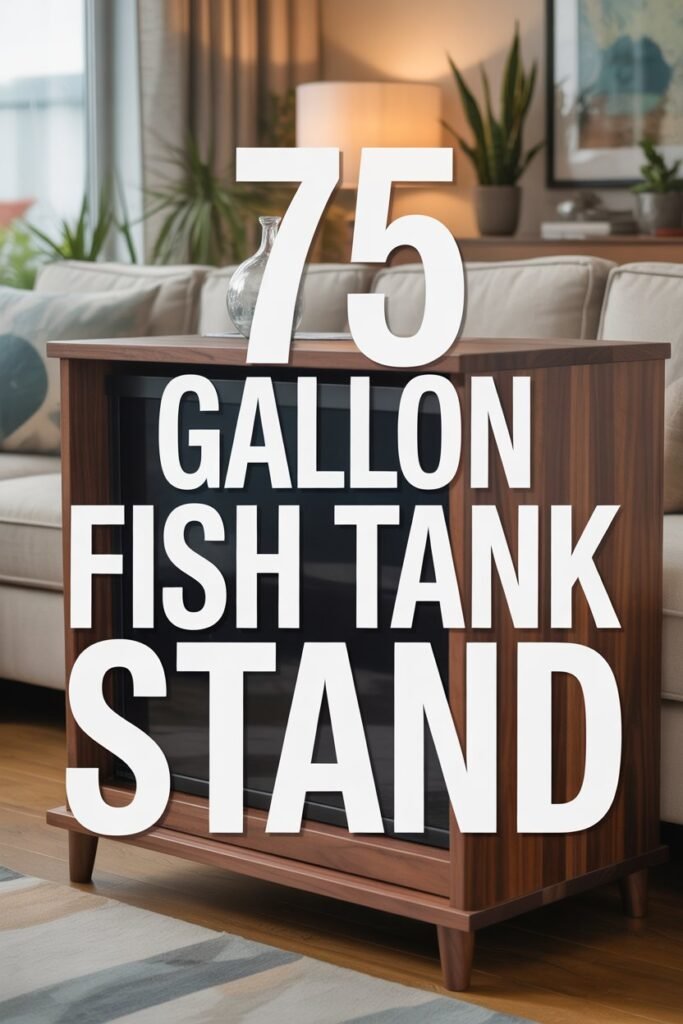
Understanding total weight is crucial when choosing a stand.
Approximate weight breakdown:
- Water (75 gallons): about 625 pounds
- Glass aquarium: 120–150 pounds
- Substrate, rocks, décor: 100–150 pounds
- Equipment and canopy: 40–60 pounds
Total estimated weight: 900–1,000+ pounds
A 75 gallon fish tank stand must be designed to safely support at least one ton of weight continuously.
Standard Dimensions of a 75 Gallon Fish Tank Stand
Most standard 75 gallon aquariums have these dimensions:
- Length: 48 inches
- Width: 18 inches
- Height: 21 inches
A proper stand must:
- Match the tank footprint exactly
- Provide full support under all edges
- Include center bracing for added strength
Any overhang or uneven support increases the risk of glass stress.
Types of 75 Gallon Fish Tank Stands
There are several types of 75 gallon fish tank stands available, each designed for different setups, budgets, and design preferences.
Wooden 75 Gallon Fish Tank Stand
Wooden stands are popular for display aquariums.
Features:
- Strong load-bearing capability
- Furniture-style appearance
- Available in many finishes
Best For:
- Living rooms
- Freshwater community tanks
- Home décor integration
Solid hardwood stands offer the best durability among wooden options.
Metal 75 Gallon Fish Tank Stand
Metal stands are built for maximum strength.
Features:
- Heavy-duty steel frames
- Excellent weight capacity
- Open, minimalist design
Best For:
- Fish rooms
- Utility areas
- Breeding or grow-out tanks
Metal stands are extremely durable but less decorative.
Cabinet-Style 75 Gallon Fish Tank Stand
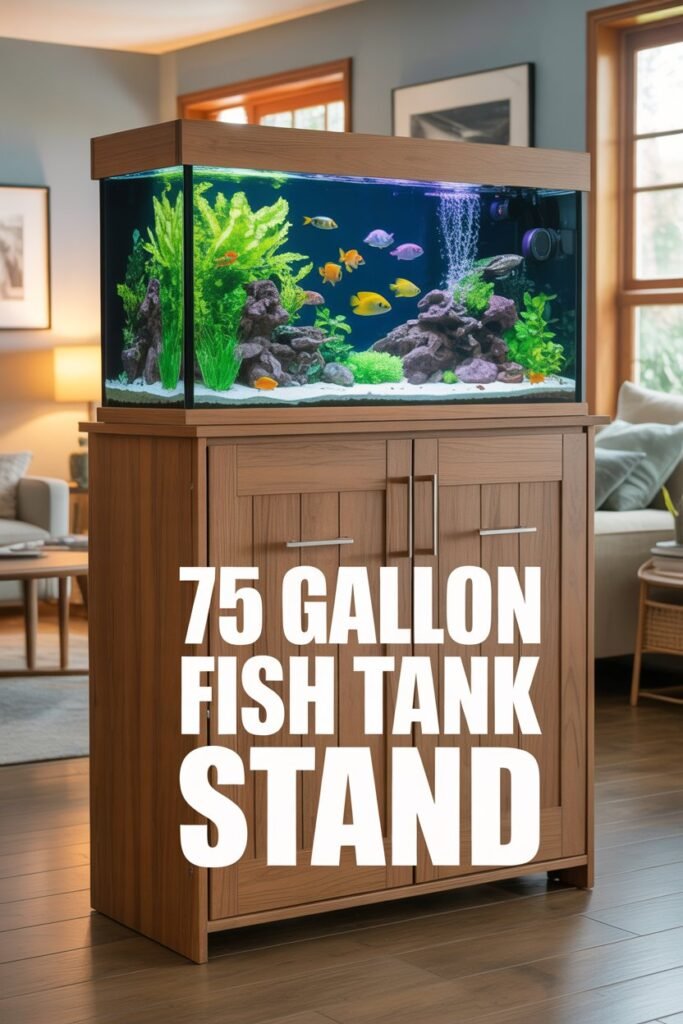
Cabinet stands combine strength with storage.
Features:
- Enclosed structure
- Doors and shelving
- Hidden equipment and wiring
Best For:
- Display aquariums
- Organized setups
- Homes with limited space
Cabinet stands keep the aquarium area clean and clutter-free.
DIY 75 Gallon Fish Tank Stand
Some aquarists prefer to build their own stand.
Features:
- Custom dimensions
- Material control
- Cost flexibility
Best For:
- Experienced DIY builders
- Custom aquarium projects
DIY stands must be properly engineered to safely support heavy weight.
Modern and Minimalist 75 Gallon Fish Tank Stand
Modern stands focus on clean aesthetics.
Features:
- Sleek design
- Neutral finishes
- Contemporary appearance
Best For:
- Modern homes
- Designer aquariums
Always confirm that modern designs meet weight requirements.
Materials Used in 75 Gallon Fish Tank Stands
Solid Hardwood
- Excellent strength
- Long lifespan
- Premium cost
Engineered Wood
- Stylish and affordable
- Must be moisture-resistant
- Requires proper reinforcement
Steel
- Highest strength rating
- Long-lasting
- Needs rust protection
MDF or Particle Board
- Budget-friendly
- Lower durability
- Only safe if heavily reinforced
Material choice directly affects stand longevity and safety.
Freshwater vs Saltwater Stand Requirements
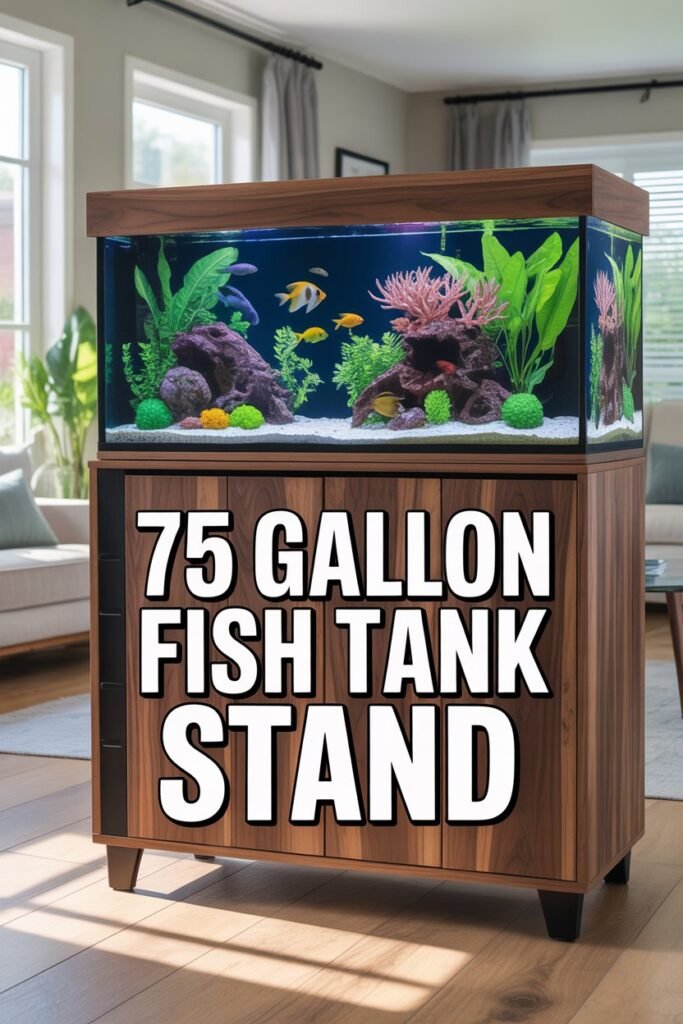
Freshwater Aquariums
Most quality 75 gallon fish tank stands are suitable.
Saltwater Aquariums
Require:
- Extra reinforcement
- Moisture and corrosion resistance
- Strong cabinet structure
Saltwater setups are heavier due to live rock and equipment.
Storage Features in a 75 Gallon Fish Tank Stand
Many stands include built-in storage for:
- Canister filters
- Sump systems
- Fish food and conditioners
- Testing kits
- Maintenance tools
Cabinet-style stands are ideal for hiding equipment.
Ideal Height for a 75 Gallon Fish Tank Stand
Most 75 gallon fish tank stands range from:
- 30 to 36 inches tall
This height:
- Provides comfortable viewing
- Makes maintenance easier
- Keeps the tank away from floor hazards
Choose based on room layout and seating height.
Safety Tips for Using a 75 Gallon Fish Tank Stand
- Place the stand on a solid, level floor
- Avoid thick carpet or uneven surfaces
- Use a leveling mat if needed
- Never move the tank when full
- Keep away from direct sunlight
Proper placement is as important as stand quality.
How to Choose the Best 75 Gallon Fish Tank Stand
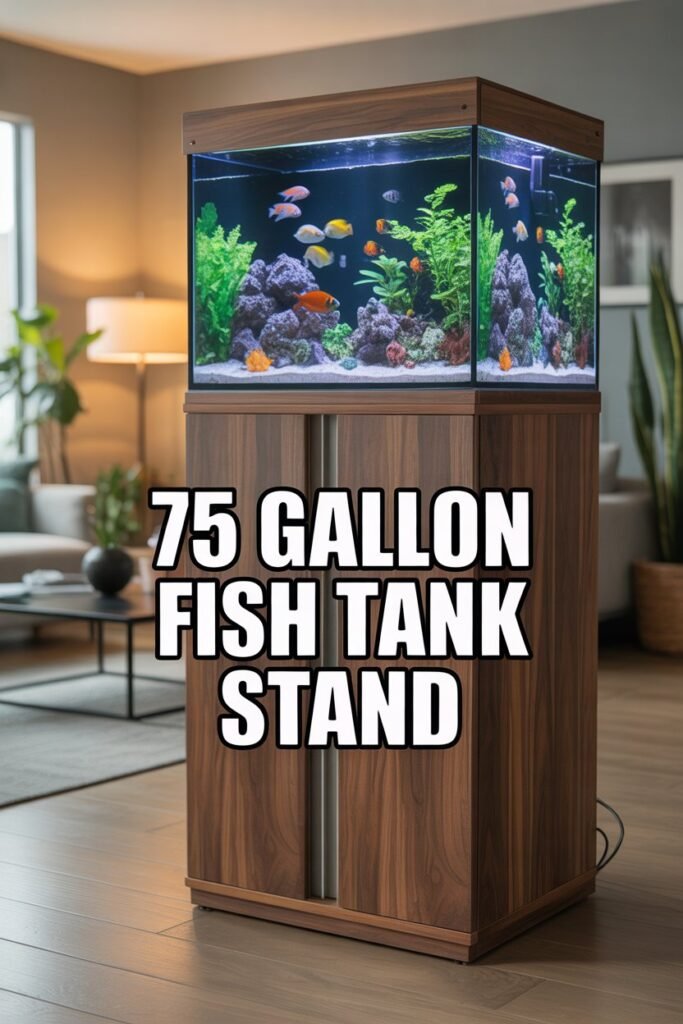
Weight Capacity
Ensure the stand supports at least 1,000 pounds.
Tank Compatibility
Stand dimensions must exactly match the tank base.
Floor Strength
Verify your floor can handle the weight.
Storage Needs
Decide whether you want open or enclosed storage.
Style and Finish
Choose a stand that complements your space.
Common Mistakes to Avoid
- Using regular furniture instead of an aquarium stand
- Ignoring center support
- Choosing weak materials
- Placing the stand on uneven flooring
- Skipping moisture protection
Avoiding these mistakes prevents accidents and damage.
Maintenance Tips for a 75 Gallon Fish Tank Stand
- Wipe up water spills immediately
- Inspect joints and screws regularly
- Check for rust, swelling, or warping
- Maintain proper room ventilation
Good maintenance extends the stand’s lifespan.
Can You Place a 75 Gallon Fish Tank Without a Stand?
While technically possible, it is not recommended.
Without a proper stand:
- Weight distribution becomes uneven
- Glass stress increases
- Risk of catastrophic failure rises
A dedicated 75 gallon fish tank stand is essential for safety.
Frequently Asked Questions (FAQs)
How much weight does a 75 gallon fish tank stand need to hold?
A minimum of 900–1,000 pounds.
Can I put a 75 gallon tank on a dresser or table?
No, household furniture is not designed for this load.
Is wood or metal better for a 75 gallon stand?
Both work well if properly built; metal offers maximum strength, wood offers aesthetics.
Does a 75 gallon fish tank stand need center support?
Yes, center support is highly recommended.
What height is best for a 75 gallon fish tank stand?
Most stands are between 30 and 36 inches tall.
Can I build my own 75 gallon fish tank stand?
Yes, but only if you use proper materials and construction methods.
Are cabinet stands safe for 75 gallon tanks?
Yes, if they are aquarium-rated and reinforced.
Should I use a leveling mat with my stand?
Yes, especially on uneven floors.
Final Thoughts
A 75 gallon fish tank stand is not an accessory—it is a necessity. With the immense weight of a fully stocked aquarium, choosing a strong, properly sized, and well-built stand is critical for safety, durability, and long-term enjoyment.
Whether you prefer a classic wooden cabinet, a heavy-duty metal frame, or a custom DIY solution, the key is proper weight support, full base coverage, and reliable construction. Investing in the right stand protects your aquarium, your home, and your aquatic life.