
 By admin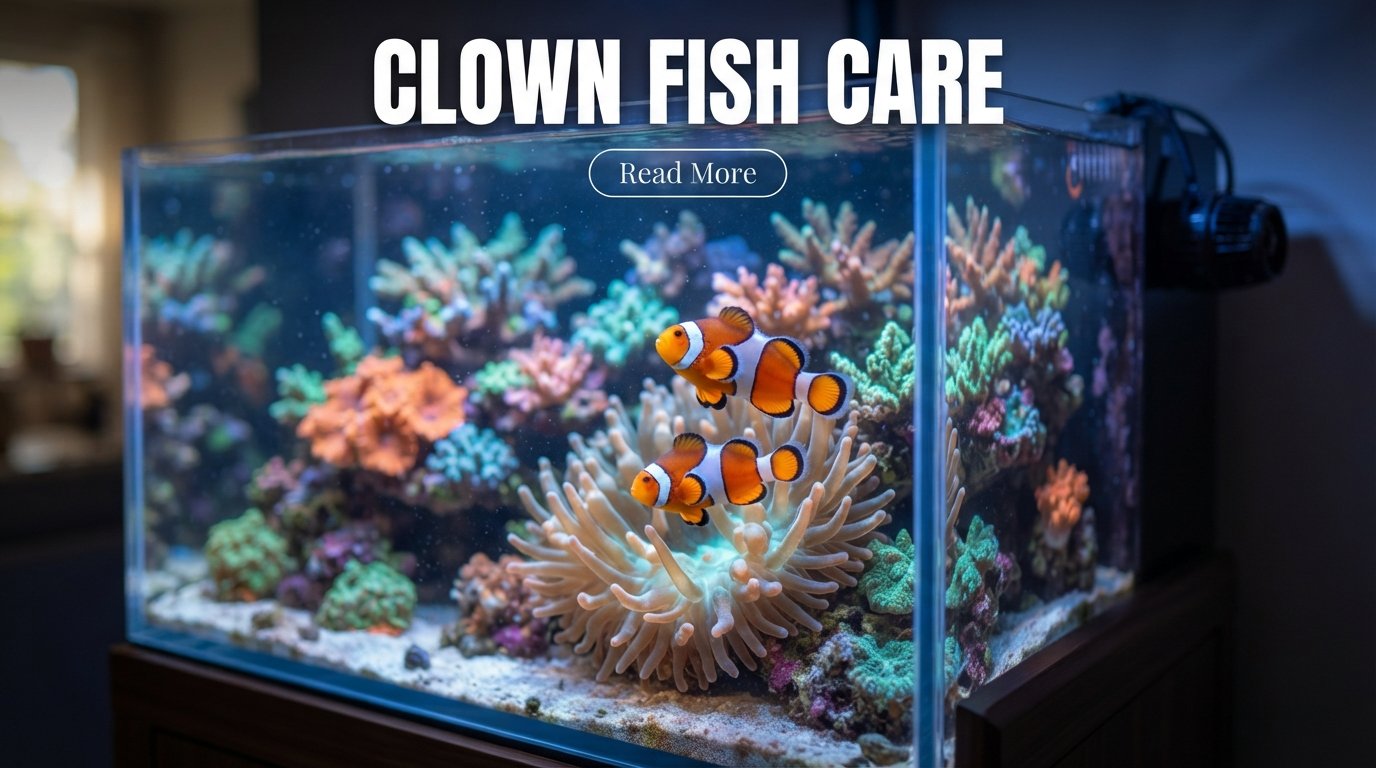
A clownfish aquarium can be one of the most colorful and fascinating saltwater aquariums to keep at home. Famous for their bright orange-and-white patterns and close relationship with sea anemones, clownfish can become a beautiful centerpiece in a marine aquarium.
Although clownfish are often recommended as beginner-friendly marine fish, they still require stable saltwater conditions, suitable filtration, proper cycling, and regular maintenance.
What Is a Clownfish Aquarium?
A clownfish aquarium is a marine fish tank designed to provide appropriate conditions for clownfish and their compatible tank mates.
A well-designed setup usually includes:
- Marine aquarium
- Saltwater
- Live rock or suitable biological media
- Marine substrate
- Filtration
- Heater
- Marine lighting
- Water movement
- Saltwater testing equipment
- Appropriate food
A reef-style aquarium can also include corals and, in some cases, a suitable sea anemone.
Best Aquarium Size for Clownfish
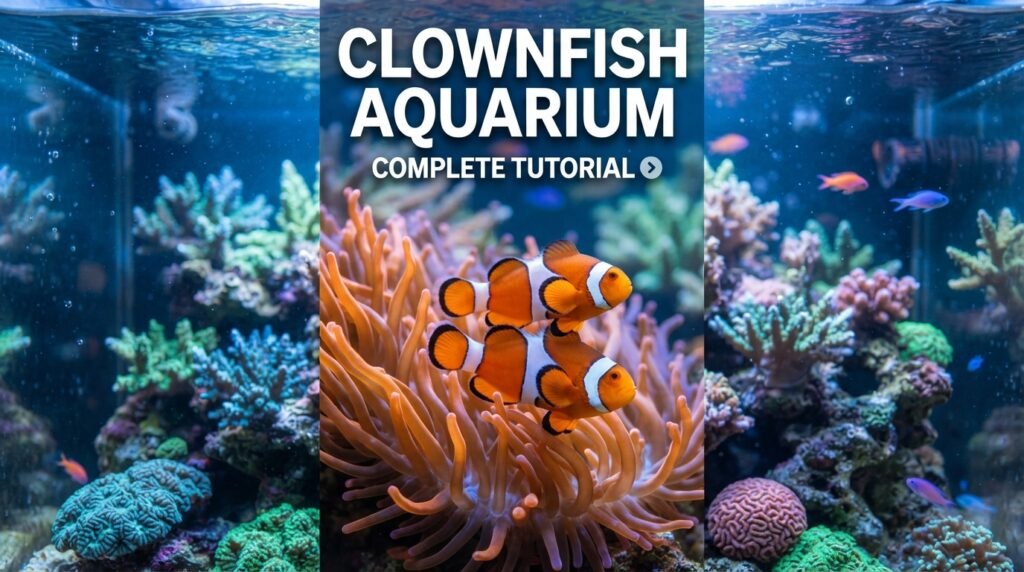
The appropriate aquarium size depends on the clownfish species and how many fish you plan to keep.
A pair of commonly kept smaller clownfish can often be maintained in a modest marine aquarium, while larger species require considerably more space.
When choosing a tank, consider the adult size of the fish rather than its size when purchased.
A larger aquarium also provides greater water volume, which can make maintaining stable conditions easier.
Clownfish Aquarium Setup
A basic setup can follow this structure:
Aquarium → Marine substrate → Live rock/biological media → Filtration → Heater → Circulation → Marine lighting
Allow the aquarium to properly cycle before adding clownfish.
Never add fish to a newly filled marine aquarium simply because the water looks clear. Biological filtration needs time to become established.
Clownfish Aquarium Water Parameters
Stable water conditions are more important than chasing an exact number.
Typical marine aquarium targets include:
| Parameter | Typical Range |
|---|---|
| Temperature | Around 24–27°C |
| Salinity | Around 1.020–1.026 specific gravity |
| pH | Around 8.0–8.4 |
| Ammonia | 0 ppm |
| Nitrite | 0 ppm |
| Nitrate | Kept controlled |
The ideal parameters can vary depending on whether you are keeping a fish-only marine aquarium or a reef system.
Choosing Aquarium Saltwater
Clownfish require marine saltwater rather than freshwater.
You can use:
- Commercial marine salt mix
- Prepared saltwater from a reputable aquarium store
- A properly mixed home saltwater system
Use a reliable refractometer or suitable hydrometer to monitor salinity.
Always mix marine salt according to the manufacturer’s instructions.
Clownfish Aquarium Filtration
Good filtration is essential for maintaining water quality.
Common options include:
Hang-On-Back Filter
Suitable for some smaller marine aquariums when appropriately sized.
Canister Filter
Can provide mechanical and biological filtration, although maintenance must be consistent.
Sump
A sump provides additional water volume and space for filtration equipment and is particularly useful for larger marine systems.
Protein Skimmer
A protein skimmer can be valuable in many marine and reef aquariums by removing organic compounds from the water.
Live Rock and Biological Filtration
Live rock or suitable biological media provides surfaces where beneficial microorganisms can colonize.
These microorganisms help process fish waste through the nitrogen cycle.
Arrange rock securely while leaving open areas for water circulation and swimming.
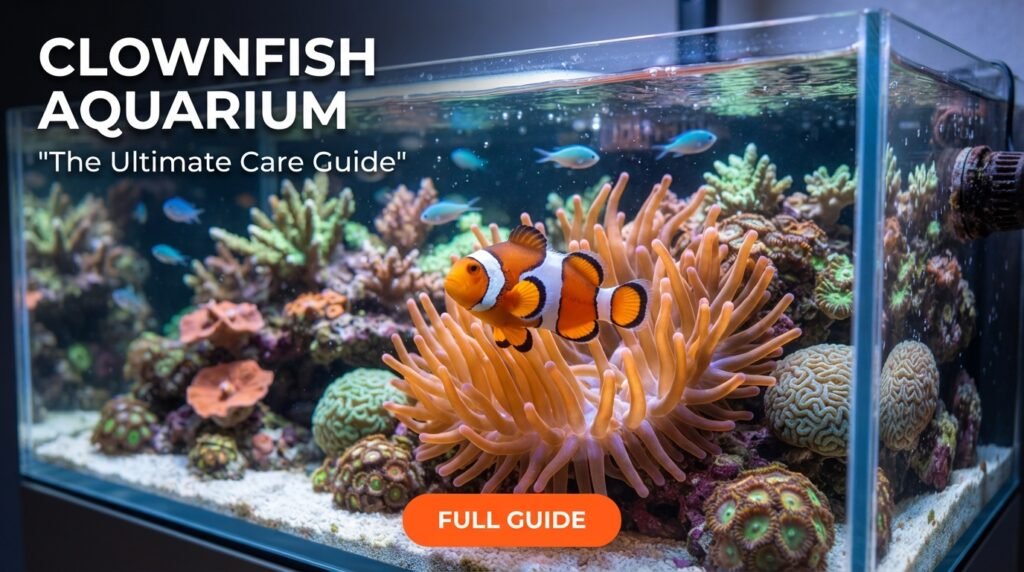
Clownfish Aquarium With Anemone
Clownfish are famous for their relationship with sea anemones.
However, a clownfish does not require an anemone to survive in a home aquarium.
Many captive clownfish live perfectly well without one.
If you want to keep an anemone, research its specific lighting, water-quality, flow, feeding, and placement requirements first.
Anemones can move around the aquarium and may sting nearby corals.
Best Anemones for Clownfish
Different clownfish species naturally associate with different anemones.
A common aquarium choice is the bubble-tip anemone, but suitability depends on the aquarium’s maturity and conditions.
Do not purchase an anemone simply because it looks attractive. Many anemones require stable, mature aquariums and stronger lighting than a basic fish-only setup.
Clownfish Without an Anemone
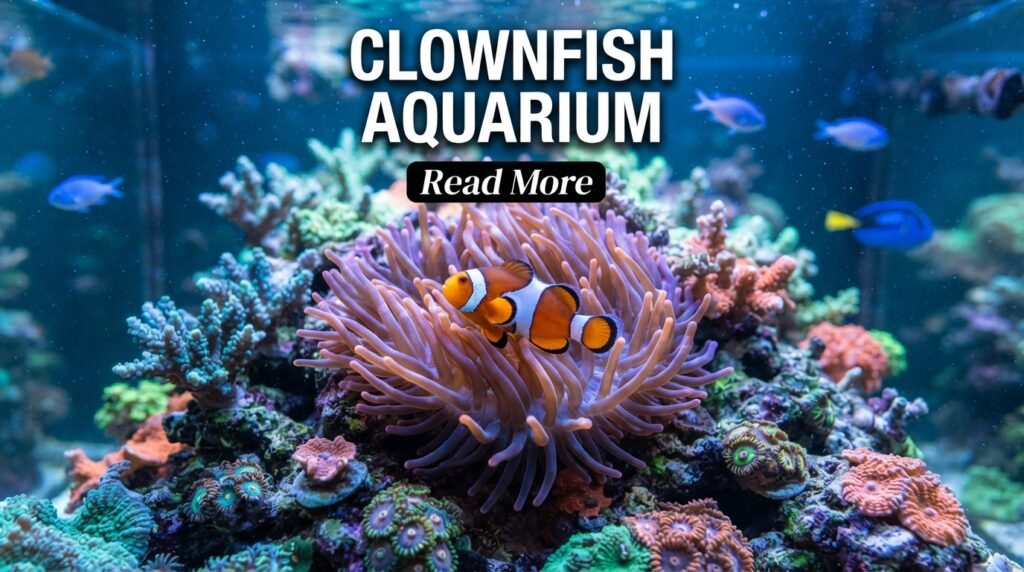
A clownfish-only aquarium can still be beautiful.
Instead of an anemone, create a natural marine environment with:
- Live rock
- Caves
- Marine-safe decorations
- Coral, if appropriate
- Open swimming areas
Clownfish may adopt other objects as a substitute host.
Clownfish Aquarium With Coral
A reef aquarium can combine clownfish with compatible corals.
Possible additions include:
- Soft corals
- LPS corals
- Suitable SPS corals
- Clean-up-crew invertebrates
Corals have specialized requirements, so research compatibility and care before adding them.
Clownfish Aquarium Decoration Ideas
A natural-looking setup can include:
Rock Caves
Create small spaces for exploration and shelter.
Coral Structures
Suitable aquarium-safe coral structures can provide additional visual interest.
Marine Substrate
Fine sand can create a natural reef appearance.
Natural Rockwork
Use stable rock formations to create caves and elevation.
Avoid excessive artificial decorations that take away swimming space.
Clownfish Species
There are many clownfish species and varieties available in the marine aquarium hobby.
Popular examples include:
- Ocellaris clownfish
- Percula clownfish
- Maroon clownfish
- Clarkii clownfish
- Tomato clownfish
- Skunk clownfish
- Cinnamon clownfish
Their adult sizes, personalities, appearance, and care requirements can differ considerably.
Ocellaris Clownfish Aquarium
Ocellaris clownfish are among the most recognizable aquarium clownfish.
They are relatively small compared with some other clownfish and are commonly kept in pairs.
A pair can make an excellent centerpiece for an appropriately sized marine aquarium.
Clownfish Pair Aquarium
A bonded pair can be fascinating to observe.
When selecting two clownfish, be aware that clownfish establish social hierarchy and can become territorial.
Provide enough space and suitable hiding areas to reduce conflict.
Clownfish Tank Mates
Potential tank mates depend on aquarium size and species.
Possible compatible choices can include certain:
- Gobies
- Blennies
- Cardinalfish
- Firefish
- Wrasses
- Peaceful reef invertebrates
Compatibility should always be checked for the exact species.
Avoid automatically assuming that every clownfish can live peacefully with every marine fish.
Feeding Clownfish
Clownfish are generally adaptable eaters.
Suitable marine foods can include:
- High-quality marine pellets
- Marine flakes
- Frozen foods
- Mysis shrimp
- Brine shrimp
- Other appropriately sized marine foods
Offer an amount the fish can consume without leaving excessive food in the aquarium.
A varied diet can help provide balanced nutrition.
Clownfish Aquarium Lighting
Lighting depends on the type of aquarium.
A fish-only clownfish aquarium does not require the same lighting intensity as a reef aquarium containing photosynthetic corals or anemones.
If you keep an anemone or corals, choose lighting specifically capable of meeting their requirements.
Water Movement
Clownfish need appropriate circulation, but excessive flow can make swimming difficult.
Use pumps and outlets to create movement throughout the aquarium while avoiding a powerful stream directed continuously at the fish.
Aquarium Cycling
Cycling is one of the most important steps before adding clownfish.
The biological filtration system needs to establish bacteria capable of processing ammonia and nitrite.
Test the water during cycling and only add livestock when the aquarium has completed an appropriate cycle.
Clownfish Aquarium Maintenance
Regular maintenance may include:
- Testing water parameters
- Partial water changes
- Cleaning glass
- Removing debris
- Maintaining filtration
- Checking salinity
- Cleaning equipment
- Monitoring fish behavior
Marine aquariums benefit from consistency.
Common Clownfish Aquarium Mistakes
Adding Fish Too Quickly
A new aquarium needs time to establish biological filtration.
Incorrect Salinity
Sudden salinity changes can stress marine fish.
Poor Filtration
Insufficient biological or mechanical filtration can allow waste to accumulate.
Overfeeding
Excess food contributes to water-quality problems.
Buying an Anemone Too Early
Anemones often require a mature and stable aquarium.
Overcrowding
A larger tank does not mean unlimited stocking.
Ignoring Compatibility
Different marine species can have very different temperaments.
How to Make a Clownfish Aquarium Look Beautiful
A professional-looking clownfish aquarium does not need hundreds of decorations.
Focus on:
- Natural-looking rockwork.
- Open swimming space.
- A simple sand bed.
- Healthy marine organisms.
- Appropriate lighting.
- Clean glass.
- Stable water quality.
- A clear focal point.
Orange-and-white clownfish stand out particularly well against darker rocks and colorful coral environments.
Clownfish Aquarium Design Ideas
| Aquarium Style | Main Features |
|---|---|
| Fish Only | Clownfish, rock, sand |
| Reef | Clownfish and corals |
| Anemone Display | Clownfish and suitable anemone |
| Nano Marine | Small clownfish species and simple rockwork |
| Natural Reef | Rock, coral, sand, marine life |
| Minimalist | Simple rockwork and open space |
Conclusion
A clownfish aquarium can be a spectacular addition to a home when it is properly planned and maintained. Clownfish are colorful, active, and fascinating to observe, making them excellent centerpiece fish for many marine aquariums.
Start with an appropriately sized tank, establish the biological cycle, maintain stable saltwater conditions, and choose compatible tank mates. An anemone is not required for clownfish, and a simple fish-only marine aquarium can be just as attractive as a complex reef system.
The healthiest clownfish aquarium is not necessarily the one with the most decorations. A stable environment, suitable filtration, appropriate nutrition, and responsible stocking are the foundation of a successful marine aquarium.
Frequently Asked Questions
Do clownfish need an anemone?
No. Clownfish can live successfully in home aquariums without a sea anemone.
What size aquarium does a clownfish need?
The appropriate size depends on the clownfish species and stocking plan. Always consider adult size and territorial behavior when choosing the tank.
Are clownfish freshwater fish?
No. Clownfish are marine fish and require saltwater with appropriate marine water parameters.
Are clownfish easy to keep?
Some commonly kept clownfish, particularly captive-bred varieties, are considered relatively manageable for marine aquariums. However, they still require proper cycling, filtration, stable salinity, and regular maintenance.
Can two clownfish live together?
Yes, compatible clownfish can form pairs. However, clownfish establish a social hierarchy and may become territorial.
What do clownfish eat?
They can eat a variety of appropriately sized marine foods, including quality pellets, flakes, frozen foods, mysis shrimp, and brine shrimp.
Can clownfish live with other fish?
Yes, depending on the clownfish species, aquarium size, and temperament of the other fish. Tank mates should always be selected for compatibility.
Do clownfish need a reef aquarium?
No. Clownfish can be kept in a fish-only marine aquarium. A reef aquarium is an optional setup that adds corals and other compatible marine organisms.