
 By admin
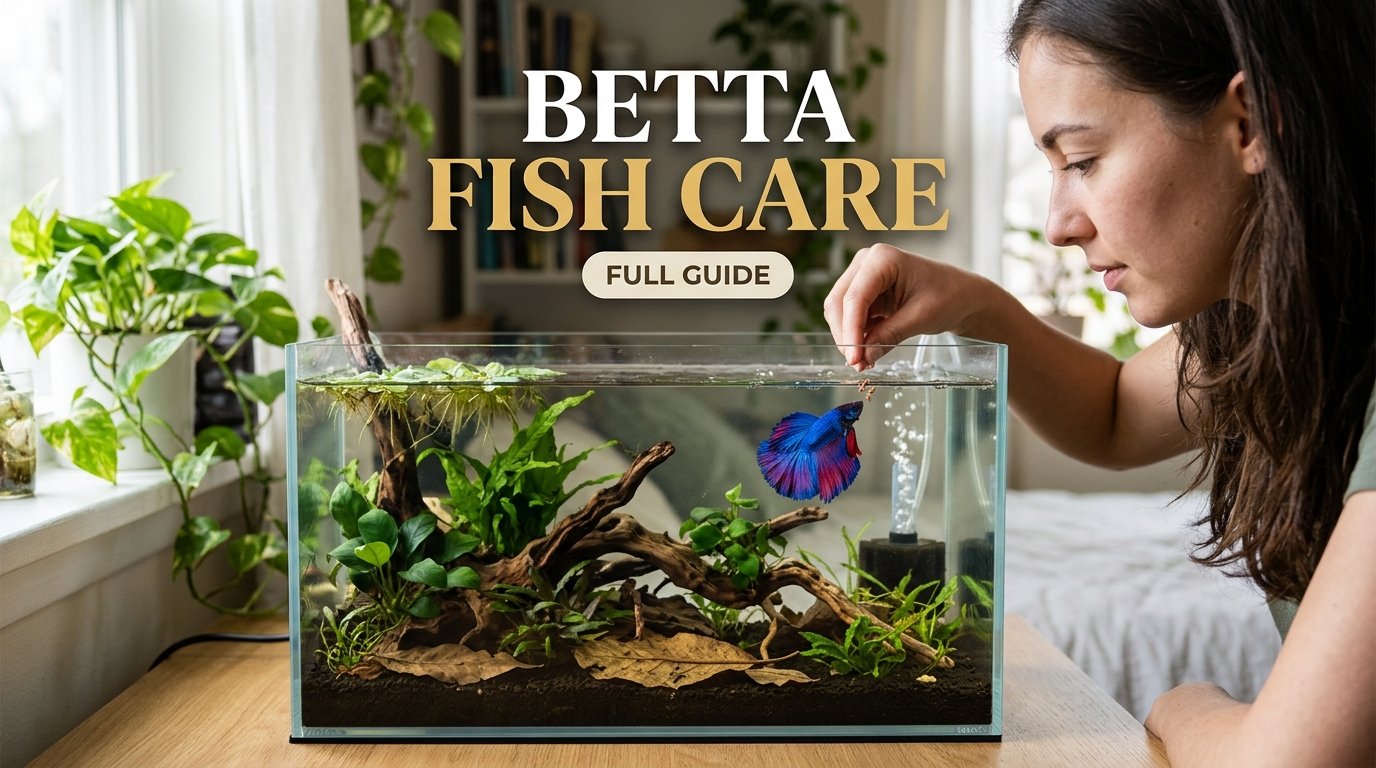
Betta fish care is essential for keeping these colorful freshwater fish healthy, active, and comfortable in a home aquarium. Also known as Siamese fighting fish, bettas are famous for their beautiful fins, vibrant colors, and curious personalities. They come in many varieties, including Halfmoon, Crowntail, Plakat, Veiltail, and Koi bettas, making them popular among beginner and experienced aquarium enthusiasts.
Although betta fish are often advertised as easy pets, they need more than a small bowl of water to thrive. A healthy betta requires an appropriately sized aquarium, warm and stable water, gentle filtration, a balanced diet, and regular maintenance. Understanding their behavior and environmental needs will help you create a safe habitat where your fish can live comfortably.
1. Choose the Right Betta Fish Tank Size
Choosing the right aquarium is one of the most important parts of betta fish care. Although bettas can survive in small containers for short periods, these environments are not suitable permanent homes.
A 5-gallon aquarium is a good starting size for one betta fish. A 10-gallon tank provides even more swimming space and makes it easier to create a beautiful planted aquarium.
| Tank size | Suitability | Recommended use |
|---|---|---|
| 1 gallon | Not suitable | Avoid as permanent housing |
| 2 gallons | Too small | Not recommended |
| 3 gallons | Below preferred size | Limited temporary use |
| 5 gallons | Good | One betta fish |
| 10 gallons | Excellent | One betta with more swimming space |
| 15 gallons | Excellent | Spacious planted aquarium |
A rectangular aquarium is generally a better choice than a narrow decorative bowl because it provides more horizontal swimming space and a larger water surface.
Always use a sturdy, level aquarium stand that can support the filled tank.
2. Maintain the Correct Water Temperature
Betta fish are tropical freshwater fish and need warm, stable water temperatures. Cold water can make them less active and increase their vulnerability to health problems.
The recommended temperature range for most domesticated bettas is approximately 76–82°F (24–28°C).
An adjustable aquarium heater helps maintain a consistent temperature, especially in rooms that become cold during winter. Use a thermometer to check the actual water temperature rather than relying only on the heater setting.
Avoid placing the aquarium near air conditioners, heaters, open windows, or direct sunlight because sudden temperature changes can stress your fish.
3. Use a Gentle Aquarium Filter
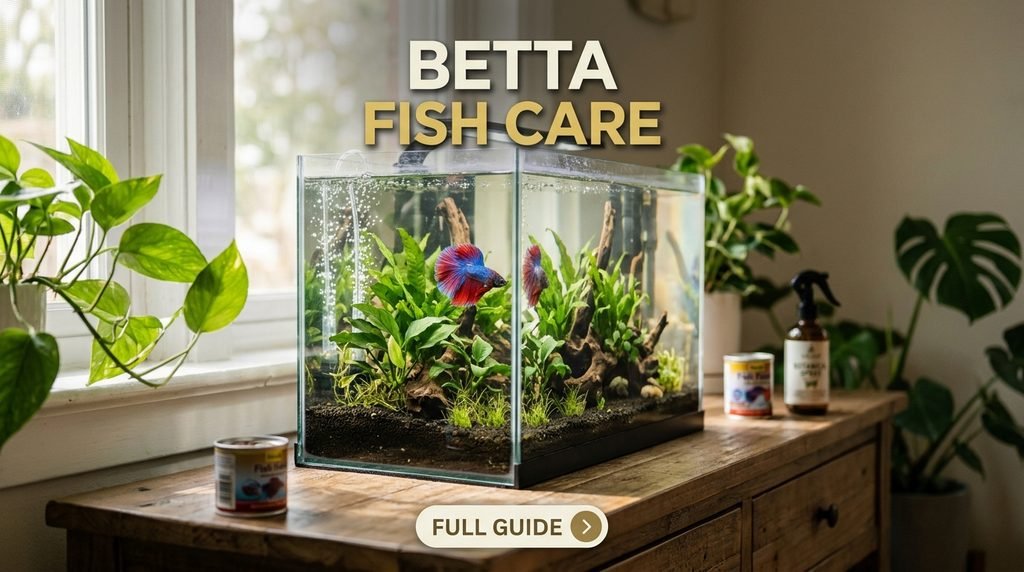
Filtration is an important part of maintaining clean and healthy aquarium water. A suitable filter removes suspended waste and provides a surface for beneficial bacteria that help process fish waste.
Bettas generally prefer calm water rather than strong currents. Powerful filtration can make swimming difficult, particularly for long-finned varieties such as Halfmoon and Veiltail bettas.
Suitable options include:
- Sponge filters
- Small adjustable aquarium filters
- Low-flow internal filters
- Filters with a gentle output or baffled flow
A sponge filter is especially popular because it provides gentle filtration and is relatively easy to maintain.
Never wash filter media under untreated tap water because chlorine and other disinfectants can damage beneficial bacteria. Instead, gently rinse it in removed aquarium water when necessary.
4. Understand the Nitrogen Cycle
The nitrogen cycle is one of the most important concepts in aquarium care. Fish waste, uneaten food, and decaying plants produce ammonia, which is toxic to bettas.
Beneficial bacteria help convert ammonia into nitrite and then nitrate. Ammonia and nitrite are both harmful, while nitrate is generally less toxic at controlled levels.
Before adding your betta, cycle the aquarium using an appropriate fishless cycling method.
Important water quality targets include:
| Water parameter | Recommended target |
|---|---|
| Temperature | 76–82°F (24–28°C) |
| Ammonia | 0 ppm |
| Nitrite | 0 ppm |
| Nitrate | Ideally below 20 ppm |
| pH | Approximately 6.5–7.5 |
Bettas can tolerate some variation in pH when it remains stable. Avoid making sudden chemical adjustments simply to reach an exact number.
Use a reliable aquarium test kit to monitor water conditions, especially during the cycling process and after introducing your fish.
5. Feed Your Betta a Balanced Diet
Proper nutrition helps maintain a betta’s energy, coloration, immune function, and overall health. Bettas are primarily carnivorous and benefit from protein-rich foods.
A high-quality betta pellet should form the foundation of the diet. Choose a product designed specifically for bettas rather than relying on generic tropical fish flakes.
You can also provide occasional variety with suitable frozen or live foods.
Recommended betta foods:
- High-quality betta pellets
- Frozen brine shrimp
- Daphnia
- Bloodworms as an occasional treat
- Appropriately sourced mosquito larvae
Feed small portions that your fish can consume without leaving excess food in the aquarium. The appropriate amount depends on pellet size, fish size, and the product’s feeding instructions.
Avoid overfeeding because uneaten food can increase ammonia levels and contribute to digestive problems.
A varied, balanced diet is generally better than feeding the same treat every day.
6. Create a Comfortable Aquarium Environment
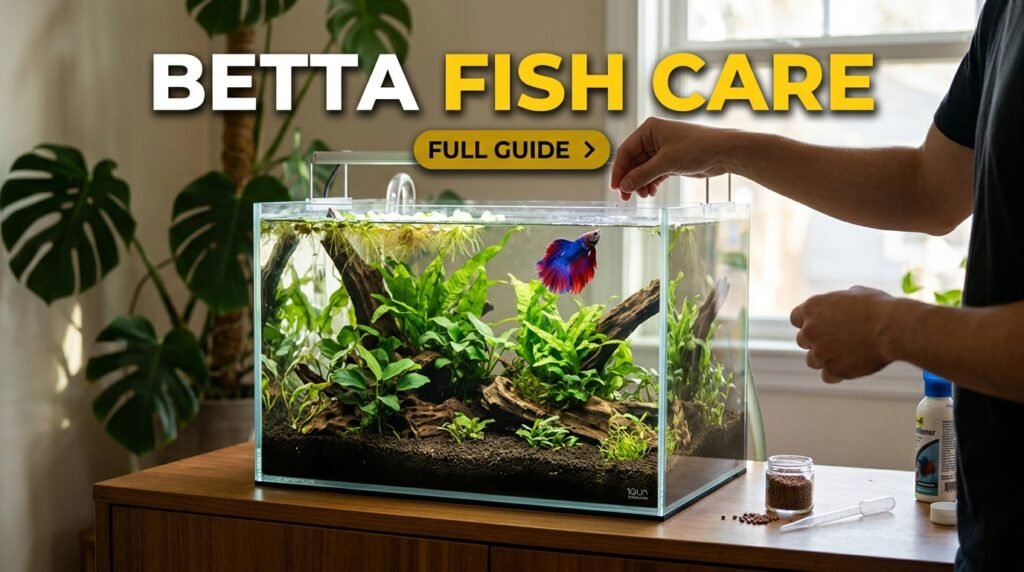
A well-designed aquarium provides more than decoration. It gives your betta places to explore, rest, and hide.
Bettas naturally investigate their surroundings and appreciate an environment with plants and sheltered areas.
Consider adding:
- Live aquatic plants
- Smooth driftwood
- Aquarium-safe caves
- Rounded stones
- Floating plants
- Betta leaf hammocks
Make sure all decorations are aquarium-safe and have no sharp edges. Long-finned bettas can easily damage their delicate fins on rough ornaments.
Leave enough open swimming space and keep the water surface accessible.
7. Choose the Best Plants for Betta Fish
Live plants improve the appearance of an aquarium and create natural cover. They can also help absorb some nutrients from the water.
Some beginner-friendly plants include:
| Plant | Difficulty | Placement |
|---|---|---|
| Anubias nana | Easy | Attached to wood or rocks |
| Java fern | Easy | Background or midground |
| Java moss | Easy | Driftwood or decorations |
| Cryptocoryne | Moderate | Substrate |
| Amazon frogbit | Moderate | Floating |
| Salvinia | Easy | Floating |
| Water sprite | Easy to moderate | Background or floating |
Anubias and Java fern should generally have their rhizomes kept above the substrate rather than buried.
Floating plants are also useful because their roots provide natural cover. However, do not let them completely cover the water surface. Bettas need access to atmospheric air because they possess a labyrinth organ that allows them to breathe at the surface.
8. Understand Betta Fish Behavior
Betta fish have interesting personalities and often become familiar with their surroundings and feeding routines.
Some common behaviors include:
Swimming around the aquarium: Healthy bettas frequently explore their environment and investigate plants and decorations.
Coming to the surface: Bettas regularly swim to the surface to take in atmospheric air. This is normal behavior.
Resting on leaves: Some bettas rest on broad plant leaves, near decorations, or close to the water surface.
Building bubble nests: Male bettas sometimes create groups of bubbles at the water surface. This is a natural reproductive behavior and does not necessarily mean the fish needs a mate.
Flaring their fins: Bettas may spread their fins and gill covers when they see reflections or another fish. Occasional flaring is normal, but repeated stress should be avoided.
Pay attention to changes in your fish’s usual behavior. Reduced activity, loss of appetite, or unusual swimming may indicate stress or illness.
9. Perform Regular Water Changes
Regular water changes help remove accumulated waste and maintain good water quality.
For many established, properly filtered 5-gallon aquariums, a partial water change of around 20–30% weekly is a reasonable starting routine. Actual requirements depend on filtration, feeding, stocking, and water test results.
Follow these steps:
- Prepare replacement water with a suitable aquarium water conditioner.
- Make sure the new water is close to the aquarium’s temperature.
- Remove a portion of the aquarium water.
- Use a siphon to remove debris from the substrate.
- Slowly add the prepared replacement water.
- Check that the filter and heater are working properly.
Never replace all the aquarium water during routine maintenance unless there is a specific emergency requiring a different approach.
Avoid using soap or household cleaning products on aquarium equipment.
10. Keep the Aquarium Covered
Betta fish are capable jumpers. They may leap out of the aquarium if startled or attracted by something outside the water.
A secure aquarium lid helps prevent accidental escapes.
Make sure the lid allows suitable air exchange and leaves a small air gap between the water surface and the cover. Bettas need access to atmospheric air, so they should not be forced to swim through an enclosed space without access to fresh air.
Also check openings around filters, heaters, and cables to ensure your fish cannot escape.
11. Can Betta Fish Live With Other Fish?
Betta fish are known for territorial behavior, especially males. Some individuals tolerate peaceful tank mates, while others may attack or become stressed by other fish.
Keeping a single betta in its own aquarium is the simplest and safest arrangement for beginners.
If you have a sufficiently large, mature aquarium and experience with community fishkeeping, carefully selected peaceful species may sometimes be suitable. However, compatibility is never guaranteed.
Potential tank mates sometimes considered include:
- Certain small peaceful rasboras
- Carefully selected small schooling fish
- Some peaceful bottom-dwelling fish
- Nerite snails
Avoid fin-nipping fish, aggressive species, and other male bettas. Do not assume that two fish will be compatible simply because they are different colors or varieties.
12. Common Betta Fish Diseases
Even with good care, bettas can sometimes develop health problems. Early observation and good water quality are important for preventing complications.
| Health problem | Common signs | General response |
|---|---|---|
| Fin rot | Deteriorating or damaged fins | Test water and improve conditions |
| Ich | Small white spots | Confirm diagnosis and use appropriate treatment |
| Swim bladder problems | Difficulty maintaining normal swimming position | Review feeding and water quality |
| Velvet disease | Fine gold or rust-colored appearance | Seek appropriate diagnosis and treatment |
| Dropsy | Swollen abdomen and raised scales | Urgent veterinary assessment |
| Fungal infection | White or cotton-like growth | Confirm cause and use suitable treatment |
These conditions can have overlapping symptoms. Do not assume every white patch, swollen abdomen, or damaged fin has the same cause.
If your betta becomes ill, test the water immediately and seek advice from an aquatic veterinarian or an experienced fish-health professional. Correct diagnosis is important before choosing medication.
13. Signs of a Healthy Betta Fish
A healthy betta usually displays several positive physical and behavioral signs.
Look for:
- Bright, clear eyes.
- Smooth and intact scales.
- Fins that are not deteriorating.
- Normal swimming and balance.
- Interest in food.
- Regular exploration of the aquarium.
- Normal breathing at the surface.
- No unusual swelling or visible growths.
Color can vary naturally between individuals, so a change in appearance should be considered alongside other symptoms.
A fish that suddenly becomes inactive, refuses food, or struggles to swim should be monitored closely.
14. Common Betta Fish Care Mistakes
Many betta health problems are related to unsuitable aquarium conditions or poor maintenance. Avoiding a few common mistakes can make a major difference.
Keeping bettas in tiny bowls: Small containers make it difficult to maintain stable temperature and water quality. Choose a properly equipped aquarium of at least 5 gallons.
Skipping the nitrogen cycle: Adding fish to an uncycled aquarium can expose them to toxic ammonia and nitrite.
Using strong filters: Excessive water movement can exhaust bettas. Choose gentle filtration.
Overfeeding: Too much food can cause digestive problems and pollute the water.
Ignoring water temperature: Cold or rapidly changing temperatures can stress tropical fish.
Adding sharp decorations: Rough plastic plants and jagged ornaments can damage fins.
Keeping incompatible fish together: Territorial behavior can lead to injuries and stress.
Cleaning everything at once: Replacing all water and thoroughly washing filter media can disrupt beneficial bacteria.
15. Daily, Weekly, and Monthly Betta Fish Care Routine
A consistent maintenance routine makes aquarium care easier and helps you notice problems early.
| Frequency | Care task |
|---|---|
| Daily | Check fish behavior and appetite |
| Daily | Observe temperature and equipment |
| Daily | Remove uneaten food |
| Weekly | Test water parameters |
| Weekly | Perform an appropriate partial water change |
| Weekly | Remove dead plant leaves |
| Weekly | Check decorations and filter flow |
| Monthly | Inspect equipment and aquarium condition |
| As needed | Clean filter media gently in removed aquarium water |
The schedule should be adjusted according to aquarium size and water test results. A small aquarium may require more frequent attention than a larger, mature setup.
Frequently Asked Questions
How do you take care of a betta fish for beginners?
Start with a properly equipped aquarium of at least 5 gallons. Cycle the tank before adding your fish, maintain a temperature of 76–82°F, install gentle filtration, provide a balanced diet, and perform regular partial water changes.
How long do betta fish live?
With suitable care, many domesticated bettas live approximately 2–5 years. Their lifespan depends on genetics, health, water quality, nutrition, and overall living conditions.
Do betta fish need a heater?
Yes, in most indoor environments. Bettas are tropical fish and generally need stable warm water. An adjustable aquarium heater and thermometer help maintain appropriate conditions.
How often should I feed my betta fish?
Feed small portions according to the food manufacturer’s instructions, usually once or twice daily. Avoid overfeeding and remove uneaten food to protect water quality.
Can betta fish live without a filter?
Although bettas can survive in some carefully maintained unfiltered setups, a suitable gentle filter is generally recommended. It supports beneficial bacteria and makes water quality easier to manage.
Do betta fish need an air pump?
Not necessarily. Bettas can breathe atmospheric air using their labyrinth organ. An air pump is not essential when adequate filtration and surface access are provided. If you use one, ensure it does not create excessive water movement.
Can I keep two betta fish in one tank?
Keeping two male bettas together is not recommended because they can fight and cause serious injuries. Female groups also require careful planning and are not suitable for beginners. One betta per aquarium is generally the safest option.
Why is my betta fish staying at the bottom of the tank?
A betta may rest near the bottom occasionally, but constant inactivity can indicate stress, unsuitable temperature, poor water quality, or illness. Check the temperature and test ammonia, nitrite, and nitrate levels.
Why does my betta fish keep swimming to the surface?
Bettas naturally visit the surface to breathe atmospheric air. However, repeated gasping combined with rapid breathing or unusual behavior can indicate poor water quality or other problems.
Do betta fish recognize their owners?
Bettas can learn to associate people with feeding and may swim toward the aquarium when someone approaches. They can become familiar with regular routines and activity around their tank.
What is the best food for betta fish?
A high-quality betta pellet designed for carnivorous fish is a good dietary foundation. Frozen or live brine shrimp and daphnia can provide variety, while bloodworms should generally be offered as an occasional treat.
Do betta fish need plants in their aquarium?
Live plants are not absolutely necessary, but they provide useful cover, resting areas, and a more natural environment. Choose aquarium-safe plants and leave enough open swimming space.
Final Thoughts
Betta fish care is about creating a stable, clean, and comfortable environment rather than simply keeping a colorful fish in a decorative container. A suitable aquarium, warm water, gentle filtration, balanced nutrition, and regular maintenance are the foundations of good betta care.
Whether you keep a Halfmoon, Crowntail, Plakat, Koi, or another beautiful variety, the basic care requirements remain similar. Pay attention to your fish’s behavior, maintain excellent water quality, and provide safe plants and decorations. With consistent care and a suitable habitat, your betta can remain active, healthy, and beautiful for years.