
 By admin

A purple betta fish is one of the most beautiful and unusual varieties of ornamental freshwater fish. Known for its striking coloration, flowing fins, and elegant swimming movements, a purple betta can become the centerpiece of a home aquarium. Its color may range from soft lavender and violet to deep royal purple, making it especially attractive to aquarium enthusiasts who enjoy rare-looking fish.
Purple bettas are not a separate biological species. They are selectively bred color varieties of the domesticated Siamese fighting fish (Betta splendens). Some have a nearly solid purple appearance, while others display combinations of purple, blue, red, pink, and metallic shades. Their fins may also feature contrasting colors that create an impressive underwater display.
Whether you are interested in buying a purple betta, learning about its different varieties, or creating a beautiful aquarium, understanding its appearance and care requirements will help you make the most of this colorful fish.
1. What Is a Purple Betta Fish?
A purple betta fish is an ornamental betta with purple or violet coloration across its body, fins, or both. Its appearance depends on genetics, pigmentation, iridescence, and selective breeding.
True-looking purple coloration can be difficult to find compared with common red and blue bettas. Some fish advertised as purple may actually have a combination of blue, red, and metallic pigmentation that creates a purple appearance under certain lighting conditions.
Purple bettas can have different fin structures, including Halfmoon, Plakat, Crowntail, and Veiltail. This means purple describes the color rather than a specific tail type.
Their colorful bodies and flowing fins make them popular choices for aquariums, especially planted and minimalist setups.
2. Different Shades of Purple Betta Fish
Purple bettas can display several attractive shades. Some appear light and delicate, while others have deep, dramatic coloration.
Lavender Purple Betta Fish
Lavender bettas have a soft purple appearance that may include pale pink or bluish undertones. Their delicate coloration gives them an elegant look.
They are particularly attractive when their fins have a lighter, almost translucent appearance.
Royal Purple Betta Fish
Royal purple bettas have a deeper and more saturated shade. Their bodies and fins may appear rich violet or dark purple, especially under suitable aquarium lighting.
This variety is appealing to people who prefer bold and dramatic fish colors.
Violet Betta Fish
Violet bettas have a noticeable blue-purple appearance. Their coloration may shift depending on the lighting and viewing angle.
Some display metallic reflections that make their scales appear especially vibrant.
Dark Purple Betta Fish
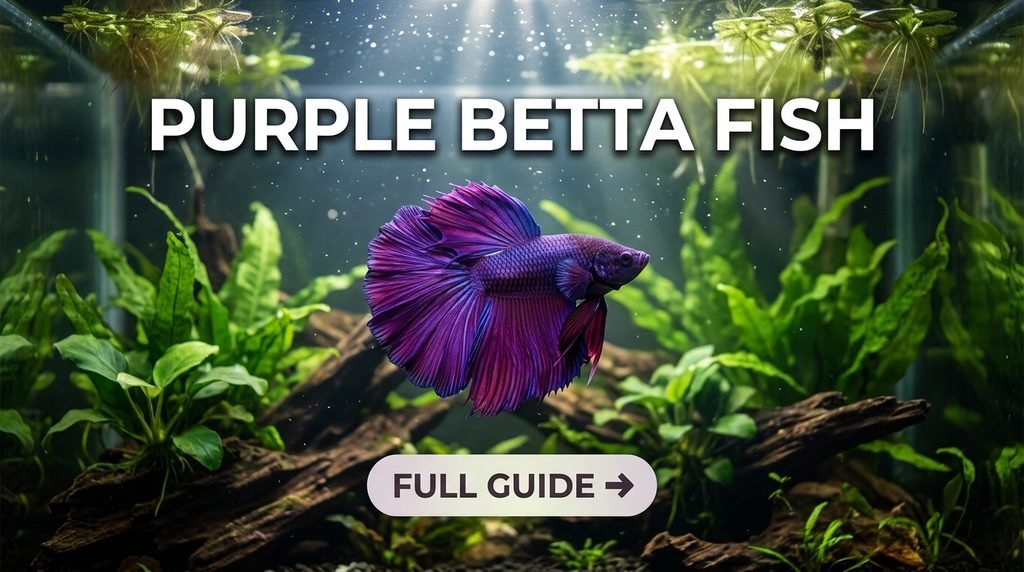
Dark purple bettas can have deep violet or almost black coloration. Their fins may display subtle blue or red highlights.
A dark aquarium background can make their body color stand out, although adequate lighting is still important for observing their natural appearance.
Purple and Blue Betta Fish
Purple and blue bettas combine two attractive shades across their bodies and fins. Some have blue bodies with purple fins, while others display a more balanced mixture.
These color combinations are especially beautiful in aquariums with green plants and natural decorations.
Purple and Red Betta Fish
Purple and red bettas have warm undertones that create a dramatic appearance. Their fins may feature red edges, while their bodies display violet or dark purple shades.
The combination creates a unique look that can vary significantly between individual fish.
3. Popular Purple Betta Fish Types
Purple coloration can appear in many different betta varieties. The following types combine distinctive fin structures with attractive purple shades.
Purple Halfmoon Betta Fish
<PRIVATE_PERSON> Halfmoon bettas are known for their large, fan-shaped tails that can spread to approximately 180 degrees. A purple Halfmoon betta combines this dramatic tail structure with violet or royal purple coloration.
Its flowing fins create an elegant appearance when the fish swims or displays its tail.
Purple Crowntail Betta Fish
Purple Crowntail bettas have extended fin rays that create a spiky, crown-like appearance. Their purple coloration can make the pointed fins look especially striking.
Some display dark violet bodies with brighter purple or blue highlights along the fins.
Purple Plakat Betta Fish
Purple Plakat bettas have shorter fins and a more compact appearance than long-finned varieties.
Their streamlined bodies make them active swimmers, and their purple coloration can range from light lavender to deep violet.
Purple Veiltail Betta Fish
Veiltail bettas have long, flowing tails that curve downward. A purple Veiltail combines this traditional tail shape with attractive violet and blue-purple shades.
Their flowing fins make them especially appealing in aquariums with gentle water movement.
Purple Double Tail Betta Fish
Double Tail bettas have two distinct tail lobes and a fuller dorsal fin. A purple Double Tail can have a dramatic appearance because its wide fins create an impressive silhouette.
When selecting one, pay attention to its swimming ability and overall health.
4. Purple Betta Fish Color Combinations
Some purple bettas have solid coloration, while others display several shades across their bodies and fins.
| Color combination | Appearance |
|---|---|
| Purple and blue | Cool violet and metallic blue |
| Purple and red | Deep violet with reddish highlights |
| Purple and white | Soft purple with pale contrasting areas |
| Purple and black | Dark, dramatic coloration |
| Purple and pink | Light, colorful, pastel appearance |
| Purple and turquoise | Iridescent blue-green highlights |
| Purple and silver | Metallic-looking scales and fins |
These combinations make each fish visually unique. Even bettas from the same breeding line may have noticeably different patterns.
5. Are Purple Betta Fish Rare?
Purple bettas are generally less commonly available than standard red, blue, or multicolored bettas. Their coloration can be difficult to produce consistently through selective breeding.
However, availability varies between breeders and locations. Some fish advertised as purple may have blue or red undertones rather than a uniform purple appearance.
When looking for a purple betta, examine photographs and videos under natural or neutral lighting. This helps you understand the fish’s actual coloration rather than relying entirely on heavily edited pictures.
A healthy fish with attractive natural coloration is a better choice than one selected only because it appears unusually rare.
6. Purple Betta Fish Tank Ideas
A well-designed aquarium can make a purple betta look even more beautiful. The right background, plants, substrate, and decorations help highlight its natural coloration.
Black Background Aquarium
A black background creates strong contrast with purple fins and scales. Add green plants, dark substrate, and a small piece of driftwood for a modern appearance.
This design is especially attractive for royal purple and violet bettas.
Natural Planted Aquarium
A planted aquarium creates a peaceful underwater environment. Use Anubias, Java fern, Java moss, and suitable floating plants.
The green leaves provide a beautiful contrast against purple coloration while giving your fish places to explore and rest.
White Sand Aquarium
A white sand substrate creates a bright, clean appearance. Combine it with green plants and a few smooth aquarium-safe stones.
This design works particularly well with lavender and light-purple bettas.
Purple and Blue Aquascape
Create a coordinated aquarium using dark substrate, natural stones, and green plants. Soft blue aquarium lighting can highlight reflective scales, but avoid excessive or continuous artificial lighting.
The goal is to complement the fish’s natural color without creating an uncomfortable environment.
Minimalist Betta Aquarium
A minimalist layout uses a few carefully selected decorations and plenty of open swimming space.
Choose a small piece of driftwood, one or two plants, and a simple background. This allows the purple betta to remain the main visual attraction.
7. Purple Betta Fish Care Requirements

Purple bettas have the same basic care requirements as other domesticated Betta splendens. Their color does not mean they need a special diet or different water conditions.
Aquarium Size
A 5-gallon aquarium is a good starting size for one betta fish. A 10-gallon tank provides additional swimming space and more opportunities for aquascaping.
Avoid keeping a betta permanently in a tiny decorative bowl because small containers make it difficult to maintain stable water quality and temperature.
Water Temperature
Maintain a stable temperature around 76–82°F (24–28°C).
An adjustable aquarium heater and thermometer are useful for keeping the water within a suitable range.
Filtration
Use a gentle filter to maintain water quality without creating strong currents. Sponge filters and adjustable low-flow filters are popular choices.
Long-finned purple Halfmoon and Veiltail bettas especially benefit from calm water.
Water Quality
A properly cycled aquarium should have zero ammonia and zero nitrite. Keep nitrate controlled through regular partial water changes and water testing.
A stable pH is more important than frequently changing the water to reach an exact number.
Aquarium Decorations
Choose smooth stones, safe caves, driftwood, and soft plants. Avoid sharp ornaments that can damage delicate fins.
Provide open swimming space and access to the water surface.
8. Best Food for Purple Betta Fish
Purple bettas are carnivorous and need a protein-rich diet. Their coloration does not require a special purple-specific food.
A high-quality betta pellet is a good dietary foundation. You can also offer suitable frozen or live foods as occasional variety.
Recommended options include:
- High-quality betta pellets
- Frozen brine shrimp
- Daphnia
- Bloodworms as an occasional treat
- Appropriately sourced mosquito larvae
Feed small portions according to the food manufacturer’s instructions and your fish’s needs. Avoid overfeeding because uneaten food can pollute the aquarium and contribute to health problems.
A balanced diet supports normal growth, energy, and overall condition.
9. How to Identify a Healthy Purple Betta Fish
When buying a purple betta, pay attention to its health rather than choosing only the brightest fish.
A healthy betta should generally have:
- Clear and bright eyes.
- Smooth, undamaged scales.
- Fins without severe tears or deterioration.
- Normal swimming and balance.
- An alert response to its surroundings.
- A healthy appetite.
- No obvious swelling, unusual growths, or visible parasites.
Check the aquarium or container where the fish is kept. Dirty water, severe fin damage, and unusual inactivity can indicate poor conditions.
Ask the seller about feeding habits and the fish’s previous care routine when possible.
10. Why Is My Purple Betta Fish Changing Color?
Betta fish can sometimes change color as they grow. This is particularly noticeable in varieties with marble genetics.
Several factors can influence their appearance:
Genetics: Some bettas naturally develop different colors and patterns as they mature.
Age: Young fish may develop stronger or different coloration as they grow.
Lighting: Purple, blue, and metallic shades can appear different under different lighting conditions.
Stress: Poor water quality and unsuitable aquarium conditions can affect a fish’s appearance and overall health.
Health: Illness may cause fading, unusual patches, or changes in the fins and scales.
A gradual color change may be natural, but sudden discoloration combined with inactivity, appetite loss, or damaged fins should be investigated.
11. Common Health Problems in Purple Betta Fish
Purple bettas can experience the same health problems as other domesticated bettas.
| Condition | Possible signs |
|---|---|
| Fin rot | Fraying or deteriorating fins |
| Ich | Small white spots on the body or fins |
| Fungal infection | White or cotton-like growth |
| Swim bladder problems | Difficulty maintaining normal swimming position |
| Dropsy | Swollen abdomen and raised scales |
| Velvet disease | Fine gold or rust-colored appearance |
Good water quality, appropriate feeding, and regular observation help reduce the risk of many aquarium health problems.
If your fish shows unusual symptoms, test the water and seek an appropriate diagnosis before using medication.
12. Can Purple Betta Fish Live With Other Fish?
Purple bettas have the same territorial tendencies as other betta varieties. Their color does not make them more or less aggressive.
Male bettas should not be housed together. Even peaceful-looking individuals can become aggressive toward other fish.
Keeping one betta in its own aquarium is generally the safest option for beginners.
In a sufficiently large, established aquarium, some peaceful tank mates may be compatible with certain bettas. However, individual temperament varies, and suitable hiding places and a backup separation plan are important.
Frequently Asked Questions
Are purple betta fish real?
Yes. Purple-colored bettas are real ornamental varieties of domesticated Siamese fighting fish. Their coloration can range from lavender and violet to deep purple, sometimes with blue or red undertones.
Are purple betta fish rare?
They are generally less common than standard red and blue bettas. The availability of true-looking purple specimens depends on breeders, genetics, and location.
How much does a purple betta fish cost?
The price varies according to location, breeder, fin type, coloration, and quality. Specially bred purple Halfmoon or Plakat bettas may cost more than commonly available varieties. Check reputable local aquarium stores and breeders for current prices.
What is the rarest purple betta fish?
There is no universally recognized single rarest purple variety. Certain unusual combinations of solid violet coloration, metallic scales, and specialized fin structures can be difficult to find.
How long do purple betta fish live?
With suitable care, many domesticated bettas live approximately 2–5 years. Their lifespan depends on genetics, nutrition, water quality, and overall health.
Do purple betta fish need special food?
No. Purple bettas need the same protein-rich diet as other domesticated bettas. High-quality betta pellets, brine shrimp, and daphnia are suitable food options.
What tank size is best for a purple betta fish?
A 5-gallon aquarium is a good starting point for one purple betta. A 10-gallon tank offers more swimming space and greater flexibility for plants and decorations.
Can a purple betta fish change color?
Yes. Some bettas change color as they mature, especially fish with marble genetics. Lighting can also influence how their purple and metallic shades appear.
Are purple Halfmoon bettas difficult to care for?
They have the same basic care requirements as other domesticated bettas. However, their large fins make gentle filtration and calm water particularly important.
Can I keep two purple betta fish together?
Keeping two male bettas together is not recommended, regardless of their color. They may fight and cause serious injuries. One betta per aquarium is generally the safest arrangement.
Final Thoughts
Purple betta fish are beautiful ornamental freshwater fish that stand out because of their unusual violet, lavender, and royal purple coloration. Whether you prefer a flowing Halfmoon, a spiky Crowntail, or a compact Plakat, there are many attractive purple betta varieties to explore.
Their care is similar to that of other domesticated bettas. Provide an appropriately sized aquarium, stable warm water, gentle filtration, a balanced diet, and safe decorations. With consistent maintenance and a comfortable environment, a purple betta can become a stunning and rewarding addition to your aquarium.
Correct the stray private-name textAdd a concise purple betta buying guide