
 By weeebooo70@gmail.com
Aquariums are not just glass boxes filled with water—they are living ecosystems that require balance, care, and design. One of the easiest and most effective ways to improve your aquarium’s health and aesthetics is by adding aquarium floating plants. These plants float freely on the water’s surface, providing shade, shelter, oxygen, and natural beauty to your aquatic world. Whether you are a beginner or an experienced aquarist, floating plants are a game-changer for both freshwater and planted tanks.
In this detailed guide, we will cover everything you need to know about aquarium floating plants, including their benefits, types, care tips, and the best species for different setups. By the end, you’ll know exactly how to choose and maintain floating plants to create a thriving underwater ecosystem.
What Are Aquarium Floating Plants?
Aquarium floating plants are aquatic plants that do not require rooting in the substrate. Instead, they float freely on the water’s surface, absorbing nutrients directly from the water column through their roots. These plants have specialized adaptations that allow them to thrive while floating, such as spongy leaves, buoyant structures, and root systems designed for nutrient absorption.
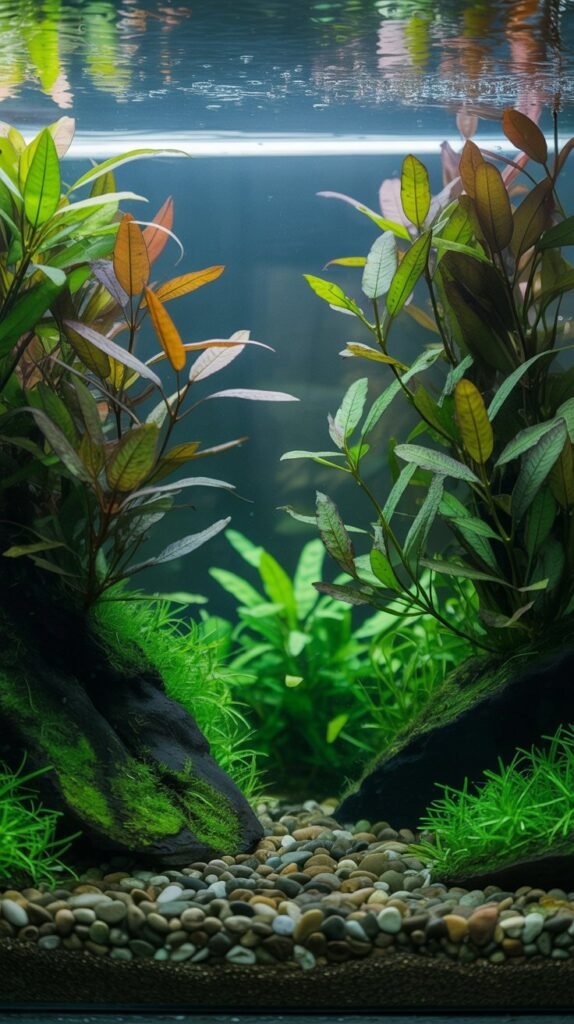
Floating plants can range from tiny species like duckweed to larger, decorative ones like water lettuce. They are incredibly versatile, fitting both small nano tanks and large aquariums.
Benefits of Aquarium Floating Plants
Floating plants are more than just decorative additions; they bring multiple benefits to aquariums:
1. Natural Shade and Light Control
Floating plants provide shade, reducing excess light penetration. This prevents algae overgrowth, which often thrives in high-light tanks. They also create a more natural environment, mimicking rivers and lakes where fish naturally live under floating vegetation.
2. Improved Water Quality
These plants absorb nitrates, ammonia, and other toxins directly from the water. This makes them excellent natural filters, reducing the need for frequent water changes and helping to stabilize aquarium parameters.
3. Oxygenation and Gas Exchange
Floating plants enhance gas exchange at the surface, contributing to oxygen-rich water. During photosynthesis, they release oxygen, creating a healthier environment for fish and invertebrates.
4. Safe Shelter for Fish and Fry
Many fish species, especially livebearers and bettas, benefit from floating plants as they provide hiding spots for fry and reduce stress. Shy fish also appreciate the cover these plants offer.
5. Aesthetic Appeal
Floating plants add a lush, natural look to aquariums. Their trailing roots and surface greenery create a jungle-like atmosphere, making your aquarium visually stunning.
Popular Types of Aquarium Floating Plants
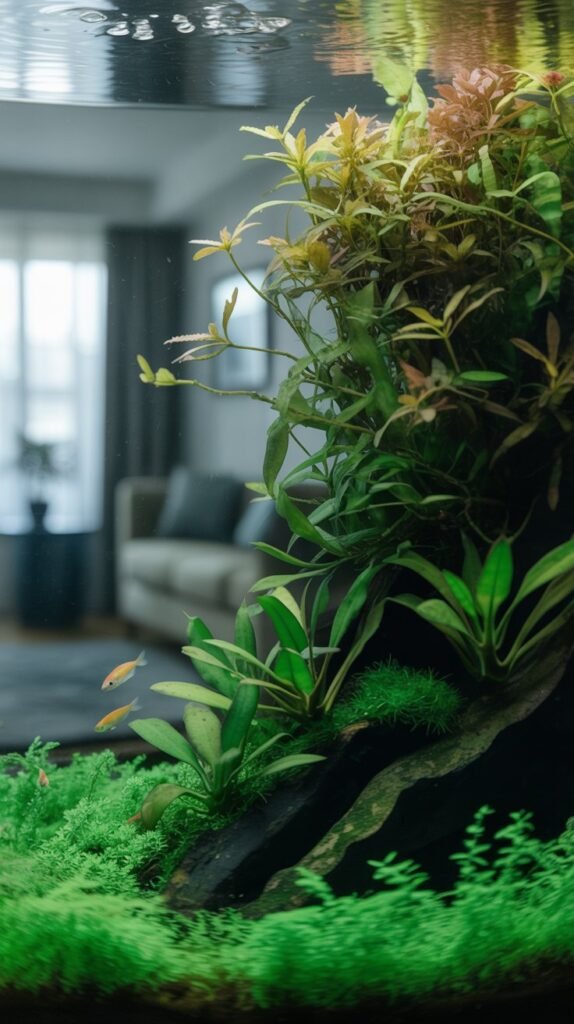
There are many varieties of floating plants available, each with unique features. Let’s explore the most common and beginner-friendly types:
1. Duckweed (Lemna minor)
- Tiny, fast-growing floating plant.
- Excellent at removing nitrates and improving water quality.
- Can quickly cover the tank, so it requires regular trimming.
2. Water Lettuce (Pistia stratiotes)
- Large rosette-like plant with spongy leaves.
- Trailing roots create a natural look.
- Prefers open tanks with good surface circulation.
3. Amazon Frogbit (Limnobium laevigatum)
- Popular choice for aquariums.
- Round, waxy leaves with long dangling roots.
- Slower-growing than duckweed, making it easier to control.
4. Salvinia (Salvinia natans)
- Small fern-like floating plant.
- Forms dense mats on the surface.
- Easy to care for and great for shading tanks.
5. Hornwort (Ceratophyllum demersum)
- Can be rooted or left floating.
- Absorbs excess nutrients quickly.
- Provides shelter for fry and shrimp.
6. Dwarf Water Lettuce (Pistia sp.)
- A smaller version of regular water lettuce.
- Suitable for smaller tanks.
- Provides shade and beautiful aesthetics.
7. Red Root Floater (Phyllanthus fluitans)
- Stunning floating plant with red roots and leaves.
- Thrives in moderate to high light.
- Adds a splash of color to aquascapes.
How to Care for Aquarium Floating Plants
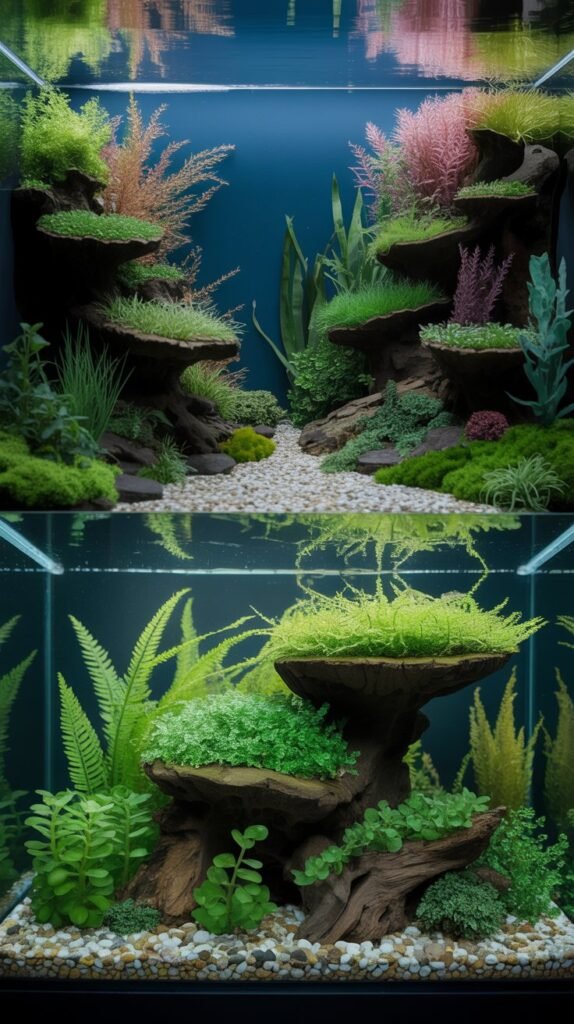
Floating plants are generally low-maintenance, but they require proper care to thrive. Here’s how to keep them healthy:
1. Lighting Requirements
- Most floating plants need moderate to high lighting.
- Too much light can cause excessive growth, while too little can make them wilt.
- Use full-spectrum LED aquarium lights for the best results.
2. Nutrient Needs
- Floating plants absorb nutrients directly from the water.
- Fertilizers with nitrogen, potassium, and micronutrients support healthy growth.
- Avoid overdosing fertilizers as they may harm fish.
3. Water Conditions
- Temperature: 72–82°F (22–28°C).
- pH: 6.0–7.5 (slightly acidic to neutral).
- Soft to moderately hard water is ideal.
4. Water Movement
- Gentle water flow is best.
- Strong currents can damage delicate floating plants or push them into filters.
- Use sponge filters or adjust flow to avoid disturbance.
5. Pruning and Maintenance
- Regularly remove excess growth to prevent plants from covering the entire surface.
- Thin them out to allow light penetration for submerged plants.
- Remove dead or decaying leaves to maintain water quality.
Common Problems with Floating Plants
While floating plants are hardy, aquarists may face some issues:
- Overgrowth: Species like duckweed grow very quickly and may cover the entire surface, blocking light.
- Nutrient Deficiency: Yellowing leaves or stunted growth indicate a lack of nutrients.
- Root Damage: Strong water currents or filter intakes may damage delicate roots.
- Mold or Algae on Roots: Excess nutrients can cause algae or fungal growth on plant roots.
Best Aquarium Setups for Floating Plants
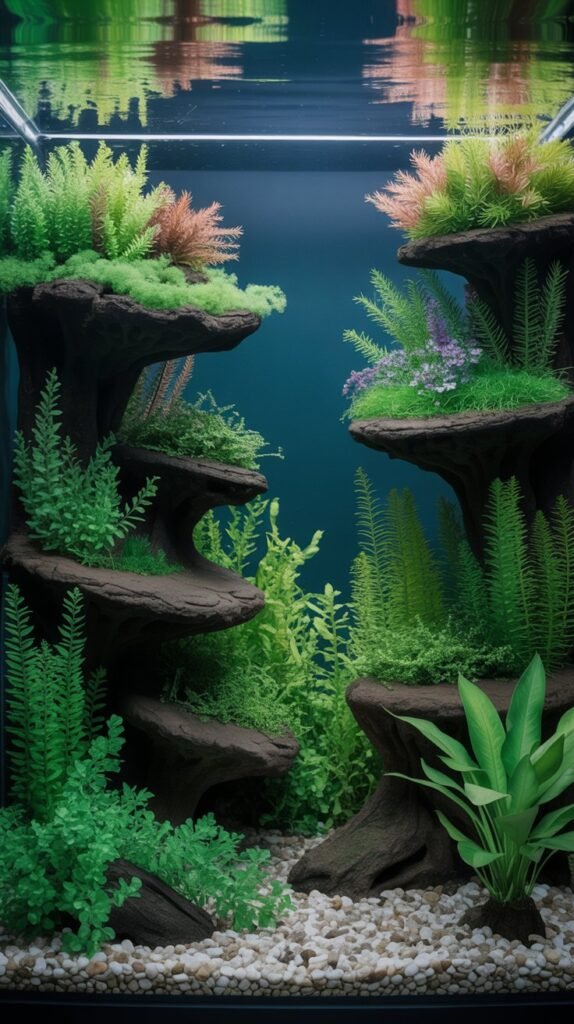
Floating plants are versatile and can fit into various aquarium setups:
1. Betta Fish Tanks
- Bettas love floating plants as they provide cover and calm environments.
- Frogbit, water lettuce, and red root floaters are excellent choices.
2. Community Tanks
- Floating plants provide hiding spots for fry and timid fish.
- Amazon frogbit and salvinia work well in community aquariums.
3. Shrimp Tanks
- Floating plants create safe zones for baby shrimp.
- Duckweed and moss-like floating species provide excellent cover.
4. Planted Aquascapes
- Floating plants add contrast and balance to aquascaped tanks.
- Red root floaters add striking color to green aquascapes.
Tips for Beginners
- Start with hardy species like Amazon frogbit or salvinia.
- Monitor plant growth and trim regularly.
- Ensure adequate nutrients without over-fertilizing.
- Adjust light intensity to balance plant and fish needs.
Conclusion
Aquarium floating plants are one of the best natural additions to any aquarium. They provide shade, improve water quality, reduce algae, and create a natural-looking environment for your fish. With proper care, these plants can thrive and transform your aquarium into a lush, healthy ecosystem. Whether you’re setting up a betta tank, a shrimp colony, or a community aquarium, floating plants will always be a valuable addition.
FAQs About Aquarium Floating Plants
Q1. Are floating plants good for aquariums?
Yes, floating plants are excellent for aquariums as they improve water quality, reduce algae growth, provide shelter, and enhance aesthetics.
Q2. Do floating plants need fertilizer?
While they absorb nutrients from fish waste, occasional liquid fertilizers help promote growth and prevent deficiencies.
Q3. Can floating plants survive in low light?
Some species, like salvinia, can tolerate low light, but most floating plants thrive in moderate to high light.
Q4. How do you prevent floating plants from covering the entire tank?
Regular trimming and surface skimmers help control overgrowth and ensure light reaches submerged plants.
Q5. Do floating plants oxygenate the water?
Yes, during photosynthesis they release oxygen, improving overall tank health.
Q6. Which floating plant is best for beginners?
Amazon frogbit and salvinia are easy to care for, making them ideal for beginners.
Q7. Can floating plants harm fish?
No, they are generally safe. However, excessive coverage can reduce oxygen at night and limit swimming space if not managed.