
 By weeebooo70@gmail.com
Carnivorous fish are some of the most fascinating, powerful, and visually striking aquatic species you can keep in an aquarium. Their sharp instincts, predatory behavior, and unique feeding habits set them apart from other aquarium fish. Whether you’re an experienced aquarist or someone planning to explore the world of carnivorous aquatic pets, understanding their needs is essential for maintaining a healthy, stress-free environment.
This comprehensive guide covers everything you need to know about carnivorous fish—what they are, popular species, feeding habits, aquarium requirements, tank mates, health care, breeding behavior, and expert tips. With the right knowledge, you can create a thriving habitat where these spectacular predators can live comfortably.
What Are Carnivorous Fish?
Carnivorous fish are species that primarily consume animal-based foods. Unlike herbivorous or omnivorous fish, they rely on protein-rich diets consisting of:
- Smaller fish
- Invertebrates
- Worms
- Crustaceans
- Insects
- Prepared carnivore pellets and frozen foods
These fish often display hunting instincts and possess physical adaptations such as strong jaws, sharp teeth, rapid swimming abilities, and a strategic feeding style.
Carnivorous fish can be found in freshwater, brackish, and marine environments. Each species displays unique behaviors and dietary needs, making them exciting but demanding aquarium pets.
Why People Keep Carnivorous Fish in Aquariums
Carnivorous fish are popular among hobbyists because they offer:
1. Fascinating Predatory Behavior
Watching carnivorous fish stalk, chase, or strike their prey can be an exciting and educational experience.
2. Unique Body Shapes and Features
Many carnivorous species have impressive colors, large jaws, muscular bodies, or elongated fins.
3. Strong Personality
Carnivorous fish tend to be intelligent, aware of their surroundings, and responsive to their owners.
4. A Challenge for Experienced Aquarists
These species require careful care, making them appealing for advanced hobbyists who want something beyond common community fish.
Popular Types of Carnivorous Fish for Aquariums
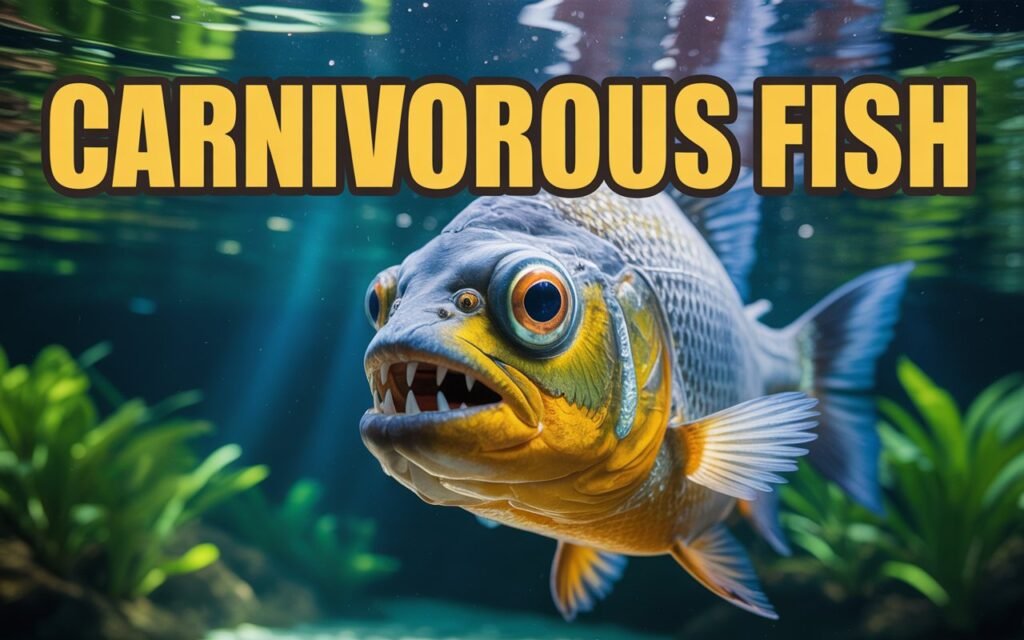
There are many carnivorous fish suitable for aquariums—ranging from small predatory species to huge, tank-dominating giants.
1. Betta Fish (Siamese Fighting Fish)
Although small, bettas are natural carnivores that feed on insects and larvae.
2. Arowanas
Known for their majestic appearance and aggressive hunting style, arowanas are surface predators.
3. Piranhas
Fierce, fast, and powerful, piranhas are iconic carnivorous fish often kept in large species-only tanks.
4. Oscar Fish
Oscars are intelligent, interactive, and require a high-protein diet.
5. African Cichlids
Many species of African cichlids have carnivorous tendencies, feeding on insects and smaller fish.
6. Lionfish (Saltwater)
A stunning marine species with venomous spines and incredible predatory skills.
7. Snakeheads
Large, aggressive, and powerful hunters suitable only for advanced aquarists.
8. Peacock Bass
A popular predatory fish known for fast growth and a huge appetite.
9. Archerfish
Famous for shooting water jets at insects to make them fall into the water.
10. Wolf Fish
A fierce species with a reputation for being extremely territorial and predatory.
These fish vary in size, temperament, and tank requirements, so it’s essential to choose species that match your skill level and available space.
Natural Diet of Carnivorous Fish
Carnivorous fish thrive on high-protein animal-based foods. Their natural diet may include:
- Small fish
- Shrimp
- Insects
- Bloodworms
- Earthworms
- Crustaceans
- Snails
- Fish larvae
- Amphibians (for very large predators)
In captivity, this diet must be replicated for proper growth, energy, and coloration.
Best Foods to Feed Carnivorous Fish in Aquariums
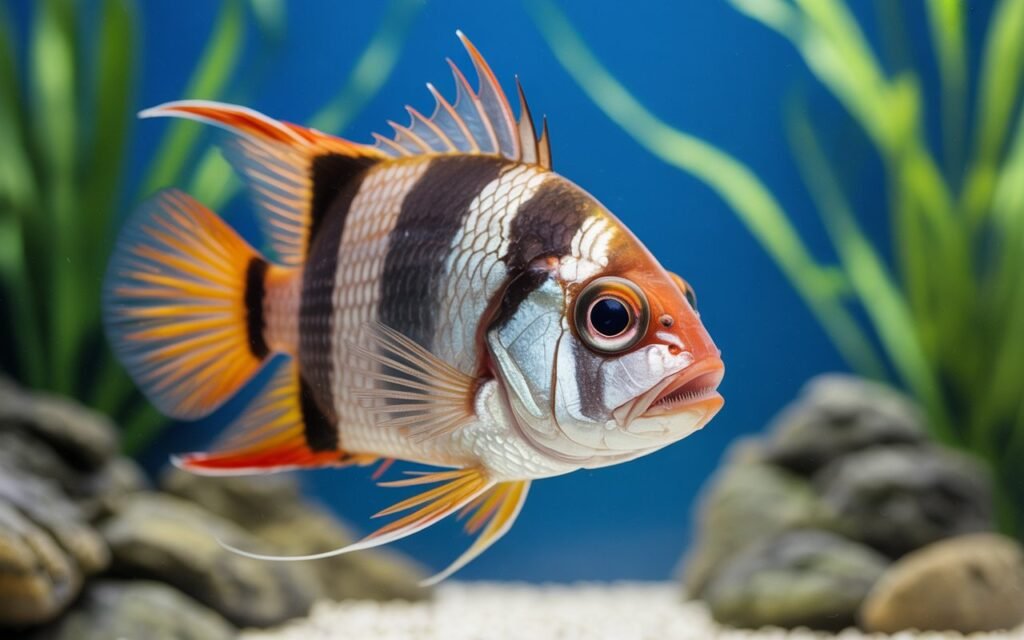
1. Live Foods
Live foods stimulate natural hunting behavior.
Examples:
- Guppy fry
- Live shrimp
- Feeder fish (only high-quality, quarantined)
- Live worms
- Insects (crickets, roaches)
2. Frozen Foods
A safe and nutritious option, frozen foods reduce disease risk.
Popular choices:
- Frozen bloodworms
- Frozen brine shrimp
- Frozen krill
- Mysis shrimp
- Silversides
3. Prepared Carnivore Pellets
High-quality pellets ensure balanced nutrition. These pellets contain:
- Fish meal
- Shrimp meal
- Marine proteins
- Healthy fats
4. Freeze-Dried Foods
Convenient and long-lasting options such as freeze-dried krill or tubifex worms.
5. Meat Options (Occasionally)
Some large carnivores accept:
- Raw fish
- Chicken heart
- Mussels
Avoid feeding:
- Raw beef
- Pork
- Processed meats
These foods are difficult to digest and can pollute the tank.
Feeding Frequency for Carnivorous Fish
The feeding schedule depends on the species and age:
Juveniles
- Eat 2–3 times daily
- Require higher protein for growth
Adults
- Eat once daily or every other day
- Overfeeding may cause obesity and pollution
Large Predators
- Often fed every 2–3 days
Carnivorous fish should only be given what they can finish within a few minutes.
Aquarium Setup for Carnivorous Fish
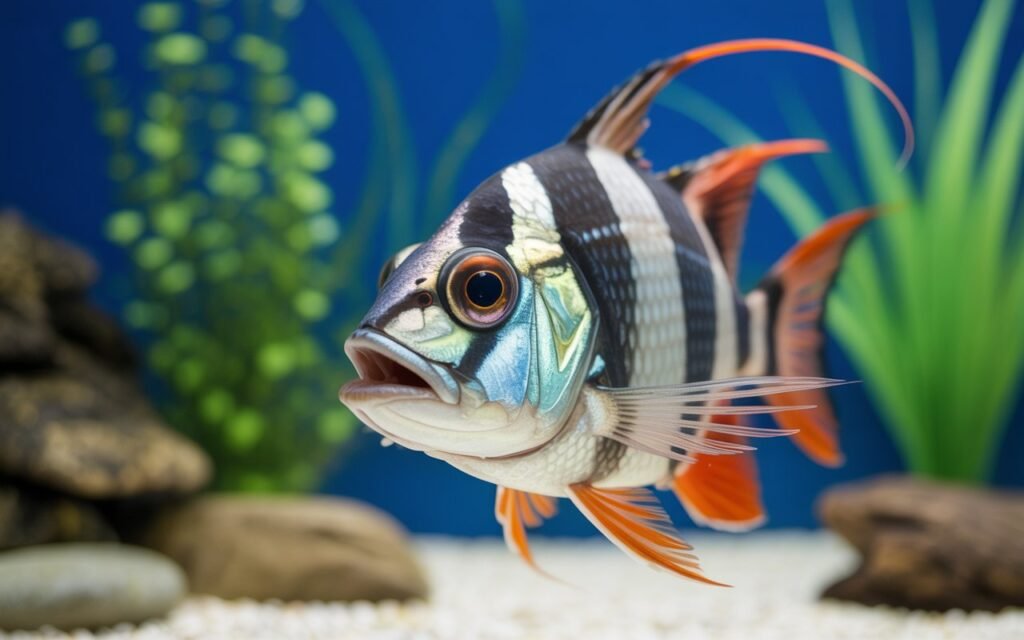
Keeping carnivorous species requires a carefully planned aquarium environment.
1. Tank Size
Carnivorous fish often grow large and need swimming space.
- Small carnivores: 20–40 gallons
- Medium species like Oscars: 75–125 gallons
- Large predators like Arowana: 250+ gallons
2. Water Parameters
Clean and stable water is essential. Most carnivores prefer:
- Temperature: 24–30°C (75–86°F)
- pH: 6.0–7.8 (species dependent)
- Ammonia & nitrite: 0 ppm
- Nitrate: <20 ppm
3. Strong Filtration
Carnivorous fish produce heavy waste. Use:
- Canister filters
- Sumps
- Internal power filters
Mechanical, chemical, and biological filtration must be strong enough to support protein-rich diets.
4. Oxygenation
Carnivorous fish require proper aeration.
Use:
- Air pumps
- Surface agitation
- Powerheads
5. Decorations and Hiding Spaces
Many carnivorous fish prefer structured environments with:
- Rocks
- Driftwood
- Dense plants (if compatible)
- Caves or PVC hiding tubes
6. Lighting
Moderate lighting is best as many carnivores prefer dim or natural lighting.
Tank Mates for Carnivorous Fish
Carnivorous fish can be aggressive, so tank mates must be chosen carefully.
Suitable Tank Mates
- Similarly sized or larger fish
- Robust species
- Fast swimmers
- Semi-aggressive cichlids
Tank Mates to Avoid
- Small community fish
- Slow fish with long fins
- Shrimp
- Snails
- Juvenile fish
As a rule: If it fits in their mouth, they will eat it.
Some carnivores are strictly solitary and should be kept alone.
Behavior of Carnivorous Fish
Carnivorous fish exhibit unique and interesting behaviors:
1. Territorial Aggression
They defend their territory and attack other fish that enter it.
2. Hunting Instincts
They may stalk prey before attacking.
3. Intelligent Feeding Patterns
Many carnivores “recognize” their owners during feeding time.
4. Hierarchy Formation
In groups, dominant individuals maintain control through displays or aggression.
Health Issues in Carnivorous Fish
Carnivorous species can suffer from certain health problems, especially when their dietary or environmental needs are not met.
1. Bacterial Infections
Often caused by dirty water or injuries.
2. Parasitic Diseases
Common parasites include ich and flukes.
3. Digestive Issues
Feeding too much fatty meat may cause bloating or constipation.
4. Nutritional Deficiencies
This occurs when feeding only one type of food (e.g., only feeder fish).
5. Stress
Stress arises from improper tank mates, low water quality, or frequent disturbances.
Breeding Carnivorous Fish
Breeding carnivorous fish can be challenging due to their aggressive nature.
Factors Needed for Breeding
- Large, separate breeding tanks
- Perfect water conditions
- High-quality diet
- Carefully matched pairs
Some species like cichlids breed readily, while others like arowanas require huge ponds or specialized conditions.
Tips for Keeping Carnivorous Fish Successfully
- Provide the largest tank possible.
- Use strong, high-quality filtration.
- Feed a varied protein-rich diet.
- Avoid cheap feeder fish to prevent disease.
- Keep the water clean and parameters stable.
- Research each species before purchasing.
- Avoid overcrowding and incompatible tank mates.
- Provide plenty of hiding places and swimming space.
- Monitor health regularly.
Frequently Asked Questions (FAQs)
1. Are carnivorous fish hard to keep?
Some carnivorous fish are easy to care for, while others require large tanks, strong filtration, and specialized diets.
2. Can carnivorous fish eat feeder fish?
Yes, but only high-quality, quarantined feeder fish should be used. Poor-quality feeders can cause diseases.
3. Can I keep small fish with carnivores?
No. Carnivorous fish will eat any fish small enough to fit in their mouth.
4. What is the best food for carnivorous aquarium species?
A combination of live, frozen, freeze-dried foods and high-quality carnivore pellets ensures a balanced diet.
5. Do carnivorous fish grow fast?
Yes. Many predatory fish grow faster than community fish due to their protein-rich diets.
6. Do carnivorous fish need more filtration?
Absolutely. These fish produce a lot of waste and require strong, efficient filtration systems.
7. Can carnivorous fish live with plants?
Some species can, but large predators may uproot or damage plants. Hardy plants are recommended.
8. Do carnivorous fish bite humans?
Most small species won’t harm humans, but large predators like piranhas and snakeheads can bite if threatened.
9. What tank size is best for large carnivores?
Large species may require 150–300+ gallon tanks depending on their adult size.
10. Are carnivorous fish suitable for beginners?
Some small predators like bettas are beginner-friendly, but many large carnivorous fish are best for advanced aquarists.