
 By weeebooo70@gmail.com
Setting up the perfect guppy tank is the foundation for healthy, colorful, and active fish. Guppies are hardy and beginner-friendly, but they thrive best in a properly planned aquarium environment. A well-designed guppy tank setup improves lifespan, enhances color, supports breeding, and prevents common diseases.
In this complete guide, you will learn everything about guppy tank setup including tank size, equipment, water parameters, decoration, filtration, maintenance, and advanced breeding layouts. Whether you are starting your first aquarium or upgrading to a professional breeding system, this guide covers it all.
Understanding Guppies Before Setting Up the Tank
The common guppy, scientifically known as Poecilia reticulata, is a small tropical freshwater fish native to South America. They are livebearers, meaning they give birth to free-swimming fry instead of laying eggs.
Because guppies are active swimmers and prolific breeders, the tank setup must provide:
• Stable water conditions
• Gentle filtration
• Adequate swimming space
• Hiding spots for fry
• Balanced male-to-female ratio
Planning these factors from the beginning ensures long-term success.
Choosing the Right Tank Size
Many beginners ask, “What is the ideal tank size for guppies?”
Minimum Tank Size
A 10-gallon tank is recommended for a small group of 5 to 6 guppies.
Ideal Tank Size
A 20-gallon tank provides better water stability and space for breeding.
Larger Tanks
Bigger aquariums are easier to maintain because water parameters remain more stable.
A common mistake is overcrowding. Always follow a responsible stocking rule and leave space for future fry.
Essential Equipment for Guppy Tank Setup
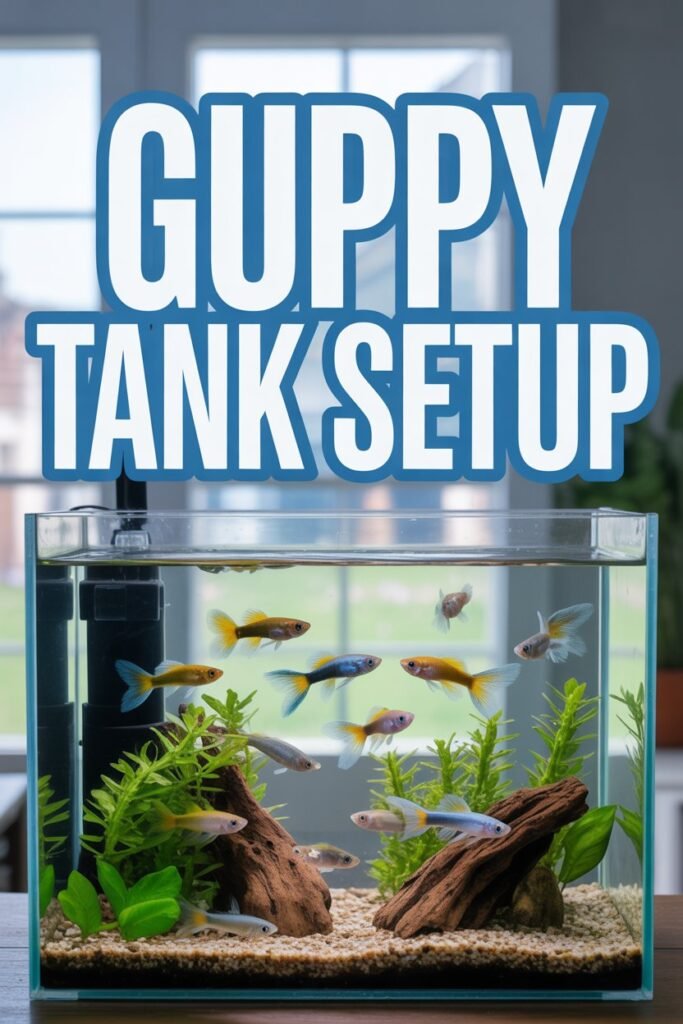
A proper guppy tank requires basic but reliable equipment.
1. Aquarium Filter
Choose a sponge filter or gentle hang-on-back filter. Guppies prefer mild water flow. Strong currents can stress them and damage large decorative tails.
2. Heater
Maintain water temperature between 24°C and 28°C. A reliable adjustable heater is essential in most climates.
3. Lighting
Moderate LED lighting enhances guppy coloration and supports plant growth.
4. Thermometer
Helps monitor temperature consistency.
5. Water Conditioner
Removes chlorine and harmful chemicals from tap water.
Ideal Water Parameters for Guppies
Maintaining correct water chemistry prevents stress and disease.
| Parameter | Ideal Range |
|---|---|
| Temperature | 24°C – 28°C |
| pH | 6.8 – 7.8 |
| Hardness | 8 – 12 dGH |
| Ammonia | 0 ppm |
| Nitrite | 0 ppm |
| Nitrate | Below 20 ppm |
Stable water is more important than exact numbers. Sudden fluctuations can harm guppies.
Substrate Options for Guppy Tanks
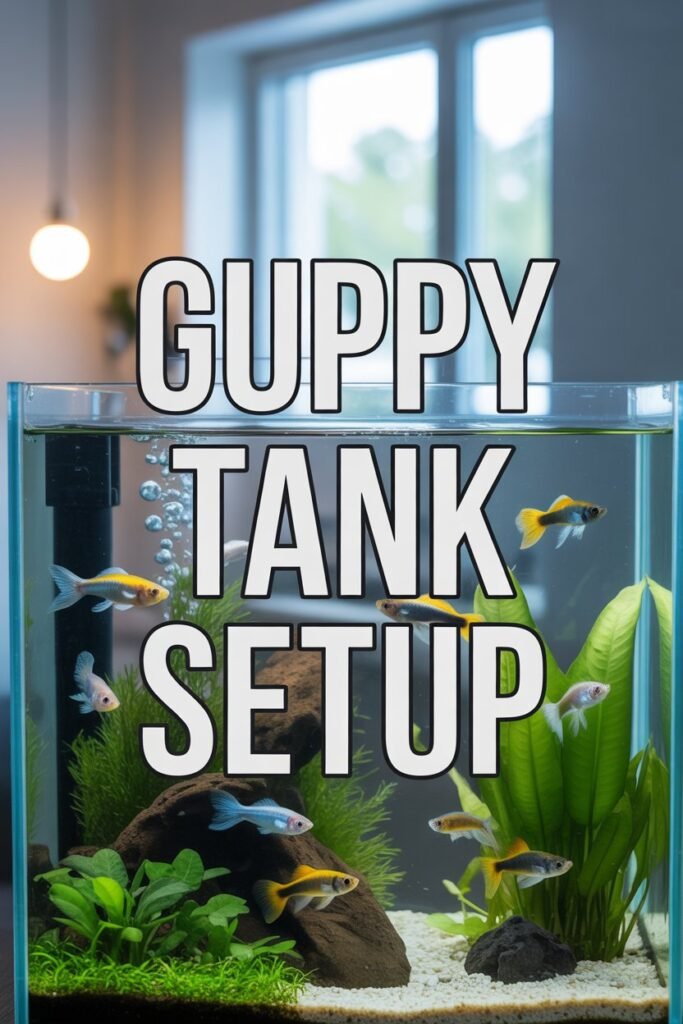
Choosing the right substrate affects aesthetics and plant growth.
Gravel
Easy to clean and beginner-friendly.
Sand
Provides a smooth look and is safe for bottom dwellers.
Planted Substrate
Best for heavily planted aquariums.
Dark substrates often enhance guppy coloration by creating visual contrast.
Live Plants vs Artificial Decorations
Live plants offer multiple benefits:
• Improve water quality
• Provide hiding spots
• Support fry survival
• Reduce stress
Popular live plants for guppy tanks include:
• Java Moss
• Anubias
• Guppy Grass
• Amazon Sword
Artificial plants can also be used but should have soft edges to avoid tearing fins.
Cycling the Tank Before Adding Guppies
Never add guppies to an uncycled tank.
Cycling establishes beneficial bacteria that break down ammonia into safer compounds. This process takes 2 to 4 weeks.
During cycling:
Test ammonia and nitrite levels regularly.
Do not add fish until ammonia and nitrite are zero.
Skipping this step is one of the biggest beginner mistakes.
Setting Up a Breeding Guppy Tank
If your goal is breeding, consider a dedicated setup.
Breeding Tank Size
10 to 20 gallons.
Male-to-Female Ratio
1 male for every 2 to 3 females.
Add floating plants to protect fry.
Use sponge filters to prevent fry from being sucked in.
Separate fry into a grow-out tank if you want maximum survival rates.
Community Guppy Tank Setup
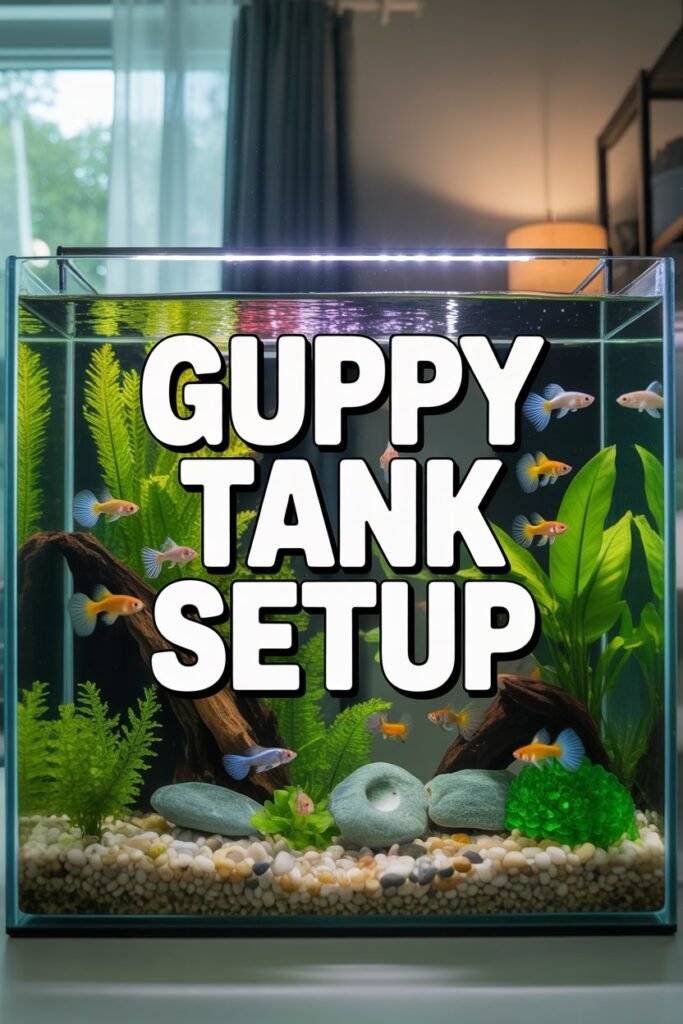
Guppies are peaceful and can live with compatible fish such as:
• Mollies
• Platies
• Corydoras
• Small tetras
Avoid aggressive fish or fin nippers.
Ensure the tank is not overcrowded and maintain strong filtration capacity.
Aquascaping Ideas for Guppy Tanks
A visually appealing tank enhances both fish health and room aesthetics.
Natural Planted Style
Dense greenery with open swimming areas.
Minimalist Setup
Dark background with simple decor to highlight fish colors.
Breeder Style Tank
Bare bottom with sponge filter for easy cleaning.
Choose a layout that matches your goals: decorative display or breeding efficiency.
Maintenance Routine for Guppy Tank
Consistent maintenance keeps guppies healthy.
Weekly Tasks
Change 20 to 30 percent of the water.
Vacuum substrate lightly.
Clean glass if needed.
Monthly Tasks
Rinse filter media in tank water.
Inspect heater and equipment.
Never wash filter media in tap water as it kills beneficial bacteria.
Common Mistakes in Guppy Tank Setup
Overcrowding
Leads to stress and poor water quality.
Overfeeding
Causes ammonia spikes.
No Heater
Temperature fluctuations weaken immune systems.
Mixing Aggressive Fish
Results in torn fins and stress.
Avoiding these mistakes ensures long-term success.
Advanced Guppy Tank Tips
For experienced aquarists:
Use separate tanks for different guppy strains.
Maintain detailed breeding records.
Install drip acclimation systems for sensitive imports.
Use color-enhancing diets for show-quality guppies.
Advanced setups often focus on genetics, fin symmetry, and color stability.
How Many Guppies Can Fit in One Tank?
As a general rule:
10 gallons: 5 to 6 guppies
20 gallons: 10 to 15 guppies
Adjust based on filtration capacity and maintenance schedule.
Can Guppies Live Without a Filter?
Technically possible in heavily planted tanks, but not recommended for beginners. Filtration ensures water clarity and toxin removal.
Ideal Tank Layout Example
Bottom: Dark gravel
Mid-level: Dense plants
Surface: Floating plants
Equipment: Sponge filter and heater
Lighting: Moderate LED
This setup supports breeding, health, and vibrant coloration.
Conclusion
A successful guppy tank setup combines proper planning, stable water parameters, suitable equipment, and consistent maintenance. Guppies are hardy and forgiving, but they truly flourish in well-maintained environments.
Whether you are setting up a simple 10-gallon beginner tank or a professional breeding system, focusing on water quality, gentle filtration, and balanced stocking will reward you with vibrant, active, and long-living guppies.
Frequently Asked Questions
What is the best tank size for guppies?
A 10-gallon tank is the minimum, but 20 gallons is ideal for stability.
Do guppies need a heater?
Yes, to maintain a stable temperature between 24°C and 28°C.
How long should I cycle my guppy tank?
Typically 2 to 4 weeks until ammonia and nitrite reach zero.
Can I keep only male guppies?
Yes, but avoid overcrowding and monitor for minor dominance behavior.
How often should I change water in a guppy tank?
Change 20 to 30 percent weekly.
Do guppies need live plants?
Not mandatory, but highly recommended for health and fry protection.
Can guppies live in small bowls?
No, bowls lack filtration and stable water conditions.
How many guppies should I start with?
Start with 5 to 6 guppies in a 10-gallon tank for balanced social interaction.