
 By weeebooo70@gmail.com
Guppies are among the most popular aquarium fish in the world. Known for their bright colors, playful behavior, and easy care, they make an excellent choice for both beginners and experienced aquarists. One of the most common questions new owners ask is: How long does a guppy fish live?
Understanding guppy lifespan helps you create a healthy and stable environment so your fish not only survive but thrive. While guppies are small and delicate, with proper care they can live longer than many aquarists expect.
This comprehensive guide explains average guppy lifespan, factors that influence it, how to extend their life, common mistakes to avoid, and additional care tips to keep your guppies healthy for years.
Average Lifespan of Guppy Fish
On average, guppy fish live between 2 to 3 years in a home aquarium. However, this range can change depending on genetics, diet, water quality, stress levels, and overall care.
Here is a quick breakdown:
| Guppy Type | Lifespan (Average) |
|---|---|
| Standard Fancy Guppy | 2–3 years |
| Wild-Type Guppy | 3–5 years |
| Show-Grade Guppy | 1.5–2 years |
| Endler’s Guppy | 2–3 years |
| Hybrid Guppy | 1.5–2.5 years |
Fun fact: In perfect conditions, some guppies have been known to live up to 5 years, although this is rare.
Why Guppy Fish Don’t Live Long in Some Aquariums

Although guppies have the potential to live much longer, many survive only a few months because of poor care. Common causes of early death include:
- Poor water quality
- Incorrect temperature
- Overfeeding or low-quality food
- Stress from aggressive tank mates
- Weak genetics (especially in fancy strains)
- Sudden water parameter changes
- Overbreeding exhaustion in females
Avoiding these mistakes is key to helping your guppies reach their full lifespan.
Factors That Affect Guppy Lifespan
1. Water Quality
Water quality is the most important factor. Guppies require clean, stable water conditions.
Ideal Water Parameters for Guppies
- Temperature: 24–28°C (75–82°F)
- pH: 6.8–7.8
- GH (Hardness): 8–12 dGH
- Ammonia: 0 ppm
- Nitrite: 0 ppm
- Nitrate: Below 20–30 ppm
Even small spikes in ammonia or nitrite can shorten your guppy’s life drastically.
2. Genetics
Modern fancy guppies are selectively bred for beauty. This sometimes weakens their immune system and reduces lifespan. Wild guppies and Endlers usually live longer because they have stronger genetics.
Buying guppies from a reputable breeder can significantly improve lifespan.
3. Diet and Nutrition
A balanced diet ensures proper growth, strong immunity, and long life. Guppies are omnivores and need protein as well as plant material.
Healthy Foods for Guppies
- High-quality flake or pellet food
- Live foods (brine shrimp, mosquito larvae, daphnia)
- Frozen foods
- Vegetables (blanched spinach, peas)
- Spirulina
Feed small amounts 2–3 times a day. Overfeeding can cause bloating, fat buildup, and water pollution — all of which shorten lifespan.
4. Stress Levels
Stress is one of the biggest reasons guppies die early. Major causes of stress include:
- Overcrowded aquariums
- Aggressive tank mates (bettas, barbs, cichlids)
- Sudden temperature changes
- Loud noises or frequent disturbance
- Poor lighting conditions
Reducing stress can significantly increase guppy lifespan.
5. Tank Size
Many beginners place guppies in very small bowls, which leads to quick death. Guppies need space to swim and establish their territory.
Recommended Tank Size
- Minimum: 10 gallons for small colonies
- Ideal: 20 gallons for stable populations
- Larger tanks = longer lifespan
6. Male-to-Female Ratio
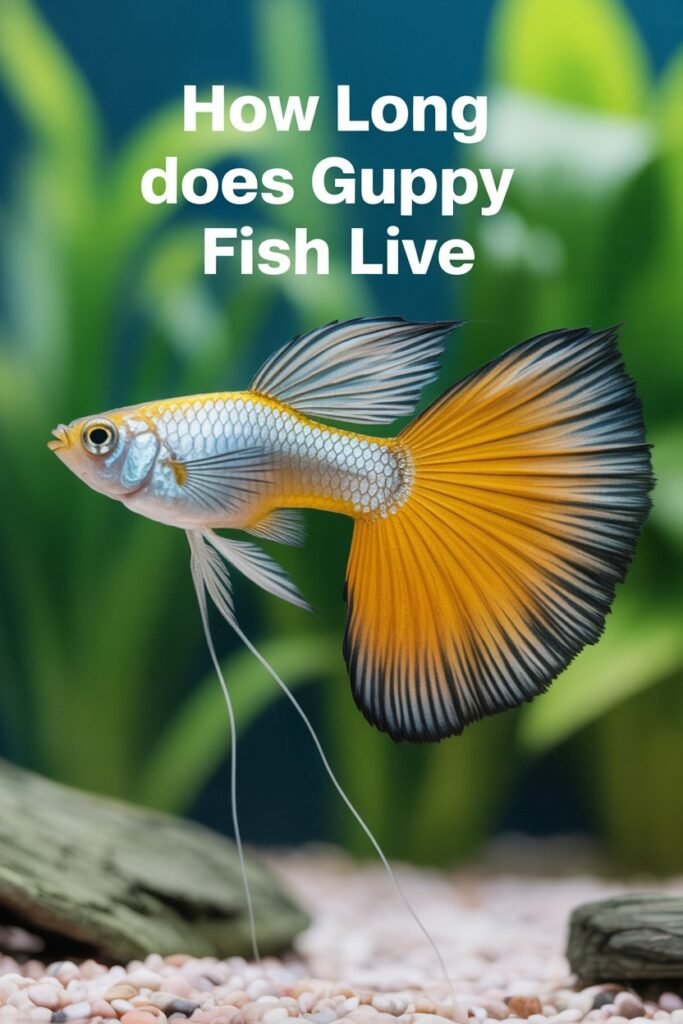
Guppy males constantly chase females to breed. Too many males can stress females, reducing their lifespan.
Best Ratio
- 1 male : 2–3 females
This prevents female exhaustion and ensures a peaceful environment.
7. Disease and Parasites
Common guppy diseases include:
- Fin rot
- Velvet
- Ich (white spot disease)
- Internal parasites
- Columnaris
- Dropsy
Healthy water conditions and quarantine practices can prevent these issues and extend lifespan.
Life Stages of a Guppy
Understanding each stage helps you care for guppies better.
1. Fry (0–6 weeks)
Tiny and fragile. Needs clean water, hiding spots, and nutrient-rich food.
2. Juvenile (6 weeks–6 months)
Rapid growth stage. Good diet and stable parameters support long-term health.
3. Adult (6 months–2 years)
Peak breeding stage. Females may give birth monthly.
4. Senior (2+ years)
Slower movement, faded color, and increased disease risk. Proper care can help them live comfortably.
How to Increase Guppy Lifespan
1. Maintain Perfect Water Quality
Perform regular maintenance:
- 25–30% water changes weekly
- Clean filter sponges
- Vacuum substrate
- Test water regularly
Clean water = long life.
2. Provide a High-Quality Diet
Include variety to boost immunity. Avoid excessive dry foods.
3. Avoid Overcrowding
More fish means more waste and more stress.
4. Choose Peaceful Tank Mates
Compatible tank mates include:
- Mollies
- Platies
- Corydoras
- Otocinclus
- Tetras (peaceful species)
Avoid aggressive or fin-nipping fish.
5. Maintain Proper Temperature
A heater is important, especially in colder climates. Sudden drops in temperature can kill guppies overnight.
6. Add Live Plants
Plants help improve:
- Water quality
- Oxygen levels
- Hiding spaces
- Natural comfort
Good plants for guppies:
- Java moss
- Hornwort
- Water sprite
- Anubias
- Floating plants
7. Avoid Overbreeding Stress
Female guppies constantly pregnant become weak. Ensure proper male-female ratio.
8. Quarantine New Fish
Prevent diseases from entering your main tank.
9. Use High-Quality Salt (Optional)
Aquarium salt boosts immunity when used correctly — but never overuse.
Signs Your Guppy Is Getting Old
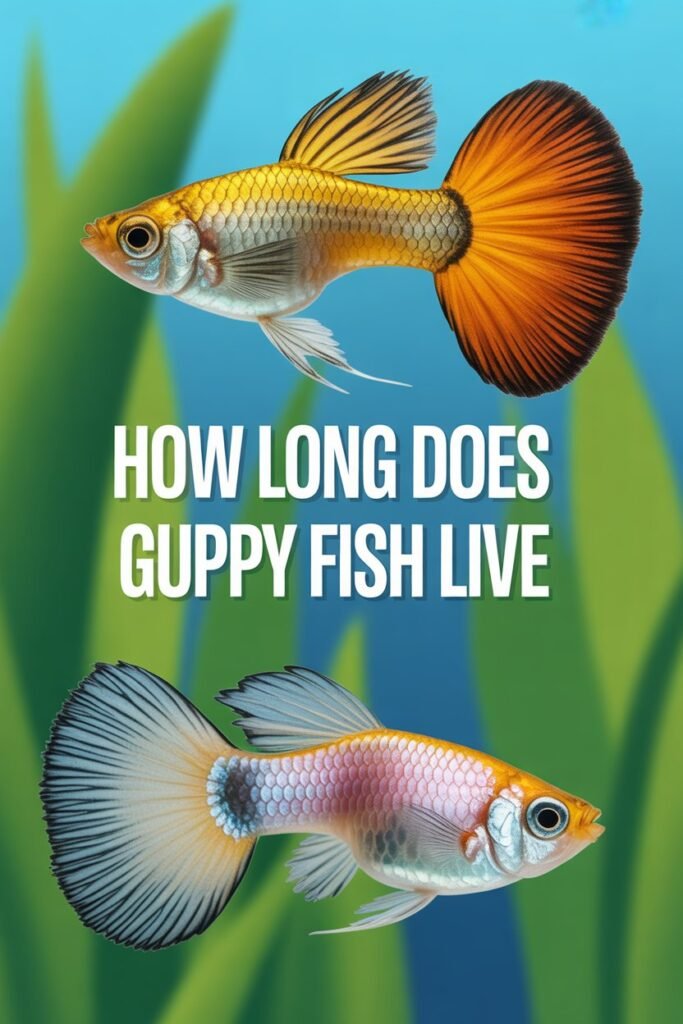
Just like humans, guppies show signs of aging:
- Faded or dull colors
- Slower swimming
- Curved spine
- Reduced appetite
- More time spent resting
- Weaker immune system
Older guppies need gentle, stable conditions to stay comfortable.
Common Mistakes That Shorten Guppy Lifespan
- Keeping guppies in bowls
- Overstocking tanks
- Skipping water changes
- Sudden temperature changes
- Mixing them with aggressive fish
- Buying weak stock from pet shops
- Using uncycled aquariums
- Overfeeding
Avoiding these mistakes alone can double your guppy’s lifespan.
Do Female Guppies Live Longer Than Males?
In many cases, females live slightly longer than males.
Reasons:
- Males have more colorful bodies and are more sensitive
- Males constantly chase females, increasing stress
- Males experience more energy drain
However, females can die early if stressed due to frequent pregnancies.
How Long Can Guppies Live Without Food?
Healthy adult guppies can survive 5–7 days without food, but fry must be fed daily. This can be useful when traveling, but not recommended regularly.
How Long Do Guppies Live in the Wild?
In the wild, guppies may live up to 1.5–2 years due to predators, food competition, and environmental changes. Domesticated guppies live longer with proper care.
Conclusion
So, how long does a guppy fish live?
Under good care, guppies typically live 2–3 years, but with excellent water quality, balanced diet, low stress, and strong genetics, they can live even longer.
If you create a clean, stable, and peaceful environment, your guppies will reward you with vibrant colors, active behavior, and a long, healthy life.
FAQs About Guppy Fish Lifespan
1. Can guppies live more than 3 years?
Yes, some guppies can live up to 4–5 years, but this requires excellent care and strong genetics.
2. Do male or female guppies live longer?
Females often live slightly longer, but both sexes can thrive with proper care.
3. Why is my guppy dying early?
Common reasons include poor water quality, stress, disease, sudden temperature changes, or weak genetics.
4. How long do guppy fry live?
With proper care, fry grow into adults within 6 months and can live 2–3 years.
5. Can guppies live in small bowls?
No. Bowls cause ammonia buildup, stress, and oxygen deficiency. A minimum 10-gallon tank is recommended.
6. How can I make my guppy live longer?
Maintain clean water, feed high-quality food, avoid overcrowding, and keep stable temperature.
7. Do guppies die after giving birth?
Not usually, but stressed or weak females may die. Proper care reduces this risk.
8. Why do fancy guppies have a shorter lifespan?
Selective breeding for large tails and bright colors sometimes weakens their genetics.