
 By admin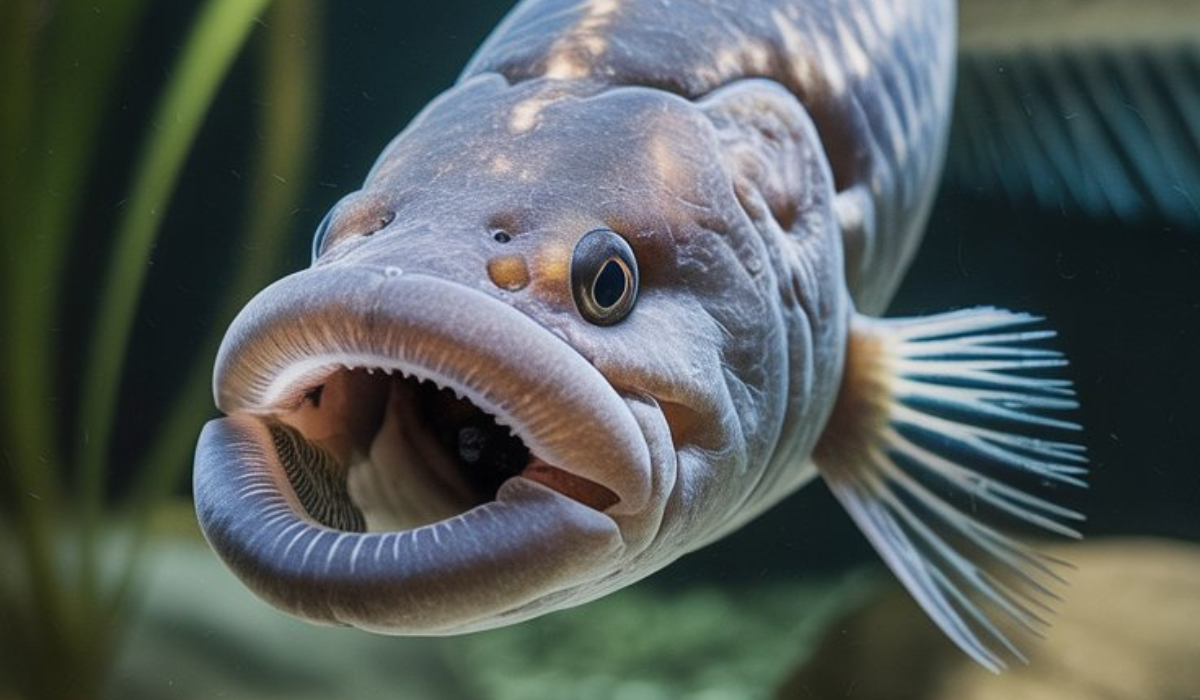
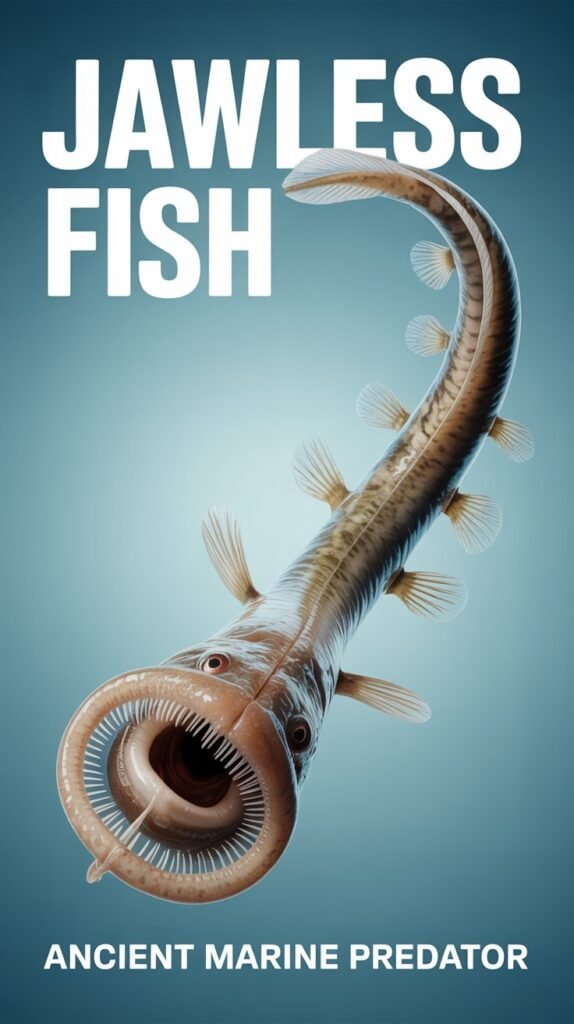
Jawless fish represent one of the most ancient and fascinating groups in the history of aquatic life. Long before sharks and bony fish existed, jawless fish ruled the oceans. They are primitive, vertebrate-like creatures that lack jaws, paired fins, and true bones. Although their modern representatives are very few, their evolutionary legacy continues to shape how scientists study early vertebrate development.
This long-form guide will take you deep into the world of jawless fish — their origins, unique body structure, lifestyle, ecological role, fossil history, and the two major living groups that still survive today.
What Are Jawless Fish?
Jawless fish are primitive vertebrates belonging to a group called Agnatha (Greek: “a” = without, “gnathos” = jaw). They are the earliest known vertebrates, dating back over 500 million years.
Defining Features
| Feature | Description |
|---|---|
| No jaws | They have round, sucker-like mouths |
| No paired fins | Unlike most fish, they lack side fins |
| Cartilaginous skeleton | Skeleton made of flexible cartilage instead of bone |
| No scales | Skin is smooth or slimy |
| Long, eel-like bodies | Adapted for burrowing or parasitic feeding |
| Gill openings | Multiple openings for breathing |
They are extremely different from modern fish but share some early vertebrate characteristics, making them key to understanding evolution.
The Evolutionary Importance of Jawless Fish
Jawless fish are the ancestors of all modern vertebrates, including:
✔ Bony fish
✔ Sharks
✔ Amphibians
✔ Reptiles
✔ Birds
✔ Mammals (including humans!)
They mark a major evolutionary step:
- Transition from simple chordates to vertebrates
- Development of a backbone-like structure
- Foundation of complex nervous and sensory systems
This makes them essential for studying how life evolved from oceans to advanced animals.
Types of Jawless Fish
Jawless fish are divided into two categories:
1️⃣ Living Jawless Fish (Extant Agnathans)
Only two groups survive today:
| Group | Example Species | Lifestyle |
|---|---|---|
| Hagfish (Myxini) | Atlantic hagfish, Pacific hagfish | Scavengers & burrowers |
| Lampreys (Petromyzontida) | Sea lamprey, Brook lamprey | Parasitic or filter-feeders |
These living species are often called Cyclostomes due to their circular mouths.
2️⃣ Extinct Jawless Fish (Fossil Agnathans)
Millions of years ago, many jawless fish existed but went extinct. The major fossil groups include:
| Group | Characteristics |
|---|---|
| Ostracoderms | Armored plates covering the head and body |
| Galeaspida | Unique helmet-like head shields |
| Anaspida | Streamlined, scale-covered bodies |
| Heterostraci | Bony head shields with no paired fins |
| Thelodonts | Tooth-like scales across the body |
These ancient species shaped vertebrate evolution and dominated early Paleozoic seas.
Living Jawless Fish in Detail
Hagfish
Hagfish are deep-sea, eel-like scavengers. They are sometimes called “slime eels” because they release huge amounts of slime when threatened.
Physical Features
| Trait | Description |
|---|---|
| Jawless circular mouth | Used to burrow into dead animals |
| Slimy body surface | Defense mechanism |
| Cartilaginous skull but no true vertebrae | Most primitive vertebrate form |
| One nostril | Used for both feeding and breathing |
Habitat
Deep ocean floors, especially around decaying carcasses.
Diet
Scavengers — they eat:
- Dead fish and whales
- Marine invertebrates
- Organic debris on sea floor
Ecological Role
They act as nature’s recycling system, cleaning the ocean by consuming dead matter.
Lampreys
Lampreys are slender, eel-like fish found in rivers and oceans. Many species are parasitic, attaching themselves to other fish.
Unique Traits
| Trait | Description |
|---|---|
| Round sucking mouth with teeth | Attaches to host fish and feeds on blood |
| Seven gill openings on each side | Visible breathing pores |
| Cartilaginous spine-like segments | More advanced than hagfish |
| Larvae called Ammocoetes | Live in freshwater and filter-feed |
Lifecycle
Lampreys have dramatic life stages:
- Eggs laid in freshwater
- Larvae filter-feed for years in riverbeds
- Adults migrate to large lakes or oceans
- Parasitic phase (for many species)
- Return to freshwater to spawn and die
This migration is similar to salmon, making lampreys important in ecological and scientific studies.
Differences Between Hagfish and Lampreys
| Feature | Hagfish | Lampreys |
|---|---|---|
| Vertebrae | Lacking true vertebrae | Rudimentary vertebrae |
| Feeding | Scavengers | Mostly parasitic |
| Habitat | Deep ocean | Rivers, lakes, and oceans |
| Defense | Produces slime | Has no slime, uses teeth for defense |
| Eyes | Very small / primitive | Well-developed eyes |
| Gill openings | Single opening | 7 pairs of openings |
General Anatomy of Jawless Fish
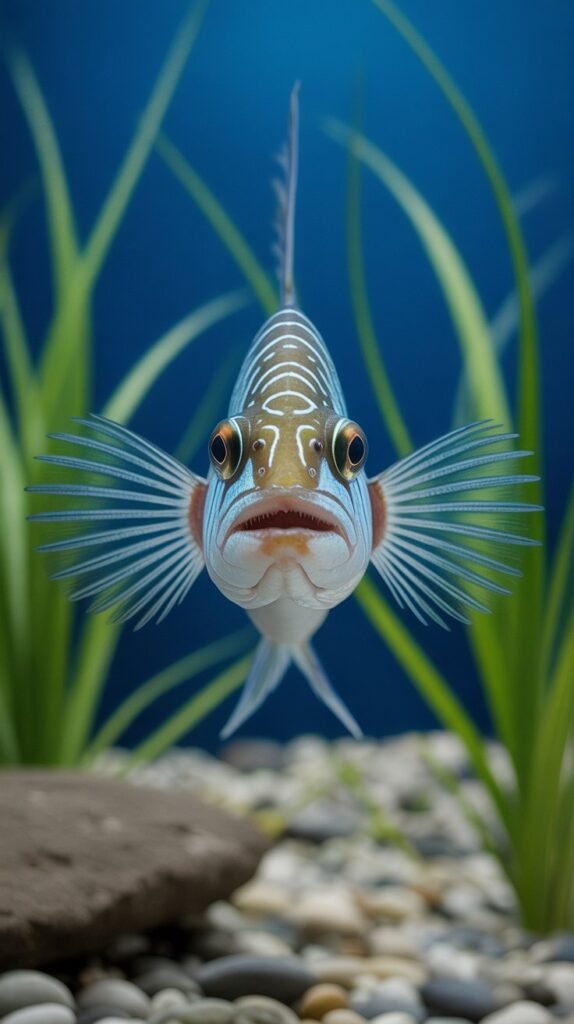
| Body Part | Description |
|---|---|
| Mouth | Jawless, circular, equipped with horny teeth |
| Skeleton | Made of cartilage |
| Skin | Smooth and scale-less |
| Fins | No paired fins, only tail fin |
| Notochord | Acts as a primitive backbone |
| Gills | Multiple slits for water breathing |
| Sense Organs | Nervous system similar to early vertebrates |
Their structure is simple yet effective for survival in primitive aquatic environments.
How Do Jawless Fish Eat?
Since they lack jaws, their feeding methods are unique:
???? Lampreys
Use a suction mouth with sharp teeth to latch onto other fish and drink blood.
???? Hagfish
Use rasping tongue-like structures to tear flesh from dead animals.
Neither can bite like jawed fish, yet their feeding systems allow them to survive and thrive.
Habitat & Distribution
Jawless fish inhabit:
- Deep oceans
- Coastal saltwater regions
- Freshwater rivers and lakes
- Muddy or sandy bottom environments
They are found in:
???? North America
???? Europe
???? Asia
???? Australia
???? Pacific Islands
Their widespread distribution shows how well-adapted they are to different aquatic ecosystems.
Behavior & Adaptation
Jawless fish show several survival adaptations:
| Adaptation | Benefit |
|---|---|
| Slime production (hagfish) | Escapes predators, clogs gills of attackers |
| Parasitism (lampreys) | Easy access to nutrient-rich blood |
| Burrowing | Protection in mud or sand |
| Sensory whiskers/touch receptors | Navigation in darkness |
| Lifecycle migration | Access to feeding and breeding habitats |
These behaviors help them survive despite lacking modern fish features.
Reproduction
Jawless fish reproduce through:
- External fertilization
- Laying eggs in nests or burrows
- No parental care after egg-laying
Lampreys migrate upstream for spawning and usually die after reproduction, while hagfish can reproduce multiple times over their lifespan.
Fossil History & Extinct Groups
Jawless fish dominated ancient seas during:
???? Cambrian Period (541 million years ago)
???? Ordovician & Silurian Periods
???? Devonian Period — “Age of Fishes”
Ancient types developed bony external armor plates, giving rise to the famous ostracoderms.
These early groups slowly evolved features like:
- Better fins
- Jaw structures
- Improved gill support
Eventually transforming into jawed vertebrates (Gnathostomes) — our ancestors!
Role in Ecosystem
Jawless fish contribute to:
???? Scientific research – model organisms for early vertebrate studies
♻ Ocean cleanup – hagfish recycle dead marine life
???? Food cycle – prey for sharks and larger fish
???? Population control – parasitic lampreys affect fish populations
Despite being small in number, they are essential for ecological balance.
Jawless Fish Vs. Jawed Fish (Gnathostomes)
| Feature | Jawless Fish | Jawed Fish |
|---|---|---|
| Jaws | No | Yes |
| Paired fins | No | Present |
| Skeleton | Mostly cartilage | Cartilage or bone |
| Lifestyle | Parasitic/Scavenger | Wide variety |
| Evolutionary age | Very ancient | More recent |
Jawed fish evolved from jawless ancestors — the biggest evolutionary leap in aquatic history.
Human Interaction & Importance
Humans rarely consume jawless fish, but they have value in:
- Medical research — studying evolution of immune and nervous systems
- Marine ecosystem protection
- Biomaterial research — hagfish slime may inspire future engineering products
- Fisheries science — controlling parasitic lampreys to protect commercial fish
Some regions try to control invasive lampreys because they harm important fish industries, especially in the Great Lakes (USA & Canada).
Threats & Conservation
Not all jawless fish are safe. They face:
⚠ Habitat destruction
⚠ Water pollution
⚠ Overfishing of host species
⚠ Climate change affecting river migration routes
Conservation programs help protect vulnerable lamprey populations while controlling invasive ones.
Fun Facts About Jawless Fish
- Jawless fish lived 100+ million years before dinosaurs
- Hagfish can fill a bucket with slime in minutes
- Lampreys have existed with minimal changes for over 360 million years
- Ammocoete larvae can live buried in mud for 5–7 years
- Hagfish can tie themselves into knots to remove slime from their bodies
Their unusual traits make them some of the strangest creatures in aquatic biology.
Complete Classification of Jawless Fish
| Level | Classification |
|---|---|
| Kingdom | Animalia |
| Phylum | Chordata |
| Subphylum | Vertebrata (or Craniata) |
| Class | Myxini (Hagfish), Petromyzontida (Lampreys), plus extinct groups |
This classification may appear in variations depending on scientific updates.
Why Are Jawless Fish Still Important?
Despite being ancient and primitive, modern jawless fish help scientists:
???? Understand vertebrate evolution
???? Study early brain development
???? Explore immune system origins
???? Preserve biodiversity
They are living windows into the early development of animals with backbones.
Frequently Asked Questions (FAQs)
Q1. What is a jawless fish?
A jawless fish is an ancient type of vertebrate that lacks jaws, paired fins, and true bones. Hagfish and lampreys are the only living examples.
Q2. What are the two main types of living jawless fish?
The two types are hagfish and lampreys.
Q3. Do jawless fish have backbones?
They have a notochord, a flexible rod-like structure instead of a true backbone. Lampreys have partial vertebrae, but hagfish do not.
Q4. How do jawless fish eat without jaws?
Hagfish scrape flesh using a tongue-like structure, while lampreys suck blood from other fish.
Q5. Are jawless fish harmful?
Hagfish are harmless, but parasitic lampreys can harm commercial fish populations in certain waters.
Q6. Where do jawless fish live?
They live in oceans, lakes, and rivers worldwide — especially deep sea environments and freshwater breeding areas.
Q7. Which extinct jawless fish had body armor?
Ostracoderms were armored jawless fish covered in bony plates.
Q8. Why are jawless fish important in evolution?
They were the first vertebrates, making them the ancestors of all jawed animals, including humans.
Conclusion
Jawless fish are living evidence of the earliest chapter of vertebrate evolution. Although only a handful survive today, their ancient ancestors once dominated Earth’s waters. Their strange features, survival skills, and scientific value make them among the most intriguing creatures found in aquatic biology.
By understanding jawless fish, we better understand where we — as vertebrates — came from. These remarkable animals may look simple, but they hold the secrets of how life transformed into the rich diversity we see today.