
 By admin
Choosing the best aquarium filter is one of the most important decisions for any fish keeper. A filter is not just an accessory—it is the life-support system of your aquarium. Without proper filtration, waste builds up quickly, water quality drops, and fish become stressed or sick.
The best aquarium filter keeps water clean, removes toxins, supports beneficial bacteria, and creates a healthy, stable environment for fish and plants. However, the “best” filter is not the same for every aquarium. Tank size, fish type, stocking level, and setup style all matter.
This in-depth guide explains all types of aquarium filters, how they work, their pros and cons, and how to choose the best aquarium filter for your specific needs.
What Is an Aquarium Filter?
An aquarium filter is a device that cleans aquarium water by removing physical debris, breaking down toxic waste, and improving oxygen levels. The best aquarium filter performs three essential functions:
- Mechanical filtration – removes solid waste
- Biological filtration – detoxifies ammonia and nitrite
- Chemical filtration – removes dissolved impurities
A good filter maintains clear water and protects fish health.
Why Choosing the Best Aquarium Filter Matters
1. Fish Health
Clean water reduces stress and disease.
2. Stable Water Parameters
Filters prevent dangerous ammonia spikes.
3. Clear, Odor-Free Water
Proper filtration improves visibility and smell.
4. Reduced Maintenance
Efficient filters mean fewer problems.
5. Long-Term Aquarium Success
A good filter supports a stable ecosystem.
Types of Aquarium Filtration
Before choosing the best aquarium filter, it’s important to understand filtration types.
Mechanical Filtration
Removes:
- Fish waste
- Uneaten food
- Plant debris
Common media:
- Sponge
- Filter floss
- Pads
Biological Filtration
The most important filtration type.
Converts:
- Ammonia → Nitrite → Nitrate
Media includes:
- Ceramic rings
- Bio balls
- Sponges
Chemical Filtration
Removes:
- Odors
- Discoloration
- Dissolved toxins
Media includes:
- Activated carbon
- Specialized resins
Optional but useful in certain cases.
Best Aquarium Filter Types Explained
There is no single filter that fits every tank. Below are all major aquarium filter types, explained in detail.
1. Sponge Filter
A sponge filter is one of the simplest and most reliable options.
How It Works
Air pulls water through a sponge that traps debris and supports beneficial bacteria.
Best For:
- Small tanks
- Shrimp tanks
- Fry and breeding tanks
Advantages:
- Gentle flow
- Excellent biological filtration
- Very safe for small fish
- Low cost
Disadvantages:
- Limited mechanical filtration
- Not ideal for large tanks
For small aquariums, a sponge filter can be the best aquarium filter choice.
2. Hang On Back (HOB) Aquarium Filter
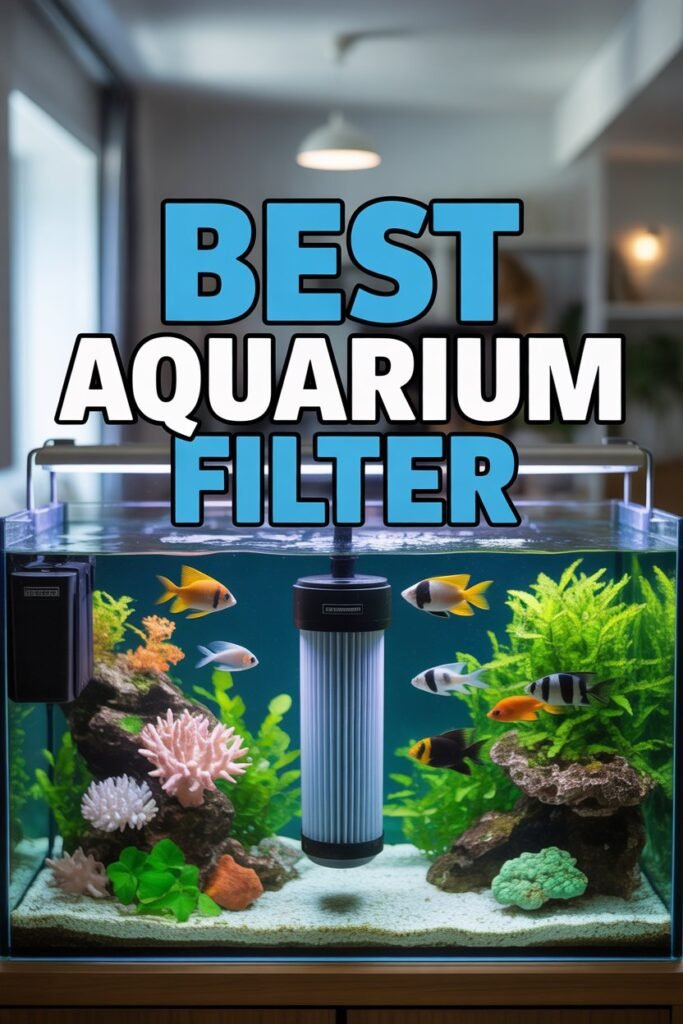
One of the most popular options worldwide.
How It Works
Hangs on the back of the tank, pulling water through filter media and returning it as a waterfall.
Best For:
- Beginner aquariums
- Small to medium tanks
Advantages:
- Easy to install
- Affordable
- Good filtration performance
Disadvantages:
- Limited media capacity
- Can be noisy if water level drops
For beginners, this is often considered the best aquarium filter.
3. Internal Aquarium Filter
Installed inside the aquarium.
How It Works
Uses an internal motor to pull water through filter media.
Best For:
- Small tanks
- Quarantine tanks
Advantages:
- Compact
- Easy to maintain
Disadvantages:
- Takes up space inside tank
- Less powerful than external filters
4. Canister Aquarium Filter
One of the most powerful filter types.
How It Works
External unit that pushes water through multiple media stages.
Best For:
- Medium to large tanks
- Planted aquariums
- Heavily stocked tanks
Advantages:
- Large media capacity
- Excellent mechanical and biological filtration
- Quiet operation
Disadvantages:
- Higher cost
- More complex maintenance
For serious hobbyists, this is often the best aquarium filter available.
5. Sump Filter System
Common in large and saltwater aquariums.
How It Works
Water flows into a separate tank containing filtration media.
Best For:
- Large aquariums
- Reef tanks
- Advanced setups
Advantages:
- Massive filtration power
- Customizable
- Easy equipment access
Disadvantages:
- Requires space
- Complex setup
For large tanks, sump systems are considered the best aquarium filter solution.
6. Undergravel Filter
An older filtration method.
How It Works
Water is pulled through the gravel substrate.
Best For:
- Simple setups
- Low-maintenance tanks
Advantages:
- Inexpensive
- No visible equipment
Disadvantages:
- Hard to clean
- Not ideal for planted tanks
Best Aquarium Filter by Tank Size
Small Aquarium (Up to 20 Gallons)
Best options:
- Sponge filter
- Small hang on back filter
Gentle flow is important.
Medium Aquarium (20–55 Gallons)
Best options:
- Hang on back filter
- Small canister filter
Choose higher capacity for better stability
Large Aquarium (55+ Gallons)
Best options:
- Canister filter
- Sump filter system
Power and media volume matter most.
Best Aquarium Filter by Tank Type
Freshwater Aquarium
Best choices:
- Hang on back filter
- Canister filter
Easy to maintain and reliable.
Planted Aquarium
Best choices:
- Canister filter
- Sponge filter with circulation
Strong biological filtration with gentle flow is ideal.
Saltwater Aquarium
Best choices:
- Sump filter
- Canister filter (fish-only)
Often combined with protein skimmers.
Betta Fish Tank
Best choices:
- Sponge filter
- Adjustable flow hang on back filter
Avoid strong currents.
Shrimp Tank
Best choices:
- Sponge filter
Safe and effective.
What Makes the Best Aquarium Filter?
To choose the best aquarium filter, look for these qualities:
Adequate Flow Rate
Filter should process tank water multiple times per hour.
Strong Biological Media
More surface area means healthier bacteria.
Quiet Operation
Important for home environments.
Easy Maintenance
Simple cleaning encourages regular care.
Proper Size Rating
Choose a filter rated higher than your tank size.
Common Mistakes When Choosing an Aquarium Filter
- Buying a filter too small
- Overcleaning filter media
- Replacing all media at once
- Using strong flow for delicate fish
Avoiding these mistakes improves filter performance.
Maintenance Tips for the Best Aquarium Filter Performance
- Rinse media in aquarium water
- Clean impeller regularly
- Never replace biological media all at once
- Monitor water flow
Proper maintenance extends filter life.
Benefits of Using the Best Aquarium Filter
- Healthier fish
- Clear water
- Stable nitrogen cycle
- Reduced algae
- Lower maintenance effort
Best Aquarium Filter FAQs
What is the best aquarium filter overall?
It depends on tank size and type, but canister filters are best for large tanks.
Is a sponge filter enough for an aquarium?
Yes, for small or lightly stocked tanks.
Are hang on back filters good?
Yes, they are excellent for beginners.
Do planted tanks need special filters?
They need strong biological filtration with gentle flow.
How often should I clean my aquarium filter?
Light cleaning every 2–4 weeks is ideal.
Can I use more than one filter?
Yes, multiple filters improve stability.
Is chemical filtration necessary?
No, it is optional for most aquariums.
Final Thoughts
The best aquarium filter is one that matches your aquarium’s size, fish species, and maintenance style. There is no single perfect filter for everyone, but understanding filter types and how they work allows you to make the right choice. Whether you use a sponge filter for a shrimp tank, a hang on back filter for a community aquarium, or a powerful canister or sump for large systems, proper filtration is the key to a clean, healthy, and successful aquarium.