
 By admin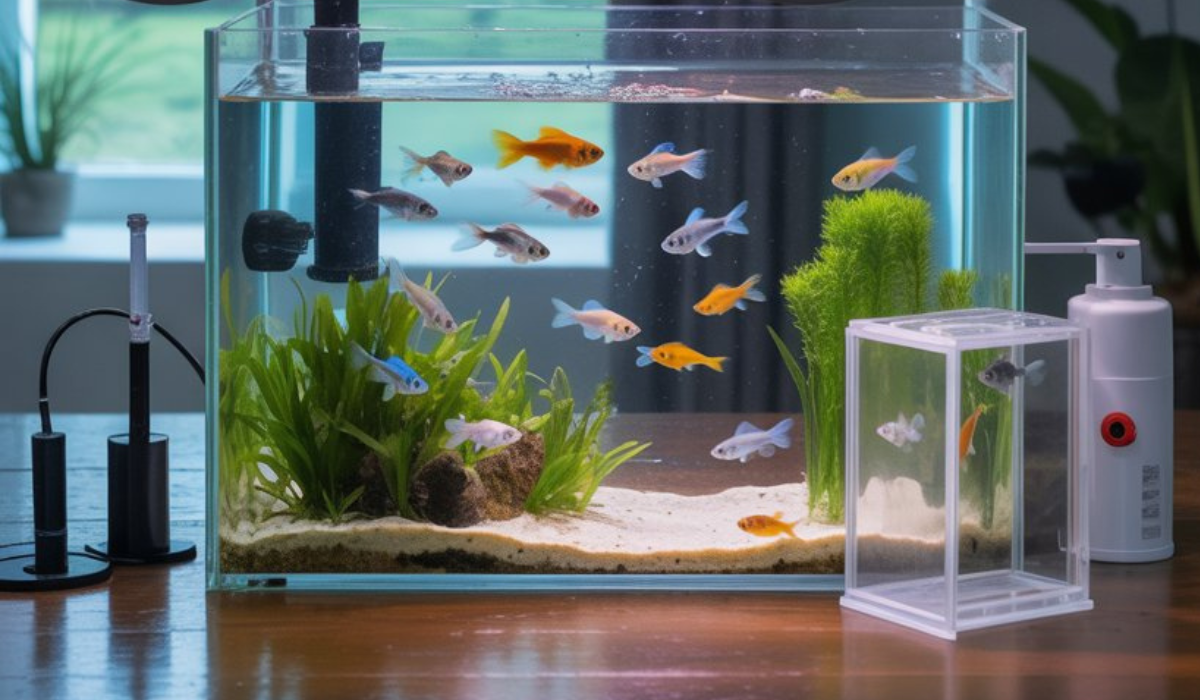
A proper guppy breeding setup is the key to producing healthy fry, maintaining strong bloodlines, and improving color and fin quality. Guppies are livebearers and reproduce easily, but without the right setup, fry survival rates can drop and genetics may weaken over time.
The common guppy, scientifically known as Poecilia reticulata, is one of the easiest freshwater fish to breed. However, serious breeders follow structured methods to maximize fry survival, control genetics, and produce show-quality fish.
This detailed guide explains everything you need to know about creating a successful guppy breeding setup, from tank preparation to fry growth and strain management.
Why a Dedicated Guppy Breeding Setup Is Important
Many beginners allow guppies to breed in community tanks. While this works, survival rates are usually low because:
• Adult guppies may eat fry
• Strong filtration can suck in babies
• Water parameters fluctuate
• Crossbreeding may occur
A dedicated breeding tank gives you full control over environment, genetics, and growth rate.
Choosing the Right Breeding Tank Size
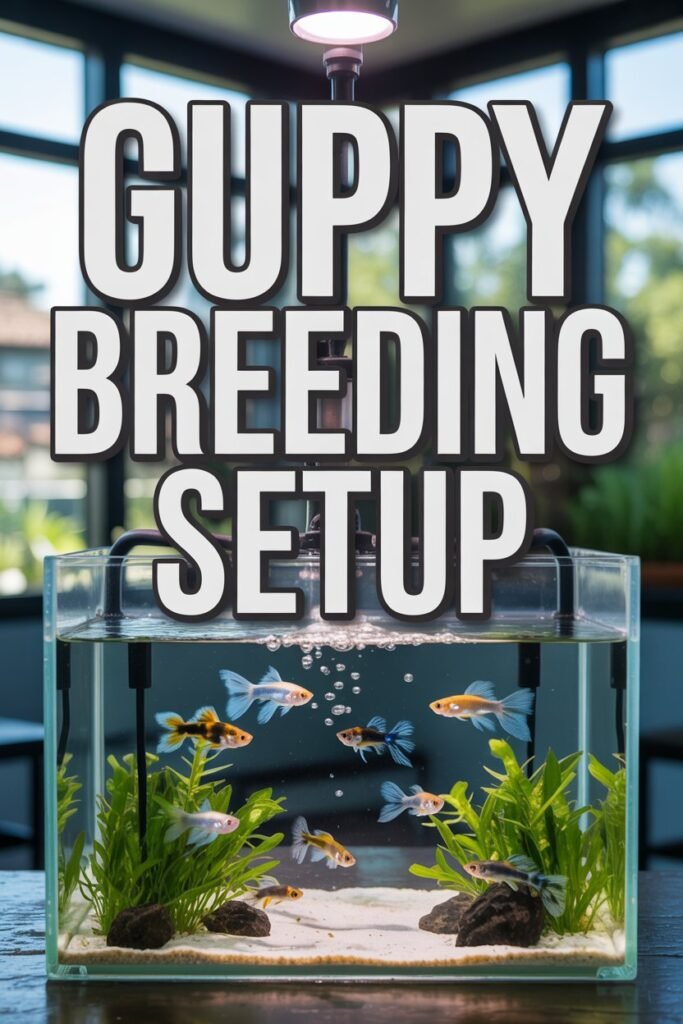
The ideal size depends on your goals.
Small-Scale Hobby Breeding
10-gallon tank is sufficient for one breeding trio.
Serious Line Breeding
15 to 20 gallons provide better water stability.
Grow-Out Tank
Separate 20 to 30 gallon tank for raising fry.
Bigger tanks maintain stable water conditions, which is crucial for fry survival.
Ideal Water Parameters for Breeding
Stable water is more important than chasing exact numbers.
| Parameter | Ideal Range |
|---|---|
| Temperature | 25°C – 27°C |
| pH | 7.0 – 7.5 |
| Hardness | Moderate |
| Ammonia | 0 ppm |
| Nitrite | 0 ppm |
| Nitrate | Below 20 ppm |
Slightly warmer temperatures help speed up metabolism and growth.
Essential Equipment for Guppy Breeding Setup
1. Sponge Filter
A sponge filter is strongly recommended. It provides:
• Gentle water flow
• Biological filtration
• Safety for fry
Avoid strong power filters that may harm newborn fish.
2. Heater
Maintains stable temperature between 25°C and 27°C.
3. Air Pump
Ensures oxygen supply and improves sponge filter performance.
4. Bare Bottom Tank (Optional)
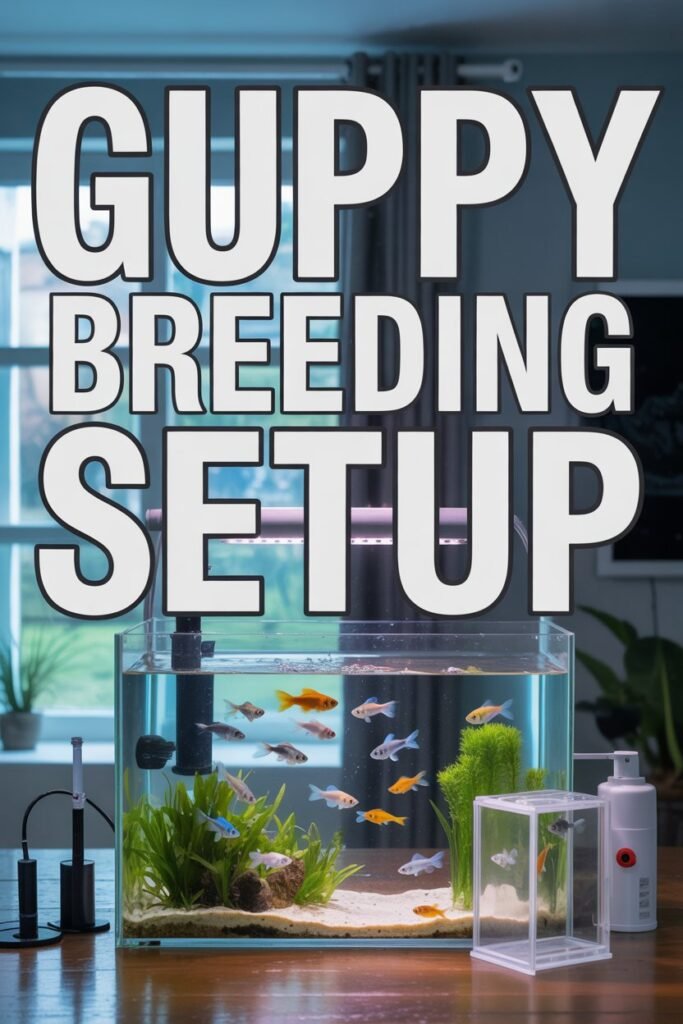
Many breeders prefer bare bottom tanks because:
• Easier cleaning
• Fry are easier to see
• Waste removal is simple
However, a thin layer of dark substrate can reduce stress.
Selecting Breeding Stock
Choose healthy and high-quality guppies.
Look for:
• Bright coloration
• Symmetrical tails
• Active swimming behavior
• No fin damage
• No signs of disease
Keep one male with two or three females to reduce stress on females.
Avoid mixing different strains if you want to maintain pure lines.
Preparing the Breeding Tank
Before adding fish:
Cycle the tank completely.
Ensure ammonia and nitrite levels are zero.
Add floating plants like guppy grass or Java moss for fry protection.
Floating plants increase fry survival naturally.
The Breeding Process
After introducing a breeding trio:
The male will display and chase females.
The female stores sperm and can give birth multiple times from one mating.
Gestation lasts about 21 to 30 days.
A gravid female shows:
• Enlarged abdomen
• Dark gravid spot near anal fin
• Squared belly shape near birth
Birth and Fry Care
When the female gives birth:
Remove the female if possible.
Leave fry in the breeding tank.
Fry are free-swimming immediately.
Feed fry 3 to 4 times daily with:
• Crushed flakes
• Baby brine shrimp
• Micro worms
• Specialized fry food
Small frequent feedings promote faster growth.
Separate Grow-Out Tank Setup
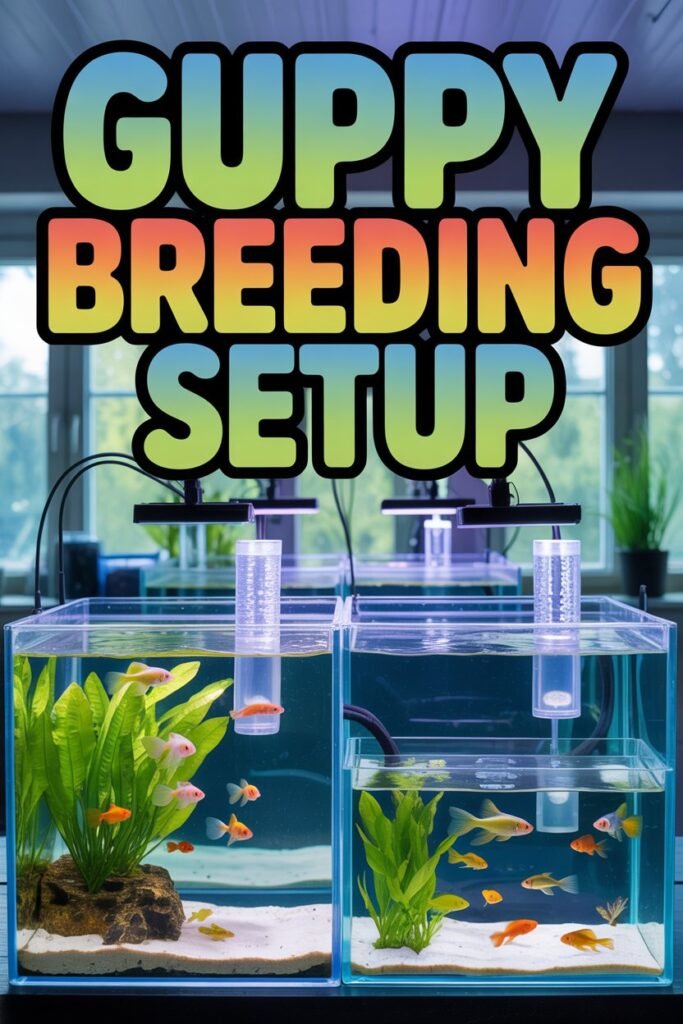
After 2 to 3 weeks, transfer fry to a grow-out tank.
Benefits of grow-out tanks:
• Faster growth
• Less competition
• Easier size grading
Maintain the same water parameters to prevent shock.
Feeding Schedule for Maximum Growth
Week 1 to 2
Feed 4 times daily.
Week 3 to 6
Feed 3 times daily with protein-rich foods.
After 6 weeks
Transition to adult diet.
High-protein foods improve fin development and color intensity.
Managing Genetics and Line Breeding
Advanced breeders use controlled breeding methods.
Line Breeding
Breeding related fish to maintain specific traits.
Outcrossing
Introducing new bloodlines to prevent weakness.
Culling
Removing weak or deformed fry to improve strain quality.
Keep detailed records of breeding pairs to avoid genetic problems.
Common Breeding Mistakes
Overcrowding
Reduces growth and increases disease risk.
Poor Water Changes
Fry are sensitive to toxins.
Mixing Strains
Leads to inconsistent offspring.
Overfeeding
Causes ammonia spikes.
Consistency and discipline are essential for success.
How Many Fry Can a Guppy Produce?
A healthy female can give birth to:
20 to 50 fry per batch.
Larger females may produce even more.
They can reproduce every month under ideal conditions.
Improving Fry Survival Rate
Use sponge filters only.
Provide dense floating plants.
Perform small but frequent water changes.
Maintain stable temperature.
Separate adults after birth.
These steps can increase survival rate significantly.
Timeline of Guppy Development
Week 1
Tiny transparent fry.
Week 3
Begin showing slight coloration.
Week 6
Males start developing tails and color.
Week 8 to 10
Ready for selective breeding.
Sex separation at 4 to 5 weeks prevents uncontrolled breeding.
Breeding for Show-Quality Guppies
If your goal is high-end strains:
Select only the best male and female.
Avoid breeding fish with bent spines or weak tails.
Maintain clean display tanks.
Use premium nutrition.
Show-quality guppies require patience and strict selection.
Conclusion
A proper guppy breeding setup ensures healthy fry, stable genetics, and strong coloration. By using a dedicated breeding tank, sponge filtration, stable water parameters, and proper feeding schedules, you can significantly improve fry survival and quality.
Whether you are breeding for fun, profit, or show standards, planning your setup carefully will produce consistent and impressive results.
Frequently Asked Questions
What is the best tank size for guppy breeding?
A 10-gallon tank works for small setups, but 20 gallons is ideal.
Do I need a separate tank for breeding?
Yes, it increases fry survival and protects genetics.
How long is guppy pregnancy?
Approximately 21 to 30 days.
How many fry survive without separation?
In community tanks, only a few may survive due to predation.
When should I separate male and female fry?
At 4 to 5 weeks to prevent early breeding.
How often can guppies reproduce?
About once every month under ideal conditions.
Do guppy fry need a filter?
Yes, but use a sponge filter to keep them safe.
How can I improve fry growth?
Feed high-protein foods frequently and maintain clean water.