
 By admin
 Damselfish are among the most popular saltwater fish for marine aquariums. They are small, colorful, hardy, and relatively inexpensive — which makes them a common choice for beginners. However, despite their tiny size and bright appearance, many damselfish species can be surprisingly aggressive.
Damselfish belong to the family Pomacentridae, which includes over 300 species found mainly in tropical oceans.
In this complete guide, we’ll cover everything you need to know about Damselfish — natural habitat, popular types, tank requirements, diet, compatibility, breeding, and expert tips.
What Is a Damselfish?
Damselfish are small marine fish known for:
- Bright electric colors
- Hardy nature
- Territorial behavior
- Active swimming
They are closely related to clownfish (which are technically a type of damselfish).
Natural Habitat of Damselfish
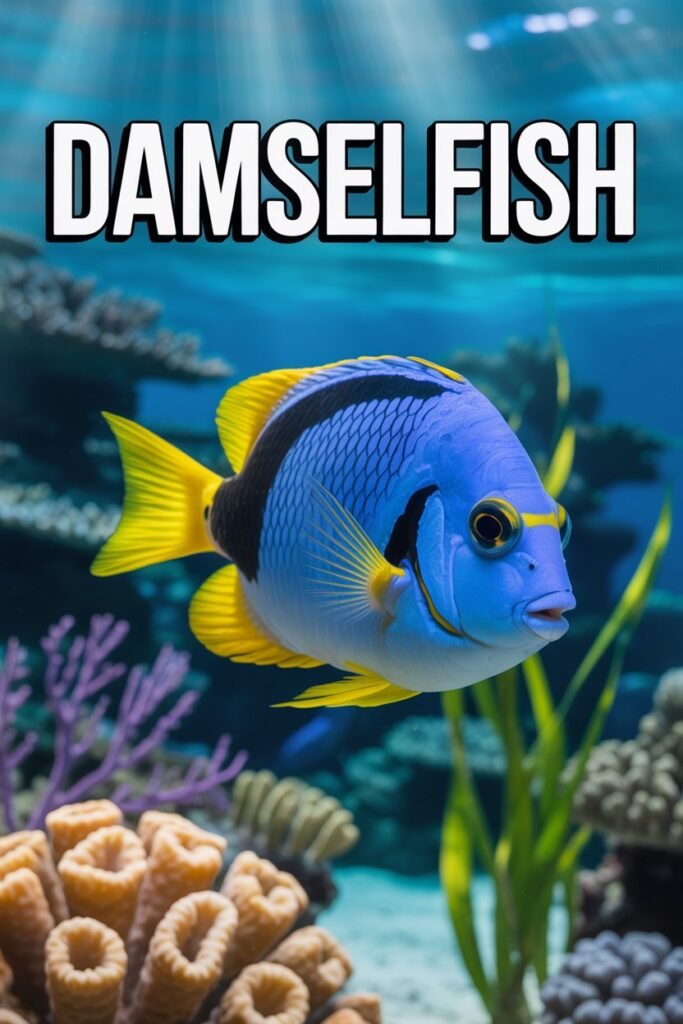
Damselfish are commonly found in:
- Indo-Pacific region
- Great Barrier Reef
- Red Sea
- Caribbean Sea
They prefer:
- Shallow coral reefs
- Rocky lagoons
- Coral branches
- Protected reef flats
Habitat Conditions:
- Temperature: 24–28°C (75–82°F)
- Stable salinity
- Plenty of hiding spots
- Coral and rock structures
In the wild, they often guard small territories within coral structures.
Physical Appearance
Damselfish are vibrant and eye-catching.
Key Features:
- Small, compact body
- Rounded tail
- Bold coloration
- Quick swimming style
Size:
- 2 to 4 inches (depending on species)
Lifespan:
- 5–8 years in captivity
- Longer with excellent care
Popular Types of Damselfish

There are many species, but here are some of the most common:
1. Blue Damselfish
Chrysiptera cyanea
- Bright electric blue body
- Small but territorial
- Very hardy
2. Three-Stripe Damselfish (Humbug)
Dascyllus aruanus
- White body with black vertical stripes
- Can become aggressive with age
3. Yellowtail Damselfish
Chrysiptera parasema
- Blue body with bright yellow tail
- More peaceful than many other species
4. Domino Damselfish
Dascyllus trimaculatus
- Black body with white spots
- Juveniles are calmer; adults can be aggressive
Each species varies in temperament and reef compatibility.
Damselfish Tank Requirements
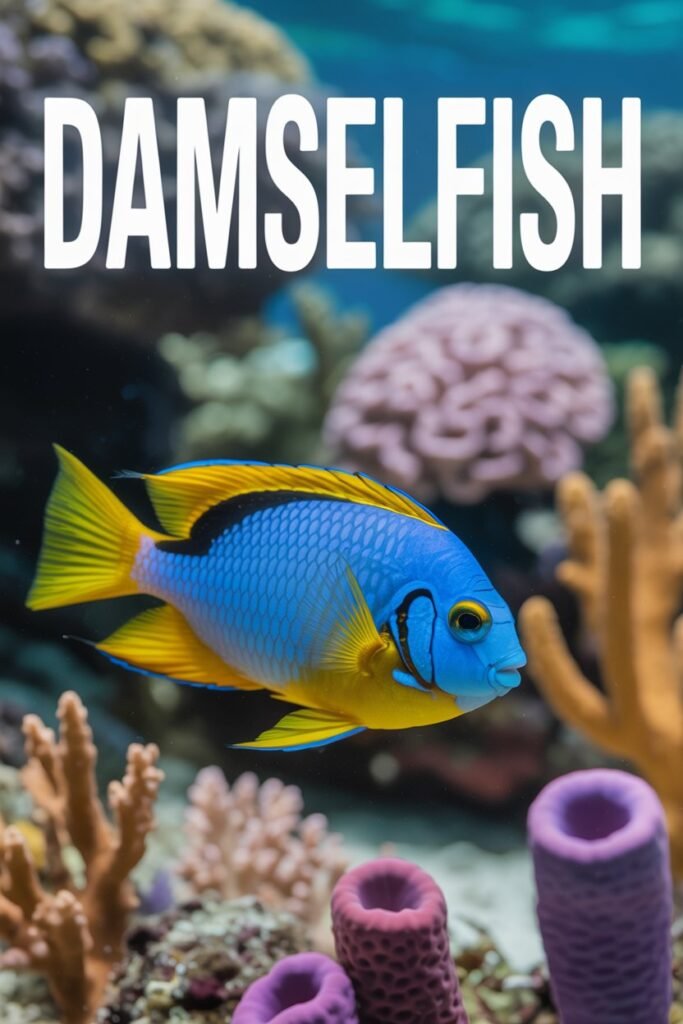
Damselfish are hardy and adaptable.
Minimum Tank Size:
- 20 gallons (single fish)
- 30–55 gallons (multiple fish)
Water Parameters:
- Temperature: 24–28°C
- pH: 8.1–8.4
- Salinity: 1.023–1.025
- Ammonia/Nitrite: 0 ppm
Tank Setup:
- Live rock
- Coral structures
- Hiding caves
- Moderate water flow
They do best in stable, mature aquariums but are more forgiving than many marine species.
Damselfish Diet
Damselfish are omnivores.
In the Wild:
- Algae
- Zooplankton
- Small crustaceans
In Aquarium:
They readily accept:
- Marine flakes
- Pellets
- Frozen mysis shrimp
- Brine shrimp
- Algae-based foods
Feed small amounts 1–2 times daily.
Behavior and Temperament
This is where Damselfish can surprise beginners.
Behavior Traits:
- Territorial
- Active swimmers
- Defensive of their space
- May bully smaller fish
While juveniles appear peaceful, many species become aggressive as they mature.
Are Damselfish Reef Safe?
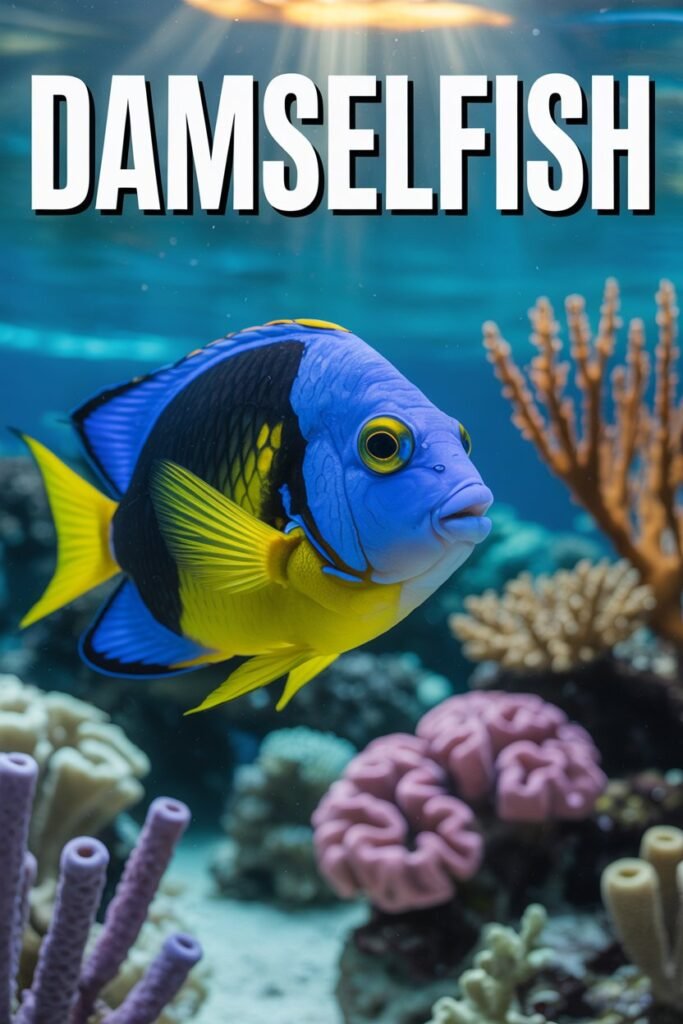
Yes, most Damselfish are reef safe.
They:
- Do not eat corals
- Rarely disturb invertebrates
However, they may harass peaceful tank mates.
Tank Mates for Damselfish
Suitable Tank Mates:
- Clownfish
- Gobies
- Blennies
- Tangs (in larger tanks)
- Wrasses
Avoid:
- Very small timid fish
- Slow-moving species
- Overcrowding
Introduce Damselfish last to reduce territorial aggression.
Damselfish Breeding
Damselfish are egg layers.
Breeding Behavior:
- Males prepare and guard nesting site
- Females lay eggs on flat surface
- Male guards eggs aggressively
In home aquariums, breeding can occur but raising fry is challenging.
Common Problems
1. Aggression
Most common issue.
2. Stress from Overcrowding
Too many fish increase territorial fights.
3. Poor Water Quality
Though hardy, long-term poor water harms health.
Are Damselfish Good for Beginners?
Yes — but with caution.
They are:
- Hardy
- Inexpensive
- Easy to feed
However, their aggressive nature means tank planning is important.
Yellowtail Damselfish are often recommended for beginners due to relatively calmer behavior
Expert Tips for Success
- Add Damselfish last in community tanks
- Provide plenty of hiding spaces
- Avoid mixing multiple aggressive species
- Monitor behavior closely
- Maintain stable water conditions
Careful species selection makes a big difference.
Why Damselfish Are So Popular
Damselfish remain popular because they are:
- Affordable
- Extremely colorful
- Hardy and adaptable
- Great starter marine fish
Their bold personality and bright coloration make them attractive additions to many marine aquariums.
Final Thoughts
Damselfish are beautiful, resilient marine fish that can thrive in a wide range of saltwater aquariums. While they are often marketed as beginner fish, understanding their territorial nature is crucial for long-term success.
With proper tank planning, compatible tank mates, and stable water quality, Damselfish can live for many years and add vibrant energy to your marine setup.