
 By admin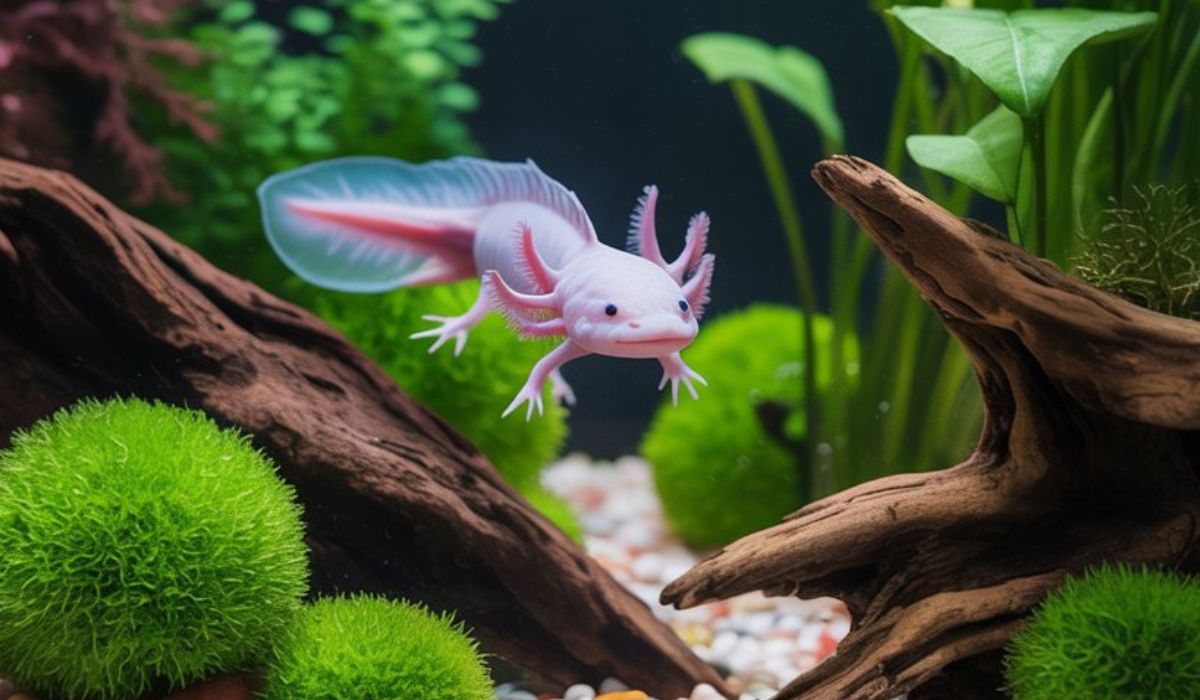
An axolotl aquarium should be peaceful, spacious, and designed with safety in mind. Axolotls are unique aquatic salamanders known for their cute appearance, feathery gills, and gentle behavior. With the right setup, you can create a beautiful and comfortable habitat that also looks amazing in your home.
This guide covers the best axolotl aquarium ideas, decorations, and care tips.
Why Axolotl Aquariums Are Special
Axolotls are different from regular aquarium fish.
They prefer cooler water, low lighting, and soft environments. Their tanks focus more on comfort and functionality rather than heavy decorations or bright lights.
Their unique appearance already makes them the star of the aquarium.
Best Axolotl Aquarium Ideas
Natural Riverbed Aquarium
- Sand substrate
- Smooth stones and driftwood
- Natural appearance
👉 Mimics their natural habitat
Minimalist Axolotl Tank
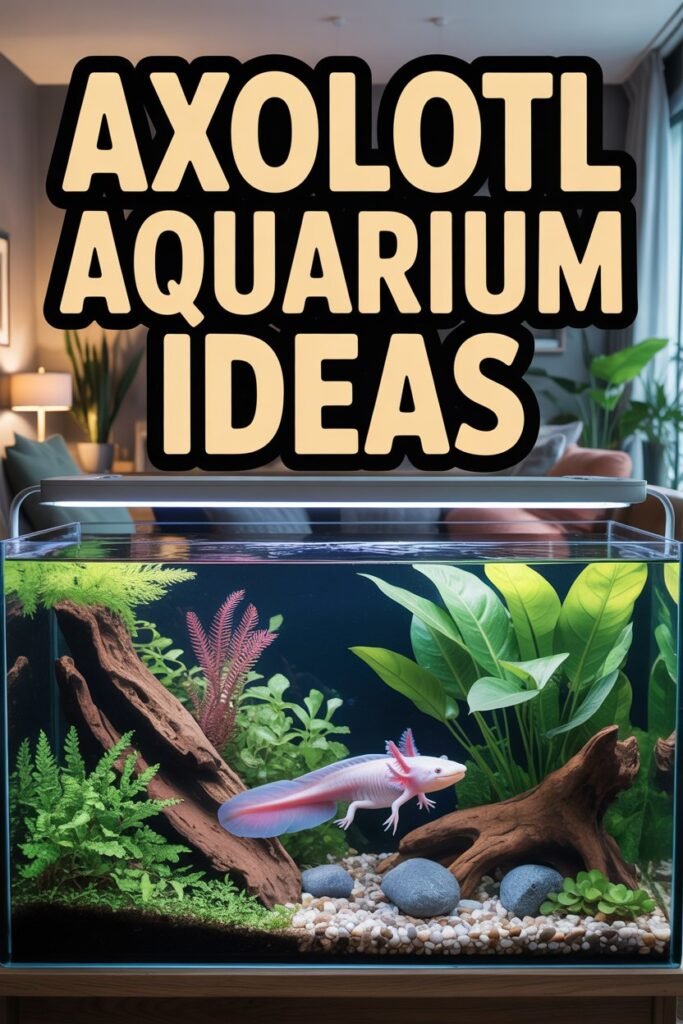
- Open swimming space
- Simple décor
- Easy maintenance
👉 Perfect for beginners
Cave & Hideout Aquarium
- PVC caves or smooth shelters
- Dark hiding spots
- Comfortable resting areas
👉 Reduces stress
Planted Axolotl Aquarium
- Low-light aquatic plants
- Calm natural environment
- Improved aesthetics
👉 Use hardy plants only
Blackwater Axolotl Setup
- Driftwood and tannins
- Soft dark appearance
- Relaxing atmosphere
👉 Creates a unique aesthetic
Best Tank Size for Axolotls
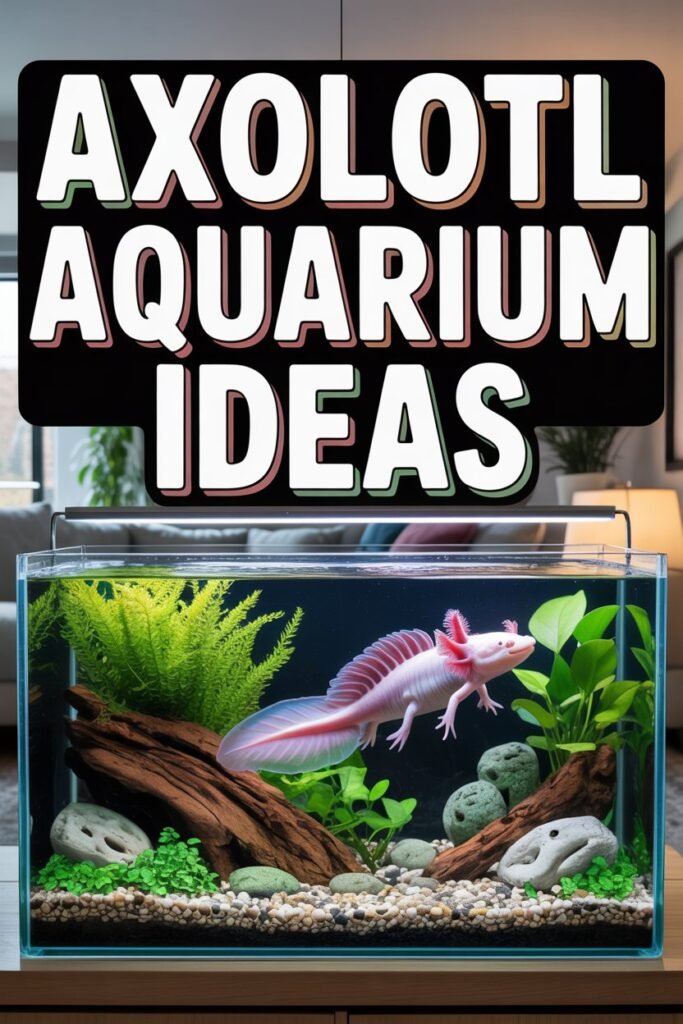
Axolotls need space.
A single adult axolotl requires at least 20 gallons.
Larger tanks provide better water stability and swimming space.
Long tanks are better than tall tanks.
Safe Substrate Options
Safety is extremely important.
Fine sand is the best substrate.
Bare-bottom tanks are also popular.
Avoid small gravel because axolotls may swallow it.
Best Plants for Axolotl Tanks
Choose low-light and hardy plants.
- Anubias
- Java Fern
- Java Moss
- Hornwort
These plants tolerate cooler water conditions.
Lighting Tips
Axolotls dislike bright lighting.
Use dim or low-intensity LED lights.
Floating plants can help reduce brightness.
Provide shaded areas for comfort.
Water Conditions
Axolotls need cool and clean water.
Stable temperatures are essential.
Use strong filtration with gentle water flow.
Cycle the aquarium through the Nitrogen cycle before adding an axolotl.
Feeding Ideas
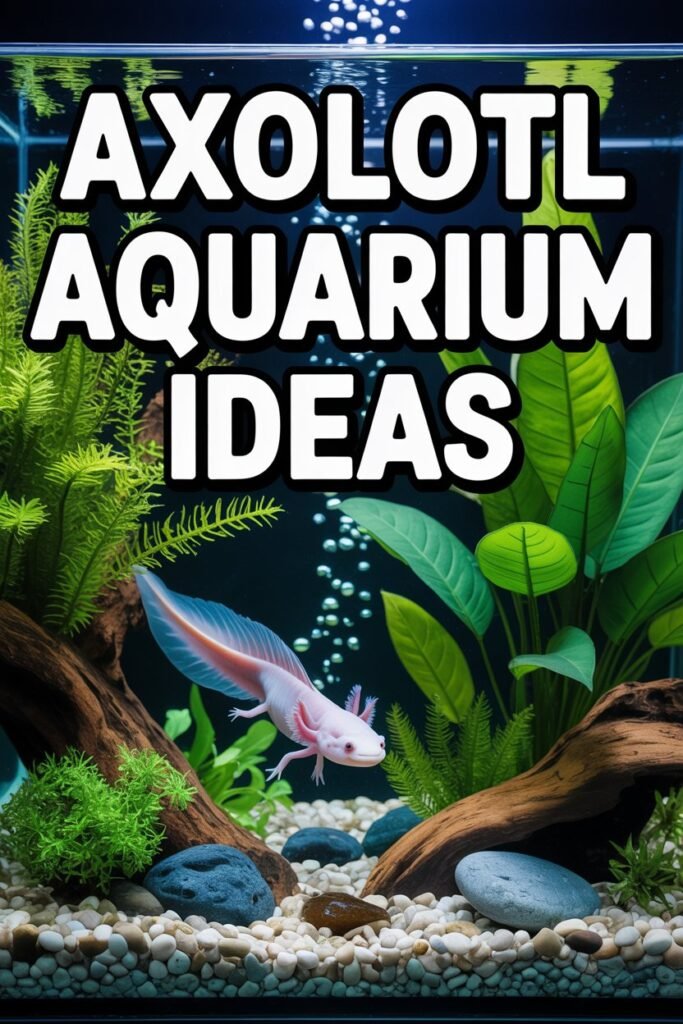
Axolotls are carnivores.
Feed foods such as:
- Earthworms
- Axolotl pellets
- Frozen bloodworms
Feed appropriate portions to avoid waste buildup.
Decoration Tips
Use smooth and safe decorations.
Avoid sharp rocks or rough surfaces.
Create open swimming areas.
Natural décor works best.
Maintenance Tips
Perform weekly water changes.
Monitor temperature carefully.
Clean leftover food quickly.
Check filtration regularly.
Keep water quality stable.
Common Mistakes to Avoid
- Using gravel substrate
- Bright lighting
- Warm water temperatures
- Strong water current
- Overcrowding the tank
Avoiding these mistakes keeps axolotls healthy.
Why Axolotl Aquariums Are Popular
Axolotl tanks are popular because these animals are cute, unique, and fascinating to watch. Their calm behavior and unusual appearance make them excellent display pets.
They also fit beautifully into minimalist and natural aquarium designs.
Final Thoughts
Axolotl aquarium ideas should focus on safety, comfort, and simplicity. With cool water, soft lighting, and proper tank design, you can create a beautiful environment where your axolotl thrives.
Choose natural décor, maintain clean water, and keep the setup stress-free for the best results.
FAQs
What size tank does an axolotl need?
At least 20 gallons for one adult.
Can axolotls live with fish?
Usually not recommended.
What substrate is safest?
Fine sand or bare-bottom tanks.
Do axolotls need cold water?
Yes, they prefer cool temperatures.
Are live plants safe?
Yes, low-light plants work well.