
 By admin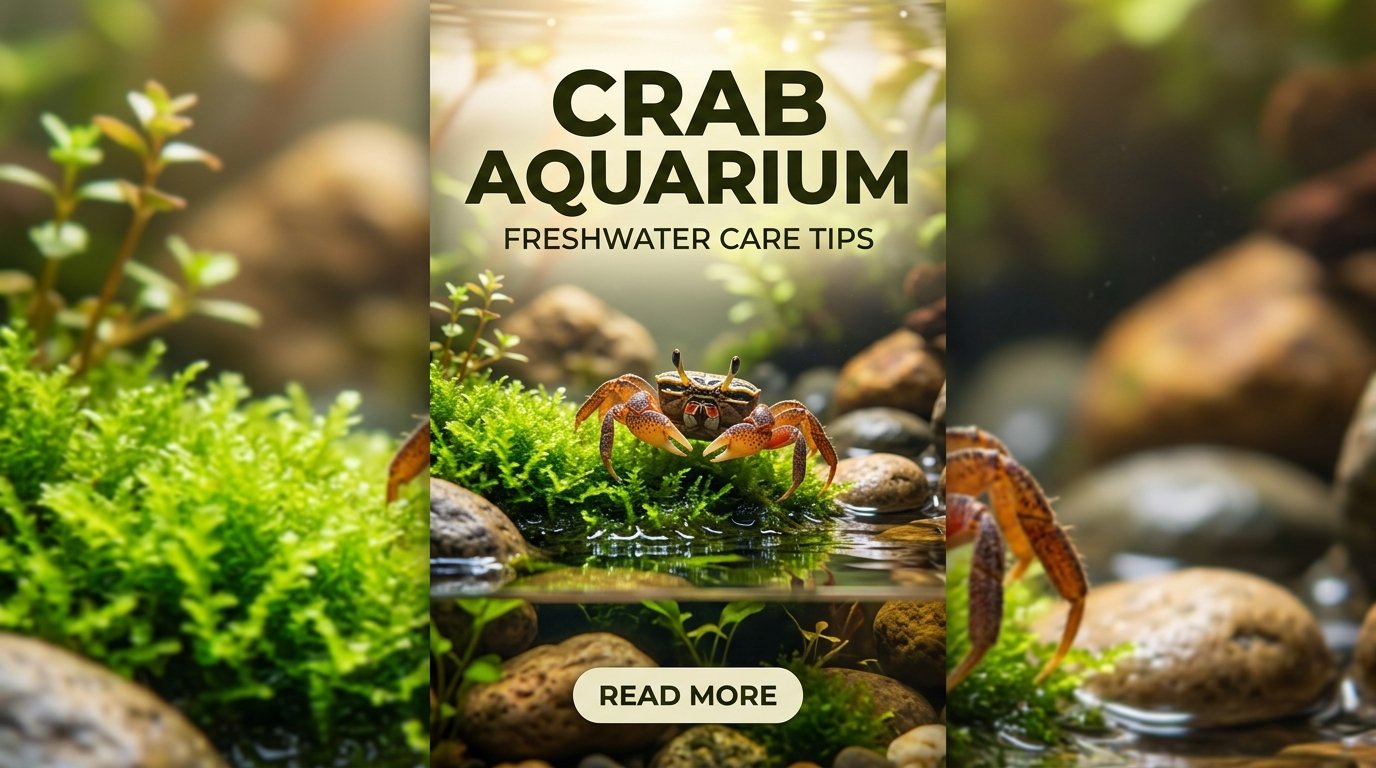
A crab aquarium is a fascinating and unique setup that allows aquarists to observe the interesting behaviors of crabs in a controlled environment. Crabs are known for their distinctive appearance, climbing abilities, scavenging habits, and entertaining personalities. Whether you keep freshwater, brackish, or marine crabs, a properly designed crab aquarium can provide years of enjoyment.
Unlike many fish species, crabs have specific habitat requirements that must be considered when setting up their aquarium. Understanding their needs is essential for creating a healthy and safe environment.
What Is a Crab Aquarium?
A crab aquarium is an aquarium specifically designed to house crabs and meet their environmental requirements.
Depending on the species, a crab aquarium may include:
- Freshwater sections
- Land areas
- Brackish water zones
- Marine environments
- Climbing structures
- Hiding places
Many crab species require both water and land access.
Why Keep Crabs in an Aquarium?
Crabs offer several advantages as aquarium pets.
Benefits of Keeping Crabs
- Unique appearance
- Interesting behaviors
- Active personalities
- Variety of species
- Low noise levels
- Educational value
Their ability to climb, dig, and explore makes them entertaining to watch.
Popular Crab Species for Aquariums
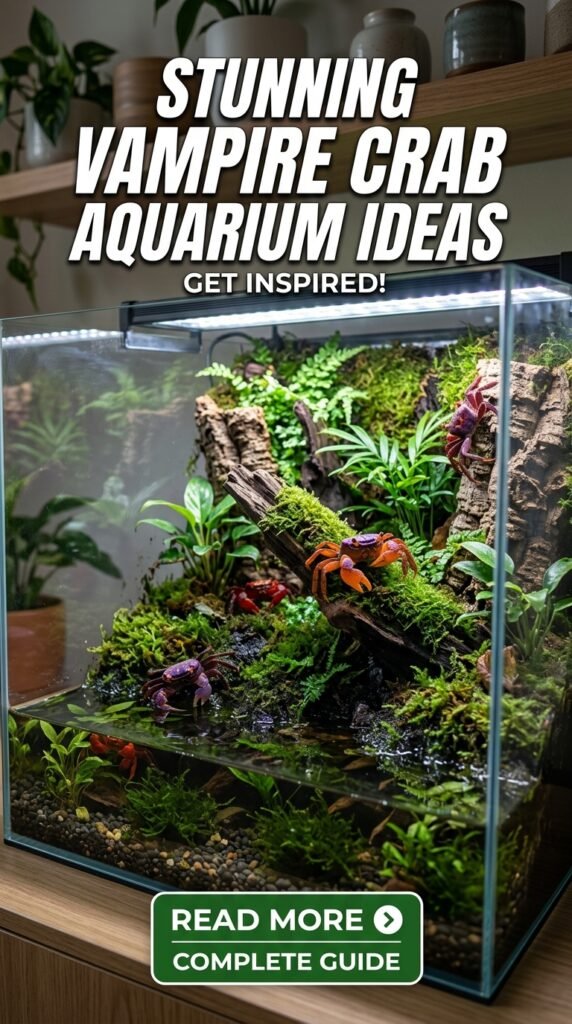
Vampire Crab
Vampire Crab is one of the most popular aquarium crab species.
Characteristics:
- Bright colors
- Small size
- Semi-terrestrial lifestyle
Red Claw Crab
Red Claw Crab is commonly found in the aquarium trade.
Features:
- Attractive red claws
- Active behavior
- Brackish water preference
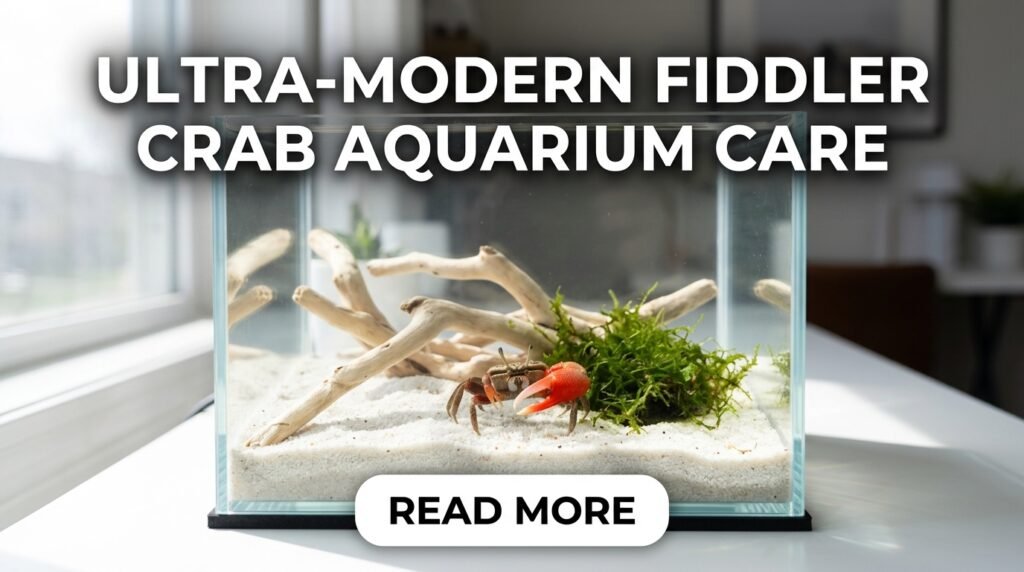
Fiddler Crab
Fiddler Crab is known for its oversized claw.
Benefits:
- Unique appearance
- Interesting social behavior
Thai Micro Crab
Thai Micro Crab is a fully aquatic freshwater crab.
Ideal for:
- Nano aquariums
- Shrimp tanks
Choosing the Right Aquarium Size
Tank size depends on the species and number of crabs.
Small Species
A 10-gallon aquarium may be suitable for a small group.
Medium Species
Require larger tanks with additional land areas.
Large Species
May need custom enclosures and extensive space.
Always research the specific requirements of your chosen species.
Freshwater, Brackish, and Marine Crabs
Different crab species require different environments.
Freshwater Crabs
Examples include:
- Thai Micro Crab
- Vampire Crab
Brackish Crabs
Examples include:
- Red Claw Crab
- Fiddler Crab
Marine Crabs
Require full saltwater conditions.
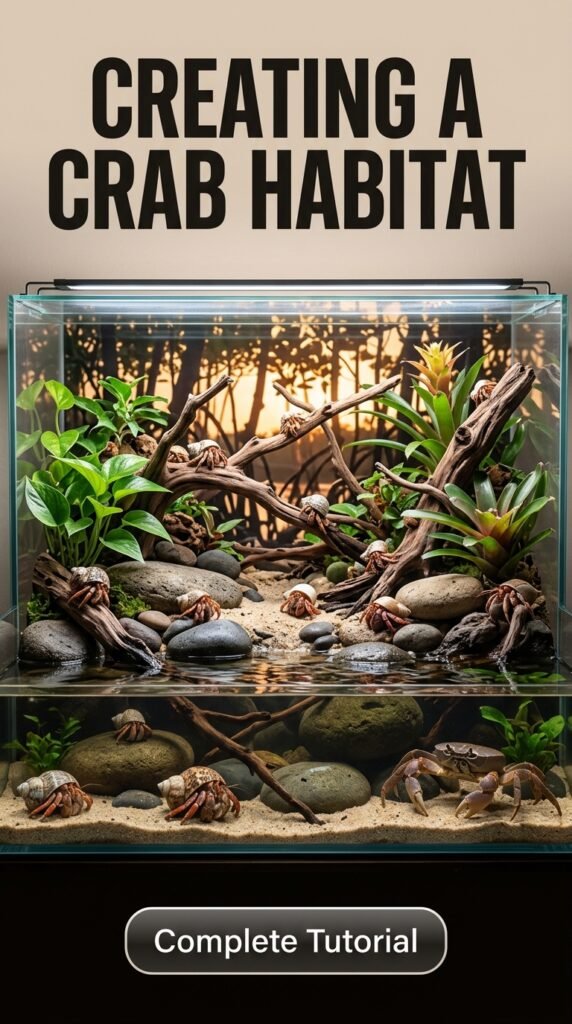
Designing a Crab Aquarium
Land and Water Areas
Many crab species need access to both environments.
Create:
- Shallow water zones
- Dry land platforms
- Easy climbing access
Secure Lid
Crabs are excellent escape artists.
A tight-fitting lid is essential.
Hiding Places
Provide multiple shelters.
Examples include:
- Caves
- Driftwood
- Rock structures
- Coconut hides
Best Substrate for Crabs
Substrate should support natural digging behavior.
Popular choices include:
- Sand
- Fine gravel
- Coconut fiber
- Mixed substrates
Many crabs enjoy burrowing and creating shelters.
Plants for a Crab Aquarium
Plants improve aesthetics and provide cover.
Good options include:
- Java fern
- Anubias
- Java moss
Choose hardy species because some crabs may damage plants.
Aquarium Decorations
Decorations should encourage exploration.
Popular choices:
- Driftwood
- Rocks
- Caves
- Branches
- Leaf litter
Create a natural-looking habitat whenever possible.
Water Parameters
Water quality is critical for crab health.
General Guidelines
- Stable temperature
- Proper salinity (if required)
- Low ammonia
- Zero nitrite
- Clean water
Research species-specific requirements carefully.
Feeding Aquarium Crabs
Crabs are generally omnivores.
Common Foods
- Crab pellets
- Algae wafers
- Vegetables
- Fish food
- Protein-rich treats
A varied diet promotes good health and coloration.
Can Crabs Live With Fish?
Compatibility depends on the species.
Potential Challenges
- Crabs may catch slow fish
- Fish may harass crabs
- Territorial disputes
Small, peaceful fish sometimes work with fully aquatic crab species.
Crab Aquarium Aquascaping Ideas
Mangrove Habitat
Features:
- Driftwood roots
- Sand substrate
- Brackish water
Jungle Shoreline
Combines:
- Dense vegetation
- Land areas
- Natural shelters
Rocky Creek Layout
Uses:
- Stones
- Flowing water
- Hidden caves
Tropical Riverbank
Replicates natural crab environments.
Crab Aquarium Inspiration
These examples demonstrate how diverse and attractive crab aquariums can be.
Common Mistakes to Avoid
No Land Area
Many crabs require access to dry land.
Poor Escape Prevention
Crabs can climb surprisingly well.
Inadequate Hiding Spots
Lack of shelter increases stress.
Incorrect Water Conditions
Always match the environment to the species.
Maintenance Tips
Weekly Tasks
- Water changes
- Cleaning uneaten food
- Checking equipment
Monthly Tasks
- Inspect decorations
- Monitor substrate condition
- Verify water parameters
Consistent maintenance helps prevent health issues.
Why Crab Aquariums Are Popular
Crabs offer a unique aquarium experience that differs significantly from traditional fish tanks. Their climbing, digging, and scavenging behaviors provide endless entertainment, while their unusual appearance makes them standout aquarium inhabitants.
Many hobbyists enjoy creating naturalistic habitats that closely resemble the crabs’ native environments.
Conclusion
A crab aquarium can be a rewarding and fascinating project for aquarists seeking something different from a traditional fish tank. By selecting the right species, providing suitable land and water areas, maintaining excellent water quality, and offering plenty of hiding places, you can create a thriving habitat that supports healthy and active crabs.
Whether you choose colorful Vampire Crab, intriguing Fiddler Crab, or tiny Thai Micro Crab, a well-designed crab aquarium is sure to become a captivating centerpiece.
Frequently Asked Questions
Can crabs live completely underwater?
Some species can, while others require access to land. Always research the specific species.
What size aquarium do crabs need?
Small species may thrive in a 10-gallon setup, while larger species require more space.
Do crabs need a lid?
Yes. Most crabs are skilled climbers and can escape from uncovered aquariums.
Can crabs live with fish?
Some species can coexist with fish, but compatibility varies.
What do aquarium crabs eat?
Most aquarium crabs are omnivores and eat pellets, vegetables, algae, and protein-rich foods.