
 By admin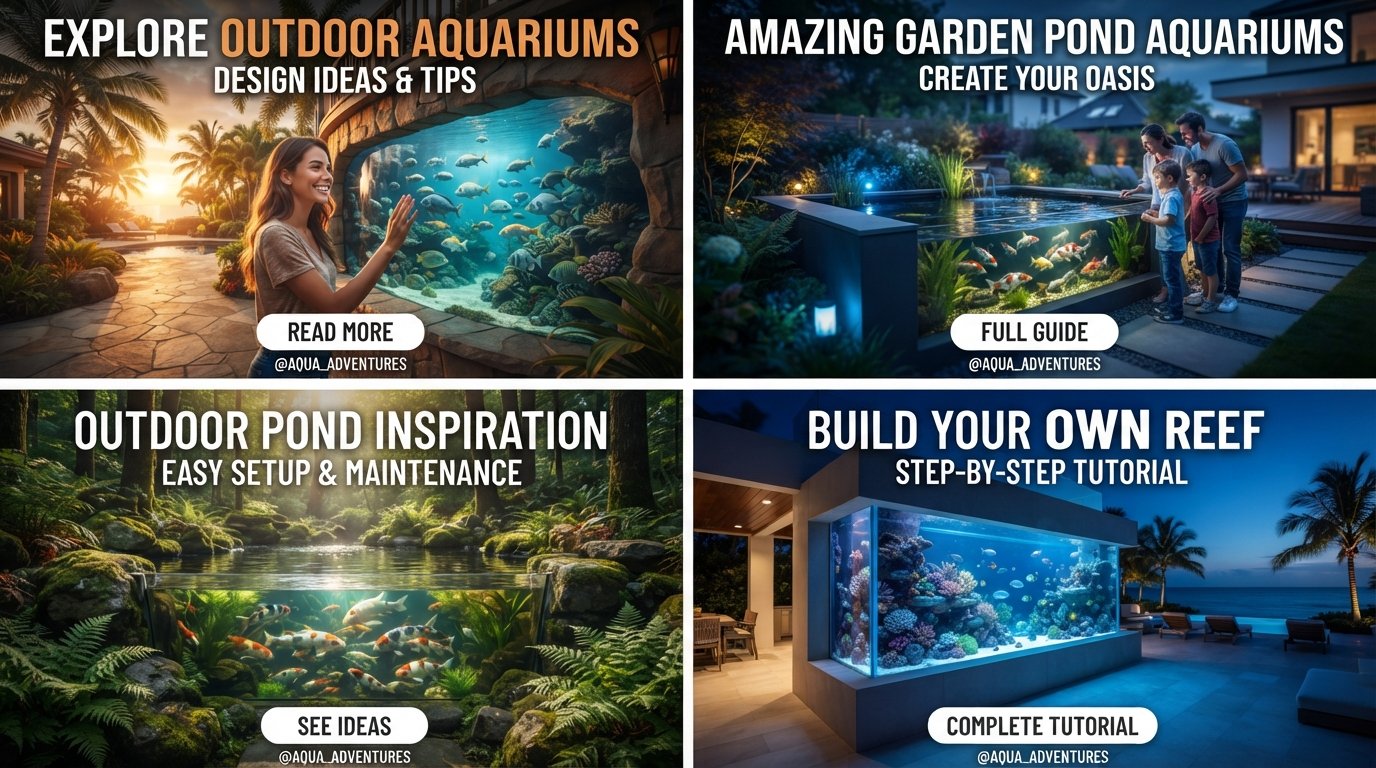
An aquarium outside is a beautiful way to combine aquatic life with your outdoor living space. Whether placed on a patio, balcony, deck, garden, or backyard, an outdoor aquarium creates a peaceful focal point while showcasing colorful fish, lush aquatic plants, and natural aquascaping. However, outdoor aquariums require additional planning to protect fish from changing weather, temperature fluctuations, and direct sunlight.
This guide covers everything you need to know about building and maintaining a successful outdoor aquarium.
What Is an Outdoor Aquarium?
An outdoor aquarium is a fish tank installed outside a home rather than indoors. It functions much like a traditional aquarium but is designed to withstand outdoor conditions while providing a safe environment for aquatic life.
Popular outdoor aquarium locations include:
- Backyard gardens
- Patios
- Balconies
- Outdoor kitchens
- Poolside seating areas
- Decks
- Courtyards
Benefits of an Outdoor Aquarium
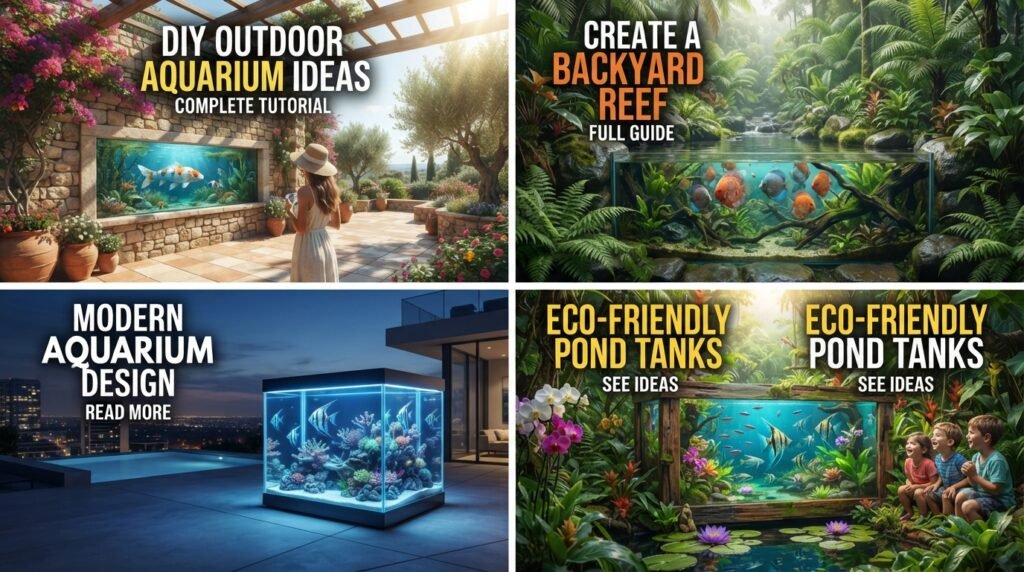
Installing an aquarium outside offers many advantages.
Benefits include:
- Creates a stunning landscape feature
- Brings nature into outdoor spaces
- Provides a relaxing atmosphere
- Enhances patios and gardens
- Adds visual interest year-round
- Supports beautiful aquatic plants
- Creates a conversation piece for guests
A well-designed outdoor aquarium can become the centerpiece of your garden.
Choosing the Best Location
Location is critical for long-term success.
Choose an area with:
- Partial shade
- A level foundation
- Easy access to electricity
- Protection from strong winds
- Convenient access for maintenance
Avoid placing the aquarium in full afternoon sun, which can rapidly increase water temperature and encourage algae growth.
Choosing the Right Aquarium
Outdoor aquariums are available in many styles.
Popular choices include:
- Glass aquariums
- Acrylic aquariums
- Rimless aquariums
- Large display aquariums
- Custom-built outdoor tanks
Larger tanks are generally more stable because they resist sudden temperature changes better than small aquariums.
Outdoor Aquarium Stand Ideas
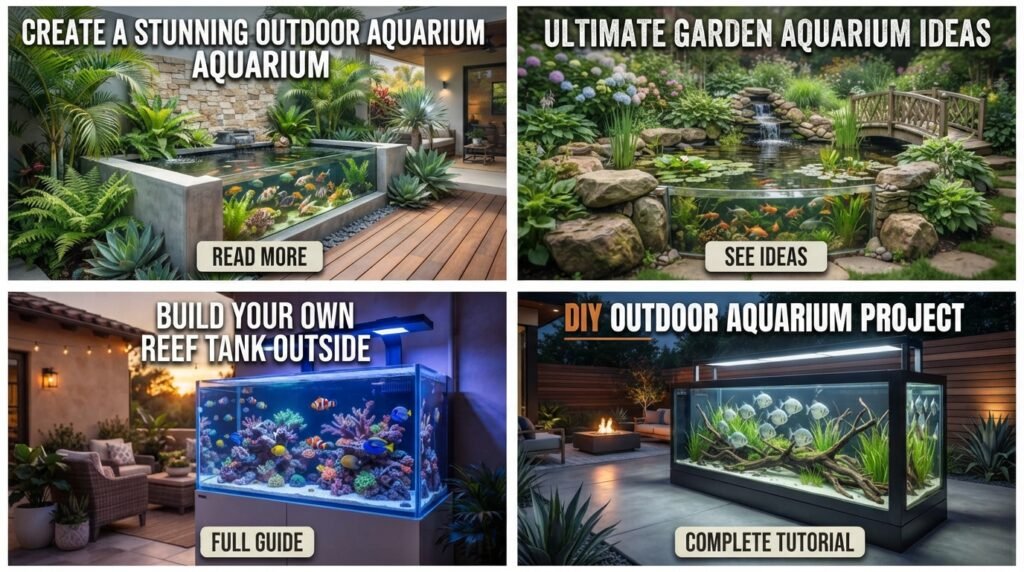
Your stand should safely support the aquarium’s total weight.
Suitable options include:
- Stone pedestal
- Brick base
- Concrete stand
- Steel aquarium stand
- Weather-resistant wooden cabinet
Always place the stand on a solid, level surface.
Best Fish for Outdoor Aquariums
Fish should be selected according to your local climate.
Popular outdoor freshwater fish include:
- Goldfish
- White Cloud Mountain Minnows
- Rice Fish (Medaka)
- Zebra Danios in suitable climates
- Guppies in consistently warm regions
Research each species carefully before moving fish outdoors.
Live Plants
Aquatic plants improve both appearance and water quality.
Excellent choices include:
- Java Fern
- Anubias
- Vallisneria
- Hornwort
- Water Sprite
- Amazon Sword
- Floating plants appropriate for your climate
Plants also provide shelter and shade for fish.
Decorative Ideas
Use aquarium-safe decorations to create a natural appearance.
Popular options include:
- River rocks
- Driftwood
- Sand substrate
- Smooth gravel
- Ceramic caves
- Natural stone formations
Avoid overcrowding the aquarium with decorations.
Lighting
Natural daylight often provides sufficient light.
If additional lighting is desired:
- Install waterproof LED lighting
- Use automatic timers
- Avoid excessive nighttime lighting
Proper lighting highlights the aquarium while supporting plant growth.
Water Parameters
Maintain stable water conditions.
| Parameter | Recommended Range |
|---|---|
| Temperature | Depends on fish species |
| pH | 6.5–7.8 |
| Ammonia | 0 ppm |
| Nitrite | 0 ppm |
| Nitrate | Below 20 ppm |
Test water regularly, especially during seasonal weather changes.
Weather Protection
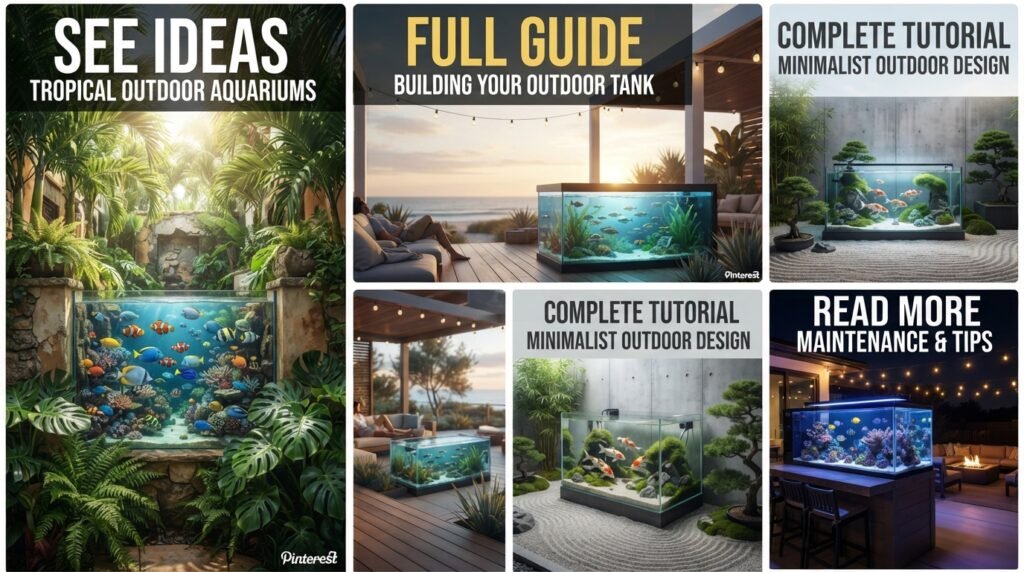
Outdoor aquariums require protection from the elements.
Helpful measures include:
- Install a secure lid
- Provide shade cloth during heat waves
- Remove fallen leaves promptly
- Protect electrical equipment from rain
- Monitor water temperature daily
These precautions help maintain a healthy aquarium.
Seasonal Care
Spring
- Inspect equipment after winter.
- Add new aquatic plants.
- Test water before introducing new fish.
Summer
- Monitor temperature daily.
- Increase aeration if needed.
- Replace evaporated water with conditioned freshwater.
Autumn
- Remove falling leaves.
- Clean filters regularly.
- Prepare for cooler weather.
Winter
- Protect the aquarium from freezing temperatures.
- Move tropical fish indoors if necessary.
- Continue monitoring water quality.
Maintenance Tips
Weekly Water Changes
Replace 20–30% of the water every week.
Clean the Glass
Remove algae with an aquarium-safe scraper.
Trim Plants
Prune overgrown plants to maintain the aquascape.
Service the Filter
Rinse filter media using aquarium water rather than tap water.
Test Water Frequently
Outdoor aquariums experience greater environmental changes than indoor tanks.
Common Mistakes to Avoid
Too Much Sunlight
Excessive sunlight can overheat the water and encourage algae growth.
Keeping Tropical Fish in Cold Weather
Only keep fish outdoors if temperatures remain within their safe range.
Ignoring Evaporation
Outdoor aquariums lose water faster during hot weather.
Overstocking
Too many fish make maintaining water quality more difficult.
Infrequent Maintenance
Outdoor tanks require consistent monitoring throughout the year.
Outdoor Aquarium Design Ideas
Garden Display
Surround the aquarium with flowers, shrubs, and natural stone pathways.
Modern Patio Aquarium
Pair a sleek rimless aquarium with outdoor furniture and subtle lighting.
Backyard Entertainment Area
Install a large aquarium beside a seating area to create a relaxing atmosphere.
Nature-Inspired Aquascape
Use driftwood, rocks, and lush aquatic plants to mimic a natural stream or pond.
Benefits of an Outdoor Aquarium
An outdoor aquarium provides:
- Beautiful landscaping
- Relaxing outdoor entertainment
- Natural aquatic beauty
- Healthy environment for fish
- Endless aquascaping opportunities
- Increased visual appeal for your home
With proper care, it can remain an attractive feature throughout the year.
Conclusion
An aquarium outside is an excellent addition to gardens, patios, and backyards, offering a unique blend of aquatic life and outdoor living. By selecting a suitable location, choosing climate-appropriate fish, maintaining excellent water quality, and protecting the aquarium from extreme weather, you can enjoy a thriving outdoor aquatic display for many years.
Careful planning, routine maintenance, and thoughtful design are the keys to building a beautiful and successful outdoor aquarium.
Frequently Asked Questions
Can I keep an aquarium outside all year?
It depends on your local climate and the fish you keep. Cold-tolerant species may remain outdoors in suitable conditions, while tropical fish often need to be moved indoors during cold weather.
Does an outdoor aquarium need a filter?
Yes. Most outdoor aquariums benefit from a properly sized filter to maintain water quality and support beneficial bacteria.
What fish are suitable for outdoor aquariums?
Goldfish, White Cloud Mountain Minnows, and Medaka are popular choices for many temperate climates. Guppies and other tropical species may be suitable in regions with consistently warm temperatures.
Can direct sunlight damage an outdoor aquarium?
Yes. Too much direct sunlight can increase water temperature and promote excessive algae growth. Partial shade is generally recommended.
How do I protect fish from predators?
Use a secure lid or protective mesh where appropriate, keep the aquarium in a visible area, and provide plants or caves so fish have places to hide.
Is an outdoor aquarium difficult to maintain?
Outdoor aquariums require regular maintenance similar to indoor tanks, with additional attention to weather, evaporation, temperature changes, and seasonal conditions.