
 By admin
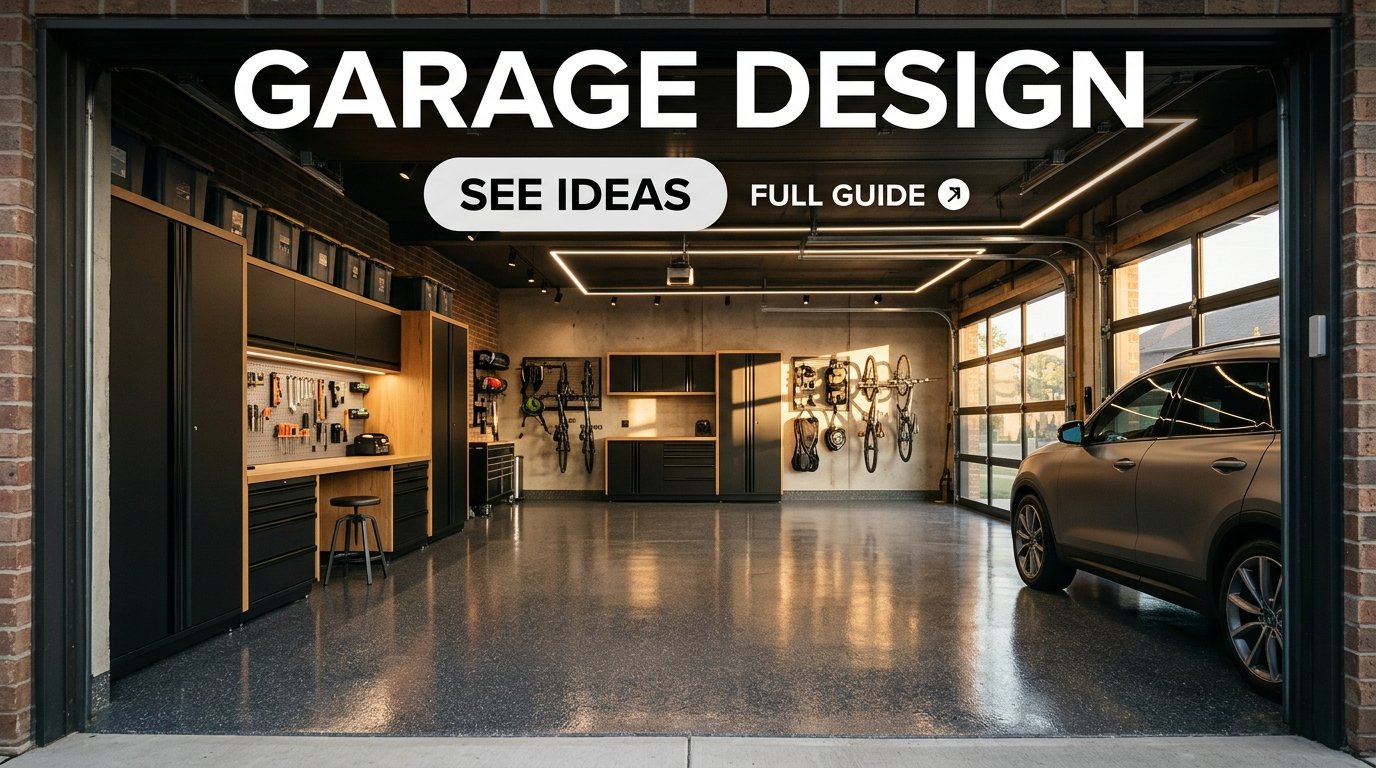
Garage design plays an important role in making a home more attractive, practical, and comfortable. A garage is no longer just a place to park vehicles. Modern homeowners are transforming garages into stylish spaces with organized storage, attractive flooring, modern lighting, functional workbenches, and creative layouts.
Whether you are planning a new garage, renovating an existing one, or looking for inspiration to improve your current space, the right design can make a significant difference. From modern minimalist garages and luxury vehicle spaces to small garage layouts and multi-purpose workshops, there are countless ways to create a garage that matches your home and lifestyle.
A well-designed garage should balance appearance, storage, safety, and functionality. It should provide enough room for vehicles while making everyday items easy to access.
In this guide, you will discover 25 garage design ideas, popular design styles, flooring options, lighting suggestions, layout tips, and practical ways to create a beautiful garage.
1. Modern Minimalist Garage Design
A modern minimalist garage is perfect for homeowners who prefer a clean and uncluttered appearance. This design focuses on simple lines, neutral colors, organized storage, and functional furniture.
Use white, gray, black, or beige as the primary color palette. Install sleek storage cabinets along one wall and keep unnecessary objects out of sight.
Polished concrete or epoxy flooring can complement the minimalist appearance. Add simple LED lighting to create a bright and contemporary environment.
The main idea is to keep the garage visually clean while maintaining everything you need within easy reach.
2. Luxury Garage Design
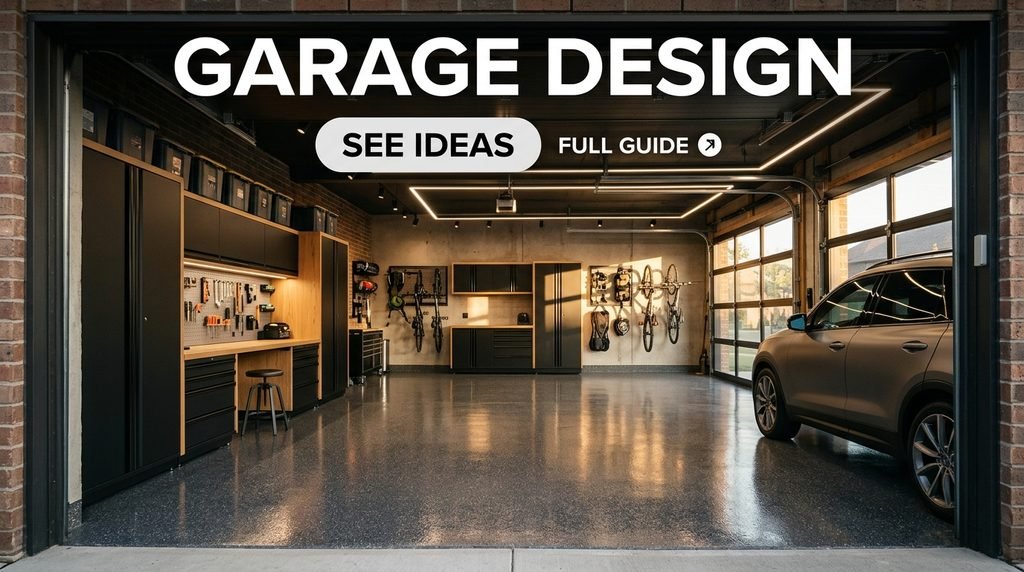
A luxury garage design transforms an ordinary parking space into an elegant environment for displaying valuable vehicles.
Consider glossy flooring, premium wall finishes, modern lighting, and custom storage cabinets. Large windows or glass doors can make the space feel more open and sophisticated.
You can also add a dedicated display area with accent lighting that highlights the vehicle’s appearance.
Choose materials that are durable and easy to maintain so the garage remains attractive over time.
3. Small Garage Design
Designing a small garage requires careful planning because available space is limited.
Use vertical storage, wall-mounted cabinets, compact shelving, and foldable workbenches to maximize the available area.
Light-colored walls can make the space feel brighter, while good lighting helps reduce dark corners. Keep the center of the garage open for parking and movement.
Avoid installing oversized cabinets that make it difficult to open vehicle doors.
4. Two-Car Garage Design
A two-car garage provides more flexibility for parking, storage, and additional activities.
Create separate parking spaces and use one wall for cabinets, shelves, or a workbench. If space allows, dedicate another section to bicycles, gardening equipment, and household storage.
A symmetrical layout can create a balanced appearance, especially when matching cabinets and lighting are used on both sides.
Plan the layout carefully to ensure both vehicles can enter, park, and exit comfortably.
5. Three-Car Garage Design
A three-car garage offers additional opportunities for storage and multi-purpose use.
You can dedicate two spaces to everyday vehicles and use the third section for a workshop, storage area, or recreational equipment.
Install cabinets along the walls and use overhead storage for suitable seasonal belongings.
A consistent flooring material, matching storage units, and coordinated lighting can make a large garage feel organized rather than overcrowded.
6. Garage Design With Epoxy Flooring
Epoxy flooring is a popular choice for modern garage interiors because it creates a smooth, attractive surface.
It is available in different colors and finishes, including solid gray, metallic effects, decorative flakes, and glossy designs.
A professionally installed epoxy system can provide a durable surface that is easier to clean than unfinished concrete. However, proper surface preparation and product selection are important.
Choose a slip-resistant finish suitable for the garage’s expected conditions.
7. Industrial-Style Garage Design
Industrial-style garages use practical materials and simple architectural details to create a workshop-inspired appearance.
Common features include exposed concrete, metal shelving, black cabinets, steel workbenches, and industrial lighting.
Dark gray, charcoal, and black are popular colors for this style. You can also introduce wooden surfaces to create contrast.
This design is particularly suitable for homeowners who use their garages for vehicle maintenance, DIY projects, or mechanical work.
8. Garage Design With Glass Doors
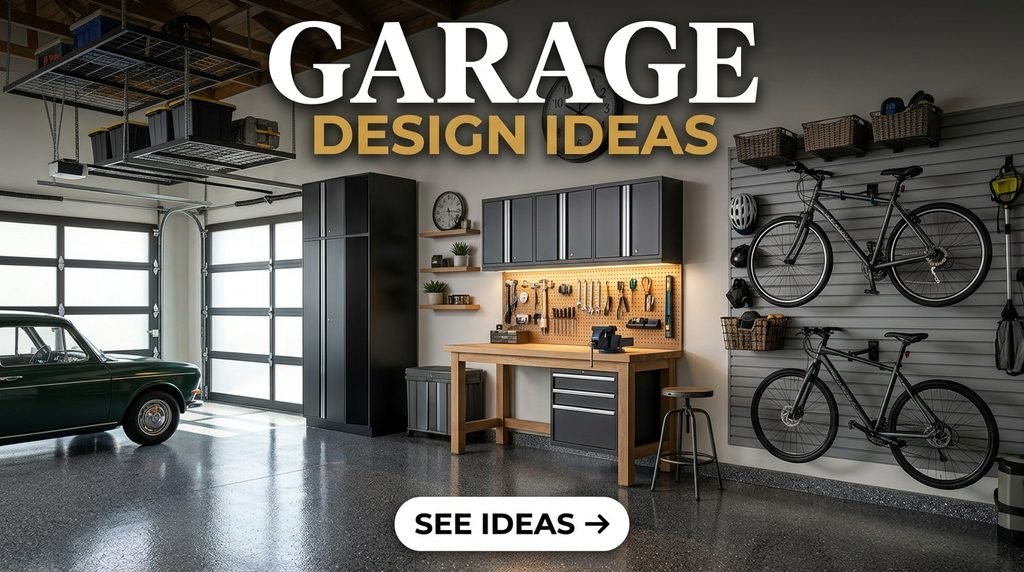
Glass garage doors can create a modern and visually appealing exterior.
They allow natural light to enter during the day and make the garage look more connected to the surrounding architecture.
Frosted or tinted glass can provide additional privacy. Insulated glass options may also help with temperature control.
Consider your climate, security needs, privacy requirements, and garage orientation before selecting a glass door system.
9. Rustic Garage Design
A rustic garage design creates a warm and welcoming atmosphere through natural materials and traditional details.
Use wood cabinets, wooden workbenches, exposed beams, and earthy colors. Stone or textured wall finishes can add character.
Warm lighting can make the space feel more comfortable, especially if the garage doubles as a workshop or hobby area.
Choose durable finishes that can handle normal garage use.
10. Contemporary Garage Design
Contemporary garage design combines modern appearance with practical features.
Use clean architectural lines, simple colors, integrated lighting, and well-planned storage.
A combination of gray walls, black cabinets, and polished flooring can create a sophisticated appearance.
You can also include smart garage door technology, motion-sensor lighting, and modern electrical outlets where appropriate.
11. Garage Design With Built-In Storage
Built-in storage creates a clean and organized appearance by integrating cabinets, drawers, and shelves into the garage layout.
You can install full-height cabinets along one wall or create a storage system around a workbench.
Choose closed cabinets for belongings you want to keep out of sight and open shelves for frequently used equipment.
Custom storage is particularly useful when the garage has unusual dimensions or limited wall space.
12. Garage Design With a Dedicated Workshop
A workshop-style garage is ideal for homeowners who enjoy woodworking, vehicle repairs, crafting, or DIY projects.
Install a sturdy workbench with drawers, a pegboard for tools, and shelves for materials.
Good lighting is essential, especially above the work surface. Include suitable electrical outlets and maintain clear space around equipment.
Make sure power tools, sharp equipment, and hazardous materials are stored safely.
13. Black and White Garage Design
A black and white garage creates a timeless and sophisticated appearance.
Use white walls to make the interior feel bright and black cabinets or trim to create contrast.
You can choose gray flooring to connect the two colors and maintain a balanced appearance.
This combination works particularly well in modern garages with simple furniture and organized storage.
14. Garage Design With Wooden Accents
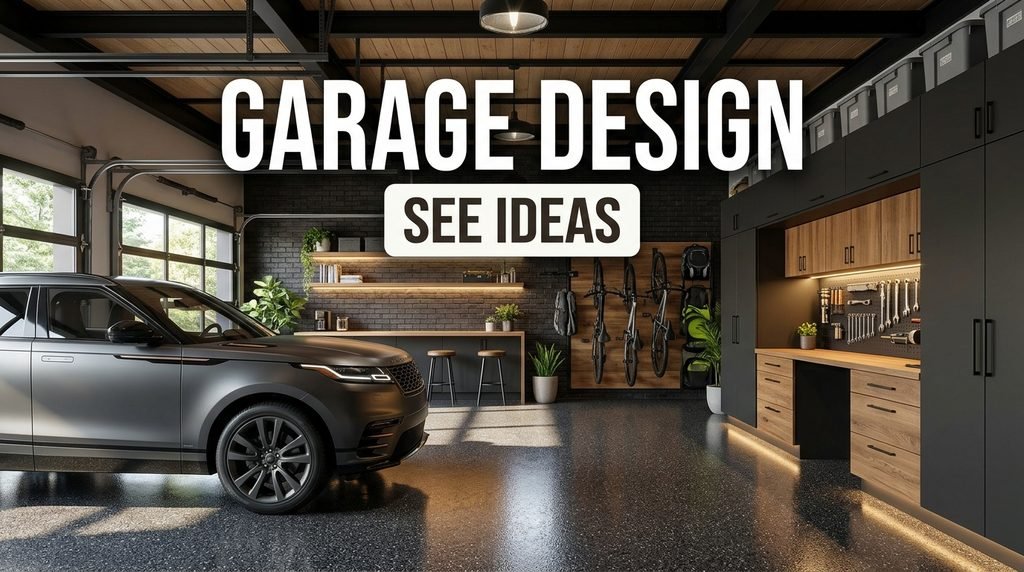
Wooden accents can make a garage feel warmer and more welcoming.
Consider wooden cabinets, decorative wall panels, floating shelves, or a wooden workbench.
You can combine wood with concrete floors, black metal storage, or white walls for a balanced modern look.
Select materials and finishes suitable for garage temperature and humidity conditions.
15. Smart Garage Design
Smart technology can make a modern garage more convenient and functional.
Consider adding:
- Smart garage door openers
- Motion-sensor lighting
- Security cameras
- Smart access controls
- Temperature monitoring
- Leak or water detection sensors
Choose reliable devices that are compatible with your existing home systems. Use secure passwords and keep connected equipment updated.
16. Garage Design With Large Windows
Windows can make a garage feel brighter and more inviting by allowing natural light inside.
Place windows where they provide useful daylight without compromising privacy or security.
Frosted glass may be suitable for garages that face a street or neighboring property.
Consider insulated windows if temperature control is important.
17. Garage Design With LED Lighting
Lighting can completely change the appearance and functionality of a garage.
LED ceiling lights provide bright general illumination, while task lighting is useful above workbenches and storage areas.
You can also use accent lighting to highlight vehicles, shelves, or architectural details.
Choose fixtures suitable for the garage environment and have electrical work completed safely.
18. Garage Design With a Car Display Area
If you enjoy collecting or showcasing vehicles, create a dedicated display area.
Use attractive flooring, clean walls, and carefully positioned lighting to highlight the vehicle.
Keep storage equipment away from the display space and maintain enough room for vehicle access.
A simple, uncluttered layout often makes the vehicle the main visual feature.
19. Farmhouse-Style Garage Design
Farmhouse garage design combines traditional charm with practical storage.
Use natural wood, neutral paint colors, metal accents, and simple shelving.
A wooden workbench, vintage-style lighting, and organized wall storage can create a distinctive look.
This style works well for garages connected to traditional or farmhouse-inspired homes.
20. Garage Design With a Mudroom Area
A mudroom-style section can be useful for families who regularly enter the home through the garage.
Add a bench, shoe storage, coat hooks, and a small cabinet for everyday belongings.
This helps prevent shoes, bags, outdoor clothing, and sports equipment from spreading throughout the home.
Choose easy-to-clean materials and keep the area separate from vehicle parking.
21. Garage Design With a Home Gym
A garage can also become a convenient exercise space.
Depending on the available area, you can include exercise mats, weights, resistance bands, a stationary bicycle, or other fitness equipment.
Use suitable flooring for the equipment and protect the floor from heavy weights. Maintain enough ventilation and ensure that vehicles and stored items do not create hazards.
A multi-purpose garage gym can be especially useful when indoor space is limited.
22. Garage Design With a Loft
A garage loft provides additional storage or usable space above the main garage area.
Depending on the building structure and local regulations, a loft may be designed for seasonal storage, a hobby area, or other permitted uses.
Structural support, ceiling height, access, fire safety, and ventilation must be carefully considered.
Consult a qualified professional before adding a loft or modifying the garage structure.
23. Garage Design With a Side Storage Area
A side storage area can help keep tools, equipment, and household belongings away from vehicle parking spaces.
Install cabinets or shelves along one side of the garage and arrange belongings by category.
This design is especially useful for two-car garages where a separate storage wall can preserve clear parking areas.
24. Garage Design With Decorative Wall Finishes
Garage walls do not have to remain plain concrete or unfinished drywall.
You can improve their appearance with suitable paint, wall panels, durable coatings, or decorative finishes.
Light gray and white can create a clean modern look, while darker shades can give the garage a bold workshop appearance.
Choose materials that are suitable for the garage environment and easy to clean.
25. Open-Concept Garage Design
An open-concept garage focuses on spaciousness, simple organization, and flexible use.
Instead of filling every wall with large cabinets, use selected storage areas and leave enough open space for parking and movement.
Keep bulky items in designated zones and use vertical storage for equipment.
This approach works well for homeowners who want a garage that feels spacious and can adapt to different needs.
Best Garage Design Colors
Color selection can influence how spacious, modern, or welcoming a garage feels.
| Color | Design effect | Suitable style |
|---|---|---|
| White | Bright and spacious | Minimalist, modern |
| Light gray | Clean and balanced | Contemporary |
| Charcoal | Bold and sophisticated | Industrial, luxury |
| Black | Strong visual contrast | Modern, automotive |
| Beige | Warm and natural | Rustic, farmhouse |
| Navy blue | Elegant and distinctive | Contemporary |
| Wood tones | Warm and welcoming | Rustic, modern |
For smaller garages, lighter colors can help make the space feel more open. Darker colors can look attractive in larger garages when balanced with suitable lighting.
Important Features to Consider Before Designing a Garage
Before starting a garage renovation or new construction project, think about how you will use the space.
Garage dimensions: Measure the length, width, and height before choosing a layout.
Vehicle clearance: Allow enough room for parking, opening doors, and walking around vehicles.
Storage requirements: Identify how much space you need for tools, equipment, and household belongings.
Flooring: Select a surface suitable for vehicle weight, cleaning, moisture, and expected use.
Lighting: Plan general and task lighting so every area remains visible.
Ventilation: Provide appropriate ventilation, especially if the garage will be used as a workshop.
Electrical outlets: Plan outlets for tools, chargers, lighting, and other equipment according to local electrical requirements.
Safety: Consider fire safety, secure chemical storage, and safe access to equipment.
Garage Design Ideas for Different Budgets
A beautiful garage does not always require an expensive renovation.
| Budget | Design improvements |
|---|---|
| Low budget | Fresh paint, basic shelves, hooks, simple lighting |
| Medium budget | Epoxy flooring, storage cabinets, LED lights, pegboards |
| High budget | Custom cabinetry, premium flooring, smart systems, architectural finishes |
| Luxury budget | Designer lighting, glass doors, custom displays, premium materials |
Start with improvements that solve practical problems. You can upgrade decorative features and custom storage later.
Common Garage Design Mistakes to Avoid
A garage may look attractive in photographs but still be inconvenient if the layout is poorly planned.
- Choosing cabinets that are too large for the available space.
- Ignoring vehicle door clearance.
- Using unsuitable flooring materials.
- Installing insufficient lighting.
- Forgetting ventilation.
- Filling every wall with storage.
- Ignoring drainage and moisture problems.
- Failing to consider electrical and fire safety.
A successful design should look attractive while remaining practical for everyday use.
Conclusion
A well-planned garage design can improve your home’s appearance while creating a more functional space for parking, storage, hobbies, and everyday activities. Whether you prefer a modern minimalist garage, a luxury vehicle display area, a rustic workshop, or a simple small-garage layout, there are many ways to create a design that suits your needs.
Start by understanding your available space and deciding how you want to use it. Choose suitable flooring, lighting, storage, colors, and furniture to create a balanced design.
With thoughtful planning, even an ordinary garage can become one of the most useful and attractive spaces in your home.
Frequently Asked Questions About Garage Design
1. What is the best garage design for a modern home?
A modern garage usually features clean lines, neutral colors, organized cabinets, LED lighting, and durable flooring. Minimalist storage and a simple layout help create a contemporary appearance.
2. How can I make my garage look luxurious?
Use premium flooring, custom cabinets, modern lighting, coordinated wall finishes, and an uncluttered layout. A dedicated vehicle display area can also create a luxurious appearance.
3. What is the best flooring for a garage?
Concrete, epoxy coatings, and suitable garage floor tiles are common choices. The best option depends on your budget, climate, expected vehicle use, and maintenance preferences.
4. How do I design a small garage?
Use vertical storage, compact cabinets, wall-mounted shelves, and foldable workbenches. Choose light colors and keep the central floor area open.
5. What colors make a garage look bigger?
White, light gray, beige, and other light neutral colors can make a garage feel brighter and more spacious.
6. How can I improve my garage without renovating it?
You can improve your garage by painting the walls, organizing storage, installing better lighting, adding shelves, and keeping the floor clear.
7. What lighting is best for a garage?
LED ceiling lights are useful for general illumination, while additional task lighting works well above workbenches and storage areas. Select fixtures suitable for garage conditions.
8. Can a garage be used as a workshop?
Yes. A garage can function as a workshop with a sturdy workbench, organized tool storage, appropriate lighting, ventilation, and suitable electrical installations.
9. How can I make a garage more functional?
Create separate storage zones, keep frequently used items accessible, choose suitable flooring, improve lighting, and maintain clear walking and parking areas.
10. What should I consider before building a new garage?
Consider garage dimensions, vehicle clearance, storage needs, building regulations, drainage, ventilation, insulation, lighting, electrical requirements, and fire safety.