
 By admin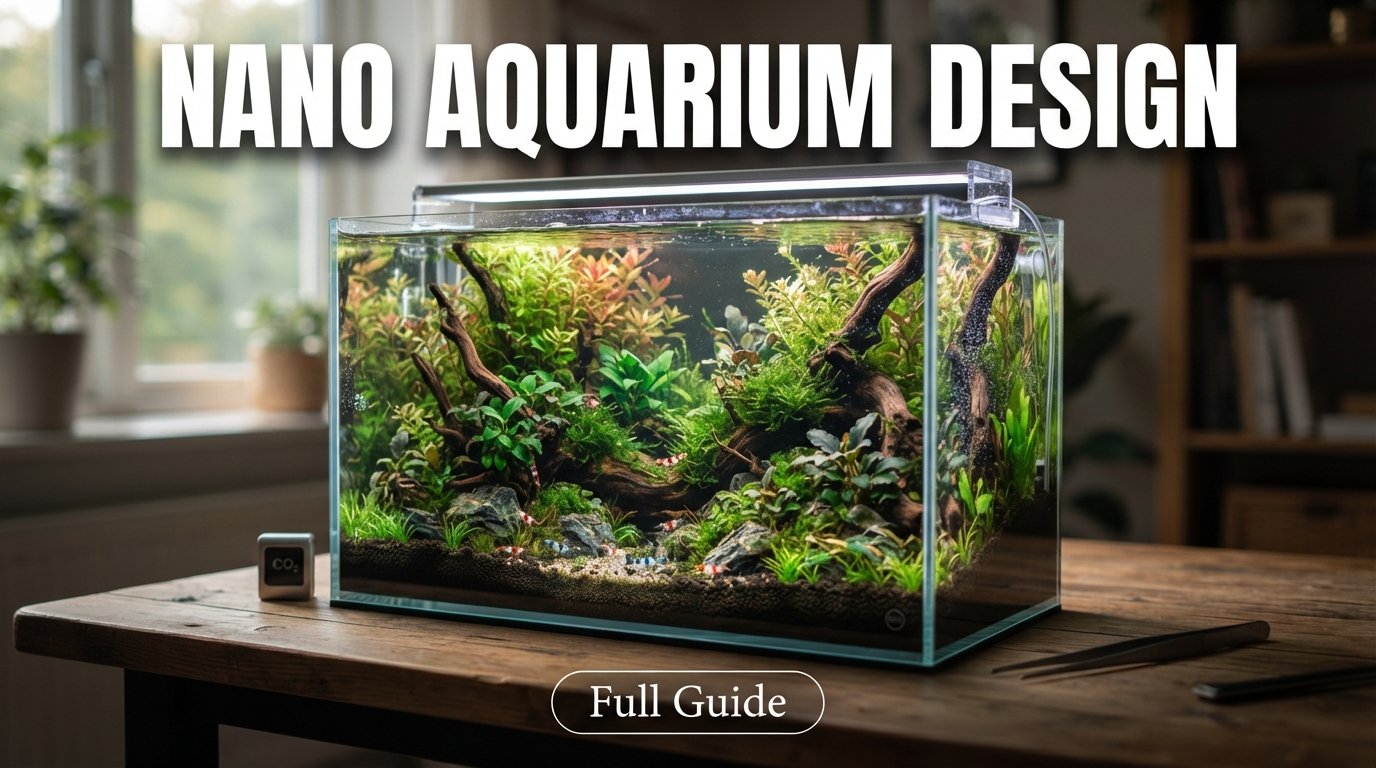
A nano aquarium design can turn a small amount of space into a beautiful underwater landscape. Nano aquariums are popular because they can fit on desks, shelves, countertops, bedside tables, and small cabinets while still creating an impressive display. With the right combination of plants, rocks, driftwood, substrate, lighting, and suitable aquatic life, even a tiny aquarium can have depth, character, and a natural appearance.
Designing a nano aquarium requires more planning than simply placing decorations inside a small tank. Because the available space is limited, every element becomes important. A carefully designed nano aquarium should balance visual beauty with the biological and maintenance needs of its inhabitants.
What Is a Nano Aquarium?
A nano aquarium is a small aquarium designed to maintain a compact aquatic environment. There is no single universal size that defines every nano aquarium, but the term is commonly used for smaller tanks ranging from very compact desktop aquariums to tanks of several gallons.
The smaller size makes nano aquariums attractive for apartments, offices, bedrooms, and other areas where a large aquarium would not be practical.
A nano aquarium can be freshwater, planted, shrimp-focused, or designed around another suitable aquatic setup. The design should always be based on the specific animals and plants being kept.
Best Nano Aquarium Design Ideas
| Nano Aquarium Design | Main Feature | Best For |
|---|---|---|
| Minimalist Nano | Simple layout | Modern interiors |
| Planted Nano | Dense aquatic plants | Nature lovers |
| Shrimp Nano | Plants and hiding areas | Shrimp keepers |
| Rockscape Nano | Stones and open space | Aquascaping |
| Driftwood Nano | Natural wood | Forest-style layouts |
| Iwagumi Nano | Carefully arranged rocks | Minimalist aquascaping |
| Jungle Nano | Dense vegetation | Natural appearance |
| Desktop Nano | Compact footprint | Offices |
| Cube Nano | Balanced dimensions | Modern rooms |
| Blackwater Nano | Dark water and wood | Natural biotope style |
Minimalist Nano Aquarium Design
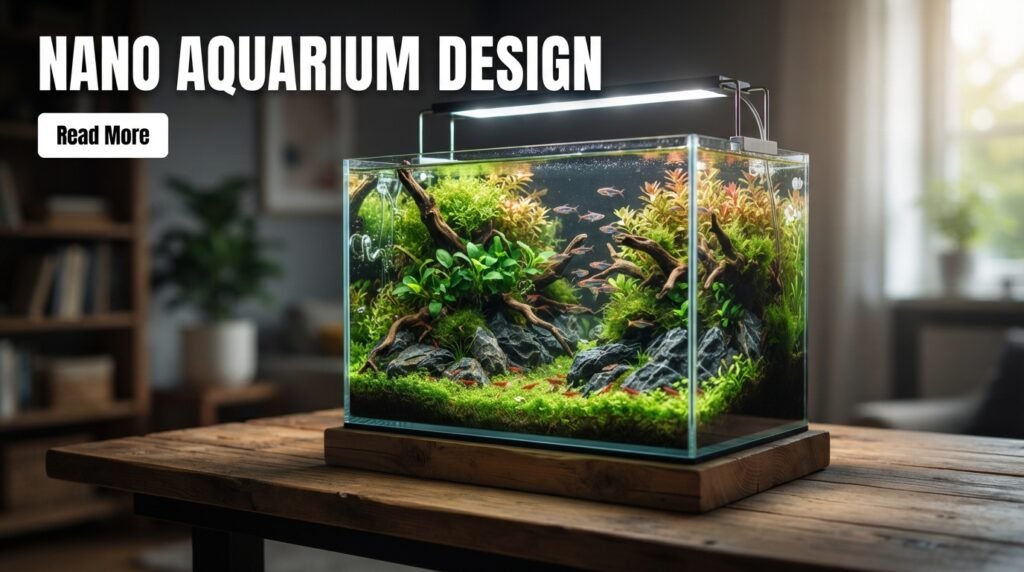
A minimalist nano aquarium focuses on simplicity. Instead of filling the tank with many decorations, use a few carefully selected elements.
A small group of stones, one piece of driftwood, and a limited number of plants can create an attractive composition. Leaving some open space makes the aquarium appear larger.
Minimalist designs work particularly well in modern homes and offices because they complement clean furniture and simple interiors.
The key is restraint. Too many rocks, plants, decorations, and fish can make a small tank look crowded.
Nano Planted Aquarium Design
A planted nano aquarium is one of the most popular small aquarium styles. Aquatic plants can create depth, texture, and a natural appearance even in a very small space.
Foreground plants can create a miniature carpet, while taller plants can be placed toward the back. Midground plants can connect the two areas.
When choosing plants, consider their eventual size and growth rate. A plant that looks small when purchased may quickly dominate a nano aquarium.
Good plant selection can make a small aquarium feel like a miniature underwater garden.
Nano Shrimp Aquarium Design
Shrimp can be a popular choice for appropriately designed nano aquariums. A shrimp-focused layout can include moss, small plants, rocks, and driftwood that provide surfaces for grazing and hiding.
Because shrimp are small, they can interact with details that would not be noticeable in a larger aquarium.
A nano shrimp aquarium should prioritize stable water conditions and appropriate filtration. The visual design should support the animals rather than simply maximizing decoration.
Nano Aquarium With Driftwood
Driftwood can become the central feature of a nano aquarium. A small branch or twisted piece of wood can create the appearance of a miniature underwater tree.
Choose a piece that fits the tank’s proportions. Oversized driftwood can make the aquarium feel smaller, while a carefully scaled piece can create depth.
Small plants can be attached around the wood to create a natural forest-like appearance.
Nano Aquarium With Rocks
Rocks are excellent for creating structure in a nano aquascape. Instead of using many small stones, consider choosing one main stone and several supporting stones.
The largest rock can act as the focal point, while smaller rocks create a visual transition around it.
Leave some open substrate around the rocks to prevent the layout from appearing overcrowded.
Iwagumi Nano Aquarium
An Iwagumi-inspired nano aquarium uses rocks as the primary structural elements. The design usually emphasizes simplicity, balance, and open space.
A dominant stone can serve as the main focal point, with smaller stones positioned around it.
Low-growing plants can be used to create a simple green landscape without hiding the rock structure.
Because nano aquariums have limited space, Iwagumi-style layouts can be especially effective when the proportions are carefully planned.
Nano Jungle Aquarium
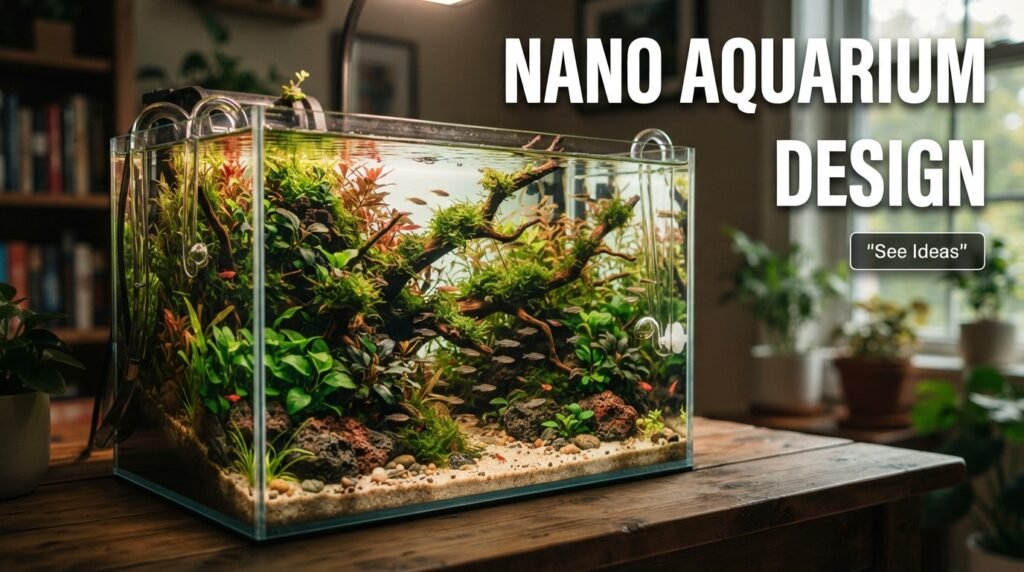
A jungle-style nano aquarium takes the opposite approach to minimalist design. Instead of emphasizing open space, it uses plants to create a dense underwater environment.
Different plant heights, leaf shapes, and textures can produce a layered appearance.
However, a jungle nano aquarium should still have a clear focal point. Without planning, dense plants can quickly turn a small aquarium into a visually confusing mass.
Nano Aquarium Cube Design
Cube-shaped nano aquariums offer interesting design possibilities because their height and width can provide a balanced viewing area.
A cube aquarium can be designed around a central piece of driftwood, a rock formation, or a small planted landscape.
Vertical space can be used with taller plants and branches, while the foreground remains relatively open.
Cube tanks can look particularly attractive on desks, shelves, and small furniture pieces.
Nano Aquarium for a Desk
A desktop nano aquarium can add a natural feature to a home office or workspace.
A small planted tank with subtle lighting can create a visually interesting display without requiring the space of a large aquarium.
Place the aquarium somewhere stable and away from direct sunlight, excessive heat, and accidental contact with office equipment.
The equipment should also be arranged so that maintenance does not interfere with normal work.
Nano Aquarium for a Bedroom
A small aquarium can also work well in a bedroom. A simple planted design can provide a peaceful visual feature.
Choose a location where the aquarium can be easily accessed for feeding and maintenance. Equipment noise should also be considered.
A simple design with green plants, natural stones, and gentle lighting can complement neutral bedroom furniture.
Modern Nano Aquarium Design
Modern nano aquarium designs usually feature clean glass, simple aquascaping, neutral colors, and minimal equipment visibility.
A frameless aquarium can create a particularly clean appearance. A simple cabinet or stand can keep the design visually organized.
Avoid adding unnecessary ornaments if the goal is a modern appearance. Natural materials such as stone and wood often provide a more sophisticated look than excessive artificial decorations.
Nano Aquarium With Sand
Sand can create an attractive foreground in a nano aquarium. A light-colored sand path can be used to create visual depth, while darker substrate can provide contrast against green plants.
The depth of the sand should be appropriate for the aquarium and its inhabitants.
One useful design approach is to create a slightly deeper substrate toward the back of the aquarium. This can make the layout appear deeper than it actually is.
Nano Aquarium With Moss
Aquarium moss is useful for small layouts because it can attach to rocks and driftwood while creating a soft, natural appearance.
Moss can be used to make driftwood look older and more natural or to soften the appearance of hardscape materials.
Because moss can grow over time, it should be trimmed when necessary to prevent it from covering the entire aquascape.
Nano Aquarium With a Waterfall Effect
A miniature waterfall-inspired layout can create an unusual visual effect. In some aquascaping designs, carefully arranged rocks and substrate can give the impression of water flowing through a landscape.
A true above-water waterfall requires a specialized setup, while a visual waterfall effect can simply be created through the arrangement of substrate, rocks, and light-colored materials.
This style works best when the design remains simple and the focal point is clearly visible.
Nano Reef Aquarium Design
A nano reef aquarium can provide a small-scale marine display, but it requires careful planning and appropriate equipment.
The design can focus on live rock, corals, sand, and suitable marine inhabitants.
Lighting, filtration, water movement, salinity, and water quality are particularly important in marine nano aquariums.
Because small water volumes can change quickly, regular monitoring and maintenance are essential.
Blackwater Nano Aquarium
A blackwater-inspired nano aquarium can recreate the appearance of naturally tannin-rich freshwater environments.
Driftwood, leaf litter, dark substrate, and subdued lighting can produce a darker natural appearance.
This type of design can be particularly attractive for aquarists who enjoy biotope-inspired aquariums.
The fish and other inhabitants should be selected according to the specific water conditions required by the setup.
Nano Aquarium With a Background
A background can change how a small aquarium looks. A dark background can make green plants stand out and hide equipment behind the tank.
A plain background often works better than a highly detailed printed background in a modern nano aquarium.
For a natural appearance, dark gray, black, or subtle neutral backgrounds can help emphasize the aquascape.
Creating Depth in a Nano Aquarium
Creating depth is one of the biggest challenges in nano aquarium design.
One effective approach is to use larger elements toward the back and smaller details toward the front. The substrate can also slope upward toward the rear.
Avoid placing every object in a straight line. Slightly offsetting rocks and wood can create a more natural perspective.
Open foreground space can also make the aquarium appear larger.
Choosing Plants for a Nano Aquarium
Plant selection should be based on the aquarium’s size, lighting, substrate, and maintenance requirements.
Small-growing plants are generally easier to manage in compact aquariums. Mosses, compact foreground plants, and appropriately sized stem or rosette plants can all be considered depending on the setup.
Before purchasing a plant, check how large it can become. A plant that eventually grows too large may require frequent trimming or replacement.
Lighting for Nano Aquariums
Lighting is important for both appearance and plant growth.
A nano aquarium light should provide appropriate illumination for the type of plants being kept. Excessive lighting can encourage unwanted algae, while insufficient light may limit plant growth.
The light should also complement the room. A well-positioned light can make the aquarium stand out without producing excessive glare.
Filtration in a Nano Aquarium
Even a tiny aquarium needs appropriate filtration when required by its inhabitants and setup.
Small internal filters, sponge filters, or other compact filtration systems can be suitable depending on the aquarium.
The filter should provide appropriate biological and mechanical filtration without creating excessive water movement for inhabitants that prefer calmer conditions.
In a shrimp-focused nano aquarium, filter intake protection can also be important to reduce the risk of small shrimp being drawn into the filter.
Choosing Fish for a Nano Aquarium
The small size of a nano aquarium limits the fish that can be kept safely. Not every small-looking fish is suitable for a very small aquarium.
Always consider the adult size, swimming behavior, social requirements, water parameters, and activity level of the species.
In some nano setups, shrimp or snails may be more appropriate than fish. The goal should always be to provide a suitable environment rather than filling the aquarium simply because there is available space.
Nano Aquarium Hardscape
Hardscape refers to the non-living structural elements of the aquarium, such as rocks and driftwood.
In a nano aquarium, hardscape selection is especially important because large objects can quickly consume the available space.
Choose materials that have interesting shapes and use them to create a clear visual structure.
A simple arrangement with one dominant element is often more effective than a collection of unrelated decorations.
Nano Aquarium Design for Small Spaces
One of the biggest advantages of a nano aquarium is its compact footprint.
It can fit into areas such as:
- Small apartments
- Home offices
- Bedrooms
- Kitchen counters
- Shelves
- Desks
- Reception areas
- Study rooms
- Small living rooms
However, the surface must be stable and strong enough for the aquarium.
Common Nano Aquarium Design Mistakes
One common mistake is overcrowding. A small tank has limited visual space, so excessive decorations can make the aquarium look messy.
Another mistake is choosing plants or fish that eventually become too large.
Poor maintenance planning can also create problems. Even a beautiful nano aquarium needs regular attention to water quality, plant growth, equipment, and general cleanliness.
Another frequent mistake is placing a nano aquarium in direct sunlight. This can contribute to temperature fluctuations and algae problems.
How to Make a Nano Aquarium Look Bigger
You can make a nano aquarium appear larger by creating visual depth.
Use a substrate slope, place larger hardscape toward the back, and keep the foreground relatively open.
A dark background can also help create contrast, while smaller plants toward the front can reinforce the sense of scale.
Avoid filling every corner. Negative space is especially valuable in a small aquarium.
How to Plan a Nano Aquarium Design
Start by selecting the aquarium itself and deciding where it will be placed.
Next, determine what type of aquatic environment you want. Choose the inhabitants before finalizing the design because their requirements will affect filtration, plants, substrate, and water conditions.
After that, select the hardscape and create the basic structure. Add substrate, plants, equipment, and lighting according to the needs of the setup.
Finally, allow the aquarium to establish properly before adding livestock according to an appropriate aquarium cycling and stocking plan.
Maintenance of a Nano Aquarium
Small aquariums can require careful maintenance because changes in a limited volume of water can have a noticeable effect.
Regular maintenance may include:
- Checking water parameters
- Performing appropriate water changes
- Cleaning the glass
- Removing excess algae
- Trimming plants
- Checking filtration
- Inspecting equipment
- Removing dead plant material
- Monitoring inhabitants
Consistency is more important than trying to perform large amounts of maintenance only occasionally.
Final Thoughts
A nano aquarium design proves that a small aquarium can still have a big visual impact. With thoughtful planning, a compact tank can become a miniature planted landscape, a shrimp habitat, a minimalist aquascape, or a stylish feature for a desk or living space.
The best nano aquarium designs focus on proportion, simplicity, depth, and the needs of the inhabitants. Rather than trying to include everything in a small tank, select a clear theme and make each element contribute to the overall design.
Whether you prefer rocks, driftwood, aquatic plants, moss, sand, or a minimalist layout, the right arrangement can transform a tiny aquarium into an attractive underwater world.
Frequently Asked Questions
What is the best design for a nano aquarium?
Minimalist planted, shrimp-focused, rockscape, driftwood, and Iwagumi-inspired designs can all work well. The best choice depends on the inhabitants and your preferred appearance.
How do I make a nano aquarium look bigger?
Use a sloping substrate, smaller foreground plants, larger hardscape toward the back, and open space. Avoid overcrowding the aquarium.
Are nano aquariums easy to maintain?
They can be convenient because they use less space and water, but their small water volume can make changes in water quality happen more quickly. Consistent maintenance is important.
Can I keep fish in a nano aquarium?
Some fish may be suitable for appropriately sized nano aquariums, but many species need more swimming space. Always research the adult size and care requirements before stocking.
Are nano aquariums good for shrimp?
A properly established and maintained nano aquarium can be suitable for certain freshwater shrimp. Plants, moss, hiding areas, and stable water conditions can make the environment more suitable.
What plants are good for a nano aquarium?
Compact aquatic plants and mosses are often useful because they can maintain suitable proportions. The best plants depend on lighting, substrate, water conditions, and maintenance preferences.
Can I create an Iwagumi design in a nano aquarium?
Yes. A small aquarium can work very well for an Iwagumi-inspired layout because the style emphasizes a small number of carefully arranged rocks and open space.
Should a nano aquarium have a filter?
Filtration depends on the specific setup and inhabitants, but many nano aquariums benefit from appropriate biological and mechanical filtration.
Can I put a nano aquarium on my desk?
Yes, provided the desk or surface is stable and strong enough to support the aquarium. Keep the tank away from electronics and direct sunlight.
What is the biggest mistake when designing a nano aquarium?
Overcrowding is one of the most common mistakes. Too many decorations, plants, or unsuitable inhabitants can make the aquarium difficult to maintain and visually unbalanced.