
 By admin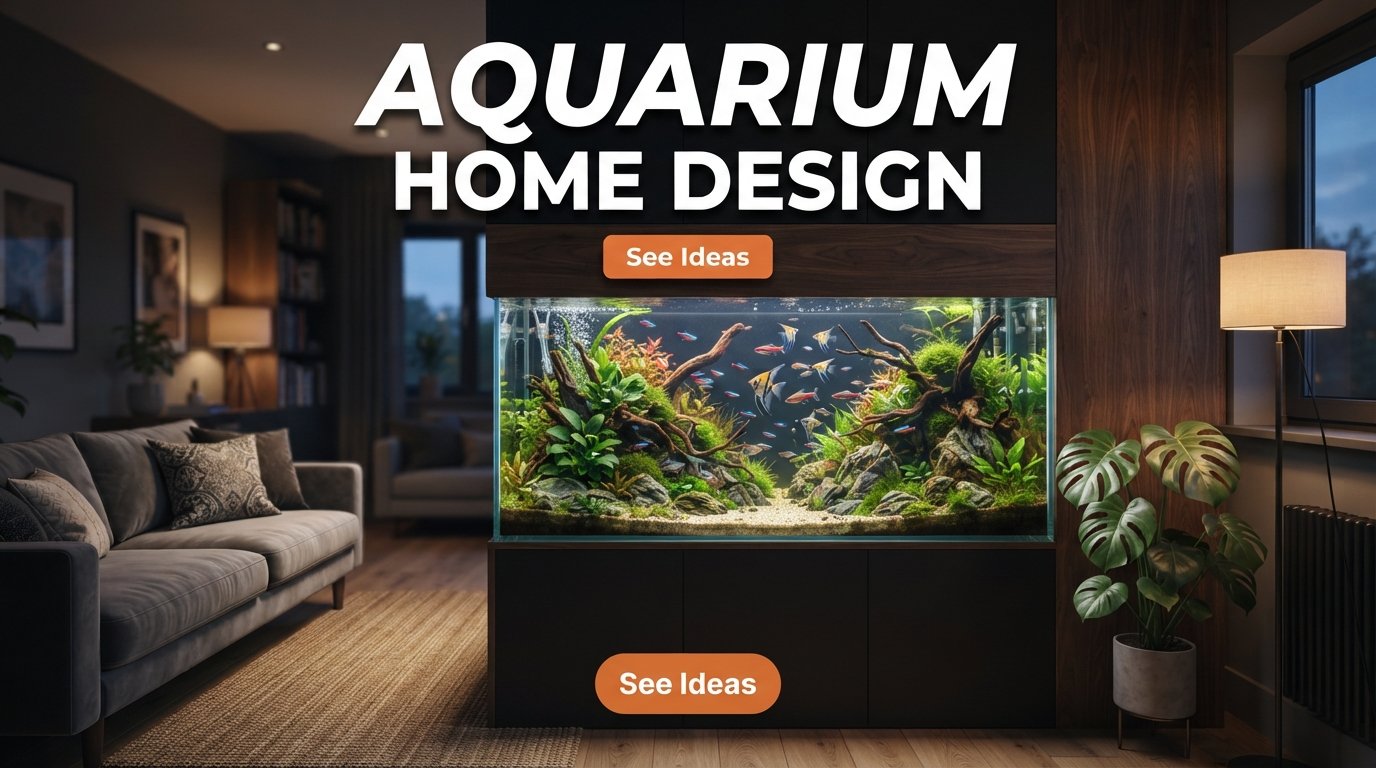
Aquarium home design is a wonderful way to bring the beauty of underwater life into your living space. A thoughtfully designed aquarium can become much more than a place to keep fish. It can serve as a focal point, room divider, decorative feature, relaxing visual element, or even an architectural part of the home. With the right combination of aquarium size, aquascaping, lighting, furniture, and surrounding décor, a home aquarium can complement almost any interior style.
Modern homeowners have many options when designing an aquarium. A traditional freestanding fish tank can provide a simple solution, while a built-in aquarium can become part of a wall or custom furniture unit. Other possibilities include staircase aquariums, TV wall aquariums, room-divider tanks, corner aquariums, and large feature displays.
The most successful aquarium home design balances appearance with the needs of the fish. A beautiful aquarium still requires appropriate filtration, lighting, water movement, maintenance access, and a suitable environment for its inhabitants.
What Is Aquarium Home Design?
Aquarium home design refers to planning and integrating an aquarium into a home’s interior so that the tank works both as a healthy aquatic environment and as part of the overall décor.
The design can include the aquarium itself, its stand or cabinet, lighting, aquascaping, filtration equipment, surrounding walls, furniture, and decorative elements.
A home aquarium can be designed around an existing room or incorporated into a new home during construction.
Popular Aquarium Home Design Ideas
| Aquarium Design | Main Feature | Best Location |
|---|---|---|
| Built-In Wall Aquarium | Integrated into the wall | Living room |
| Room Divider Aquarium | Visible from two sides | Open-plan rooms |
| TV Unit Aquarium | Aquarium combined with media wall | Living room |
| Staircase Aquarium | Built around stairs | Hallway |
| Corner Aquarium | Uses unused corner space | Small rooms |
| Bedroom Aquarium | Relaxing decorative tank | Bedroom |
| Kitchen Aquarium | Decorative kitchen feature | Kitchen |
| Office Aquarium | Professional focal point | Home office |
| Floor Aquarium | Glass viewing panel in floor | Luxury homes |
| Large Feature Aquarium | Major visual centerpiece | Large rooms |
1. Built-In Wall Aquarium
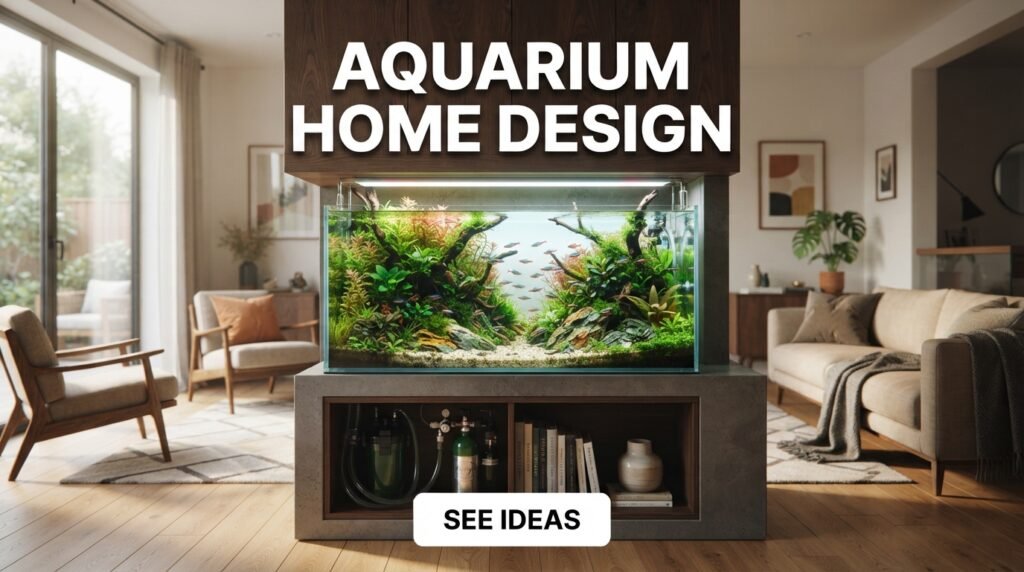
A built-in wall aquarium is one of the most impressive aquarium home design ideas.
Instead of placing the aquarium in front of the wall, the tank is incorporated into the wall structure. Only the front viewing glass may be visible, while filtration equipment and plumbing can be hidden behind the surrounding construction.
A built-in aquarium can create a clean architectural appearance and save some visible floor space.
Before construction, consider structural support, access to equipment, waterproofing, electrical connections, and maintenance space.
2. Living Room Aquarium Design
The living room is one of the most popular locations for a home aquarium.
A large aquarium can become the main focal point of the room. You can place it against a feature wall, beside a sofa, inside a media unit, or between different areas of the room.
For modern living rooms, frameless glass, simple cabinetry, and minimalist aquascaping can create a sophisticated appearance.
For traditional interiors, a wooden aquarium cabinet and natural rock or driftwood aquascape may work better.
3. Aquarium as a Room Divider
A room-divider aquarium is both decorative and functional.
A double-sided tank can separate the living room from the dining area while remaining visible from both spaces.
For this design, create an aquascape that looks attractive from multiple viewing angles. Avoid placing all the important decorations directly against one side of the tank.
An open central aquascape can allow fish to move throughout the display while maintaining visibility from both rooms.
4. TV Unit With Aquarium
Combining an aquarium with a TV unit can create a dramatic living-room feature.
The aquarium can be placed beside the television, beneath it, or integrated into the larger media wall.
A common approach is to position the aquarium on one side of the TV and storage cabinets on the other. This creates visual balance.
Make sure aquarium humidity and water splashes are kept away from electrical equipment.
5. Aquarium Under the Staircase
The area beneath a staircase can sometimes be used for an aquarium.
A custom-built tank can follow the available space and transform an otherwise unused area into a decorative feature.
This design requires careful planning because access may be limited. Filters, pumps, heaters, and other equipment need to remain accessible.
The staircase structure should also be properly evaluated before installing a heavy aquarium.
6. Corner Aquarium Design
A corner aquarium can make use of an otherwise empty part of a room.
Corner tanks can be especially useful in smaller homes where wall space is limited.
A triangular, curved, or standard rectangular aquarium can be positioned in the corner depending on the room layout.
Keep the surrounding area uncluttered so the aquarium does not feel squeezed into the space.
7. Bedroom Aquarium Design
A small or medium aquarium can become a calming feature in a bedroom.
A simple planted aquarium with gentle lighting can create a natural atmosphere.
Consider equipment noise before placing an aquarium near the bed. Pumps and filters should be selected and positioned appropriately if quiet operation is important.
Avoid excessively bright aquarium lighting if the tank will be used in a room where people sleep.
8. Kitchen Aquarium Design
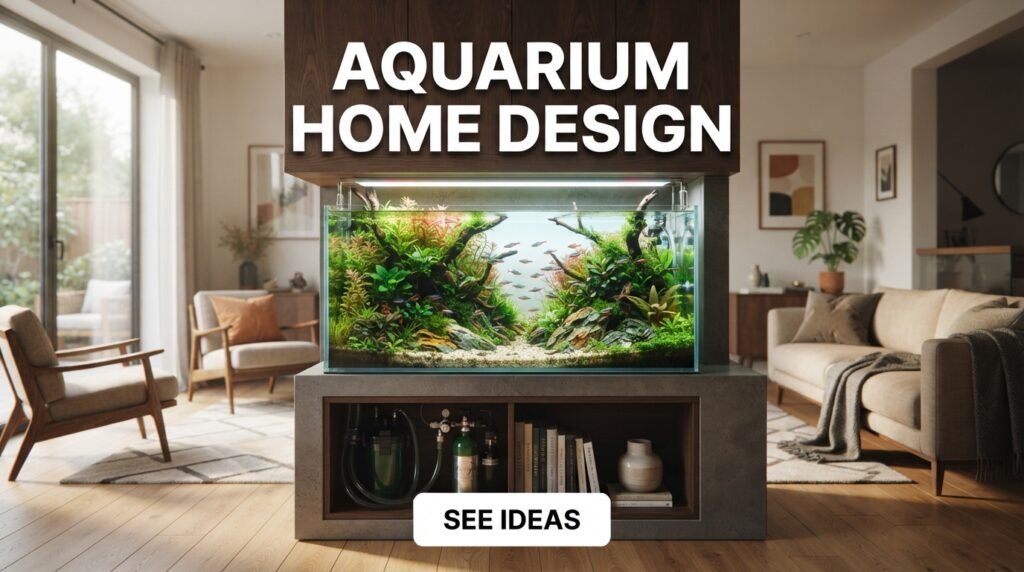
An aquarium can also be incorporated into a kitchen.
A small tank can be installed between cabinets or used as part of a decorative wall.
A larger built-in aquarium can separate a kitchen from an adjacent dining area.
However, the aquarium should be positioned away from cooking splashes, excessive heat, and areas where cleaning chemicals could accidentally enter the water.
9. Home Office Aquarium
A home office aquarium can provide an attractive visual break from screens and work.
A small desktop aquarium or wall-mounted tank can fit into a professional workspace without taking up too much room.
For a modern office, use a simple glass tank, clean cabinetry, and a restrained aquascape.
A planted aquarium can also provide natural texture in an otherwise technology-focused room.
10. Entryway Aquarium
An aquarium in the entrance area can make a strong first impression.
A narrow vertical aquarium can work particularly well where floor space is limited.
Another option is to place a large aquarium along an entrance wall.
Ensure there is enough clearance around the tank so people can walk comfortably and maintenance can be performed safely.
Modern Aquarium Home Design
Modern aquarium designs generally emphasize clean lines, simple materials, and minimal decoration.
A frameless aquarium combined with white, black, gray, or natural wood cabinetry can complement modern interiors.
Inside the aquarium, an asymmetrical aquascape with open space can create a sophisticated appearance.
Hidden equipment can further improve the clean look.
Luxury Aquarium Home Design
A luxury home can accommodate a large custom aquarium that becomes part of the architecture.
Floor-to-ceiling aquariums, double-sided displays, massive reef tanks, and custom feature walls can all create a dramatic effect.
Luxury does not necessarily mean adding excessive decoration. A large, carefully designed aquarium with premium cabinetry and professional lighting can make a stronger statement than a crowded display.
Minimalist Home Aquarium
A minimalist aquarium uses simplicity as its main design principle.
Choose a simple tank shape, limited materials, and a carefully planned aquascape.
One major rock formation or a small group of plants can provide the focal point.
Leave plenty of negative space so the fish remain easy to see.
Natural Home Aquarium Design
A natural aquarium can bring the appearance of a forest, river, lake, or reef into your home.
Use natural-looking rocks, driftwood, aquatic plants, sand, gravel, and carefully selected fish.
Avoid arranging everything symmetrically. Natural environments generally contain different heights, textures, and open areas.
Aquarium Furniture Design
The aquarium stand should complement the home’s furniture.
Wooden cabinets can provide a warm appearance, while sleek painted cabinets can suit modern interiors.
The cabinet should provide enough room for filtration equipment, electrical connections, and maintenance supplies.
Do not sacrifice structural support for appearance. The stand must be designed to support the aquarium’s full operating weight.
Aquarium Lighting for Home Design
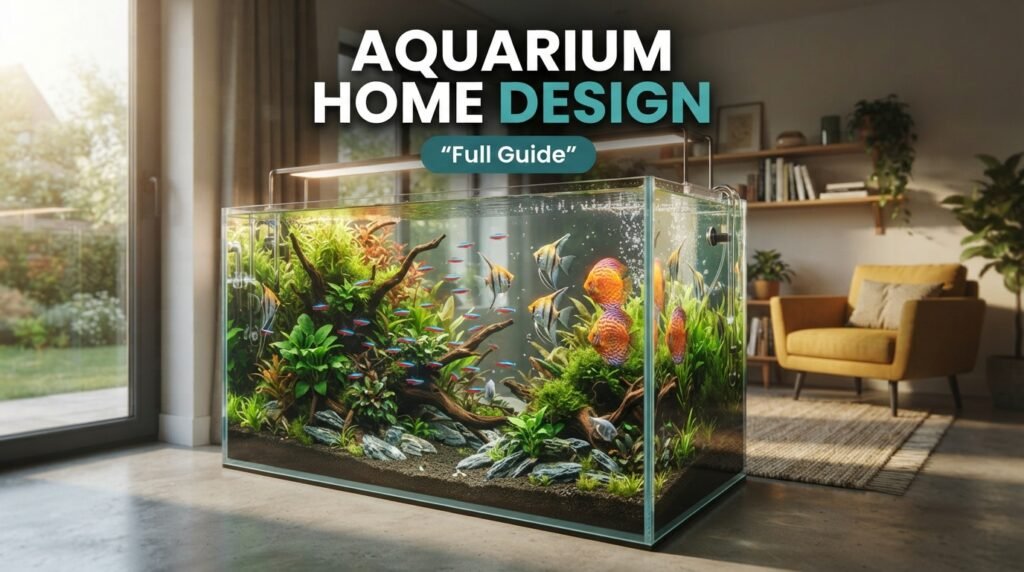
Lighting can dramatically change the appearance of an aquarium.
For planted freshwater aquariums, lighting should support plant growth while creating an attractive display.
Reef aquariums have additional lighting requirements based on their corals and livestock.
For the surrounding room, avoid placing extremely bright aquarium lighting where it creates uncomfortable glare.
Hidden accent lighting around the aquarium cabinet or wall can also make the tank stand out.
Built-In Aquarium Feature Wall
A feature wall can combine the aquarium with shelving, cabinets, lighting, and decorative materials.
For example, a large aquarium can occupy the center while wooden shelves surround it.
Another design can use stone or textured panels around the aquarium.
The feature wall should be planned as one complete composition rather than adding an aquarium to an already finished wall without considering proportions.
Aquarium With Storage
Combining aquarium space with storage can be practical in smaller homes.
Cabinets beneath or beside the aquarium can store fish food, cleaning supplies, testing equipment, nets, and other accessories.
Keep electrical components and water-sensitive materials organized and protected.
A custom cabinet can hide filtration equipment while keeping maintenance access available.
Small Home Aquarium Design
You do not need a large house to create an attractive aquarium.
A nano aquarium, desktop aquarium, narrow wall tank, or corner aquarium can fit into a small apartment.
Use a simple aquascape and avoid overcrowding.
A smaller tank should still have appropriate filtration and maintenance. Its compact size does not eliminate the need for proper care.
Large Home Aquarium Design
Large aquariums provide more opportunities for creative design.
You can create multiple rock formations, caves, planted areas, open swimming zones, and larger architectural features.
A large aquarium can also be incorporated into a room divider, feature wall, staircase, or entertainment unit.
Because large aquariums are extremely heavy when filled, structural support should be carefully considered before installation.
Aquarium Home Design for Different Fish
The fish you keep should influence your aquarium design.
Community fish may benefit from planted areas and open swimming space.
Bottom-dwelling fish can benefit from suitable substrate and hiding places.
Fish that prefer caves may need rock structures with secure openings.
Active swimmers may require a longer aquarium rather than a very tall one.
Always consider adult fish size and behavior when planning the tank.
Aquarium Aquascaping Ideas
Aquascaping is the process of arranging the aquarium’s interior elements.
Some popular styles include:
Island Aquascape
Create one main rock formation surrounded by open water.
Two-Island Aquascape
Use two separate structures with a swimming area between them.
Jungle Aquascape
Combine dense aquatic plants with wood and rocks.
Minimalist Aquascape
Use a few carefully selected elements and plenty of negative space.
Reef Aquascape
Use rocks and corals to create a marine environment.
The best style depends on the aquarium, livestock, and overall home design.
Aquarium Placement Tips
Location is one of the most important decisions.
Avoid placing an aquarium where it receives excessive direct sunlight because this can contribute to unwanted algae growth and temperature fluctuations.
Choose a location near suitable electrical access and where water changes can be performed conveniently.
Leave enough space around the aquarium for cleaning and equipment maintenance.
Also consider how the aquarium will look from the main seating areas.
Aquarium Safety in the Home
Water and electricity require careful planning.
Electrical equipment should be installed appropriately and protected from water exposure.
Use suitable supports and ensure the aquarium is level.
Keep the aquarium away from areas where children or pets could accidentally damage the equipment.
For large installations, professional structural and electrical planning can be appropriate.
Common Aquarium Home Design Mistakes
One common mistake is choosing an aquarium that is too large for the room.
Another is designing the aquarium around appearance without considering maintenance.
Poor equipment access can make routine cleaning difficult.
Overcrowded aquascaping can also reduce the visual impact of the aquarium.
Some homeowners position aquariums in direct sunlight or too close to heat sources.
Finally, do not forget the surrounding furniture. The aquarium should complement the room rather than appear disconnected from it.
How to Create Your Aquarium Home Design
Start by identifying the room where the aquarium will be installed.
Measure the available space and decide how large the aquarium can realistically be.
Next, determine the type of aquarium you want, such as freshwater, planted, reef, or fish-only.
Choose the livestock before finalizing the interior layout because different species have different requirements.
Then plan filtration, lighting, heating, equipment storage, and maintenance access.
Finally, select the stand, cabinetry, wall materials, and decorative style.
Final Thoughts
Aquarium home design can turn a simple fish tank into an important part of your home’s interior. Whether you choose a small desktop aquarium, a built-in wall display, a room-divider tank, a TV unit aquarium, or a large architectural feature, the design possibilities are extensive.
The most successful home aquariums combine attractive appearance with practical planning. Consider the aquarium’s location, size, livestock, filtration, lighting, maintenance access, and structural support before focusing on decorative details.
A carefully planned aquarium can complement modern, minimalist, natural, traditional, or luxury interiors while creating a relaxing living environment. With the right design, your aquarium can become a beautiful living feature that grows more interesting as the aquatic environment matures.
FAQs About Aquarium Home Design
What is the best place for an aquarium in a home?
Living rooms, home offices, entryways, and dining areas are popular choices. The ideal location should provide adequate support, electrical access, maintenance space, and protection from excessive sunlight and heat.
Can an aquarium be built into a wall?
Yes. Built-in wall aquariums can be incorporated into home architecture. Structural support, waterproofing, plumbing, electrical access, and maintenance access should be planned before installation.
Is an aquarium good for a small home?
Yes. Nano tanks, corner aquariums, narrow tanks, and wall-integrated designs can work in smaller spaces.
Can an aquarium be used as a room divider?
Yes. A properly supported double-sided aquarium can separate two areas while providing a view of aquatic life from both sides.
How do I make my home aquarium look modern?
Use clean lines, simple cabinetry, a frameless tank, concealed equipment, appropriate lighting, and a minimalist aquascape.
What aquarium size is best for a home?
The appropriate size depends on the available space, budget, maintenance ability, and livestock. The aquarium should be large enough to provide a suitable environment for the species you plan to keep.
Can I put an aquarium in the bedroom?
Yes. A small aquarium can work well in a bedroom. Consider equipment noise, lighting, humidity, and safe placement.
Can I put an aquarium near a TV?
Yes, but the aquarium should be positioned so water cannot splash onto electrical equipment. A properly planned TV unit aquarium can create an attractive feature wall.
How can I hide aquarium equipment?
Equipment can be placed inside a suitable cabinet, sump area, or dedicated equipment compartment while maintaining easy access for cleaning and maintenance.
Should an aquarium be placed in direct sunlight?
Direct sunlight is generally best avoided because it can contribute to algae growth and temperature changes.
How do I make a small aquarium look larger?
Use an open aquascape, avoid excessive decorations, create visual depth, and leave negative space. A simple background can also make the tank appear more spacious.
Can I design an aquarium under a staircase?
Yes. An aquarium can be custom-built into the space beneath a staircase, provided there is adequate structural support and enough access for maintenance.
What makes a luxury aquarium design?
Large custom tanks, architectural integration, high-quality cabinetry, carefully planned lighting, concealed equipment, and professionally designed aquascaping can create a luxury aquarium appearance.
How should I plan an aquarium before installing it?
First determine the location and tank size, then select the aquarium type and livestock. After that, plan filtration, lighting, plumbing, electrical access, maintenance space, cabinetry, and the aquascape.