
 By admin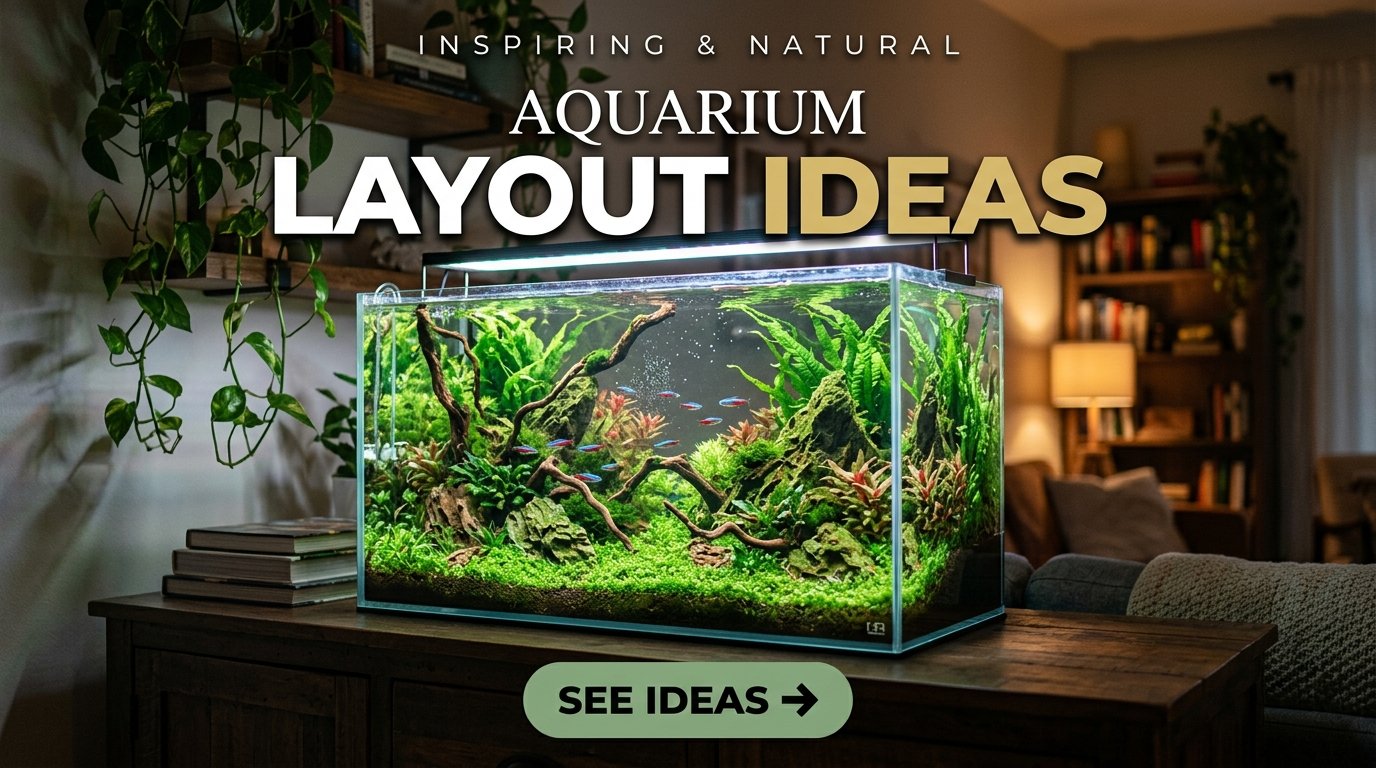
Aquarium layout ideas can help you transform an ordinary fish tank into a beautiful underwater landscape that looks natural, organized, and relaxing. Whether you have a small desktop aquarium, a planted freshwater tank, or a large community aquarium, the right layout can improve the appearance of your setup while providing fish with comfortable swimming areas, hiding places, and a suitable environment.
A successful aquarium layout is about more than arranging decorations. It involves choosing the right substrate, placing plants and rocks carefully, creating visual depth, and leaving enough open space for fish to swim. The best designs combine beauty with the practical needs of the aquatic animals living inside the tank.
In this guide, you will discover creative aquarium layout ideas for different tank sizes, decorating styles, planted aquariums, beginner-friendly setups, and natural underwater landscapes.
What Is an Aquarium Layout?
An aquarium layout is the arrangement of plants, rocks, driftwood, substrate, decorations, and open swimming areas inside a fish tank. It determines how the aquarium looks and how efficiently the available space is used.
Some layouts imitate natural rivers, forests, and mountain landscapes. Others use minimalist arrangements, colorful decorations, or carefully positioned artificial plants to create a distinctive appearance.
A well-designed aquarium layout should provide three important benefits. First, it creates an attractive underwater scene. Second, it gives fish enough space to swim, rest, and hide. Third, it allows you to maintain the aquarium without constantly moving decorations or damaging plants.
Before choosing a style, consider the size of your aquarium, the fish you keep, the equipment you need, and how much time you can spend maintaining the setup.
1. Natural Aquarium Layout
A natural aquarium layout recreates the appearance of an underwater environment. It usually combines natural-colored gravel or sand, driftwood, stones, and aquatic plants.
Start with a dark or earthy substrate and place a few pieces of aquarium-safe driftwood near the center or toward one side. Add plants of different heights around the wood and rocks. Keep some open space in the foreground so the tank does not appear crowded.
Choose plants with different leaf shapes to create a more realistic appearance. Anubias, Java fern, Java moss, and suitable Cryptocoryne varieties can work well in many freshwater setups.
This layout is suitable for community aquariums containing compatible fish such as certain tetras, rasboras, and small peaceful bottom-dwelling species.
The most important rule is to avoid making every part of the aquarium look identical. Slight differences in plant height, rock placement, and substrate level help create a more natural environment.
2. Minimalist Aquarium Layout
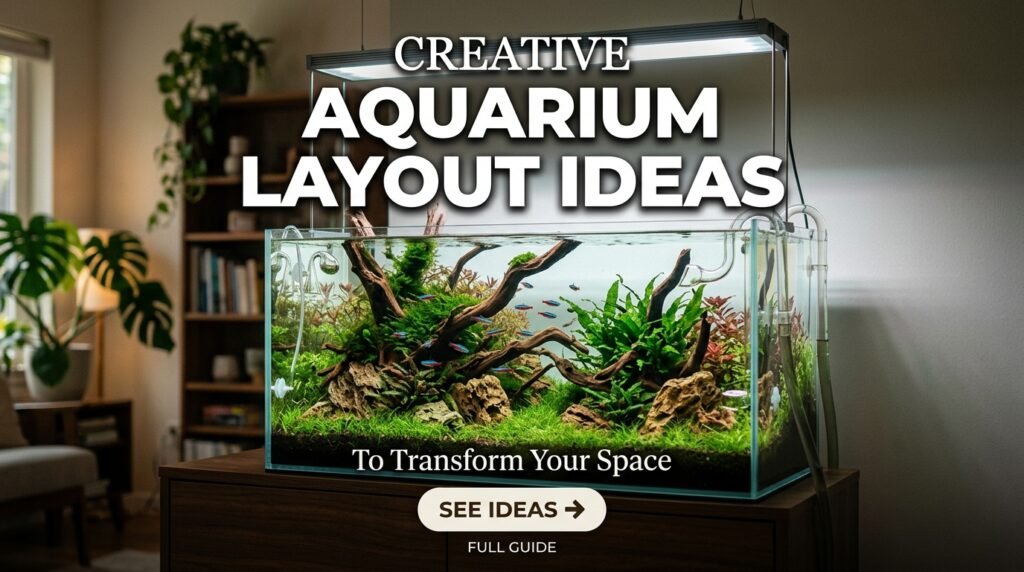
A minimalist aquarium layout focuses on simplicity. Instead of filling the entire tank with decorations, it uses a limited number of carefully selected elements.
You might choose a single piece of driftwood, a small group of rocks, and a few plants. Leave a large portion of the aquarium open to emphasize the shapes of the decorations and the movement of the fish.
This style works especially well in modern homes, offices, bedrooms, and small apartments. It can also make cleaning easier because there are fewer objects to remove or work around.
For the best result, select decorations that complement each other in color and texture. Avoid adding many unrelated ornaments, as they can make a minimalist setup look cluttered.
Remember that a simple appearance does not mean a biologically simple aquarium. The tank still needs adequate filtration, appropriate lighting, and suitable water conditions.
3. Planted Aquarium Layout
A planted aquarium layout uses living aquatic plants as the main decorative feature. Plants add texture, color, and movement while providing cover for fish and surfaces for beneficial microorganisms.
A popular approach is to arrange plants according to height. Place shorter plants toward the front, medium-height plants in the middle, and taller plants along the back and corners.
Beginner-friendly options may include Java fern, Anubias, Java moss, and certain Cryptocoryne species. Floating plants can also create shaded areas when used in moderation and when permitted by the tank’s equipment and inhabitants.
For a healthy planted aquarium, select plants that match your lighting, substrate, and maintenance routine. Some plants need nutrient-rich substrate or additional fertilization, while others grow well attached to rocks and driftwood.
Avoid covering every inch of the substrate with plants at the beginning. Leaving room for growth makes the aquarium easier to maintain and allows the layout to develop naturally.
4. Iwagumi Aquarium Layout
An Iwagumi aquarium layout is a minimalist aquascaping style that emphasizes stone placement. It often uses a small number of rocks arranged to create balance, direction, and a sense of scale.
A common design includes one dominant stone, sometimes called the main stone, supported by smaller stones that complement its shape. The rocks should look like parts of the same natural landscape rather than separate decorations placed randomly.
Low-growing aquatic plants are often used to create a carpet-like appearance around the stones. Suitable plants depend on the aquarium’s light, nutrient availability, and maintenance requirements.
This layout is visually striking, but it can require more care than it initially appears. Carpet plants may need stronger lighting, careful nutrient management, and regular trimming. Choose easier plants if you are new to aquascaping.
Use only aquarium-safe rocks and make sure heavy stones cannot fall or slide. Place them securely before adding substrate or water.
5. Driftwood Aquarium Layout
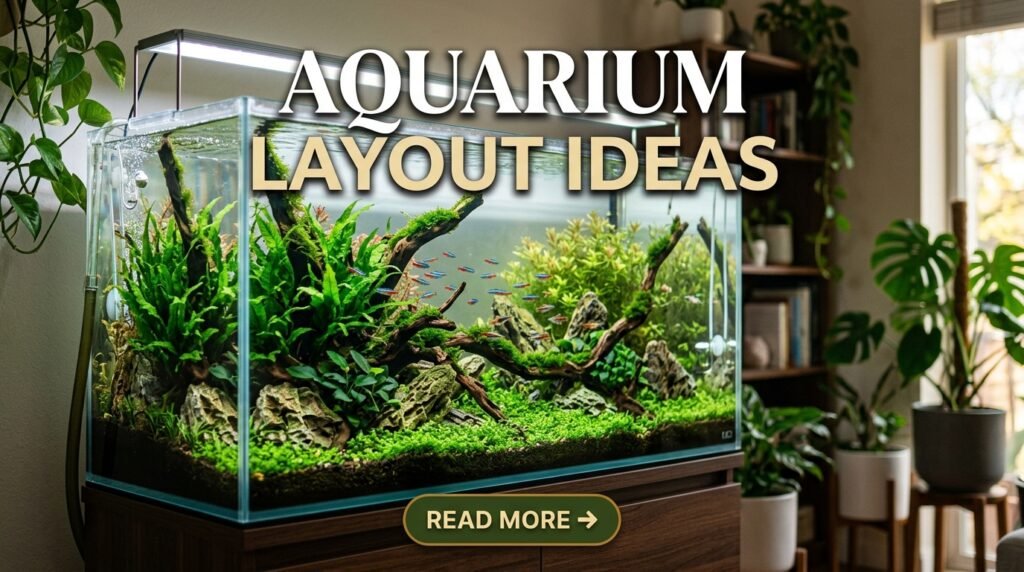
Driftwood can become the main feature of an aquarium. Its branching shape creates the appearance of tree roots, fallen branches, or submerged forest structures.
Position a large piece toward one side of the tank and angle its branches toward the center. Attach suitable plants such as Anubias, Java fern, or moss to create a more natural effect.
For a balanced appearance, combine the driftwood with smaller stones and a simple substrate. Avoid placing large pieces directly in front of the aquarium glass if they block the view of the fish.
Use wood specifically prepared for aquarium use. Some wood releases tannins that turn the water light brown, which is generally harmless for many freshwater aquariums and can create a natural blackwater appearance. However, the effect depends on the wood, fish species, and water conditions.
Soak or prepare wood according to its type and size, and never use wood treated with paint, preservatives, or other chemicals that could contaminate the water.
6. Rock-Based Aquarium Layout
A rock-based aquarium layout uses stones as the primary structural elements. This design can look like a rocky riverbed, mountain slope, or underwater canyon.
Start by selecting rocks with similar colors or textures. Arrange the largest pieces toward the back or along one side, then use smaller stones to connect the arrangement visually.
You can create a valley through the middle of the aquarium by leaving an open path between two groups of rocks. Another option is to build a sloping rock arrangement that appears to rise from the foreground toward the back.
Choose rock types carefully. Some rocks can alter water hardness or pH, which may be unsuitable for certain fish and plants. Test unfamiliar materials before using them.
Heavy rocks should rest securely on a stable base rather than on loose substrate where burrowing fish might undermine them. Do not stack stones in a way that creates unstable structures.
7. Aquarium Layout Ideas for Small Tanks
Small aquariums need thoughtful layouts because even a few decorations can take up a significant amount of swimming space.
For a small tank, choose one main decorative feature, such as a piece of driftwood or a compact rock arrangement. Add a few appropriately sized plants and leave open water in front.
Use decorations that are proportionate to the aquarium. Oversized castles, large artificial plants, and bulky ornaments can make a small tank look cramped.
A small aquarium also has less water volume to dilute waste and buffer sudden changes in water conditions. Therefore, the layout should make routine cleaning easy and avoid creating inaccessible areas where debris accumulates.
Do not choose fish solely because they are small. Check their adult size, activity level, social needs, and minimum aquarium requirements. A five-gallon aquarium, for example, is not suitable for every small fish species.
8. 10-Gallon Aquarium Layout Ideas
A 10-gallon aquarium offers enough room for several different design styles, although stocking options remain limited.
One attractive option is a planted corner layout. Place taller plants at the back, arrange a piece of driftwood along one side, and leave the opposite side relatively open.
Another idea is a small river-inspired layout with rounded aquarium-safe stones, fine substrate, and plants arranged along the back and edges.
A minimalist layout can also work well. Use a few small stones and a compact piece of wood instead of filling the tank with numerous decorations.
When planning a 10-gallon aquarium, account for the space occupied by the filter, heater, and other equipment. Make sure fish can move freely and that decorations do not obstruct water circulation.
9. 20-Gallon Aquarium Layout Ideas
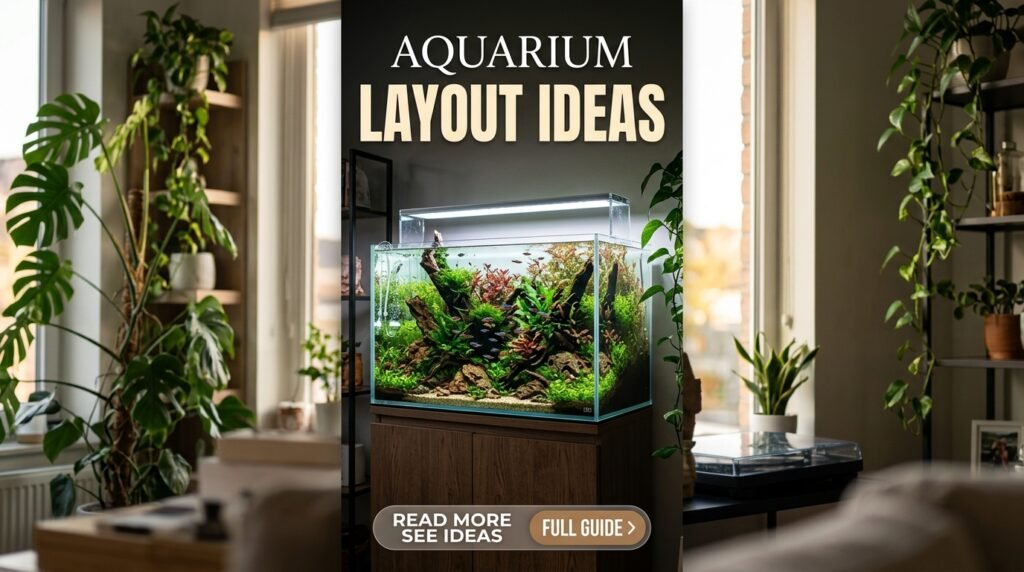
A 20-gallon aquarium provides more flexibility for creating visual depth and separating different areas of the tank.
You can build a planted forest layout with branching driftwood, moss-covered surfaces, and taller plants in the background. Alternatively, create a rock garden with a central group of stones and low-growing plants.
A gentle slope in the substrate can make the tank look deeper. Keep the slope stable and avoid excessively deep layers that trap waste or create maintenance problems.
If you keep a community of compatible fish, use plants and decorations to create separate visual zones without dividing the aquarium into tiny spaces. Some fish prefer open swimming areas, while others appreciate vegetation and cover.
Choose livestock according to the aquarium’s actual dimensions, filtration, and water conditions rather than volume alone.
10. Aquarium Layout With Sand
Sand creates a clean, natural appearance and can resemble a riverbed, beach, or shallow-water habitat.
A sand-based aquarium can be designed with driftwood, rounded stones, and plants placed in small groups. Leaving an open sandy foreground creates a strong visual contrast with the background.
Use aquarium-safe sand with a suitable grain size for your fish. Fine sand can be appropriate for many species, but it must be managed properly to avoid compacted areas and debris buildup.
Some plants need root nutrients and may benefit from root tabs when grown in inert sand. Plants that attach to rocks and driftwood can be convenient alternatives.
Do not stir up the entire substrate during every cleaning session. Instead, remove visible waste carefully and use a siphon technique suitable for your sand and aquarium inhabitants.
11. Blackwater Aquarium Layout
A blackwater aquarium is inspired by naturally tannin-rich freshwater habitats, where submerged branches, leaf litter, and subdued lighting create a darker appearance.
Use aquarium-safe driftwood and suitable botanicals, such as prepared catappa leaves, when appropriate for the species being kept. The water may develop a tea-like tint as tannins are released.
A blackwater layout often includes a dark substrate, scattered leaves, branching wood, and modest plant growth. The goal is to create a habitat that resembles the natural conditions of the fish rather than simply making the water dark.
Not every fish prefers the same water chemistry. Research the requirements of your species before deliberately changing pH, hardness, or other parameters. Monitor water quality and remove decomposing material when necessary.
12. Aquarium Layout With Live Plants and Driftwood
Combining live plants and driftwood creates a layered, natural-looking aquarium.
Start with one main piece of wood that has an interesting shape. Position smaller branches so that they lead the eye through the tank rather than pointing in unrelated directions.
Attach epiphytic plants such as Anubias and Java fern to suitable surfaces. Moss can soften sharp edges and make the wood look older. Plant taller species behind the wood and shorter species in the foreground.
Keep the central composition slightly asymmetrical. A main feature positioned off-center often looks more natural than one placed exactly in the middle.
Leave adequate room around the wood for fish to swim and for you to reach the substrate during maintenance.
13. Aquarium Layout for Guppies
Guppies are active fish that benefit from a layout offering both open swimming areas and vegetation.
Place live plants along the back and sides of the aquarium while leaving an unobstructed area in the center. Plants such as Java moss and suitable stem plants can provide cover for fry, although dense growth should not prevent adequate circulation or maintenance.
Floating plants can provide shade and cover, but they should not block the entire surface or interfere with filtration and gas exchange.
Choose smooth, aquarium-safe decorations without sharp edges that could damage fins. Keep the water clean and stable, and avoid overcrowding as guppies reproduce quickly under suitable conditions.
A well-planned guppy aquarium should make it easy to observe fish behavior, feed them, and remove waste.
14. Aquarium Layout for Betta Fish
A betta aquarium should provide resting places, gentle areas of water movement, and easy access to the surface.
Use live plants, broad leaves, and smooth decorations to create sheltered areas. Keep some open space for swimming and ensure that plants or ornaments do not prevent the fish from reaching the surface.
Silk artificial plants can be an alternative when live plants are not practical, provided they are designed for aquariums and have no sharp edges. Avoid rough plastic plants that can tear delicate fins.
Bettas need heated, filtered water and stable conditions. Their layout should not be used as a substitute for appropriate tank size, filtration, or regular maintenance.
15. Aquarium Layout for Shrimp
A shrimp aquarium often focuses on small-scale details, plant growth, and natural surfaces.
Moss, smooth stones, driftwood, and fine-leaved plants provide places for shrimp to graze and explore. A sponge filter or a suitable intake guard can help protect small shrimp from being drawn into filtration equipment.
Create several sheltered areas while leaving enough open substrate to observe the shrimp and remove waste. Shrimp can be sensitive to sudden changes in water chemistry, so choose decorations and substrates that are appropriate for the species.
Avoid adding materials that may release copper or other harmful substances. Use aquarium-safe products and check that fertilizers and treatments are suitable for invertebrates.
16. Aquarium Layout With a Cave
Caves can make an aquarium more interesting while providing shelter for fish that prefer enclosed spaces.
You can create a cave using a purpose-made aquarium ornament, a suitable rock structure, or aquarium-safe ceramic décor. Position it near the side or toward the back so it contributes to the overall layout without dominating the tank.
Make sure the entrance is large enough for the intended fish and that there are no sharp edges. A cave should not be made from unstable rock piles that could collapse.
Some fish are territorial and may defend caves or other hiding places. If you keep territorial species, provide enough space and shelters to reduce competition.
17. Aquarium Layout for a Natural River Theme
A river-themed aquarium imitates a flowing freshwater habitat through the use of rounded stones, driftwood, and open swimming areas.
Arrange smooth stones along the bottom and place wood near one side. Use plants that suit the fish species and water conditions rather than assuming every river habitat contains dense vegetation.
Choose a filter that provides appropriate circulation without creating excessive current for the fish. Some species prefer fast-moving water, while others need calmer areas.
This style works particularly well when the selected livestock and décor reflect a similar natural environment. Research the habitat needs of the fish before combining species from different water conditions.
18. Aquarium Layout for a Bedroom
A bedroom aquarium can become a relaxing focal point when the layout is visually simple and the equipment is managed carefully.
Choose a design with gentle colors, natural stones, driftwood, and a modest amount of greenery. Avoid excessive bright decorations if you prefer a calm appearance.
Position the aquarium on a level stand designed to support its filled weight. Keep it away from direct sunlight, which can encourage algae growth and cause temperature fluctuations.
Consider filter noise and lighting schedules. A timer can help maintain a consistent day-and-night cycle, while appropriate equipment placement can reduce disturbance during sleep.
The aquarium still needs regular care, including water changes, filter maintenance, and temperature monitoring.
Aquarium Layout Ideas Compared
| Layout style | Main materials | Difficulty | Best feature |
|---|---|---|---|
| Natural | Plants, driftwood, stones | Easy to moderate | Realistic appearance |
| Minimalist | Few rocks or one wood feature | Easy | Clean and uncluttered design |
| Planted | Live aquatic plants | Easy to advanced | Lush greenery |
| Iwagumi | Carefully arranged stones | Moderate to advanced | Strong visual balance |
| Driftwood | Aquarium-safe wood and plants | Easy to moderate | Branching natural shapes |
| Rock-based | Stones and limited plants | Easy to moderate | Mountain or canyon effect |
| Sand-based | Aquarium-safe sand, wood, stones | Easy to moderate | Bright, open foreground |
| Blackwater | Driftwood, suitable botanicals | Moderate | Dark, natural atmosphere |
| Shrimp-focused | Moss, plants, small stones | Moderate | Detailed miniature habitat |
| River-themed | Rounded stones, wood | Easy to moderate | Natural riverbed appearance |
How to Plan a Beautiful Aquarium Layout
Choose a Main Focal Point
A focal point is the main feature that attracts attention when someone looks at your aquarium. It might be a large piece of driftwood, a group of stones, a distinctive plant, or an aquarium-safe cave.
Choose one main feature instead of using several decorations that compete for attention. Position it slightly to one side if you want a more natural composition.
Create Depth With Substrate
A gentle substrate slope can make an aquarium appear deeper. Keep the front layer relatively shallow and increase the depth toward the back when appropriate for the substrate and plants.
Avoid steep, unstable slopes that collapse during maintenance. If you need to support a significant difference in substrate height, use suitable aquarium-safe methods rather than relying on loose sand alone.
Arrange Plants by Height
Place shorter plants in the foreground, medium-height plants in the middle, and taller plants near the back. This arrangement keeps the front visible while making the tank look layered.
Leave room for plants to grow. A layout that looks perfect on the first day may become crowded after several weeks if fast-growing species are planted too densely.
Balance Decorations and Open Space
A common mistake is filling every empty area with decorations. Fish need space to swim, and open areas make the layout easier to appreciate.
Leave enough room for fish to turn comfortably, for water to circulate, and for you to clean the aquarium. The ideal balance depends on the species, aquarium dimensions, and decoration size.
Use Consistent Colors and Textures
Choose a limited palette of colors to create a coordinated appearance. Natural brown wood, gray stones, green plants, and dark substrate can work together without looking overly decorative.
Bright ornaments can also be effective if you prefer a colorful theme. The key is to use them deliberately and ensure every item is safe for aquatic use.
Plan Around Your Fish
Always select the layout according to the fish rather than choosing fish to fit an unsuitable design. Some species need hiding places, some need open swimming space, and others dig in the substrate or rearrange decorations.
Research compatibility, adult size, temperature, water chemistry, and social requirements before stocking the tank.
Common Aquarium Layout Mistakes to Avoid
Overcrowding the aquarium: Too many ornaments reduce swimming space and make cleaning difficult. Start with a few important elements and add more only when necessary.
Using unsafe decorations: Painted objects, untreated wood, metal items that can corrode, and rocks containing unsuitable minerals can harm aquarium inhabitants. Use materials intended for aquarium use or verify their safety.
Ignoring stability: Heavy stones and wood must be secured so they cannot fall, especially when fish dig or move substrate.
Blocking the filter: Decorations should not obstruct the filter intake or prevent appropriate water movement throughout the tank.
Choosing plants without checking their needs: Some plants require stronger lighting, additional nutrients, or specific water conditions. Select species that match your setup.
Ignoring maintenance access: Leave enough room to reach the glass, substrate, filter, and other equipment. A beautiful layout should remain practical after the aquarium is established.
Adding fish too soon: A finished-looking layout does not mean the aquarium is biologically ready. Establish the nitrogen cycle, verify safe water conditions, and introduce livestock responsibly.
Tips for Maintaining Your Aquarium Layout
A good aquarium layout should remain attractive as plants grow and fish move around. Regular maintenance prevents debris and algae from changing the appearance of the tank.
Trim plants when they begin blocking the foreground or covering other species. Remove dead leaves and siphon accumulated waste carefully. Clean the glass when algae appears, and inspect wood, rocks, and artificial decorations for instability or damage.
Perform routine water changes based on the aquarium’s stocking, water quality, and maintenance needs. Test the water when necessary, particularly for ammonia, nitrite, and nitrate. Ammonia and nitrite should remain at zero in an established, properly functioning aquarium.
Clean filter media according to the filter manufacturer’s guidance, using aquarium water where appropriate to avoid unnecessarily damaging beneficial bacteria. Do not replace all biological filter media at once unless there is a specific reason.
Avoid changing the entire layout frequently. Moving decorations can stress fish, disturb plant roots, and release trapped debris. If you want to redesign the aquarium, make changes gradually and monitor water quality afterward.
Frequently Asked Questions
What is the best aquarium layout for beginners?
A natural layout with a simple substrate, a few smooth stones, one piece of aquarium-safe driftwood, and easy-care plants is an excellent starting point. It looks attractive without requiring complicated arrangements.
How can I make my aquarium look beautiful?
Choose one main focal point, arrange plants at different heights, create a gentle substrate slope, and leave open swimming space. Coordinated colors and a balanced arrangement usually look better than a tank filled with unrelated decorations.
Which aquarium layout is easiest to maintain?
A minimalist layout with a small number of decorations and easy-care plants is often straightforward to maintain. However, the actual workload depends on the fish, lighting, filtration, and plant growth.
Are live plants better than artificial plants?
Live plants can absorb some nutrients, provide shelter, and support natural grazing behavior. Artificial plants require less plant care, but they do not provide the same biological benefits. Choose smooth, aquarium-safe artificial plants if you use them.
Can I use ordinary rocks in an aquarium?
Not all rocks are suitable. Some may change water hardness or pH, and contaminated rocks can introduce harmful substances. Choose known aquarium-safe materials and test unfamiliar rocks before use.
How do I create depth in an aquarium?
Use a slightly deeper substrate toward the back, smaller visual elements in the distance, and plants of different heights. Leaving an open foreground can also make the aquarium appear larger.
What is the best layout for a 10-gallon aquarium?
A planted corner layout, a compact driftwood design, or a minimalist rock arrangement can work well. Keep decorations proportionate to the tank and ensure the chosen fish have enough space and suitable living conditions.
How many decorations should an aquarium have?
There is no fixed number. Use enough decorations to create shelter and a pleasing design without overcrowding the tank. The appropriate amount depends on aquarium size, fish behavior, and the size of each object.
Do aquarium decorations affect water quality?
Yes. Unsafe materials can release chemicals or alter water chemistry. Even safe decorations can collect waste if water circulation is poor. Choose appropriate materials and maintain the aquarium regularly.
Should I arrange the aquarium before adding fish?
Yes. Install the substrate, decorations, plants, and equipment before introducing fish whenever possible. Then establish the nitrogen cycle and verify that the water is safe before stocking the aquarium.
Conclusion
Aquarium layout ideas offer endless possibilities, from minimalist stone arrangements and lush planted tanks to driftwood forests, river-inspired designs, and compact layouts for smaller aquariums. The best choice depends on your available space, preferred style, maintenance routine, and the needs of your fish.
Start with a clear plan, select aquarium-safe materials, and arrange the main decorations before adding smaller details. Use plants and rocks to create depth while preserving open swimming areas and access for maintenance.
Most importantly, remember that a successful aquarium combines attractive design with healthy living conditions. When your layout supports the natural behavior of your fish and remains easy to maintain, you can enjoy a beautiful underwater environment for years to come.