
 By admin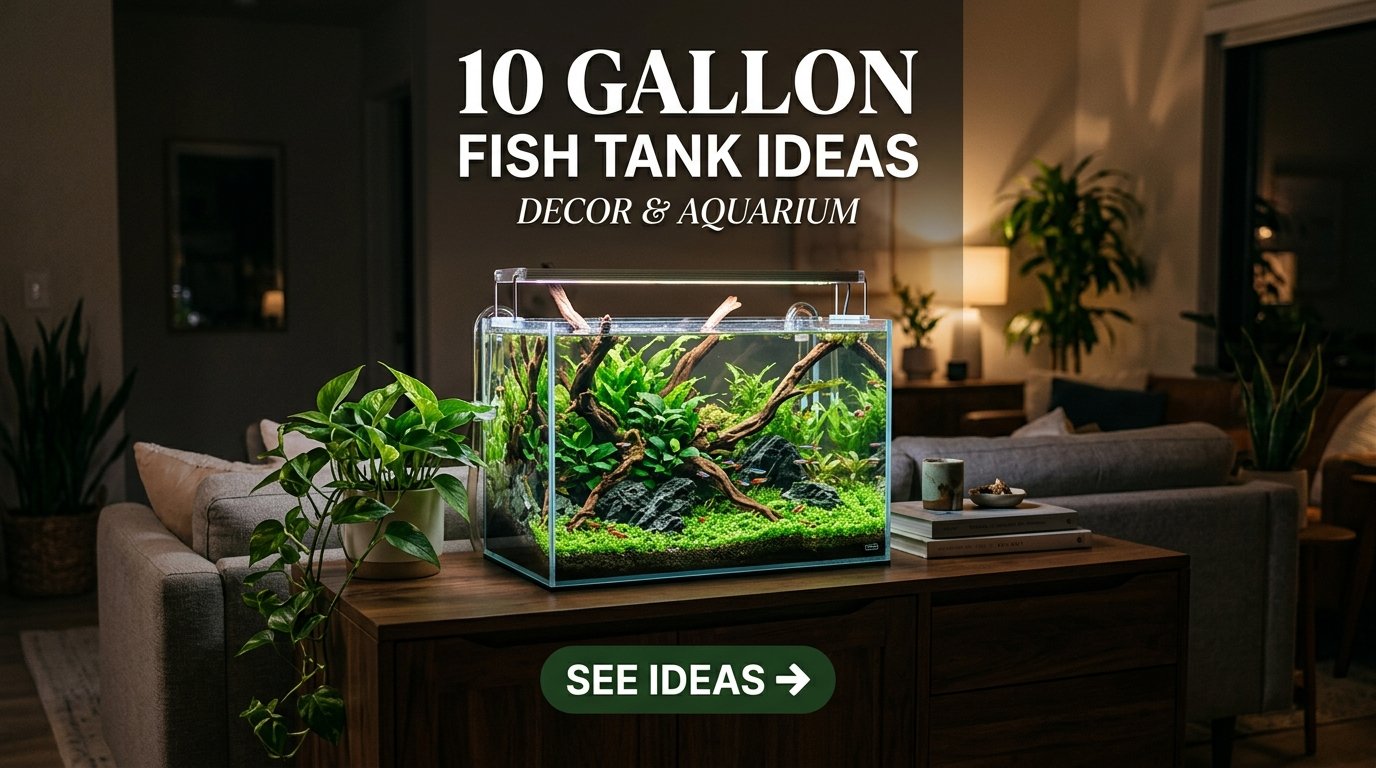
A 10 Gallon Fish Tank Ideas Decor Aquarium setup can transform a small space into a beautiful underwater display. Whether you want a natural planted aquarium, a colorful tropical fish tank, a minimalist aquascape, or a themed aquarium with attractive decorations, a 10-gallon tank offers plenty of creative possibilities when designed carefully.
A 10-gallon aquarium is popular for bedrooms, offices, living rooms, and small apartments because it does not require as much space as a large aquarium. However, its limited water volume means that water quality and temperature can change quickly. Choosing appropriate fish, installing reliable filtration, and avoiding overcrowding are essential for creating a healthy aquarium.
In this guide, you will discover practical 10-gallon fish tank decorating ideas, suitable plants and ornaments, beginner-friendly stocking options, and maintenance tips to help you create an attractive and comfortable environment for your fish.
1. Natural Aquascape Aquarium
A natural aquascape is one of the most timeless decorating ideas for a 10-gallon fish tank. It uses aquarium-safe rocks, driftwood, sand, and live plants to recreate the appearance of a natural underwater habitat.
Start with a layer of suitable substrate and position one or two pieces of driftwood slightly off-center. Add smooth stones around the base and plant greenery along the back and sides. Leave an open area in the foreground to create depth and provide swimming space.
Java fern, Anubias, and Java moss are useful options for this design because they can grow under a range of aquarium lighting conditions. Attach rhizome plants such as Java fern and Anubias to wood or rocks rather than burying their rhizomes in the substrate.
This style works well for a peaceful, species-appropriate aquarium and can be maintained without an elaborate decoration collection.
2. Minimalist Fish Tank Decor
A minimalist aquarium uses only a few carefully selected decorations. Instead of filling the tank with ornaments, focus on the shape of the substrate, a small piece of driftwood, and a few healthy plants.
Choose a natural-colored or dark substrate and position one main decorative feature slightly to the side. Add a small cluster of Anubias or Java fern to soften the appearance of the wood or rocks.
Minimalist designs are particularly suitable for small tanks because they preserve open swimming space and make it easier to remove waste during maintenance.
Avoid using too many large rocks or bulky ornaments. In a 10-gallon aquarium, every decoration takes away some of the available space for fish.
3. Planted 10-Gallon Aquarium
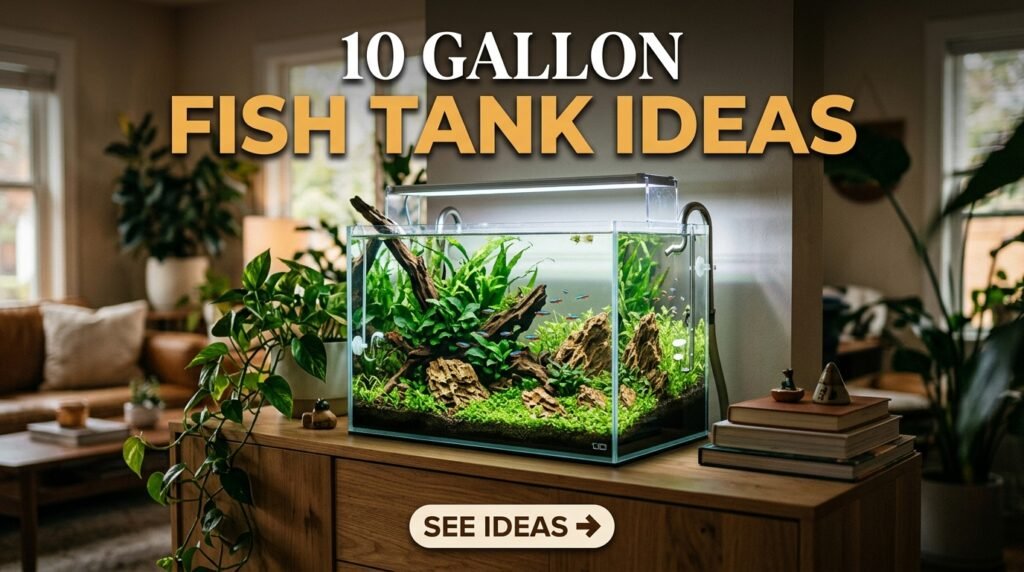
A planted aquarium uses live plants as the main decorative feature. Green foliage provides a natural appearance, offers shelter, and helps absorb some nutrients from the water.
For an easy planted setup, combine Java fern, Anubias, Java moss, and suitable Cryptocoryne species. Floating plants can create shaded areas, but avoid allowing them to cover the entire surface because fish still need adequate gas exchange and light distribution.
Choose plants according to your lighting, substrate, and nutrient supply. Some plants grow well attached to decorations, while others benefit from nutrient-rich substrate or root fertilizers.
A planted aquarium may need occasional trimming, but it can look attractive even with simple equipment and a modest plant selection.
4. Black Substrate Aquarium
Black substrate can make colorful fish and green plants stand out. It creates a clean, modern appearance and works especially well with red, orange, blue, and yellow fish.
Use aquarium-safe sand or fine gravel with smooth edges. Add green plants along the back and sides, then place a piece of driftwood or a few contrasting stones near the center.
Dark substrate does not automatically improve fish health, and it is not suitable for every species or every design. Choose it for its appearance and practical compatibility with your fish and plants.
Make sure the substrate is suitable for bottom-dwelling species if you plan to keep any. Avoid sharp gravel that could injure fish that forage near the bottom.
5. White Sand Aquarium Design
White sand creates a bright, clean appearance and can make a small aquarium feel open. It works well with green plants, natural driftwood, and smooth gray stones.
For a balanced design, create a gentle slope from the back toward the front. Place taller plants at the rear and smaller plants along the edges, leaving an open foreground for swimming and feeding.
White substrate can show fish waste and algae more clearly than darker materials, so regular maintenance may be more noticeable. Choose fine, aquarium-safe sand and avoid disturbing it excessively during cleaning.
6. Driftwood and Rock Aquarium
Driftwood and rocks create texture, depth, and hiding places without requiring many artificial decorations. This design can suit planted aquariums, shrimp-focused setups, and several peaceful freshwater fish species.
Select aquarium-safe driftwood and smooth rocks. Arrange them securely so that they cannot fall or trap fish. If using multiple stones, make sure the structure is stable before adding water.
Attach moss or suitable rhizome plants to the wood to create a natural appearance. Leave enough open space for swimming and make sure decorations do not block the filter intake or outlet.
Avoid collecting unknown rocks or wood from outdoor locations unless you can verify that they are safe for aquarium use.
7. Colorful Tropical Fish Tank
A colorful tropical aquarium combines vibrant fish with simple decorations and healthy plants. In a 10-gallon tank, it is usually best to choose one suitable fish species or one carefully planned stocking arrangement rather than trying to keep many different species together.
A single betta can be a good option for a properly heated and filtered 10-gallon aquarium. Choose plants and decorations that do not have sharp edges, and provide sheltered areas where the fish can rest.
Small schooling fish may also be suitable, but many need a group and sufficient horizontal swimming space. Check the adult requirements of the species before purchasing them.
Use colorful decorations sparingly. Too many ornaments can make the aquarium crowded and reduce the space available for swimming.
8. Betta Fish Tank Decor
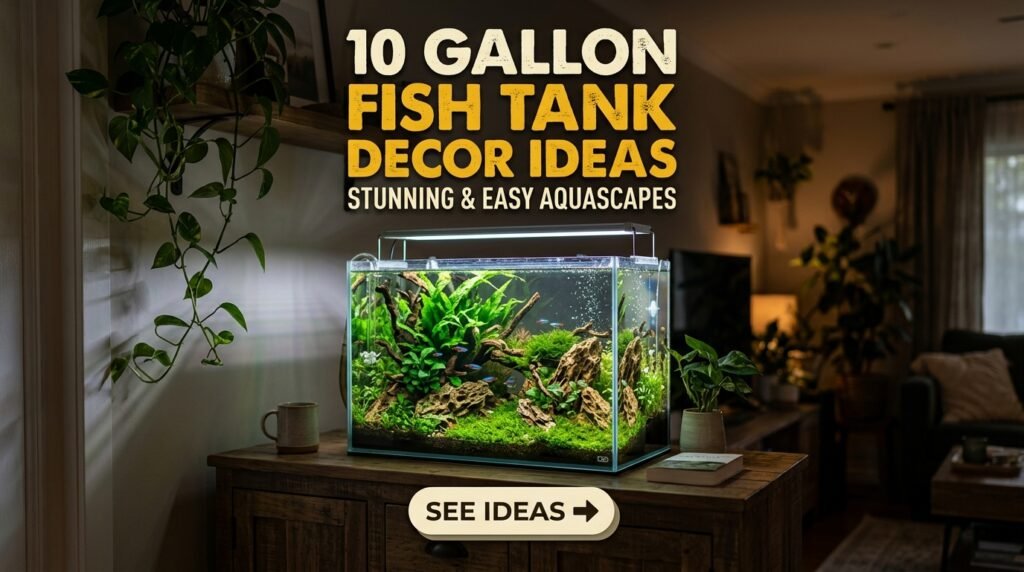
A 10-gallon aquarium offers more room for a betta than many smaller betta setups. You can create an attractive environment with live plants, smooth driftwood, and broad leaves near the surface.
Anubias and Java fern are useful choices, while floating plants can provide shade if they do not block too much light or surface access.
Bettas need stable warm water, gentle filtration, and access to the water surface. Avoid sharp plastic plants and decorations with narrow holes that could catch their fins.
A single betta is often the simplest stocking choice for this aquarium size. Do not add tank mates without checking compatibility and providing a backup plan if aggression occurs.
9. Nano Aquarium with Small Plants
A nano aquarium focuses on small-scale scenery, compact plants, and subtle decorative details. In a 10-gallon tank, you can create the impression of a miniature underwater landscape without filling every part of the aquarium.
Use a small piece of driftwood, fine substrate, and low-growing plants such as suitable mosses. Add taller plants toward the rear to create perspective.
This design is especially appealing for people who enjoy aquascaping. However, remember that a nano aquarium still needs reliable filtration, routine water changes, and careful stocking.
10. Aquarium with a Cave and Hiding Places
A cave-style aquarium combines natural or artificial shelters with plants and a soft substrate. It is useful for fish that prefer sheltered areas, provided the cave openings are safe for the species being kept.
Choose aquarium-safe ceramic caves, smooth rock formations, or suitable driftwood. Check every opening for sharp edges and gaps where a fish could become trapped.
Arrange the hiding places around the sides or rear, leaving an open area in front. This creates a balanced appearance while providing fish with places to rest and retreat.
Do not use ornaments with narrow tunnels or unstable stacked rocks.
11. Jungle-Style Aquarium
A jungle-style aquarium uses dense greenery, layered plants, and natural decorations to create a lush underwater environment.
Use taller plants along the back and sides, with moss or smaller plants around driftwood. Keep the front section relatively open so that the tank does not look crowded.
This style can work with peaceful fish that appreciate plant cover. Regular pruning is important because fast-growing plants may eventually block swimming areas or prevent light from reaching lower leaves.
12. Simple Aquarium with Artificial Decorations
Artificial decorations can be useful if you prefer a themed aquarium or do not want to maintain live plants. Choose ornaments specifically made for aquariums, with smooth surfaces and non-toxic materials.
A small castle, shipwreck, or natural-looking rock ornament can serve as a focal point. Combine it with plain substrate and a few simple decorations rather than filling the entire tank.
Avoid household objects, painted ornaments that may leach chemicals, sharp plastic plants, and decorations with openings that can trap fish. Rinse new aquarium ornaments according to the manufacturer’s instructions before use.
Live plants are not essential for every aquarium, but all fish still need adequate filtration, appropriate water conditions, and suitable shelter.
13. Best Plants for a 10-Gallon Fish Tank
Plants can make a small aquarium look more natural while providing cover for fish. Select species according to your lighting, substrate, and maintenance preferences.
| Plant | Main benefit | Care consideration |
|---|---|---|
| Anubias | Hardy leaves and compact growth | Attach rhizome to wood or rock |
| Java fern | Attractive, easy-care foliage | Do not bury its rhizome |
| Java moss | Useful for small sheltered areas | Trim as it grows |
| Cryptocoryne | Adds midground and background cover | May shed leaves after changes in conditions |
| Amazon sword | Broad leaves and a lush appearance | Can become too large for a 10-gallon tank |
| Floating plants | Create shade and cover | Thin them regularly to keep the surface open |
For a small tank, choose plants that remain manageable at maturity. Large plants can overwhelm the available space and make maintenance difficult.
14. Best Fish for a 10-Gallon Aquarium
Stocking is one of the most important decisions you will make. A 10-gallon aquarium cannot safely house every small fish, and some species need larger groups or more swimming space than this tank can provide.
| Fish or setup | Suitability | Important notes |
|---|---|---|
| One betta | Often a good option | Needs a heater, gentle filtration, and suitable cover |
| Endler’s livebearers | Possible in a carefully planned setup | Small, active fish; reproduction can increase stocking |
| Chili rasboras | Possible in a mature nano aquarium | Need a group and stable conditions |
| Ember tetras | Possible with careful planning | Need a group and suitable swimming space |
| Cherry shrimp | Suitable for a dedicated shrimp setup | Need stable water and compatible tank mates |
| Mystery snail | May be suitable in a properly maintained tank | Produces considerable waste for its size |
The suitability of a species depends on its adult size, social requirements, water parameters, and activity level. Avoid combining several schooling species simply because each fish is small.
For beginners, one carefully selected stocking plan is generally easier to maintain than a crowded mixed community.
15. Essential Equipment for a 10-Gallon Fish Tank
Decorations improve the appearance of an aquarium, but reliable equipment keeps it functioning safely.
Filter: Choose a filter that can process waste effectively while providing a current suitable for the fish.
Heater: Most tropical species need stable warm water. Select a reliable heater appropriate for the tank and room temperature.
Thermometer: Check the water temperature regularly rather than relying only on the heater setting.
Lighting: Choose aquarium lighting suited to your plants and desired appearance. Excessive lighting can encourage algae growth.
Water conditioner: Use a suitable conditioner when tap water contains chlorine or chloramine.
Water test kit: Test ammonia, nitrite, nitrate, and pH as needed to monitor the aquarium’s condition.
Secure lid: A lid helps prevent fish from jumping out and reduces evaporation.
Before introducing fish, cycle the aquarium so that the biological filter can process waste. Ammonia and nitrite should be at zero before the tank is stocked.
16. How to Decorate a 10-Gallon Aquarium Step by Step
Step 1: Choose a Theme
Decide whether you want a natural aquascape, a planted tank, a minimalist design, or a themed aquarium. Choosing one style makes it easier to select matching decorations.
Step 2: Add the Substrate
Use aquarium-safe sand or gravel suited to your fish and plants. Rinse it according to the manufacturer’s directions before placing it in the tank.
Step 3: Position the Main Decoration
Place driftwood, a smooth rock formation, or one safe ornament slightly off-center. This creates a focal point without making the aquarium look crowded.
Step 4: Add Plants
Position taller plants toward the rear and smaller plants near the front. Leave enough open space for fish to swim and food to reach them.
Step 5: Install the Equipment
Set up the filter, heater, and lighting. Ensure that decorations do not block water circulation or access for routine maintenance.
Step 6: Fill and Cycle the Aquarium
Fill the tank with appropriately conditioned water and establish the biological filter before adding fish. Test the water to confirm that the aquarium is ready.
Step 7: Introduce Suitable Fish
Add fish gradually and avoid exceeding the aquarium’s capacity. Monitor their behavior, feeding, and water quality after introduction.
17. Maintenance Tips for a 10-Gallon Aquarium
Small aquariums need consistent maintenance because waste and temperature changes can affect a relatively small volume of water quickly.
Check the filter and heater regularly, remove uneaten food, and inspect fish for changes in behavior. Test ammonia and nitrite if the tank is newly established or fish appear stressed.
For many established aquariums, a partial water change of around 20–30% each week is a reasonable starting point. Adjust the schedule according to nitrate readings, stocking, feeding, and the tank’s actual condition.
Clean the substrate gently, trim plants when necessary, and rinse filter media in removed aquarium water when cleaning is needed. Avoid replacing all the filter media at once because doing so can remove beneficial bacteria.
Frequently Asked Questions
What is the best decoration for a 10-gallon fish tank?
Driftwood, smooth aquarium-safe rocks, live plants, and simple caves are excellent options. They create a natural appearance while providing shelter and preserving swimming space.
How can I make a 10-gallon aquarium look bigger?
Use a simple design, keep the foreground relatively open, place taller plants toward the back, and avoid oversized ornaments. A consistent color palette can also make the aquarium appear less cluttered.
What fish can live in a 10-gallon aquarium?
A single betta is a popular option for a properly equipped 10-gallon tank. Certain nano fish may also be suitable in a carefully planned setup, but schooling needs, adult size, and water conditions must be considered.
Can I put live plants in a 10-gallon fish tank?
Yes. Anubias, Java fern, Java moss, and suitable Cryptocoryne species can work well. Select plants according to your lighting and available space.
Is a 10-gallon aquarium good for beginners?
Yes, it can be a good starting size if it is properly equipped and maintained. However, its small water volume can change quickly, so regular testing and careful stocking are important.
How many fish can I put in a 10-gallon tank?
There is no single safe number for every species. Fish size, adult behavior, group requirements, filtration, and water quality determine how many can be kept. Plan around the needs of the chosen species rather than a simple fish-per-gallon rule.
Do I need a filter for a 10-gallon aquarium?
A reliable filter is strongly recommended for most fish aquariums because it supports biological filtration and water circulation. A filter does not eliminate the need for water changes or water testing.
How often should I clean a 10-gallon fish tank?
Many established tanks benefit from weekly partial water changes and regular removal of waste. The exact routine depends on stocking, feeding, plants, and water-test results.
Can I use plastic decorations in a 10-gallon fish tank?
Yes, if they are specifically designed for aquarium use and have no sharp edges, exposed wires, or small openings that could trap fish. Rinse them according to the manufacturer’s instructions before adding them.
Is sand or gravel better for a 10-gallon aquarium?
Both can work. Fine, smooth sand suits many bottom-dwelling fish and natural designs, while aquarium-safe gravel is easy to use in many planted setups. Choose according to the fish, plants, and maintenance requirements.
Conclusion
A 10 Gallon Fish Tank Ideas Decor Aquarium project can be simple, natural, colorful, or highly creative. Driftwood, live plants, smooth stones, caves, and carefully selected artificial ornaments can transform a small tank without taking away too much swimming space.
For the best results, choose a decoration style before buying equipment, select fish that genuinely suit a 10-gallon aquarium, and establish the biological filter before stocking. Maintain stable water conditions, avoid overcrowding, and use decorations that are safe for your fish.
With thoughtful planning, a 10-gallon aquarium can become a beautiful underwater display that is practical to maintain and comfortable for its inhabitants.
Improve the keyword-focused titleAdd more unique decor ideas