
 By admin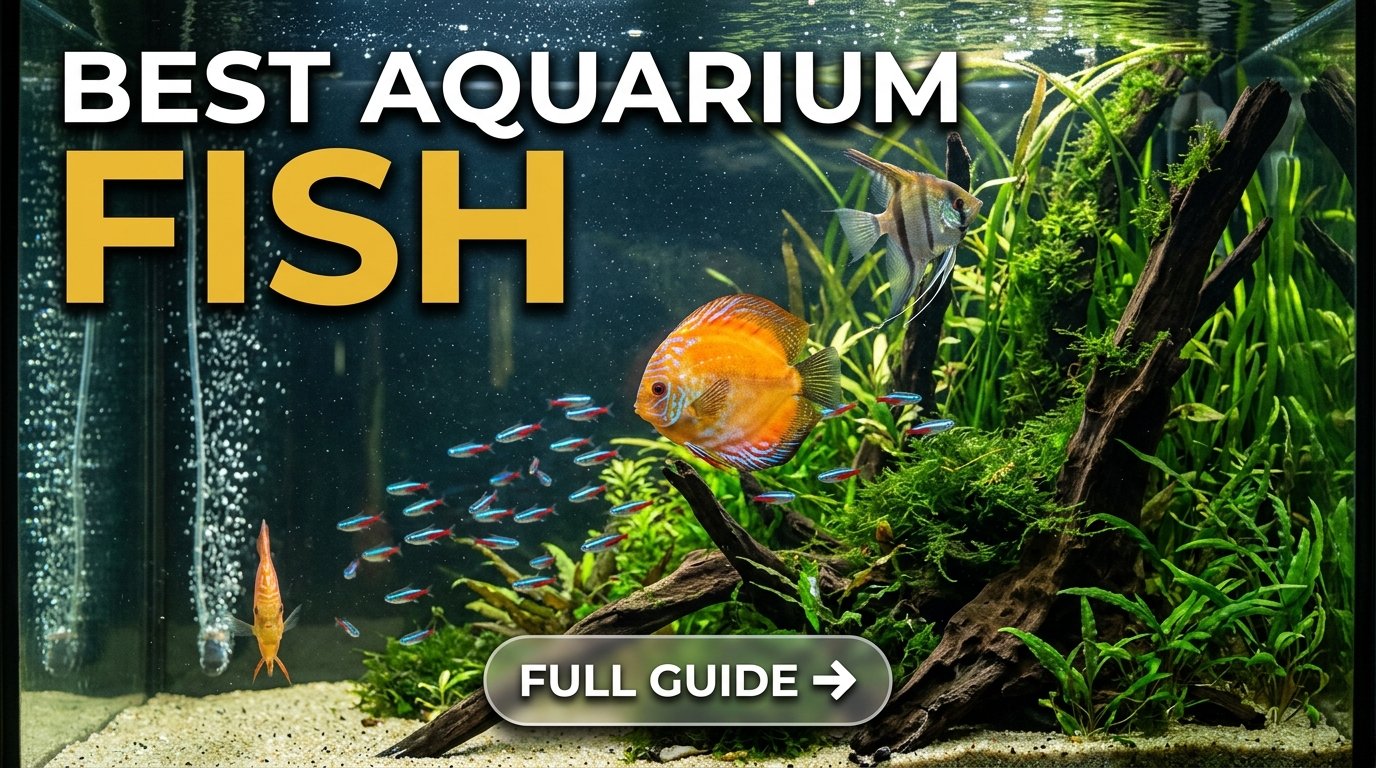
The best aquarium fish are those that match your tank size, experience level, water conditions, and maintenance routine. Some fish are peaceful and easy to care for, making them ideal for beginners, while others are colorful, active, or unusual species that appeal to experienced fishkeepers. Choosing the right fish can help you create a healthy, attractive aquarium that remains enjoyable for years.
Before buying aquarium fish, consider their adult size, temperament, swimming space, feeding requirements, and social behavior. A fish that looks perfect in a pet store may not be suitable for a small aquarium or a community tank. Proper filtration, a fully cycled aquarium, and compatible tank mates are just as important as appearance.
This guide explores the best aquarium fish for beginners, small tanks, community aquariums, colorful displays, and planted setups. It also explains how to choose suitable species and maintain a healthy underwater environment.
What Are the Best Aquarium Fish?
The best aquarium fish are not necessarily the most expensive or colorful species. They are fish that can thrive in the conditions you can provide. For beginners, hardy species with straightforward feeding requirements and peaceful temperaments are often the easiest choices.
Some fish, such as bettas, are commonly kept individually, while others, including neon tetras and guppies, have social needs that should be considered when planning an aquarium. Goldfish are popular, but they need considerably more space and filtration than many new fishkeepers expect.
Your aquarium should be established before fish are introduced. A properly cycled filter helps process fish waste, while regular water testing and partial water changes help maintain safe conditions.
Best Aquarium Fish for Beginners
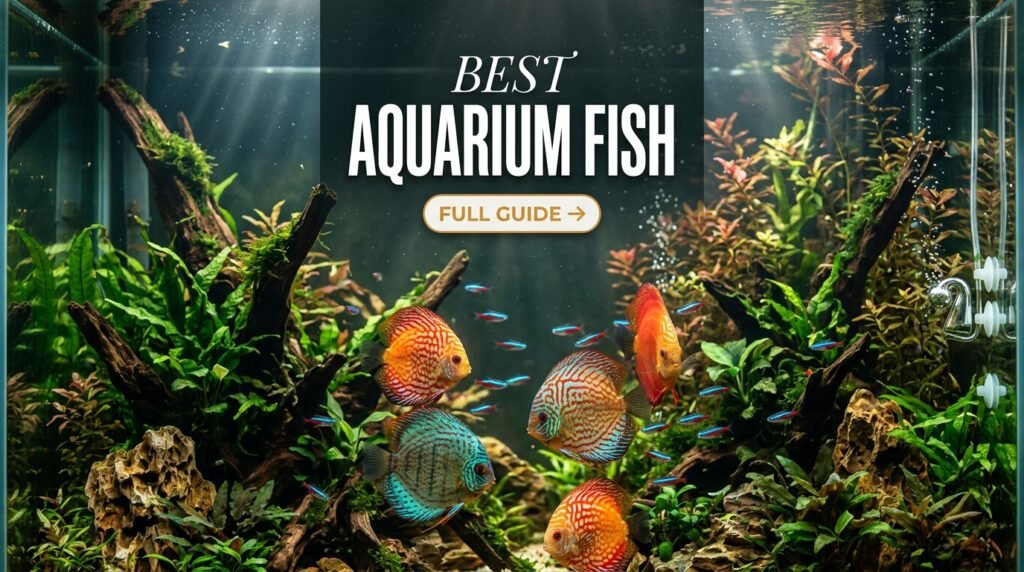
If you are new to fishkeeping, start with species that suit your aquarium’s dimensions and water conditions. Avoid choosing fish simply because they are small at the pet store; many species grow larger or need groups to remain healthy.
1. Guppy
Guppies are among the best aquarium fish for beginners because they come in a wide variety of colors, patterns, and tail shapes. They are active livebearers that adapt well to many properly maintained freshwater aquariums.
Guppies generally prefer stable, moderately hard water and a temperature around 24–28°C (75–82°F). They can be kept in peaceful community aquariums with compatible fish. However, males and females reproduce readily, so consider an all-male group if you do not want fry.
A suitable aquarium should have filtration, open swimming space, and plants or other cover. Although guppies are small, they should not be crowded into tiny containers.
2. Betta Fish
Betta fish are known for their vibrant colors and flowing fins. They are often kept individually and can be an excellent choice for someone who wants to observe the behavior of one distinctive fish.
A single betta should have a heated, filtered aquarium with gentle water movement and enough room to swim. A tank of approximately 5 gallons is a common minimum recommendation, while a larger aquarium often makes temperature and water quality easier to maintain.
Male bettas should generally not be housed together because they can fight. Compatibility with other fish varies by individual, so a species-only aquarium is often the simplest option for beginners.
3. Platy Fish
Platies are hardy livebearers available in colors such as orange, red, yellow, and mixed patterns. They are active, generally peaceful fish that can suit community aquariums when kept with compatible species.
They prefer stable water conditions and often do well in moderately hard water. Platies can reproduce quickly, so plan for additional fry if you keep both males and females.
Provide a spacious aquarium with filtration, plants, and room for swimming. Avoid keeping them with aggressive fish or species that require very different water conditions.
4. Zebra Danio
Zebra danios are active schooling fish with distinctive horizontal stripes. They are hardy and adaptable, making them a popular choice for new fishkeepers.
These energetic fish need swimming space and should be kept in a group rather than alone. A long aquarium is preferable because zebra danios spend much of their time moving around the tank.
Choose tank mates that can tolerate their activity. Very slow-moving fish with long fins may not be the best companions.
5. Harlequin Rasbora
Harlequin rasboras are peaceful schooling fish with orange-copper bodies and dark triangular markings. They look particularly attractive against green plants and a dark aquarium background.
Keep them in a group, ideally six or more, in a mature aquarium with stable water quality. They are suitable for many peaceful community setups and usually occupy the middle areas of the aquarium.
Their schooling behavior and attractive coloration make them a good option for planted aquariums.
Best Colorful Aquarium Fish
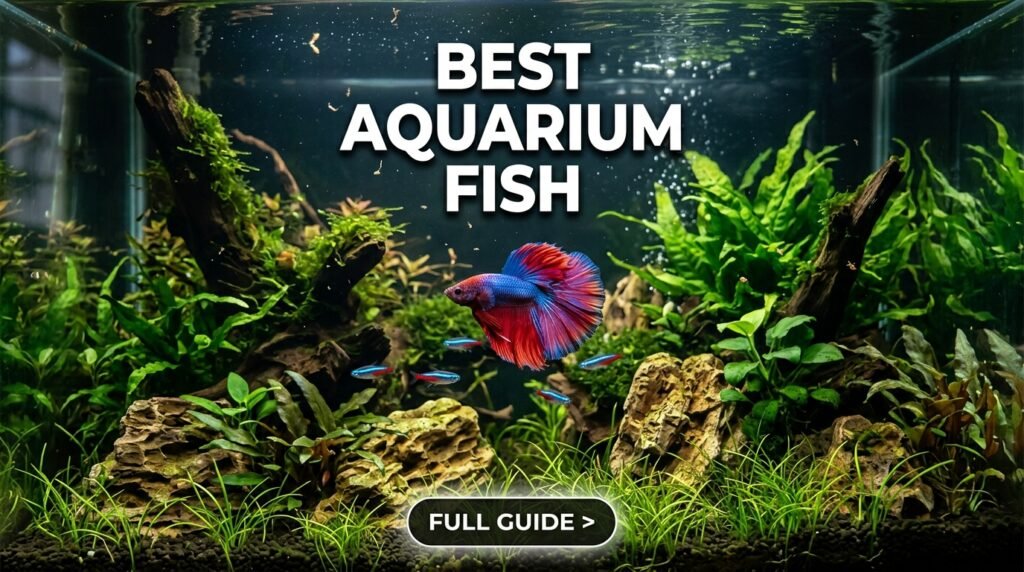
If appearance is your main priority, many freshwater fish offer impressive colors without requiring an elaborate setup. The best choice still depends on tank size, water conditions, and compatibility.
6. Neon Tetra
Neon tetras are famous for their bright blue stripe and red coloration. A group creates a striking display, especially in a planted aquarium with subdued lighting.
They are schooling fish and should be kept in groups, preferably six or more. A stable, mature aquarium is important because they may struggle in tanks with poor water quality or sudden changes.
Choose peaceful tank mates that will not harass or eat them.
7. Cardinal Tetra
Cardinal tetras resemble neon tetras but have a red stripe extending along much more of the body. Their vivid colors make them especially attractive in planted and blackwater-inspired aquariums.
They are schooling fish that benefit from a group and stable water conditions. A mature aquarium with suitable water chemistry is preferable to a newly established tank.
8. Endler’s Livebearer
Endler’s livebearers are small, energetic fish known for their bright green, orange, black, and metallic markings. They are particularly appealing for planted aquariums and species-focused displays.
They are active fish and can reproduce readily when both sexes are present. Plan stocking carefully to avoid overcrowding as the population increases.
Because they are small, avoid housing them with larger fish that might eat them.
9. German Blue Ram
German blue rams are colorful dwarf cichlids with blue, yellow, and orange markings. They can be excellent display fish for experienced keepers who can maintain warm, stable water conditions.
They are more sensitive to poor water quality and temperature fluctuations than many beginner species. A mature aquarium, appropriate filtration, and careful tank-mate selection are important.
They are not usually the easiest choice for someone setting up their first aquarium.
10. Cherry Barb
Cherry barbs are peaceful fish whose males can develop a deep red coloration. They work well in planted community aquariums when kept in a suitable group.
Provide plants, sheltered areas, and open swimming space. They are generally less demanding than some highly sensitive tropical species, making them a useful option for a peaceful display.
Best Aquarium Fish for Small Tanks
Small aquariums require careful planning. A small fish does not automatically mean it can live comfortably in a tiny tank, and very small volumes of water can experience rapid changes in temperature and water quality.
| Fish | General suitability | Important consideration |
|---|---|---|
| Betta fish | Suitable for a properly equipped small aquarium | Usually best kept individually |
| Chili rasbora | Suitable for a carefully maintained, planted nano aquarium | Needs a group and stable water |
| Endler’s livebearer | Suitable for an appropriately sized nano setup | Can reproduce rapidly |
| Least killifish | Suitable for some species-focused small aquariums | Check local availability and water needs |
| Ember tetra | Suitable for a well-maintained nano aquarium with enough swimming space | Keep in a group |
For many beginners, a properly equipped 5- to 10-gallon aquarium is easier to manage than an extremely small bowl or jar. A 10-gallon tank provides more flexibility for stocking, planting, and maintaining stable conditions, although it is not suitable for every species.
Always check adult size and social requirements before selecting fish. Do not place several schooling species together in a tiny aquarium just because each fish is individually small.
Best Aquarium Fish for Community Tanks
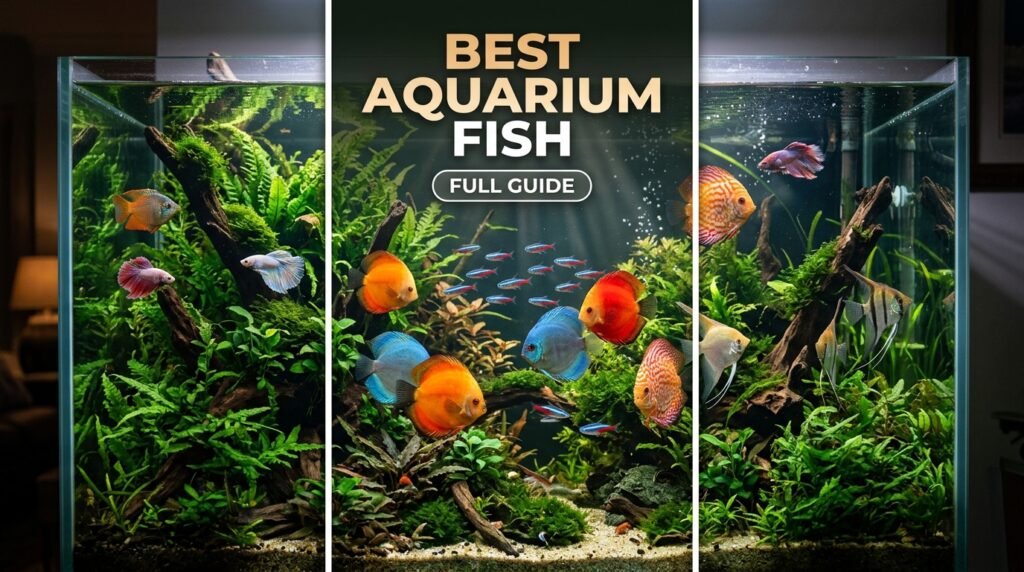
Community aquariums contain different species that can live peacefully under compatible conditions. The key is choosing fish with similar temperature and water-quality needs, suitable adult sizes, and compatible temperaments.
Good options for many community setups include:
- Guppies with peaceful, appropriately sized tank mates
- Platies with other compatible livebearers
- Harlequin rasboras with small peaceful fish
- Neon tetras in suitable planted aquariums
- Corydoras catfish with peaceful fish and a soft substrate
- Cherry barbs in a calm, well-planned community tank
- Kuhli loaches with peaceful species that do not compete aggressively for bottom space
Corydoras catfish and kuhli loaches are bottom-dwelling fish, so they need suitable substrate and access to food that reaches the bottom. Schooling species should be kept in groups appropriate for their needs.
Avoid combining fish simply because they are all tropical. Some species are territorial, some grow much larger than expected, and others need different water conditions. Research every species before buying it.
Best Aquarium Fish for Planted Tanks
Planted aquariums combine live plants with fish to create a natural-looking underwater environment. Small, peaceful fish often look especially attractive as they swim among green leaves and driftwood.
Guppies, ember tetras, harlequin rasboras, neon tetras, and cherry barbs can all be suitable choices in appropriately designed planted tanks.
A successful planted aquarium needs suitable lighting, plant nutrients, and a substrate that supports the chosen plants. Some plants grow well attached to driftwood or rocks, while others require nutrients around their roots.
Choose fish that will not uproot plants or disturb the substrate excessively. Leave enough open space for swimming and ensure that the plants do not obstruct access to food.
Best Aquarium Fish for Beginners on a Budget
You do not need expensive fish to create a beautiful aquarium. Commonly available species such as guppies, platies, zebra danios, and cherry barbs can offer color and activity without the cost of rare species.
However, the purchase price of the fish is only one part of the total expense. A reliable filter, heater where appropriate, water conditioner, test kits, food, and maintenance supplies are essential costs.
To keep expenses manageable, start with a suitably sized aquarium and a small number of compatible fish. Choose hardy plants, avoid overstocking, and do not buy extra fish before your biological filter can handle the additional waste.
A healthy, simple aquarium is usually less expensive in the long term than an overcrowded tank that develops repeated water-quality problems.
Aquarium Fish Comparison Table
The following table summarizes several popular choices and their general care requirements. Exact needs vary by species and aquarium conditions.
| Fish | Experience level | Social needs | General temperament |
|---|---|---|---|
| Guppy | Beginner | Group; plan for breeding | Peaceful |
| Betta | Beginner with proper setup | Usually kept individually | Can be territorial |
| Platy | Beginner | Social; consider breeding | Generally peaceful |
| Zebra danio | Beginner | Group | Active |
| Harlequin rasbora | Beginner to intermediate | School | Peaceful |
| Neon tetra | Beginner to intermediate | School | Peaceful |
| Cardinal tetra | Intermediate | School | Peaceful |
| Endler’s livebearer | Beginner | Group; consider breeding | Peaceful |
| German blue ram | Intermediate to advanced | Pair or suitable arrangement | Can be territorial |
| Cherry barb | Beginner to intermediate | Group | Generally peaceful |
How to Choose the Best Aquarium Fish
Before buying fish, evaluate the following factors.
Aquarium Size
Consider the adult size and activity level of every species. Fast swimmers need adequate horizontal space, while territorial fish need enough room to establish their own areas.
Water Temperature
Tropical fish generally need a heater to maintain a stable temperature. Coldwater species have different requirements, so avoid mixing fish with incompatible temperature needs.
Water Chemistry
Some fish prefer soft, acidic water, while others thrive in harder, more alkaline conditions. Choose species suited to your water supply rather than constantly making large adjustments to the aquarium.
Temperament
Peaceful fish may become stressed when kept with aggressive or excessively active species. Research adult behavior, not just how the fish behave when young.
Group Size
Many small fish are schooling or social species. Keeping too few individuals may lead to stress or unnatural behavior, so plan the group size before buying them.
Maintenance Requirements
Sensitive fish may need more frequent testing and closer attention to water quality. Beginners often benefit from choosing species with care requirements they can maintain consistently.
Essential Care Tips for Healthy Aquarium Fish
Even hardy fish need proper care. Follow these basic practices to help maintain a stable aquarium.
Cycle the tank before adding fish. Establish beneficial bacteria in the filter so ammonia and nitrite can be processed. Both should remain at zero in a healthy, established aquarium.
Use appropriate filtration. Choose a filter that can handle the aquarium’s stocking level without creating excessive current for fish that prefer calmer water.
Avoid overfeeding. Offer suitable portions and remove uneaten food when necessary. Excess food can contribute to poor water quality.
Perform regular partial water changes. The appropriate amount and frequency depend on stocking, filtration, nitrate levels, and test results. Always use water conditioner when needed for your water supply.
Test the water. Monitor ammonia, nitrite, nitrate, and pH. Check temperature regularly and investigate sudden changes in fish behavior.
Quarantine new fish when possible. A separate quarantine aquarium can help you observe new arrivals and reduce the risk of introducing disease into an established community.
Avoid overcrowding. More fish create more waste and increase competition for space, food, and oxygen. Add livestock gradually and monitor water quality.
Common Mistakes to Avoid When Choosing Aquarium Fish
One common mistake is buying fish before researching their adult size. Some species grow far larger than expected, while others need groups or specialized environments.
Another mistake is placing incompatible fish together. A peaceful community fish may be injured or stressed by aggressive tank mates, even if the aquarium is large enough.
New fishkeepers also sometimes add too many fish before the aquarium is cycled. This can cause dangerous ammonia and nitrite levels. Cycling the aquarium first is safer and more reliable.
Finally, avoid keeping fish in unfiltered bowls or containers that are too small for their needs. Fish require appropriate space, stable water conditions, and enough oxygen to remain healthy.
Frequently Asked Questions
What is the best aquarium fish for beginners?
Guppies, platies, and zebra danios are popular beginner choices when their group, tank-size, and water requirements are met. A betta can also be suitable in a properly heated and filtered aquarium.
Which aquarium fish is the easiest to care for?
Several common species are relatively hardy, including guppies, platies, and zebra danios. However, no fish is maintenance-free. All aquarium fish need suitable water quality, appropriate food, and enough space.
What is the most colorful aquarium fish?
Guppies, bettas, Endler’s livebearers, cardinal tetras, and German blue rams are known for attractive colors. The best choice depends on the aquarium size and the level of care you can provide.
What fish can live in a 5-gallon aquarium?
A 5-gallon aquarium may suit a single betta or certain carefully selected nano setups, provided the tank is properly equipped and maintained. It is too small for many schooling fish and most community combinations.
Can different types of aquarium fish live together?
Yes, if their adult size, temperament, water parameters, and social requirements are compatible. Always research each species before combining them.
How many fish can I put in my aquarium?
There is no reliable rule based only on the number of fish per gallon. Adult size, body shape, activity level, filtration, water quality, and social needs all affect stocking. Choose species first, then plan the aquarium around their requirements.
Do aquarium fish need a heater?
Most tropical fish need stable warm water, so a heater is usually necessary in rooms where temperatures fluctuate or fall below their preferred range. Some species have different temperature requirements, so check each fish’s needs.
How often should aquarium fish be fed?
Many adult aquarium fish do well with one or two small feedings per day, although requirements vary. Feed a balanced diet in portions the fish can consume without leaving excessive waste.
Which aquarium fish are best for a planted tank?
Guppies, ember tetras, harlequin rasboras, neon tetras, and cherry barbs can work well in suitable planted aquariums. Select species according to tank size, water conditions, and compatibility.
What is the best fish for a peaceful community aquarium?
Harlequin rasboras, small peaceful tetras, suitable livebearers, and cherry barbs can be good choices. The best combination depends on the aquarium’s size and whether the fish share compatible environmental needs.
Conclusion
The best aquarium fish are those that suit your aquarium and can thrive with the care you can provide. Guppies, platies, bettas, zebra danios, harlequin rasboras, and several tetra species are popular options, but each has specific needs relating to space, social behavior, water conditions, and compatibility.
Before buying fish, cycle your aquarium, choose appropriate equipment, and research the adult requirements of every species. Provide a balanced diet, maintain stable water quality, and avoid overcrowding.
With thoughtful planning, you can create a colorful, peaceful, and healthy aquarium that is enjoyable to maintain and gives your fish the best possible environment.
Add exact tank-size recommendationsMake the fish list more consistent