
 By admin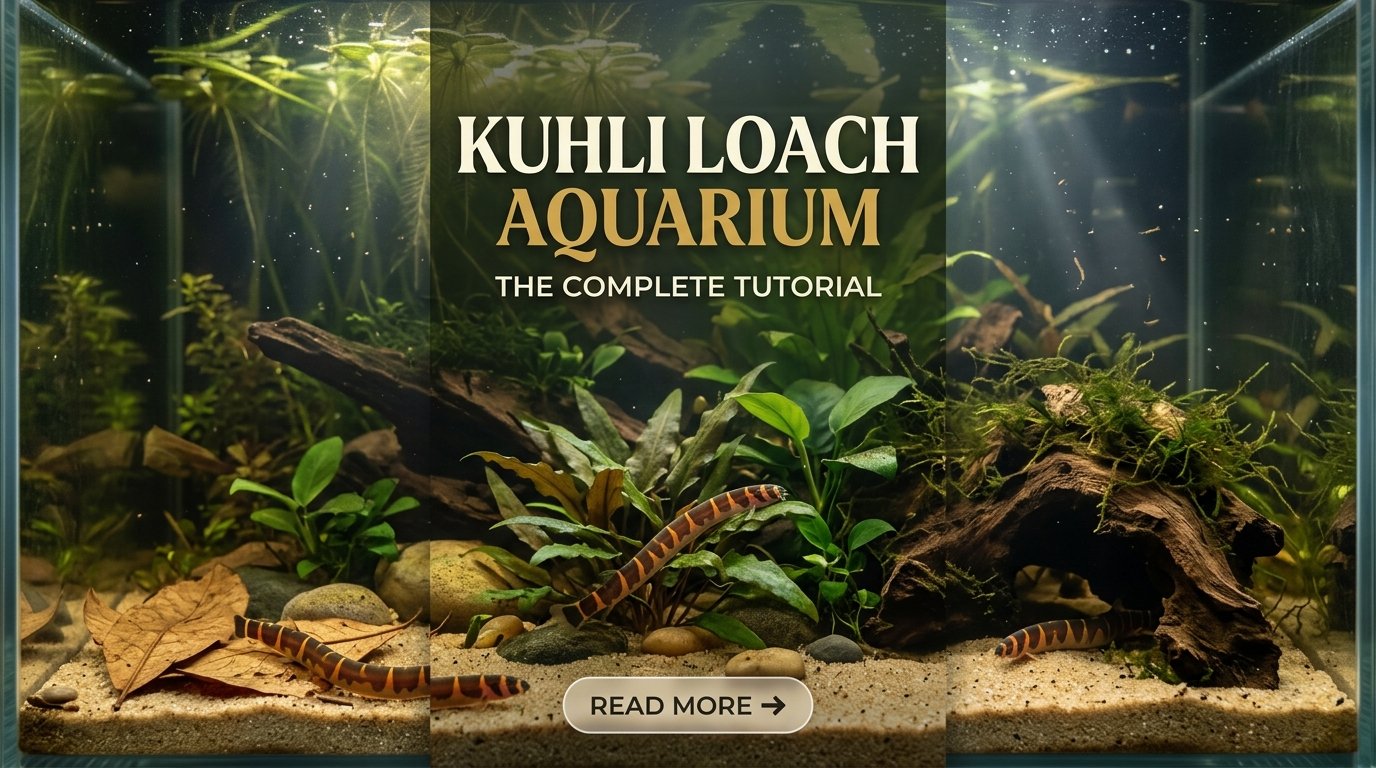
A kuhli loach aquarium is an excellent choice for fishkeepers who enjoy peaceful, unusual, and fascinating freshwater fish. Kuhli loaches are slender, eel-like fish known for their dark bands, shy personalities, and habit of hiding among plants, driftwood, and aquarium decorations. They spend much of their time near the bottom of the tank and often become more active during the evening or when food is available.
Creating a suitable aquarium for kuhli loaches is not difficult, but these fish have specific needs. They prefer soft, smooth substrates, plenty of hiding places, clean water, and the company of their own kind. With the right setup, a kuhli loach aquarium can become a beautiful, natural-looking underwater environment.
This guide explains the best tank size, water parameters, substrate, plants, feeding routine, compatible tank mates, and maintenance practices for keeping kuhli loaches healthy.
What Is a Kuhli Loach?
Kuhli loaches are small freshwater fish from Southeast Asia. The name commonly refers to species in the genus Pangio, including the popular striped kuhli loach. Their long, narrow bodies and alternating dark and light markings make them look somewhat like tiny aquatic eels.
These fish are peaceful bottom dwellers that spend much of their time exploring the substrate and squeezing into sheltered spaces. They are naturally secretive, especially when first introduced to an aquarium. They may hide during the day and become more active in dim lighting or after the aquarium lights go off.
Kuhli loaches are social fish and generally do better in groups of their own kind rather than being kept alone. A group also makes their natural behavior easier to observe because they may explore, rest, or search for food together.
Best Tank Size for a Kuhli Loach Aquarium
Choosing the correct tank size is one of the most important parts of setting up a kuhli loach aquarium. Although kuhli loaches are relatively small, they need enough floor space to explore and enough room for hiding places.
A 20-gallon-long aquarium is a practical starting point for a small group in many community setups. The longer footprint provides more bottom area than a tall aquarium of similar volume. Larger tanks are even better when you want a bigger group or additional community fish.
| Aquarium size | Suitable use |
|---|---|
| 10 gallons | Generally too limited for a proper group and community setup |
| 15 gallons | May suit a carefully planned, species-focused setup, depending on dimensions |
| 20-gallon long | Good starting option for a small group |
| 29–30 gallons | More room for plants, hiding places, and compatible tank mates |
| 40 gallons or larger | Excellent for larger groups and spacious community aquariums |
Tank dimensions matter as well as water volume. A long aquarium usually offers more useful bottom space than a tall, narrow tank. Always consider the number of fish, filtration capacity, and available floor area before choosing a tank.
Ideal Water Parameters for Kuhli Loaches
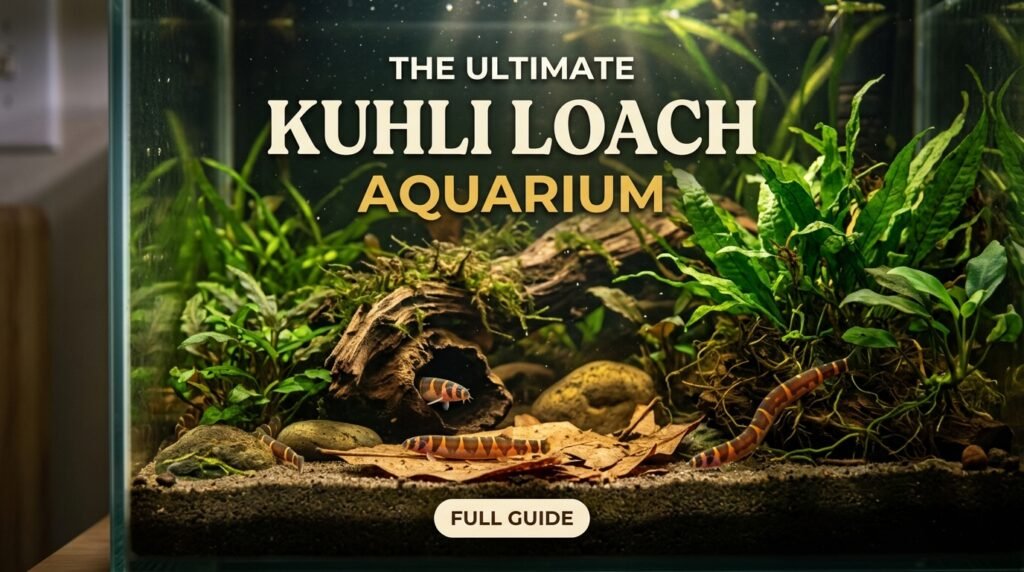
Kuhli loaches need stable, clean water. They can tolerate a reasonable range of conditions, but sudden changes in temperature, pH, or water chemistry may stress them.
A suitable target range for many commonly kept kuhli loaches is:
| Water parameter | Recommended range |
|---|---|
| Temperature | 24–28°C (75–82°F) |
| pH | Approximately 5.5–7.5 |
| Water hardness | Soft to moderately hard |
| Ammonia | 0 ppm |
| Nitrite | 0 ppm |
| Nitrate | Ideally kept below 20 ppm |
Stability is more important than constantly adjusting the water to reach one exact pH value. Test your aquarium water regularly, particularly during the first weeks after introducing fish.
The aquarium must be fully cycled before adding kuhli loaches. A cycled aquarium has an established biological filter that converts toxic ammonia into nitrite and then into nitrate. Both ammonia and nitrite should remain at zero.
Use a reliable aquarium heater when needed to maintain a stable temperature. A thermometer helps you confirm that the water is not becoming too warm or too cold.
Best Substrate for a Kuhli Loach Aquarium
Substrate is especially important because kuhli loaches spend much of their time close to the bottom. They often sift through the substrate while searching for food and may partially bury themselves in soft material.
Fine Sand
Fine aquarium sand is one of the best substrate choices. It allows kuhli loaches to explore naturally without scraping their delicate bodies against sharp edges. Sand also creates a natural appearance and works well with live plants, driftwood, and smooth stones.
Smooth Fine Gravel
Fine, rounded gravel can also work if it has no sharp edges. Choose material that is comfortable for bottom-dwelling fish to move across. Avoid coarse gravel with jagged pieces or rough fragments.
Natural-Looking Substrate
A combination of sand, leaf litter intended for aquariums, driftwood, and carefully selected smooth stones can create a natural habitat-inspired appearance. Any leaves or wood should be aquarium-safe and prepared appropriately before use.
Avoid collecting random outdoor materials unless you can confirm that they are safe and free from pesticides, contaminants, or harmful substances.
Best Decorations and Hiding Places
Kuhli loaches are naturally shy, so hiding places are essential. An aquarium with an open floor and very few shelters may leave them stressed or hidden most of the time.
Consider adding the following decorations:
Driftwood: Aquarium-safe driftwood creates shaded areas, adds natural texture, and provides spaces for exploration.
Caves and tunnels: Smooth ceramic caves and aquarium-safe shelters provide secure resting places. Make sure openings are large enough for the fish to pass through without getting trapped.
Smooth stones: Arrange stones securely to create sheltered spaces. Do not leave unstable rocks that could collapse or trap fish.
Aquarium leaf litter: Suitable dried leaves can provide cover and create a natural appearance when used appropriately.
Dense plants: Plants provide shade and break up open areas, making the aquarium feel more secure.
Every decoration should be free of sharp edges. Check that caves, ornaments, and wood have no narrow gaps where a fish could become stuck.
Best Plants for a Kuhli Loach Aquarium

Live plants are a great addition because they provide cover, improve the visual appearance of the aquarium, and help absorb some nutrients from the water. Kuhli loaches generally do not damage healthy plants intentionally, making them suitable for planted aquariums.
Good plant options include:
| Plant | Benefits |
|---|---|
| Java fern | Hardy plant that attaches to wood or rocks |
| Anubias | Slow-growing plant with sturdy leaves |
| Java moss | Creates small sheltered areas |
| Cryptocoryne | Adds dense cover near the substrate |
| Amazon sword | Provides broad leaves and a lush appearance in larger tanks |
| Floating plants | Reduce bright light and create shaded areas |
Choose plants according to your aquarium lighting, substrate, and maintenance routine. Plants with broad leaves and dense growth are particularly useful for creating shaded areas.
Leave some open spaces along the bottom so kuhli loaches can move around easily. A planted aquarium should provide shelter without becoming so crowded that food and waste are difficult to manage.
How to Set Up a Kuhli Loach Aquarium
Setting up the aquarium correctly from the beginning helps reduce stress and makes long-term maintenance easier.
1. Choose a Long Aquarium
Select an aquarium with a suitable footprint, preferably a 20-gallon-long tank or larger for a small group. Make sure the stand can safely support the filled aquarium.
2. Add a Soft Substrate
Rinse aquarium sand or fine, smooth gravel according to the manufacturer’s instructions. Spread it evenly across the bottom, leaving enough depth for plants if required.
3. Install the Filter
Choose a filter that provides effective biological filtration without producing an excessively strong current. A sponge filter can be useful in a suitable setup. If using an intake filter, cover the intake securely so small fish cannot be drawn into it.
4. Arrange Hiding Places
Add smooth caves, driftwood, and aquarium-safe stones. Check every opening for sharp edges and potential trapping points.
5. Add Plants
Position rooted plants toward the back and sides while leaving open areas for movement. Attach Java fern and Anubias to suitable decorations instead of burying their rhizomes in the substrate.
6. Cycle the Aquarium
Establish the biological filter before introducing fish. Use an appropriate fishless cycling method and test ammonia, nitrite, and nitrate to confirm that the aquarium can process waste reliably.
7. Check Temperature and Water Quality
Confirm that the temperature is stable and that ammonia and nitrite are zero. Make sure the water conditioner, if needed, is suitable for your local water supply.
8. Introduce a Group Gradually
Acclimate the fish carefully to differences in temperature and water chemistry. Avoid adding too many fish at once, and monitor their behavior during the first few days.
How Many Kuhli Loaches Should You Keep Together?
Kuhli loaches are social fish and are best kept in groups. A group of six or more is a useful goal when the aquarium has enough floor space and filtration to support them. Larger groups may display more natural behavior, but stocking should always depend on tank size, water quality, and the other fish present.
Keeping only one kuhli loach is not ideal because it misses the benefits of living alongside its own kind. However, simply adding more fish does not guarantee better welfare if the aquarium is too small or lacks hiding places.
Provide multiple shelters rather than one central cave. This gives the fish more options and helps reduce competition for resting spaces.
What Do Kuhli Loaches Eat?
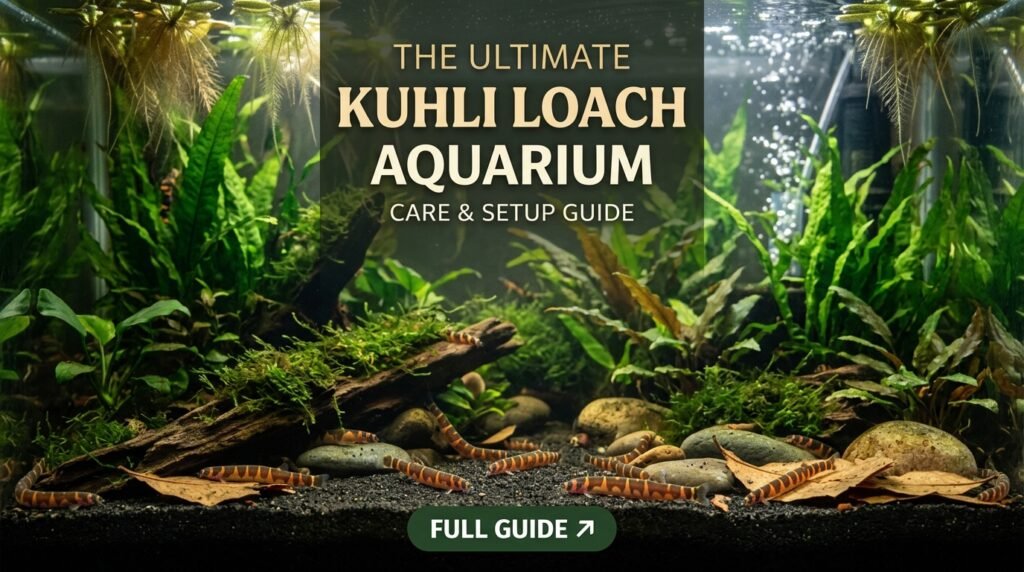
Kuhli loaches are omnivores that feed on small food items found around the bottom of their habitat. In an aquarium, they need a varied diet rather than relying entirely on leftover food from other fish.
Suitable foods include:
- Sinking micro pellets formulated for bottom-feeding fish
- High-quality sinking wafers that break down into manageable pieces
- Frozen or appropriately prepared bloodworms
- Daphnia and brine shrimp
- Other suitable small frozen or live foods from reputable aquarium suppliers
Feed small portions that the fish can consume without leaving large amounts of waste behind. Kuhli loaches may be most active at dusk or after the lights go out, so feeding in the evening can help ensure they receive enough food.
Do not assume that they will get sufficient nutrition by eating leftover flakes. Watch whether food reaches the bottom and whether the loaches are actually eating. Remove uneaten food when necessary to prevent water-quality problems.
Best Tank Mates for Kuhli Loaches
Kuhli loaches are peaceful and can live with many small, non-aggressive community fish. Suitable companions generally prefer similar warm water conditions and do not compete aggressively for food or shelter.
Potential tank mates include:
- Harlequin rasboras
- Small peaceful rasboras
- Ember tetras
- Many suitable small, peaceful tetras
- Corydoras catfish, provided the aquarium has enough bottom space
- Small peaceful gouramis, depending on the species and tank size
- Compatible freshwater snails
Not every species is suitable for every aquarium. Consider adult size, temperament, temperature needs, feeding behavior, and the available space before combining fish.
Avoid large predatory fish, aggressive species, and fish that may swallow small kuhli loaches. Very active or aggressive bottom dwellers may also make it difficult for them to feed comfortably.
If you keep kuhli loaches with other bottom-dwelling fish, provide several feeding areas and plenty of hiding places. This reduces competition and helps ensure every fish receives food.
Lighting and Water Flow
Kuhli loaches often feel more comfortable under subdued lighting. Bright aquarium lighting is not necessarily harmful, but an exposed tank with no shaded areas may discourage them from coming out.
Floating plants, driftwood, and broad-leaved plants can reduce the intensity of the light reaching the bottom. You can also provide a regular lighting schedule that supports plant growth without leaving the aquarium illuminated for excessive periods.
Moderate water movement is generally appropriate. The filter should circulate the water effectively, but the bottom should not have such a strong current that the fish struggle to explore or rest.
Common Kuhli Loach Aquarium Problems
Kuhli Loaches Hide All Day
Hiding is normal behavior, especially during the adjustment period. If the fish never appear, check whether the aquarium is too bright, lacks shelter, contains aggressive tank mates, or has unstable water conditions. Feeding after the lights dim may encourage them to emerge.
Kuhli Loaches Refuse Food
Newly introduced fish may need time to settle in. Offer suitable sinking foods and observe the aquarium quietly. If the fish continue refusing food, check ammonia, nitrite, temperature, and possible signs of disease.
Fish Appear Pale or Inactive
Stress, poor water quality, inappropriate temperatures, or illness can cause changes in appearance and behavior. Test the water and look for additional signs such as rapid breathing, unusual swimming, visible injuries, or persistent loss of appetite.
Fish Disappear
Kuhli loaches are excellent at finding hiding spots. Check inside and behind decorations, under driftwood, and around filter equipment before assuming a fish has died. Secure the aquarium lid and cover gaps around cables and filters because these fish can escape through surprisingly small openings.
Water Becomes Cloudy
Cloudy water may result from a new aquarium, excess food, disturbed substrate, or an immature biological filter. Test the water, remove excess food, and maintain appropriate filtration. Avoid repeatedly replacing all the water or cleaning the biological filter aggressively, as these actions can disrupt beneficial bacteria.
Kuhli Loach Aquarium Maintenance
Regular maintenance keeps the aquarium safe and helps prevent common water-quality problems.
Perform partial water changes based on nitrate levels, stocking, and the aquarium’s condition. A weekly change of around 20–30% is a reasonable starting routine for many established aquariums, but adjust it according to test results and actual needs.
Use a gravel vacuum carefully, especially around sand and dense plant roots. Remove visible waste without digging aggressively through every hiding area. Clean the filter when flow becomes restricted, following the manufacturer’s guidance, and preserve beneficial bacteria by avoiding unnecessary replacement or harsh cleaning of biological filter media.
Test ammonia and nitrite whenever fish appear stressed or the aquarium is newly established. Monitor nitrate regularly and check that the heater, filter, and lid are functioning correctly.
Kuhli Loach Aquarium Design Ideas
You can build a kuhli loach aquarium around several different styles while still meeting the fish’s needs.
Natural Riverbed Aquarium
Use fine sand, smooth stones, driftwood, and clusters of plants. Keep the arrangement natural and provide shaded spaces under wood and around the sides.
Planted Kuhli Loach Aquarium
Combine Java fern, Anubias, crypts, and floating plants. Arrange the taller plants at the back and sides, creating a clear area for feeding and movement along the bottom.
Blackwater-Inspired Aquarium
Use aquarium-safe driftwood and suitable leaf litter to create a shaded, natural appearance. Botanicals may release tannins that tint the water amber or brown. Prepare all materials properly and monitor water chemistry, especially if your tap water is already soft or acidic.
Minimalist Aquarium
Choose a soft, natural substrate, a few smooth pieces of driftwood, and a small number of dense plant clusters. This style is easy to maintain while still offering enough shelter when designed carefully.
Whatever style you choose, prioritize the needs of the fish over decoration. A beautiful aquarium must also be safe, properly filtered, and easy to maintain.
Frequently Asked Questions
What is the best tank size for kuhli loaches?
A 20-gallon-long aquarium is a good starting point for a small group in many setups. Larger tanks provide more floor space, shelter, and flexibility when keeping compatible tank mates.
How many kuhli loaches should be kept together?
A group of six or more is a useful target when space and filtration are adequate. They are social fish, so keeping a group is generally preferable to keeping a single individual.
Do kuhli loaches need sand?
Sand is not strictly required, but fine, smooth sand is one of the best choices because it is gentle on their bodies and suitable for their natural searching behavior. Smooth, fine gravel can also work.
Are kuhli loaches good for beginners?
They can be suitable for beginners who are willing to establish the aquarium properly, maintain stable water conditions, provide hiding places, and keep a group. They are not a substitute for regular testing and maintenance.
Are kuhli loaches nocturnal?
They are often most active in low light or during the evening, although activity varies between individuals. A comfortable aquarium with plenty of shelter can help them become more confident.
Can kuhli loaches live with betta fish?
Sometimes, but compatibility depends on the betta’s temperament, aquarium size, temperature, and the amount of space available. A peaceful betta may ignore them, while an aggressive individual may harass tank mates. Monitor behavior carefully and provide enough hiding places.
Do kuhli loaches eat algae?
They may investigate food and organic material on surfaces, but they should not be purchased as a primary algae-control solution. They need a proper, varied diet of sinking foods and suitable animal-based foods.
Can kuhli loaches live alone?
They may survive alone, but they generally do better in groups of their own kind. A suitable group allows more natural social behavior.
Why do kuhli loaches bury themselves in sand?
They may burrow or partially bury themselves while resting, exploring, or seeking shelter. This behavior is generally normal when the substrate is soft and the fish otherwise appear healthy.
Do kuhli loaches jump out of aquariums?
They can escape through openings around the lid, cables, or filter equipment. Use a secure lid and cover gaps while maintaining appropriate ventilation.
How long do kuhli loaches live?
With suitable care, kuhli loaches may live for several years. Their lifespan depends on the species, water quality, diet, stress levels, and general health.
Conclusion
A successful kuhli loach aquarium provides warm, clean water, a soft substrate, a secure lid, and plenty of hiding places. Fine sand, aquarium-safe driftwood, smooth caves, and live plants create an environment where these peaceful bottom dwellers can explore and behave naturally.
Choose a tank with enough floor space, keep a suitable group, and provide a varied diet of sinking foods. Maintain the biological filter, monitor water quality, and select peaceful tank mates that share compatible environmental needs.
With thoughtful planning and consistent care, kuhli loaches can become fascinating residents of a natural-looking freshwater aquarium for years to come.
Add a quick-start care checklistClarify stocking and tank-mate limits