
 By admin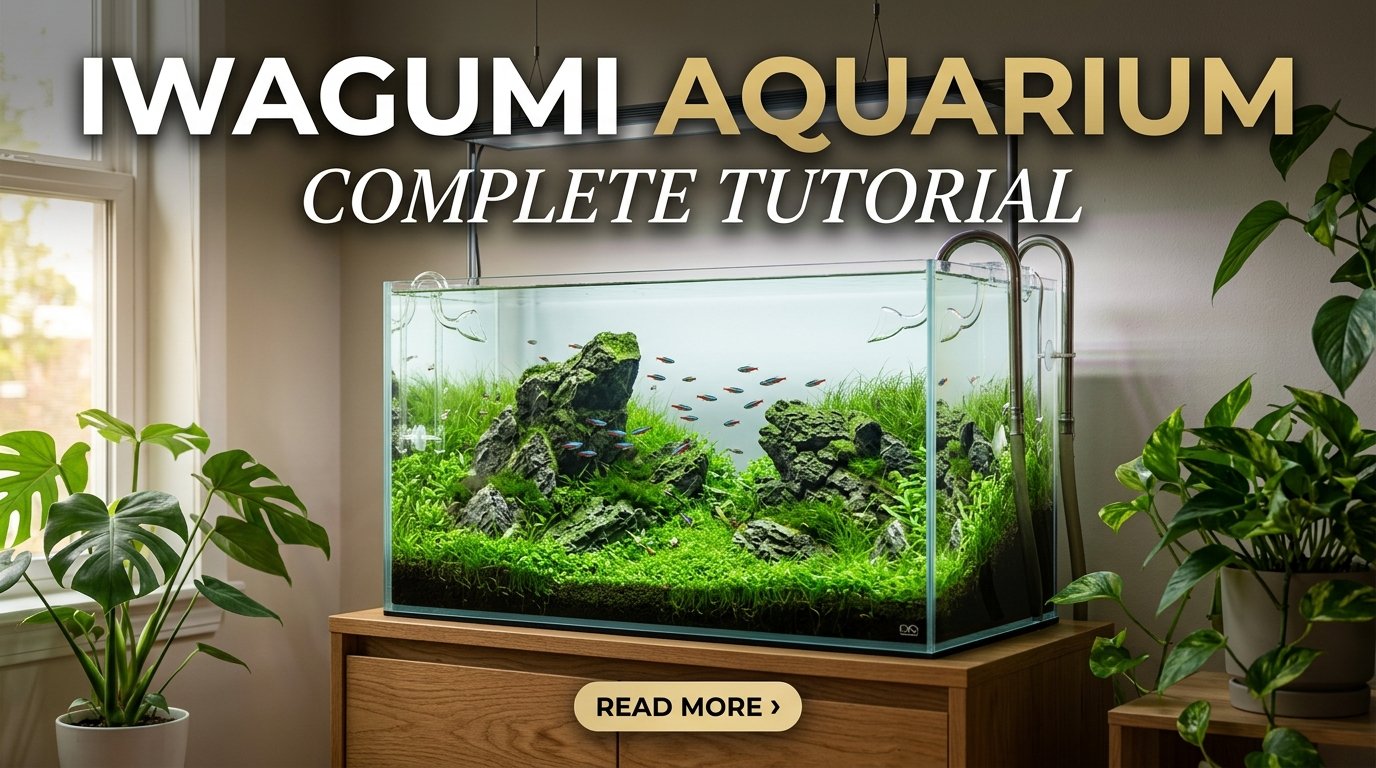
Iwagumi Aquarium is a beautiful style of aquascaping that uses carefully arranged stones, aquatic plants, and open space to create a natural underwater landscape. Inspired by Japanese rock gardening, this aquarium style focuses on simplicity, balance, proportion, and harmony. Instead of filling the tank with numerous decorations, an Iwagumi aquarium uses a small number of carefully selected rocks to create a peaceful scene that resembles mountains, rocky hills, or a natural riverbed.
An Iwagumi aquarium can become an elegant centerpiece in a living room, bedroom, office, or dedicated fishkeeping space. Although the design looks simple, creating a balanced layout requires thoughtful planning, suitable plants, proper lighting, and consistent maintenance. Whether you are a beginner exploring aquascaping or an experienced aquarium enthusiast looking for a minimalist design, Iwagumi aquascaping offers endless opportunities to create a stunning underwater landscape.
What Is an Iwagumi Aquarium?
An Iwagumi aquarium is a planted aquarium design based on the Japanese concept of arranging stones in a natural and visually balanced composition. The word “Iwagumi” refers to a rock formation or stone arrangement, and the style is strongly associated with modern nature aquarium design.
In this aquascaping method, stones serve as the main visual elements. Plants are used carefully to complement the rocks rather than compete with them. Open spaces, gentle slopes, and consistent plant growth help create the impression of a natural landscape.
Unlike heavily decorated aquariums featuring artificial castles, colorful ornaments, or numerous decorative objects, an Iwagumi aquarium usually has a restrained appearance. Its beauty comes from the relationship between the stones, plants, substrate, and negative space.
The design often follows principles of asymmetry and proportion. Stones of different sizes are arranged to create a focal point and guide the viewer’s eyes across the aquarium. When done well, the result looks natural rather than artificially organized.
The Main Stones Used in Iwagumi Aquascaping
Stones are the most important elements of an Iwagumi aquarium. Their shape, texture, color, and placement determine the overall character of the layout.
Common choices include Seiryu stone, Dragon stone, and other aquarium-safe rocks with attractive natural textures. Each type creates a different appearance, so the best option depends on the style you want to achieve.
1. Seiryu Stone
Seiryu stone is a popular choice for Iwagumi aquascaping because of its rugged texture, angular shapes, and gray-blue appearance. Its crevices and contrasting mineral patterns can resemble mountain ridges or rocky cliffs.
This stone works particularly well in minimalist layouts with short foreground plants. Its detailed surface creates visual interest without requiring additional decorations.
However, some Seiryu stones can influence water hardness and carbonate hardness. This matters if you plan to keep soft-water fish or sensitive aquatic plants. Test your water and monitor its parameters when using rocks that may affect chemistry.
2. Dragon Stone
Dragon stone, also known as Ohko stone, features a porous surface with many holes and crevices. Its earthy brown colors can create a warm, natural appearance.
Dragon stone is useful for layouts that resemble eroded hills, rocky valleys, or ancient landscapes. The holes can also provide places for mosses to attach, although the stones should be cleaned carefully before use.
Select pieces with compatible textures and colors so that the overall arrangement looks unified.
3. Lava Rock
Lava rock has a rough, porous surface that can add texture to an aquascape. Depending on its shape and color, it may work in a more rugged or mountain-inspired Iwagumi design.
Choose aquarium-safe lava rock and inspect it for sharp edges that could injure fish. Small pieces may be useful for supporting substrate slopes or creating a stable base beneath larger stones.
4. Natural River Stones
Smooth river stones can create a softer, more peaceful Iwagumi appearance. They are suitable for designs inspired by riverbanks and rounded mountain landscapes.
Use stones known to be safe for aquarium use. Randomly collected rocks may contain contaminants or affect water chemistry, so they should not be added without proper identification and preparation.
The Traditional Iwagumi Stone Arrangement
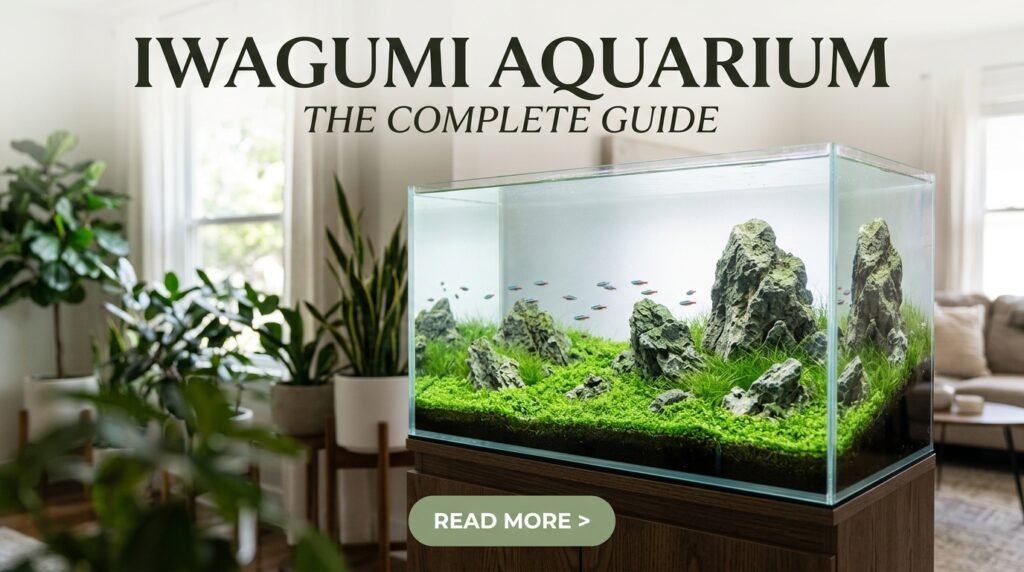
Classic Iwagumi layouts commonly use an odd number of stones, often three, five, or seven. The goal is to create a natural composition in which the stones complement one another without looking like a symmetrical display.
A traditional arrangement may include several roles.
Oyaishi: The Main Stone
Oyaishi is the largest and most visually important stone in the layout. It establishes the main focal point and often determines the direction of the entire composition.
Aquascapers frequently position the main stone at an off-center location rather than directly in the middle. Tilting it slightly in the direction suggested by its natural shape can make the arrangement feel more dynamic.
The main stone should be large enough to establish the scene but not so large that it overwhelms the aquarium.
Fukuishi: The Secondary Stone
Fukuishi is the secondary stone, usually smaller than the main stone. It supports the focal point and helps balance the composition.
Its shape and orientation should complement the main stone. If both stones look identical in size and direction, the arrangement may feel repetitive rather than natural.
Soeishi: The Supporting Stone
Soeishi is a smaller supporting stone that adds depth and reinforces the relationship between the larger rocks.
It can help create a visual transition from the main stone toward the surrounding landscape. Careful positioning is important because even a small stone can change the balance of a minimalist aquascape.
Suteishi: The Additional Stone
Suteishi is an additional stone that contributes subtle detail to the arrangement. It may be partly hidden by plants or positioned to make the rock formation feel more natural.
Not every Iwagumi aquarium needs to follow these roles rigidly. They are useful design principles, but the final composition should depend on the stones available and the dimensions of the tank.
Best Iwagumi Aquarium Design Ideas
There are several ways to create an attractive Iwagumi layout. The right approach depends on your aquarium size, available stones, preferred plants, and experience with planted tanks.
1. Classic Mountain Iwagumi
A mountain-inspired Iwagumi aquarium uses angular stones to create the impression of a rocky mountain range. The largest stone forms the primary peak, while smaller stones create secondary elevations.
Short green carpeting plants spread across the substrate like grass growing along mountain slopes.
This design works well when the stones share a similar visual character but vary in size and shape. Avoid arranging them in a straight row because a natural mountain range rarely appears perfectly uniform.
2. Minimalist Iwagumi Aquarium
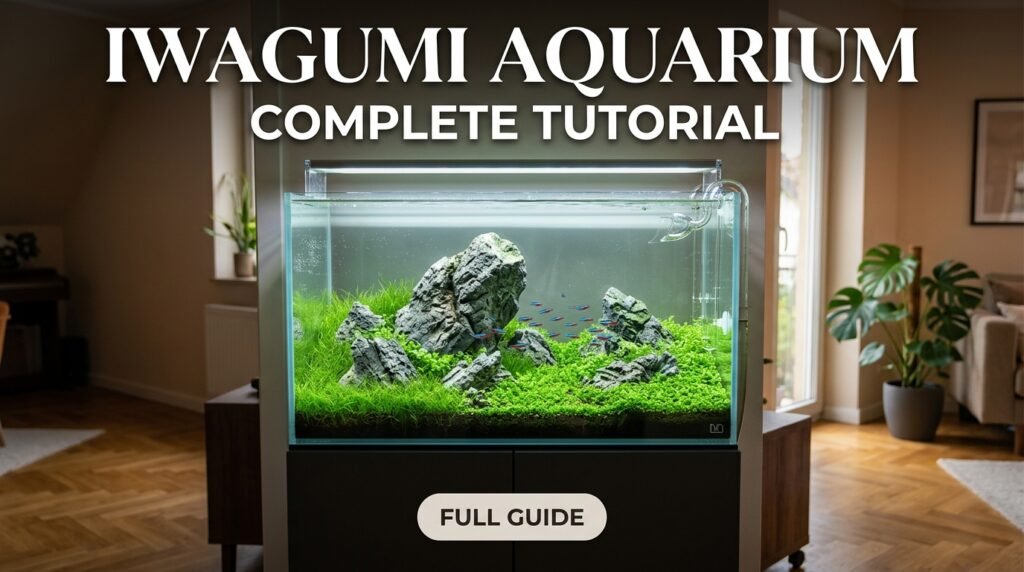
A minimalist Iwagumi aquarium uses only a few stones and a simple plant arrangement. The main objective is to create a strong visual effect with very few elements.
Choose one dominant stone, two or more supporting stones, and a low-growing foreground plant. Leave some open space so the layout does not feel crowded.
This style is particularly attractive in modern interiors because it has a clean, uncluttered appearance.
3. Sloping Iwagumi Layout
A sloping Iwagumi layout uses substrate at different heights to create depth. The substrate may be deeper toward the back or one side of the aquarium, making the landscape appear to extend into the distance.
Place the main stone where it supports the direction of the slope. Smaller stones can lead the viewer’s attention through the scene.
A suitable substrate barrier or carefully arranged hardscape may help keep the slope stable. Avoid creating unstable piles that could collapse or place excessive pressure on the aquarium glass.
4. Valley-Inspired Iwagumi Aquarium
A valley layout creates a visual passage between two groups of stones. The open area between them resembles a valley or natural pathway.
Carpeting plants can cover the foreground while taller or denser growth is placed toward the back. This creates a sense of distance without requiring many plant species.
The open channel should remain visually clear so that the main composition does not become crowded.
5. Nano Iwagumi Aquarium
A nano Iwagumi aquarium brings the same design principles into a compact tank. It may use three or five small stones, a low-growing plant carpet, and a carefully shaped substrate.
Small aquariums require extra attention to scale. A stone that looks modest in a large tank may dominate a nano aquarium.
Water conditions can also change quickly in small tanks, so consistent maintenance and appropriate stocking are essential. A small Iwagumi tank can be designed as a planted display without fish, or with carefully selected livestock that fits its actual capacity.
6. Iwagumi Aquarium With Open Sand
Some Iwagumi layouts combine a planted foreground with a small area of exposed sand. This creates contrast and makes the stone arrangement stand out.
A narrow sand path can suggest a riverbed or mountain trail. Keep the shape irregular and natural rather than drawing a perfectly straight line through the aquarium.
Separate sand and nutrient-rich planted substrates carefully if needed to reduce mixing during maintenance.
Best Plants for an Iwagumi Aquarium
Iwagumi aquariums usually benefit from a limited selection of plants. Low-growing species are especially popular because they create a grass-like carpet around the stones.
The best plant choice depends on lighting, carbon dioxide availability, nutrients, and your willingness to trim the aquarium regularly.
| Aquatic plant | Growth style | Suitability |
|---|---|---|
| Dwarf hairgrass | Grass-like carpet | Creates a miniature meadow appearance |
| Monte Carlo | Low, spreading carpet | Popular for green foregrounds |
| Glossostigma elatinoides | Small-leaved carpet | Often needs strong lighting and careful care |
| Micranthemum tweediei ‘Monte Carlo’ | Compact spreading growth | Useful for natural-looking slopes |
| Java moss | Moss attached to hardscape | Best used sparingly in suitable layouts |
| Eleocharis parvula | Short grass-like growth | Can create a fine-textured foreground |
Not every Iwagumi aquarium needs all these plants. Using one main carpeting species often produces a cleaner and more consistent appearance.
Dwarf Hairgrass
Dwarf hairgrass is a popular choice for aquascapes that resemble grassy fields. Its thin leaves create a delicate texture around the stones.
It may take time to establish a dense carpet, and growth depends on lighting, nutrients, and carbon dioxide availability. Trimming helps maintain a tidy foreground.
Monte Carlo
Monte Carlo is widely used in planted aquariums because its small, rounded leaves can form a lush green carpet under suitable conditions.
It can spread across the substrate and soften the visual contrast between stones and the aquarium floor. Good circulation and suitable nutrient availability support healthy growth.
Glossostigma
Glossostigma can create a low, bright-green carpet that complements dramatic stone arrangements. It generally performs best with strong lighting and stable growing conditions.
Because it can be more demanding than some other carpeting plants, beginners may find Monte Carlo or suitable hairgrass varieties easier to manage.
Best Fish for an Iwagumi Aquarium
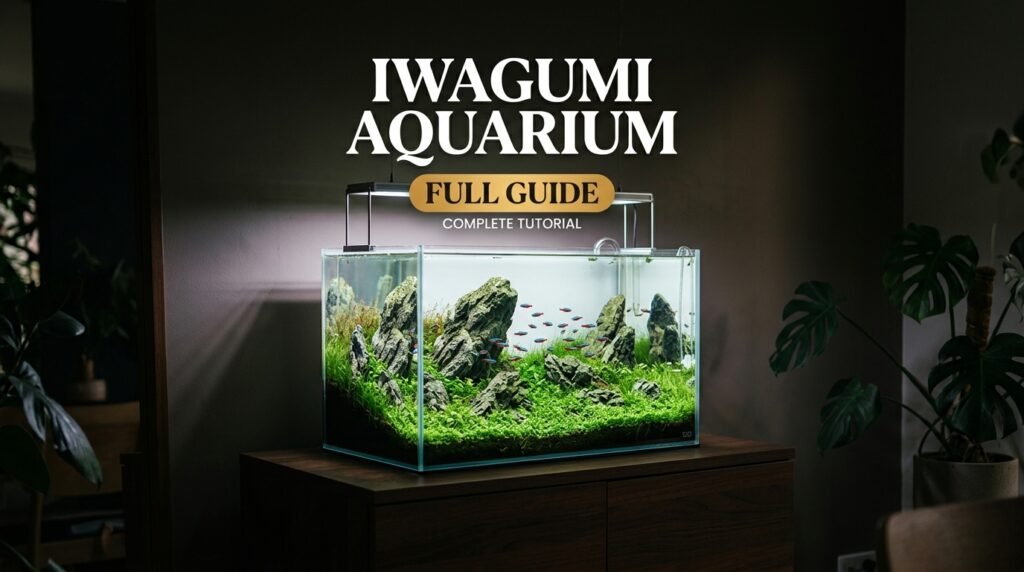
Iwagumi aquariums are designed primarily around stones and plants, so fish are often chosen to complement the landscape rather than become the main visual attraction.
Small, peaceful schooling fish can create movement across the open areas of the tank. However, the aquarium’s dimensions, water conditions, and the adult size of the fish should determine stocking choices.
Possible options include:
- Neon tetras: Small schooling fish with striking blue and red coloration, suitable only when their water conditions and group needs are met.
- Ember tetras: Small, orange-colored fish that can add a warm accent to a green aquascape.
- Harlequin rasboras: Active schooling fish that work well in appropriately sized planted aquariums.
- Chili rasboras: Tiny fish for carefully planned, mature aquariums with suitable water conditions.
- Otocinclus catfish: Small algae-grazing fish that need a mature aquarium, suitable food, and appropriate group care.
These are examples, not a recommendation to combine all of them in one tank. Select species with compatible requirements and provide appropriate group sizes and swimming space.
Avoid choosing fish simply because they are small. Their social behavior, preferred water chemistry, diet, and long-term care requirements remain important.
Equipment Needed for an Iwagumi Aquarium
A healthy Iwagumi aquarium requires suitable equipment even though the design itself looks simple.
Aquarium tank: Choose a tank with dimensions that allow the stones to form a balanced composition. Wider tanks often provide more room for arranging the hardscape.
Filtration system: Use a filter appropriate for the tank volume and planned livestock. Good filtration helps maintain water quality and supports beneficial bacteria.
Aquarium lighting: Carpeting plants generally need suitable light to grow densely. Choose lighting based on the plant species and aquarium depth rather than automatically selecting the brightest option.
Substrate: Nutrient-rich aquasoil is commonly used for planted layouts, although other substrates may be appropriate depending on the plants and water conditions.
Carbon dioxide system: Pressurized CO2 can support faster and denser growth in demanding planted aquariums. It is not mandatory for every Iwagumi setup, but some carpeting plants may grow more slowly without it.
Water testing supplies: Tests for ammonia, nitrite, nitrate, and relevant water parameters help you monitor the aquarium, especially during setup and after changes.
Maintenance tools: Aquascaping scissors, tweezers, a gravel vacuum, and an algae scraper make it easier to maintain a clean, carefully arranged layout.
How to Set Up an Iwagumi Aquarium
Creating an Iwagumi aquarium is easier when the stone arrangement is planned before plants and water are added.
Step 1: Choose the Tank
Select a tank based on the available space, desired layout, and future maintenance needs. A wide aquarium gives you room to establish a focal point and create depth.
Ensure the aquarium sits on a level, suitable stand that can support the filled tank safely.
Step 2: Select and Arrange the Stones
Choose stones that complement one another in color, texture, and shape. Start with the largest stone, then arrange smaller stones around it.
View the arrangement from the front and make small adjustments. Avoid evenly spacing every stone or positioning all of them at the same angle.
Secure the stones so they cannot fall or shift during maintenance. If large rocks rest directly on the substrate, plan the base carefully to protect the aquarium bottom.
Step 3: Add the Substrate
Shape the substrate to create depth, usually with greater height toward the back. A gentle slope can make the aquarium look larger and more natural.
Use appropriate substrate supports when necessary. Avoid building a steep slope that collapses easily or exposes large areas of nutrient-rich substrate.
Step 4: Plant the Foreground
Divide carpeting plants into small portions and plant them across the intended foreground. Aquarium tweezers can make this easier.
Leave appropriate spacing between portions so they have room to spread. Planting too densely can make it harder for roots to establish, while excessively wide gaps can delay carpet formation.
Step 5: Install the Equipment
Set up filtration, lighting, and any heater or CO2 system required by the chosen plants and livestock.
Make sure equipment is suitable for the aquarium volume and can operate safely. Follow manufacturer instructions when adjusting CO2 and lighting.
Step 6: Fill the Aquarium Carefully
Add water slowly to prevent the substrate from becoming disturbed. Pouring water over a plate or another clean, aquarium-safe surface can reduce disruption.
Start the filter and verify that water circulates properly. Check for leaks, unstable stones, and areas where debris may accumulate.
Step 7: Cycle the Aquarium
Before adding fish, establish biological filtration using an appropriate cycling method. Test the water to confirm that the aquarium can process fish waste safely.
A tank that looks clear is not necessarily biologically ready. Continue monitoring water quality during the cycling process.
Step 8: Add Livestock Gradually
Once the aquarium is stable and fully cycled, introduce suitable fish gradually. Acclimate them according to their needs and monitor their behavior afterward.
Avoid adding too many fish at once. A lightly stocked Iwagumi aquarium often preserves the calm, open appearance that makes the style attractive.
Lighting and CO2 for Iwagumi Aquascaping
Lighting and carbon dioxide are important factors in the success of many Iwagumi aquariums, especially those with demanding carpeting plants.
Strong lighting can encourage compact plant growth, but excessive light without sufficient nutrients or carbon availability can encourage algae. Start with a reasonable lighting schedule and adjust it according to plant growth and algae levels.
CO2 supplementation may improve the growth and appearance of carpeting plants. If using injected CO2, maintain stable conditions and monitor fish carefully because excessive dissolved CO2 can be dangerous.
A low-tech Iwagumi aquarium is also possible. Choose plants that tolerate the available light and avoid designing the tank around species that require equipment you do not intend to use.
Common Iwagumi Aquarium Problems
Algae Growth
Algae can become a problem when lighting, nutrients, carbon availability, and plant growth are out of balance. Establish the aquarium carefully, avoid excessive lighting, and perform regular maintenance.
Do not rely on algae-eating animals to solve every algae problem. Correct the underlying conditions first.
Carpeting Plants Growing Slowly
Carpeting plants may struggle because of unsuitable lighting, limited nutrients, unstable CO2, or inappropriate substrate conditions. Research the requirements of the plant species and make changes gradually.
Some plants need time to establish roots before they begin spreading across the substrate.
Stones Looking Artificial
A layout can look unnatural if all the stones are identical in size, evenly spaced, or arranged in a symmetrical pattern.
Try rotating the stones, changing their spacing, and creating a clear focal point. Use their natural lines and textures to guide the composition.
Substrate Slumping
Substrate slopes can gradually flatten during filling and maintenance. Build the slope carefully, use suitable supports where needed, and direct water flow so it does not erode the substrate.
Too Many Fish
Adding too many fish can make the aquarium look crowded and increase the biological load. Choose an appropriate stocking level and preserve enough open space for the fish to swim naturally.
How to Maintain an Iwagumi Aquarium
Regular maintenance helps preserve both the health of the plants and the simplicity of the design.
Trim carpeting plants before they become excessively thick. Remove dead leaves, siphon visible debris, and clean the glass when needed. Perform partial water changes according to the aquarium’s stocking and water-quality needs.
Check the filter regularly and clean it according to its instructions without unnecessarily removing all beneficial bacteria. Monitor plant growth, algae, and water parameters, particularly after changing lighting, fertilization, or CO2.
Inspect stones periodically to ensure they remain stable. Avoid making frequent major changes to the hardscape unless there is a practical reason.
A well-maintained Iwagumi aquarium should remain balanced rather than overgrown. Consistent trimming and careful observation are usually more effective than occasional drastic maintenance.
Frequently Asked Questions About Iwagumi Aquarium
What is an Iwagumi aquarium?
An Iwagumi aquarium is a minimalist aquascape based on the Japanese art of arranging stones. It usually combines a few carefully selected rocks, carpeting plants, and open space to create a natural landscape.
Which stones are best for an Iwagumi aquarium?
Seiryu stone, Dragon stone, and suitable natural rocks are popular choices. Select stones with complementary shapes and textures, and check whether they could affect your water chemistry.
How many stones should an Iwagumi aquarium have?
Many traditional layouts use an odd number of stones, such as three, five, or seven. However, the final number depends on the tank dimensions and the composition you want to create.
Which plants are best for an Iwagumi aquarium?
Dwarf hairgrass, Monte Carlo, Glossostigma, and other suitable carpeting plants are common options. Choose plants according to your lighting, substrate, CO2 availability, and maintenance experience.
Can beginners create an Iwagumi aquarium?
Yes, beginners can build an Iwagumi aquarium, especially with undemanding plants and a simple stone arrangement. A demanding carpet may require stronger lighting, CO2 supplementation, and more frequent trimming.
Does an Iwagumi aquarium need CO2?
No. CO2 injection is optional, but it can help demanding carpeting plants grow faster and more densely. Without added CO2, choose plants that suit a lower-tech setup.
What fish are suitable for an Iwagumi aquarium?
Small, peaceful schooling fish may suit an appropriately sized Iwagumi aquarium. Neon tetras, ember tetras, and suitable rasboras are possible options when their water and social requirements are met.
Why is my Iwagumi aquarium growing algae?
Algae can result from excessive light, unstable conditions, nutrient imbalances, or slow plant growth. Review your lighting schedule, maintenance routine, and plant health before making gradual adjustments.
Is an Iwagumi aquarium expensive?
Costs vary with tank size, lighting, filtration, stone selection, plants, and whether you use pressurized CO2. A simple low-tech layout can cost less than a high-performance planted aquarium.
How often should I trim an Iwagumi aquarium?
Trimming frequency depends on plant growth and lighting. Carpeting plants may need regular trimming to stay compact, while slower-growing plants require less frequent maintenance.
Conclusion
Iwagumi Aquarium is an elegant aquascaping style that proves a simple design can create a powerful visual impression. By combining carefully arranged stones, suitable carpeting plants, open space, and balanced proportions, you can build an underwater landscape inspired by natural mountains and rocky valleys.
The key to success is choosing aquarium-safe stones, selecting plants that match your equipment, establishing biological filtration before adding fish, and maintaining stable water conditions. With thoughtful planning and consistent care, an Iwagumi aquarium can become a peaceful, natural-looking centerpiece in your home or office.