
 By admin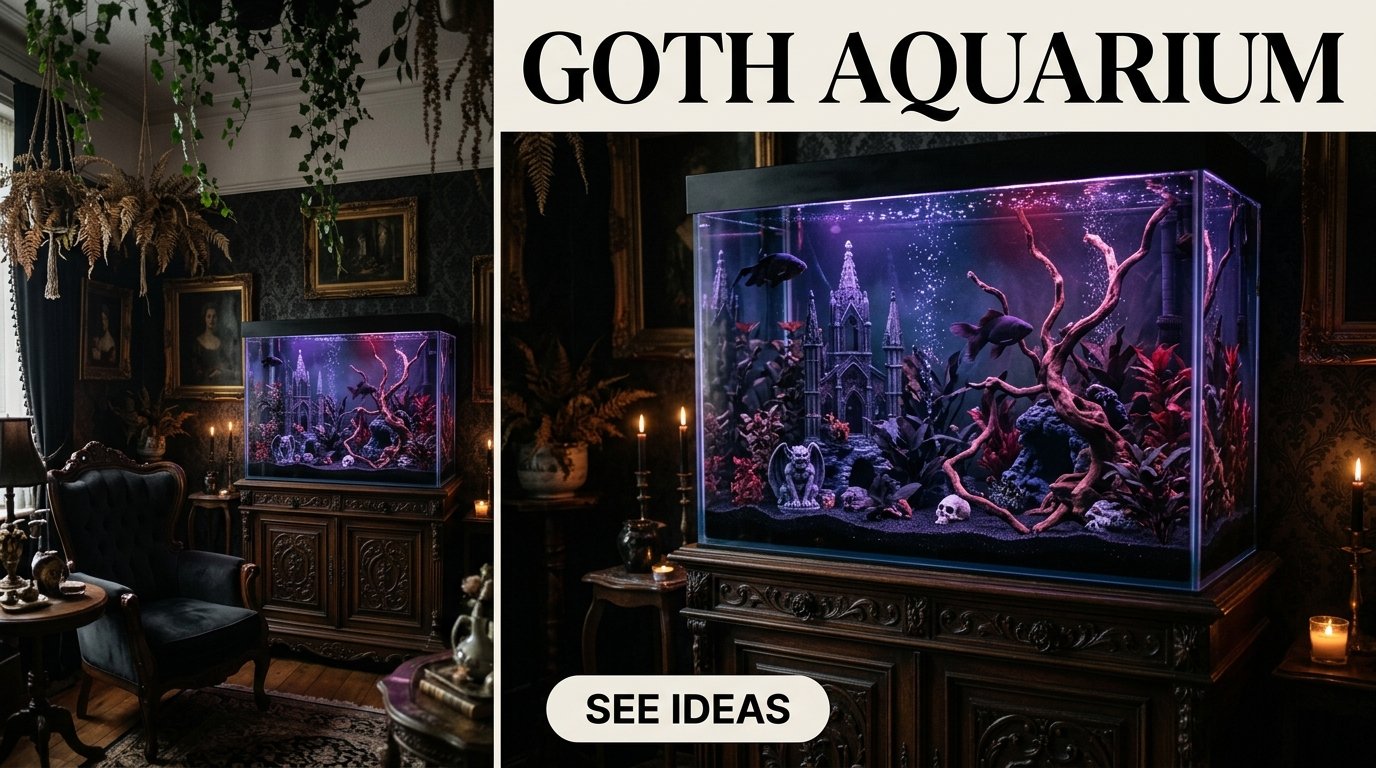
Goth aquarium designs are perfect for aquarium lovers who enjoy dark aesthetics, mysterious underwater landscapes, black decorations, dramatic lighting, and unusual fish tank themes. A goth aquarium combines the beauty of aquatic life with gothic-inspired elements such as dark stone, black sand, twisted driftwood, moody plants, and castle-like decorations. The result can be a striking centerpiece for a bedroom, living room, gaming room, or any space with a dark and alternative style.
Creating a gothic aquarium does not mean sacrificing the health and comfort of your fish. The best designs balance a dark appearance with suitable filtration, stable water conditions, safe decorations, and enough room for fish to swim naturally. Whether you prefer a subtle black aquarium or an elaborate haunted underwater scene, there are many ways to achieve a gothic look.
In this guide, you will discover creative goth aquarium ideas, decoration tips, plant suggestions, lighting options, suitable fish considerations, and practical advice for building a dark aquarium that looks beautiful and remains healthy.
What Is a Goth Aquarium?
A goth aquarium is a fish tank designed around gothic, dark, mysterious, or alternative visual themes. It often features black backgrounds, dark substrates, dramatic shadows, stone structures, skeletal branches, and carefully selected decorations.
Some gothic aquariums resemble abandoned castles or haunted ruins, while others look like mysterious underwater forests. Minimalist versions use only black sand, dark rocks, and a few plants to create a sophisticated appearance.
Popular colors include black, charcoal gray, deep purple, dark red, silver, and muted green. These colors can make brightly colored fish stand out and give the aquarium a distinctive atmosphere.
However, gothic design is a visual style rather than a special type of aquarium. The tank still needs to meet the biological and environmental requirements of its inhabitants.
1. Black Goth Aquarium
A black goth aquarium is one of the simplest ways to create a dark underwater display. It uses a black background, dark substrate, and carefully chosen decorations to create a unified appearance.
Begin with aquarium-safe black sand or gravel. Add a black background to hide cords and equipment and make the tank appear deeper. Place a few pieces of dark stone or driftwood around the sides, leaving the middle open for swimming.
Live plants can provide contrast against the darker surroundings. Deep green Anubias, Java fern, and moss attached to driftwood can work well in suitable freshwater conditions.
This style is ideal for people who prefer a clean, modern gothic aesthetic rather than an aquarium crowded with themed ornaments.
Choose substrate carefully because some dark products may contain dyes or coatings that are unsuitable for aquatic environments. Always use materials specifically intended for aquarium use.
2. Gothic Castle Aquarium
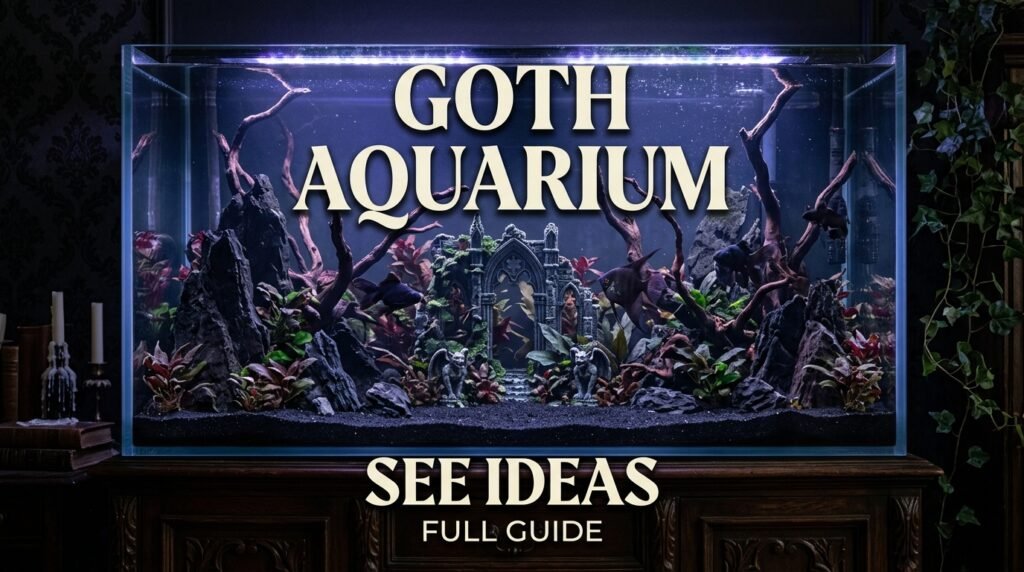
A gothic castle aquarium recreates the atmosphere of an ancient, mysterious fortress beneath the water. Castle towers, ruined walls, arches, and stone-like structures can make the aquarium look like a submerged medieval kingdom.
Choose an aquarium-safe castle ornament with smooth edges and openings large enough for the fish that will use it. Position the main structure toward the back or one side of the tank to create depth.
Smaller stones and suitable plants can be placed around the base to make the castle appear integrated into the landscape. Dark gravel or sand helps reinforce the theme.
Avoid filling the tank with too many large ornaments. Fish need open swimming space, and excessive decoration can make cleaning difficult. Check that the ornament has no narrow gaps where fish could become trapped.
3. Haunted Goth Aquarium
A haunted aquarium creates the appearance of a mysterious underwater location that has been abandoned for centuries. It can include ruined structures, twisted branches, dark stones, and subdued lighting.
Use a few carefully selected decorations instead of combining every spooky object you can find. A single ruined tower, a branch-shaped piece of driftwood, and dark substrate can be enough to establish the theme.
Artificial fog effects are not appropriate inside an aquarium unless the product is specifically designed for aquatic use. Instead, create a misty appearance through visual contrast, fine-leaved plants, and a dark background.
The goal is to suggest a haunted atmosphere without introducing unsafe materials or compromising the aquarium’s water quality.
4. Gothic Aquarium With Driftwood
Driftwood is an excellent choice for gothic aquariums because its irregular branches can resemble twisted trees, ancient roots, or a dead forest.
Select aquarium-safe driftwood with an interesting shape. Position it at an angle so the branches extend toward the center of the tank. Surround the base with dark stones and add a few plants to soften the arrangement.
Java moss and other suitable aquatic mosses can give the wood an aged appearance. Anubias and Java fern may also be attached to appropriate surfaces.
Some driftwood releases tannins that turn the water amber or brown. This effect can complement a dark, natural aesthetic, although the degree of discoloration varies. Prepare the wood appropriately and monitor water conditions.
Never use painted branches, treated garden wood, or materials collected from contaminated areas.
5. Dark Forest Goth Aquarium
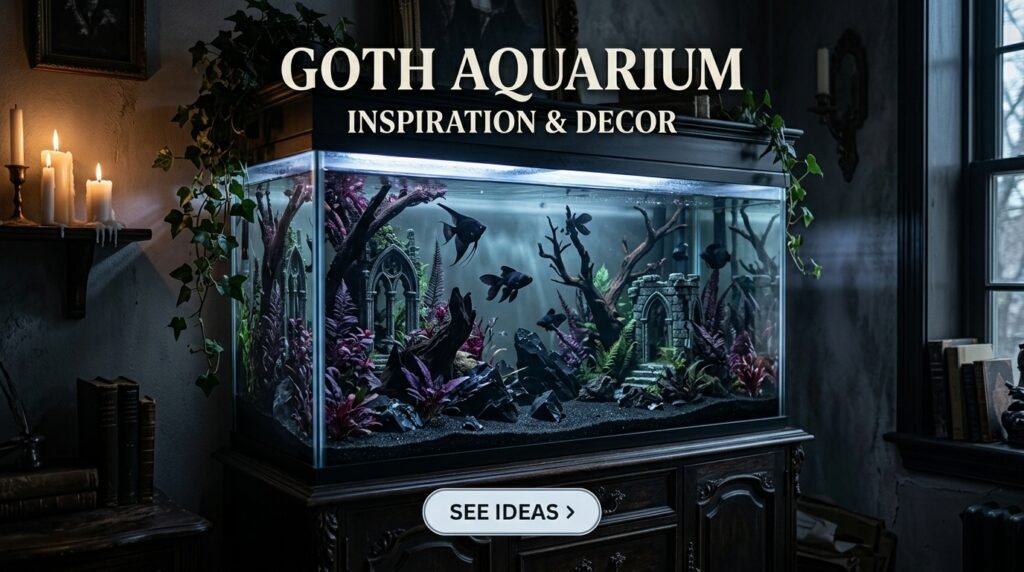
A dark forest aquarium combines gothic styling with the appearance of a submerged woodland. It uses branching driftwood, clusters of plants, shadows, and dark substrate to create an immersive underwater landscape.
Start by placing one or two pieces of branching wood toward the back. Arrange plants around their bases, using taller species behind and shorter plants in front. Leave an open path through the center to create the impression of a forest clearing.
Dark green plants can reinforce the forest appearance, while moss-covered wood adds texture. A black background helps the arrangement feel deeper.
Keep plant growth under control so that the aquarium does not become overcrowded. Make sure fish can move freely between branches and that water circulates around the decorations.
6. Gothic Aquarium With Black Sand
Black sand can transform the appearance of a freshwater aquarium without requiring many decorations. It creates a dramatic foundation for dark stones, pale driftwood, green plants, and colorful fish.
Spread aquarium-safe black sand evenly across the base or create a gentle slope that rises toward the back. Add a few large rocks or a single central ornament, then use plants to frame the scene.
Black sand can also make red, orange, silver, and blue fish visually prominent. However, fish should never be selected solely for color; their adult size, temperament, water requirements, and social needs must come first.
Choose sand suitable for your fish species. If your fish dig or sift through the substrate, check that its grain size and texture are appropriate.
7. Gothic Aquarium With Red Lighting
Red accents can give a gothic aquarium a dramatic appearance. They work particularly well with black backgrounds, dark ornaments, and restrained decoration.
Instead of bathing the entire tank in intense red light, consider using normal aquarium lighting that supports the plants and fish, with a subtle red accent outside the aquarium or in the surrounding room.
Colored lighting should not replace the appropriate light spectrum and duration needed by living plants. Excessive or prolonged lighting can encourage algae growth and disrupt the aquarium’s day-night cycle.
If you want a red glow, choose lighting equipment designed for aquarium use and follow its safety instructions. Maintain a regular period of darkness so the fish can rest.
8. Purple and Black Goth Aquarium
A purple-and-black aquarium offers a fantasy-inspired gothic appearance. Black substrate and a dark background provide the foundation, while purple accents create a mysterious atmosphere.
You can introduce the color through decorations designed for aquariums, exterior room lighting, or a compatible programmable aquarium light. Dark rocks and twisted driftwood can complete the design.
Live plants may appear greener under purple lighting, depending on the spectrum and intensity. Ensure the lighting remains suitable for the plants and does not make it difficult to observe fish or assess their condition.
A few coordinated accents usually look better than placing purple decorations throughout every part of the tank.
9. Gothic Ruins Aquarium
A gothic ruins aquarium resembles the remains of a submerged cathedral, forgotten city, or ancient stone structure.
Use aquarium-safe ornaments featuring arches, broken columns, weathered walls, or ruined towers. Place the tallest structure near the back and smaller stones around its base to create a gradual transition.
Plants and moss can soften the edges and give the appearance of an old, overgrown ruin. A dark substrate and black background help unify the design.
Inspect all structures carefully before adding fish. Avoid unstable stacks, sharp edges, and small openings that could trap aquatic animals. Secure heavy decorations on a stable base so they cannot collapse if fish disturb the substrate.
10. Gothic Cathedral Aquarium
A cathedral-themed aquarium is ideal for people who appreciate elaborate architecture and medieval gothic design.
Choose an ornament with pointed arches, tall towers, or decorative stonework. Place it slightly off-center and use smaller rocks or plants to balance the opposite side.
A tall cathedral ornament can dominate a small aquarium, so select a size appropriate for the tank. Make sure it does not block the filter intake, heater, or circulation.
For a more realistic appearance, use restrained colors and a simple background rather than mixing the cathedral with unrelated bright ornaments.
Always check the material and finish. Aquarium ornaments should not release paint, metals, or other substances into the water.
11. Minimalist Goth Aquarium
A minimalist goth aquarium uses a small number of elements to create a sophisticated dark appearance. It is suitable for modern interiors and aquarium owners who do not want a complicated decorating project.
Use a black background, dark substrate, and one distinctive piece of driftwood or stone. Add a few plants in carefully chosen positions, leaving plenty of open space.
The minimalist approach makes fish and their movements the main attraction. It can also simplify cleaning because there are fewer ornaments and fewer inaccessible spaces.
Minimalism does not mean removing necessary hiding places. Choose the arrangement according to the species you keep, especially if the fish are shy, territorial, or naturally live among plants and structures.
12. Goth Aquarium for a Bedroom
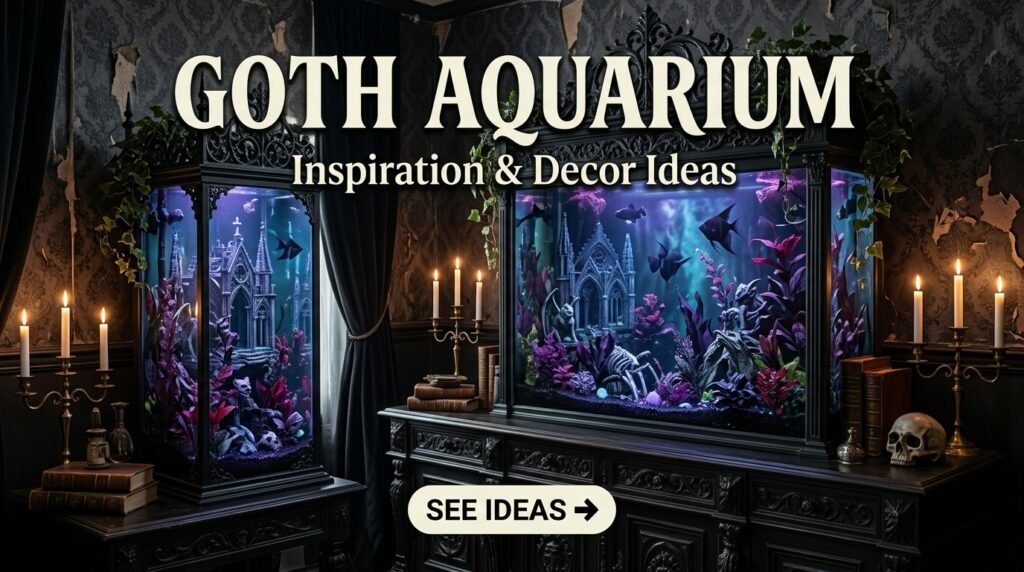
A goth aquarium can become a striking feature in a bedroom decorated with dark furniture, black walls, gothic artwork, or alternative décor.
A compact black aquarium with a few plants and one dramatic ornament can complement the room without overwhelming it. For a larger bedroom, a natural dark forest layout or castle theme may be more suitable.
Position the tank on a stable stand capable of supporting the weight of the filled aquarium. Avoid direct sunlight, heat sources, and locations where the tank could be knocked over.
Consider noise and light when choosing its location. Use a reliable filter, maintain a consistent lighting schedule, and turn aquarium lights off during the normal nighttime period. Bright or constantly changing lighting can disturb fish.
Remember that the aquarium needs regular care even when it is primarily intended as a decorative feature.
13. Gothic Aquarium With Live Plants
Live plants can make a dark aquarium look more natural and prevent the design from appearing like a collection of artificial ornaments.
Suitable plants depend on your lighting, water chemistry, substrate, and maintenance routine. Anubias and Java fern are often useful choices for low-to-moderate-light setups because they can be attached to wood or rock rather than planted deeply into the substrate.
Moss can create an aged appearance on driftwood and suitable decorations. Other plants may be used when their growth requirements match your aquarium.
Arrange plants in small groups rather than distributing them evenly throughout the tank. This creates contrast between planted and open areas.
Avoid using plants simply because their leaves are dark or purple. Confirm that they are genuine aquatic plants suitable for long-term underwater growth. Some plants sold for aquariums are actually terrestrial or semi-aquatic plants that deteriorate when permanently submerged.
14. Gothic Aquarium With Artificial Plants
Artificial plants can work well in a gothic aquarium if you prefer a consistent decorative appearance or do not want to manage live plants.
Choose aquarium-safe silk plants or suitable soft artificial plants without sharp edges. Dark green, muted red, or other restrained colors may complement the gothic theme.
Arrange taller plants near the back and shorter ones around the sides. Leave enough open space for swimming and cleaning.
Artificial plants do not absorb nutrients or grow like living plants, so they do not replace biological filtration or water changes. They can also collect algae and debris, making occasional cleaning necessary.
Avoid rough plastic foliage that can damage delicate fins. Inspect decorations regularly and replace any item that becomes cracked or deteriorates.
15. Gothic Aquarium for Bettas
A gothic betta aquarium can use dark substrate, smooth stones, live plants, and a carefully chosen cave or piece of driftwood.
Bettas benefit from calm areas, sheltered resting places, and easy access to the water surface. Keep decorations smooth and avoid narrow openings where the fish might become trapped.
Plants with broad leaves can offer resting spots, while a few open areas allow the fish to swim freely. Make sure the filter creates appropriate water movement rather than a current that is too strong for the individual betta.
Bettas require suitable tank dimensions, heated and filtered water, and stable water conditions. Do not keep a betta in a tiny decorative bowl simply because it matches a gothic theme.
16. Gothic Aquarium for Guppies
A gothic guppy aquarium combines a dark background and substrate with plants or decorations that contrast against the fish’s colors.
Blue, orange, red, and multicolored guppies can stand out beautifully against a darker setting. Use live plants along the back and sides while preserving open swimming areas.
Java moss and other suitable plants can offer cover for fry. However, dense growth should not prevent you from observing the fish or cleaning the aquarium.
Choose smooth decorations to protect delicate fins and avoid overcrowding. Guppies reproduce readily, so plan for future population growth before adding males and females together.
The dark theme should enhance the fish’s appearance without making it difficult to monitor their health and behavior.
17. Gothic Aquarium With Skeleton Decorations
Skeleton-themed decorations can give a gothic aquarium a spooky, fantasy-inspired look. Options may include aquarium-safe skull ornaments, skeletal arches, or small themed objects designed specifically for underwater use.
Use one main decoration as the focal point and complement it with dark stones or a few plants. Avoid crowding the aquarium with multiple large objects.
Only use ornaments that are manufactured for aquarium use or whose materials and coatings have been verified as safe. Household figurines, painted toys, and decorative objects may contain substances that are harmful in water.
Check for sharp teeth, narrow eye sockets, or other openings where small fish could become stuck. Clean the ornament before introducing it and inspect it regularly.
18. Gothic Aquarium for a Gaming Room
A gothic aquarium can complement a gaming room with dark furniture, fantasy artwork, or atmospheric lighting.
A black-background aquarium with a castle, ruins, or dark forest layout can fit this style. If the room already has bright RGB lighting, consider keeping the aquarium lighting simpler so the tank remains a calm, natural environment.
Avoid placing the aquarium where electronics, power strips, or computer equipment could be damaged by splashes or leaks. Use appropriate drip loops and electrical protection, and keep cables organized and away from water.
The tank should have a stable temperature and a consistent day-night cycle. A gaming room may have warm equipment and variable lighting, so check the aquarium’s location carefully.
Best Materials for a Goth Aquarium
| Material | Gothic appearance | Important consideration |
|---|---|---|
| Black aquarium sand | Dark, dramatic base | Choose a suitable grain size |
| Dark aquarium gravel | Simple, coordinated appearance | Avoid sharp or unsafe coatings |
| Aquarium-safe driftwood | Twisted roots and branches | Prepare it appropriately |
| Aquarium-safe stones | Ruins and rocky landscapes | Check their effect on water chemistry |
| Live aquatic plants | Natural contrast and texture | Match plants to tank conditions |
| Aquarium-safe castle ornaments | Medieval gothic theme | Check openings and stability |
| Smooth ceramic decorations | Minimalist or ruined structures | Verify aquatic safety |
| Black background | Greater visual depth | Keep equipment accessible |
How to Build a Goth Aquarium Step by Step
Step 1: Choose the Aquarium Size
Select a tank based on the needs of the fish you intend to keep, not simply the size that looks best in your room. Larger aquariums generally provide more stable water conditions, although they still require proper filtration and maintenance.
Step 2: Pick a Gothic Theme
Decide whether you prefer a black minimalist aquarium, a haunted forest, gothic ruins, a cathedral, or a dark planted landscape. Choosing one main theme helps you avoid buying unrelated decorations.
Step 3: Select Safe Substrate
Use aquarium-safe black sand, dark gravel, or another suitable substrate. Rinse it according to the manufacturer’s instructions before use.
Step 4: Position the Main Decoration
Place your largest rock, castle, driftwood feature, or ruin first. Position it toward one side or toward the back to create visual depth. Secure heavy objects before adding water.
Step 5: Add Plants and Smaller Details
Use plants and smaller stones to connect the main decoration to the rest of the layout. Preserve open swimming areas and access for cleaning.
Step 6: Install and Test Equipment
Set up an appropriate filter, heater if needed, and suitable lighting. Ensure that water circulates throughout the aquarium and that the equipment operates safely.
Step 7: Cycle the Aquarium Before Stocking
Establish the nitrogen cycle and verify that ammonia and nitrite remain at zero before introducing fish. Do not assume clear water means the tank is ready for livestock.
Step 8: Maintain the Dark Aesthetic
Keep the glass clean, remove dead plant material, and trim plants when necessary. Use lighting on a consistent schedule and inspect all decorations for damage or instability.
Common Goth Aquarium Mistakes
Using unsafe decorations: Painted toys, household ornaments, and untreated materials may release harmful substances. Use products designed for aquarium use.
Making the aquarium too dark: Fish need a suitable day-night cycle, and living plants need appropriate lighting. A dark aesthetic can come from the substrate, background, and decorations rather than constant darkness.
Overcrowding the tank: Too many castles, skulls, rocks, and plants can reduce swimming space and create difficult-to-clean areas.
Choosing fish based on color alone: Fish have different space, temperature, water chemistry, and social requirements. Select livestock based on compatibility and long-term care needs.
Ignoring stability: Heavy ornaments and rocks can fall if they are not securely positioned. This can injure fish or damage the glass.
Neglecting maintenance: Dark décor may hide debris and algae. Check the substrate, glass, filter, and decorations regularly to maintain water quality.
Frequently Asked Questions
What is a goth aquarium?
A goth aquarium is a fish tank designed with a dark, mysterious, gothic-inspired appearance. It may include black substrate, dark backgrounds, driftwood, stone ruins, castle ornaments, and restrained lighting accents.
How do I make my aquarium look gothic?
Start with a black background and dark substrate. Add one main feature, such as driftwood, a castle, or a ruined structure, and use a few plants or stones to complete the scene. Keep the layout balanced and suitable for your fish.
Are black aquariums good for fish?
A black background or dark substrate can be suitable for many aquarium fish when the materials are safe. The important factors are proper tank size, water quality, filtration, lighting, and species-specific care.
Can I use red or purple lights in a gothic aquarium?
Red or purple lighting can create a dramatic visual effect, but it should not interfere with the lighting needs of live plants or the normal day-night cycle of fish. Use appropriate aquarium lighting and provide regular darkness.
What fish look good in a goth aquarium?
Many fish can look attractive against a dark background, including suitable guppies, bettas, and other compatible freshwater species. Choose fish according to their care requirements rather than appearance alone.
Can I put a skull in my aquarium?
Yes, if the skull is an aquarium-safe decoration with suitable materials, no harmful coatings, and no openings that could trap fish. Avoid ordinary painted skulls or household ornaments unless their safety for permanent underwater use is verified.
Are live plants suitable for gothic aquariums?
Yes. Plants such as Anubias, Java fern, and suitable mosses can contrast beautifully with dark décor. Select plants that match your lighting, water conditions, and maintenance routine.
How do I keep a gothic aquarium clean?
Maintain an appropriate filtration system, perform regular water changes, remove debris, clean the glass, and trim plants. Dark substrate can make waste harder to see, so inspect the aquarium carefully.
Can I create a goth aquarium in a small tank?
Yes, but choose compact decorations and preserve enough swimming space. Select the tank size according to the species you plan to keep, and avoid keeping fish in an undersized aquarium just to achieve a particular look.
Do gothic aquarium decorations affect water quality?
They can if they contain unsafe paints, metals, coatings, or materials that alter water chemistry. Choose aquarium-safe decorations and check the manufacturer’s information before placing them in the tank.
Conclusion
Goth aquarium ideas offer a creative way to combine aquatic life with gothic architecture, dark colors, mysterious forests, and dramatic underwater landscapes. Whether you prefer a minimalist black tank, a haunted castle, a twisted driftwood forest, or a cathedral-inspired design, the possibilities are extensive.
Start with a clear theme, select safe decorations, and use dark substrate and backgrounds to establish the atmosphere. Add plants or rocks where they improve the composition, and leave enough room for fish to swim and for you to maintain the aquarium.
A beautiful gothic aquarium should be more than a decorative display. With appropriate equipment, stable water conditions, compatible fish, and regular maintenance, you can create a dark and distinctive underwater world that remains healthy and attractive over time.