
 By admin
A saltwater aquarium is one of the most beautiful and rewarding additions you can make to your home or office. With colorful marine fish, vibrant corals, live rock, and crystal-clear water, a well-designed saltwater aquarium creates a breathtaking underwater world that closely resembles the ocean. Whether you’re setting up your first marine tank or upgrading an existing reef aquarium, choosing the right design can make your aquarium both visually impressive and healthy for its inhabitants.
This comprehensive guide explores the best saltwater aquarium ideas, including layout inspiration, equipment, fish selection, coral placement, maintenance tips, and aquascaping techniques to help you create an extraordinary marine aquarium.
Why Choose a Saltwater Aquarium?
Saltwater aquariums offer incredible diversity and vibrant colors that are difficult to match in freshwater tanks.
Benefits include:
- Brilliantly colored marine fish
- Beautiful live corals
- Natural reef appearance
- Endless aquascaping possibilities
- Educational value
- Relaxing underwater scenery
- Unique centerpiece for any room
Although marine aquariums require more planning than freshwater setups, the results are often spectacular.
Choosing the Right Aquarium Size
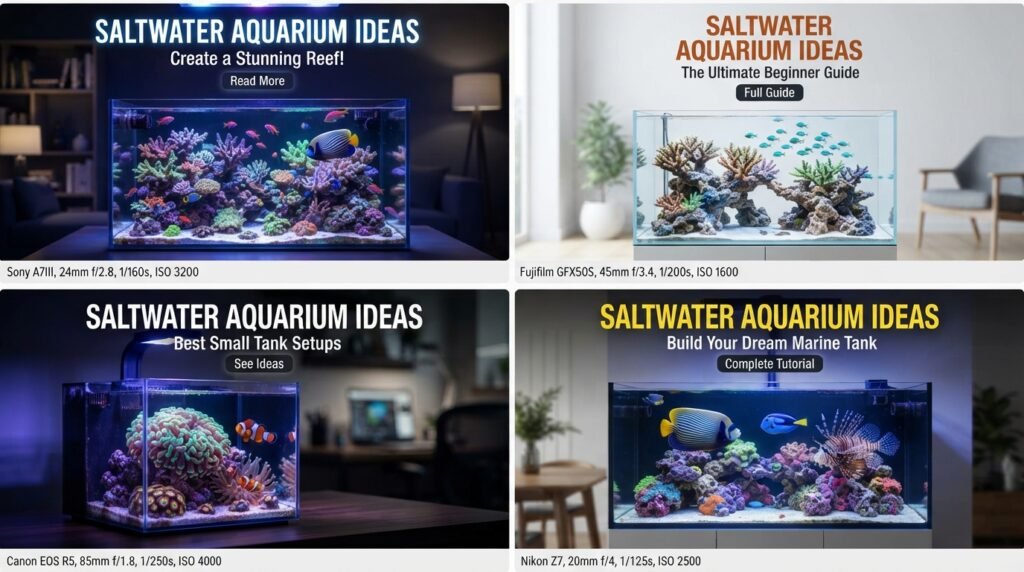
Selecting the proper tank size is one of the most important decisions.
Nano Saltwater Aquarium (10–30 Gallons)
Ideal for:
- Small apartments
- Desktop aquariums
- A few small marine fish
- Beginner reef projects
Because water chemistry changes quickly in smaller tanks, regular monitoring is essential.
Medium Aquarium (40–75 Gallons)
Suitable for:
- Community marine fish
- Beginner reef aquariums
- Soft corals
- More stable water conditions
Large Aquarium (90 Gallons and Above)
Perfect for:
- Large reef displays
- Multiple coral species
- Schools of marine fish
- Advanced aquascaping
Larger aquariums provide greater stability and more design flexibility.
Modern Reef Aquarium
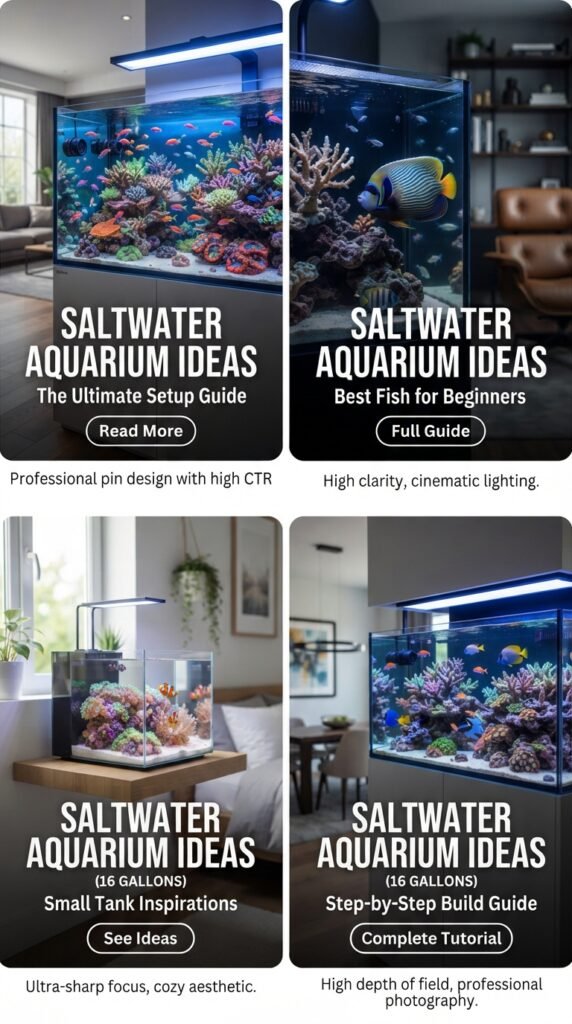
A minimalist reef aquarium focuses on clean lines and open swimming space.
Features include:
- White or black cabinet
- Minimal rock structures
- Colorful coral colonies
- Hidden equipment
- Clear viewing panels
This style creates an elegant contemporary appearance.
Natural Coral Reef Aquarium
Recreate a tropical coral reef using:
- Live rock
- Colorful corals
- Reef-safe fish
- Natural sand
- Strong water movement
This design closely resembles marine ecosystems found in the wild.
Island Aquascape
Build one or two rock islands separated by open sand.
Benefits include:
- Excellent water circulation
- Plenty of swimming space
- Natural appearance
- Easy coral placement
Island layouts are among the most popular reef aquarium designs.
Lagoon Aquarium
A lagoon-inspired aquarium features calm water and soft corals.
Suitable livestock includes:
- Soft corals
- Zoanthids
- Mushroom corals
- Clownfish
- Gobies
- Shrimp
This peaceful design is ideal for beginners.
Mixed Reef Aquarium
A mixed reef contains a variety of coral types.
You can combine:
- Soft corals
- LPS corals
- SPS corals
- Colorful reef fish
Proper lighting and water flow are essential for success.
Fish-Only Saltwater Aquarium
If you prefer colorful marine fish without corals, consider a fish-only setup.
Advantages include:
- Lower lighting requirements
- Easier maintenance
- Greater fish selection
- Flexible decorations
This is an excellent choice for new marine aquarists.
Live Rock Aquascaping Ideas
Live rock forms the foundation of most marine aquariums.
Popular layouts include:
Arch Design
Natural arches create dramatic swimming pathways.
Cave Layout
Multiple caves provide shelter for shy fish.
Open Reef
Minimal rockwork maximizes swimming space.
Wall Aquascape
Rock structures along the back create a reef backdrop.
Floating Reef
Elevated rock structures create a modern, open appearance.
Choosing the Right Substrate
Marine aquariums typically use:
Aragonite Sand
The most popular choice because it provides a natural look and helps support stable water chemistry.
Crushed Coral
Suitable for certain fish-only systems but requires regular cleaning.
Fine white sand enhances the brightness of marine aquariums.
Best Saltwater Fish
Choose peaceful species that are compatible with your aquarium size.
Popular options include:
- Clownfish
- Royal Gramma
- Firefish Goby
- Banggai Cardinalfish
- Yellow Watchman Goby
- Blue Green Chromis
- Blenny
- Coral Beauty Angelfish
- Foxface Rabbitfish (for larger aquariums)
Research compatibility before mixing species.
Reef-Safe Fish
If keeping corals, select reef-safe fish whenever possible.
Excellent choices include:
- Clownfish
- Gobies
- Blennies
- Firefish
- Royal Grammas
- Cardinalfish
These species are less likely to damage corals.
Coral Ideas
Corals add incredible color and movement.
Soft Corals
Beginner-friendly options include:
- Zoanthids
- Mushroom Corals
- Kenya Tree Coral
- Leather Corals
LPS Corals
Popular choices include:
- Hammer Coral
- Frogspawn Coral
- Torch Coral
- Candy Cane Coral
SPS Corals
Suitable for experienced aquarists.
Examples include:
- Acropora
- Montipora
- Birdsnest Coral
These corals generally require strong lighting and stable water conditions.
Marine Invertebrates
Useful additions include:
- Cleaner Shrimp
- Peppermint Shrimp
- Hermit Crabs
- Snails
- Sea Urchins
These animals help maintain a cleaner aquarium and add diversity.
Lighting
Lighting is especially important in reef aquariums.
LED reef lights provide:
- Full-spectrum illumination
- Adjustable intensity
- Coral growth support
- Energy efficiency
Choose lighting that matches the needs of your corals.
Water Movement
Marine aquariums require strong water circulation.
Benefits include:
- Oxygen exchange
- Waste removal
- Coral health
- Even nutrient distribution
Use appropriately sized circulation pumps to create varied flow throughout the aquarium.
Filtration
A quality filtration system is essential.
Common equipment includes:
- Protein skimmer
- Sump system
- Mechanical filtration
- Biological filtration
- Chemical filtration with activated carbon or other media when appropriate
Good filtration helps maintain stable water quality.
Water Parameters
Maintain consistent marine water conditions.
General reef guidelines include:
- Temperature: 76–80°F (24–27°C)
- Salinity: 1.024–1.026 specific gravity
- pH: 8.1–8.4
- Ammonia: 0 ppm
- Nitrite: 0 ppm
- Nitrate: As low as practical, depending on the livestock
Regular testing is essential for long-term success.
Saltwater Aquarium Decoration Ideas
Enhance your aquarium with:
- Live rock
- Coral skeleton replicas
- Reef-safe caves
- Natural arches
- Open sand areas
Avoid decorations that could alter water chemistry or have sharp edges.
Budget-Friendly Saltwater Aquarium Ideas
You can build an attractive marine aquarium without overspending.
Consider:
- Starting with a fish-only system
- Buying dry rock and allowing it to mature
- Using hardy fish species
- Choosing beginner-friendly soft corals
- Purchasing quality equipment gradually
Planning your setup carefully often saves money in the long run.
Maintenance Tips
Consistent maintenance keeps your aquarium healthy.
Weekly Water Changes
Replace 10–20% of the water using properly mixed saltwater.
Test Water Regularly
Monitor:
- Salinity
- Temperature
- pH
- Ammonia
- Nitrite
- Nitrate
Clean the Glass
Use a marine-safe algae scraper.
Maintain Equipment
Clean pumps, filters, and protein skimmers as recommended.
Observe Livestock
Watch for changes in fish behavior or coral appearance, as these can indicate water quality issues.
Common Mistakes to Avoid
Overstocking Fish
Too many fish increase nutrient levels and stress.
Rushing the Nitrogen Cycle
Allow the aquarium to cycle completely before adding livestock.
Poor Water Quality
Stable parameters are critical for marine animals.
Incompatible Livestock
Research fish and coral compatibility before making additions.
Neglecting Maintenance
Regular care prevents many common problems.
Benefits of a Saltwater Aquarium
A marine aquarium offers many rewards.
- Incredible colors
- Diverse marine life
- Relaxing viewing experience
- Educational opportunities
- Creative aquascaping
- Beautiful home décor
With patience and proper care, a saltwater aquarium can thrive for many years.
Conclusion
Exploring different saltwater aquarium ideas allows you to create a marine display that matches your style and experience level. Whether you choose a minimalist reef, a vibrant coral garden, a fish-only aquarium, or a natural island aquascape, success depends on careful planning, high-quality equipment, and consistent maintenance.
By selecting suitable fish, using quality live rock, maintaining stable water chemistry, and performing regular care, you can enjoy a stunning marine aquarium that brings the beauty of the ocean into your home.
Frequently Asked Questions
What is the best saltwater aquarium setup for beginners?
A medium-sized fish-only or soft coral aquarium with hardy species, quality filtration, and stable water parameters is often the easiest way to begin.
Can beginners keep corals?
Yes. Many soft corals, such as mushroom corals, leather corals, and zoanthids, are considered suitable for beginners when proper lighting and water quality are provided.
What fish are best for a saltwater aquarium?
Clownfish, royal grammas, firefish gobies, blennies, Banggai cardinalfish, and yellow watchman gobies are popular beginner-friendly choices.
How often should I change the water in a saltwater aquarium?
Most marine aquariums benefit from weekly water changes of 10–20%, though the exact schedule depends on the aquarium’s size, livestock, and filtration.
Do saltwater aquariums need live rock?
Live rock is highly recommended because it provides biological filtration, shelter for marine animals, and a natural appearance. Dry rock can also be used and will become biologically active over time.
Are saltwater aquariums difficult to maintain?
They generally require more attention than freshwater aquariums, particularly regarding salinity and water chemistry. However, with proper planning, regular maintenance, and quality equipment, they can be successfully maintained by dedicated beginners.