
 By admin
A plant aquarium can turn an ordinary fish tank into a beautiful underwater garden. Live aquatic plants provide natural shelter for fish, create visual depth, and give the aquarium a peaceful, natural appearance. From simple beginner layouts to lush jungle aquariums, there are many ways to design a planted fish tank.
The best planted aquarium combines attractive plants with suitable lighting, substrate, filtration, and fish that can comfortably live in the environment.
1. Simple Planted Aquarium
A simple planted fish tank is ideal for beginners.
Use:
- A natural substrate
- A few hardy plants
- One piece of driftwood
- A small number of rocks
- Open swimming space
Avoid adding too many plants at once. A simple layout is easier to maintain and gives plants room to grow.
2. Jungle Aquarium
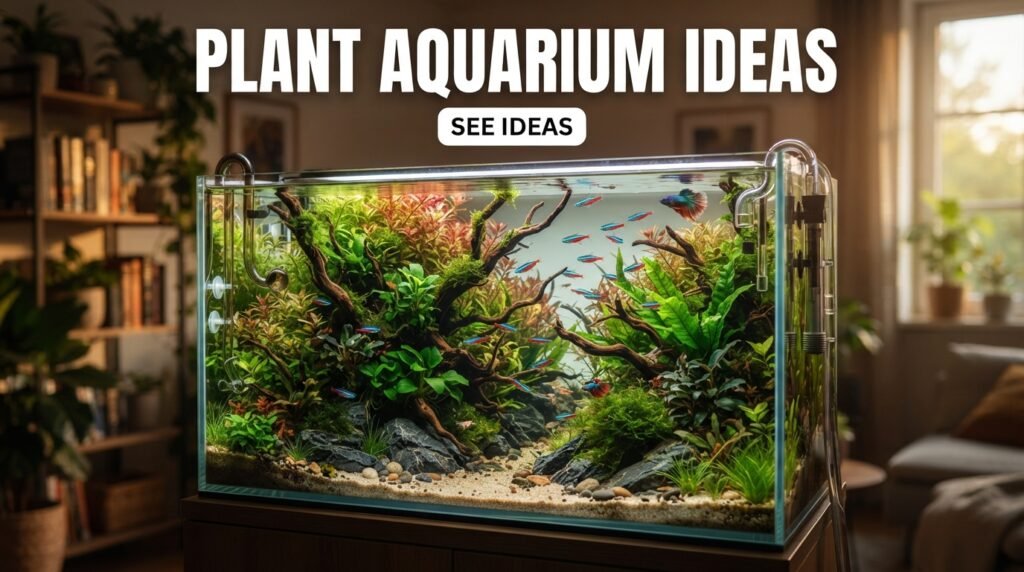
A jungle-style aquarium creates a dense underwater forest.
Use a combination of:
- Tall background plants
- Broad-leaf plants
- Moss
- Floating plants
- Driftwood
- Natural rocks
Allow some plants to grow naturally for a wild appearance.
3. Minimalist Plant Aquarium
Minimalist aquariums use fewer plants but arrange them carefully.
A simple design can include:
- One focal piece of driftwood
- Low foreground plants
- A few midground plants
- Open sand or substrate
- A clean background
This style works especially well in modern homes.
4. Fish Tank With Floating Plants
Floating plants create shade and add another visual layer.
Suitable options may include:
- Amazon Frogbit
- Salvinia
- Water Sprite
- Duckweed
Floating plants can also provide shelter for some fish, but they should be thinned regularly so they do not completely block light and gas exchange.
5. Aquarium With Driftwood and Plants
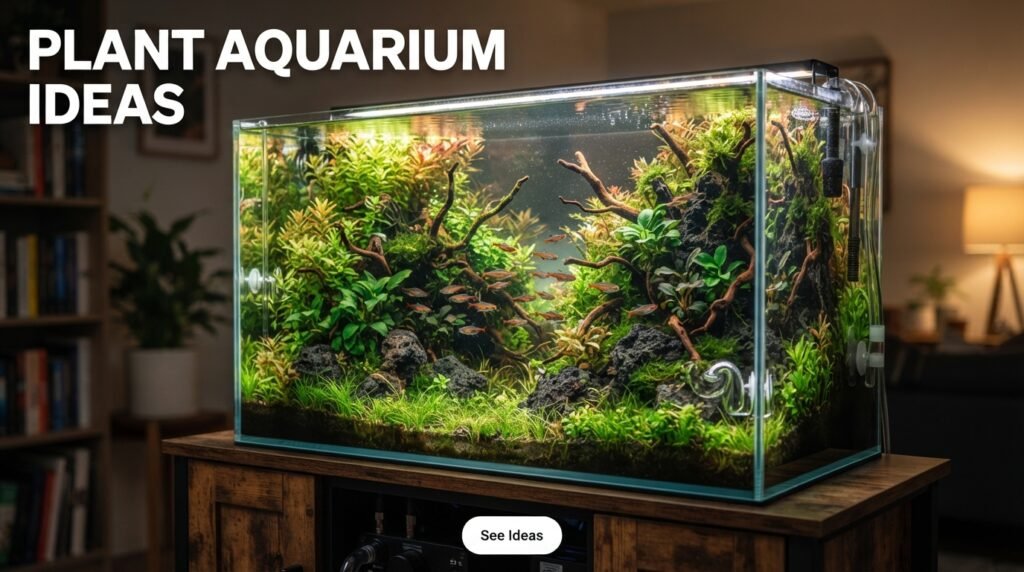
Driftwood provides an excellent foundation for a natural aquascape.
Attach suitable plants such as:
- Java Fern
- Anubias
- Bucephalandra
- Java Moss
Place the wood at an angle to create a sense of movement and depth.
6. Rock and Plant Aquarium
Combine rocks with plants to create a mountain-inspired layout.
Try:
- Large rocks as the focal point
- Smaller stones around the base
- Low-growing plants in the foreground
- Taller plants in the background
Keep the rocks stable and use aquarium-safe materials.
7. Aquarium Grass Design
Aquarium grasses and carpet plants can create the appearance of an underwater lawn.
Depending on the aquarium conditions, options include:
- Dwarf Hairgrass
- Vallisneria
- Sagittaria
- Other suitable carpeting plants
Plant selection should match your lighting and maintenance level.
8. Moss Aquarium
Moss is one of the easiest ways to create a natural appearance.
Popular choices include:
- Java Moss
- Christmas Moss
- Flame Moss
- Weeping Moss
Moss can be attached to driftwood, rocks, or other aquarium-safe surfaces.
9. Shrimp Planted Aquarium
Shrimp look especially attractive in heavily planted nano tanks.
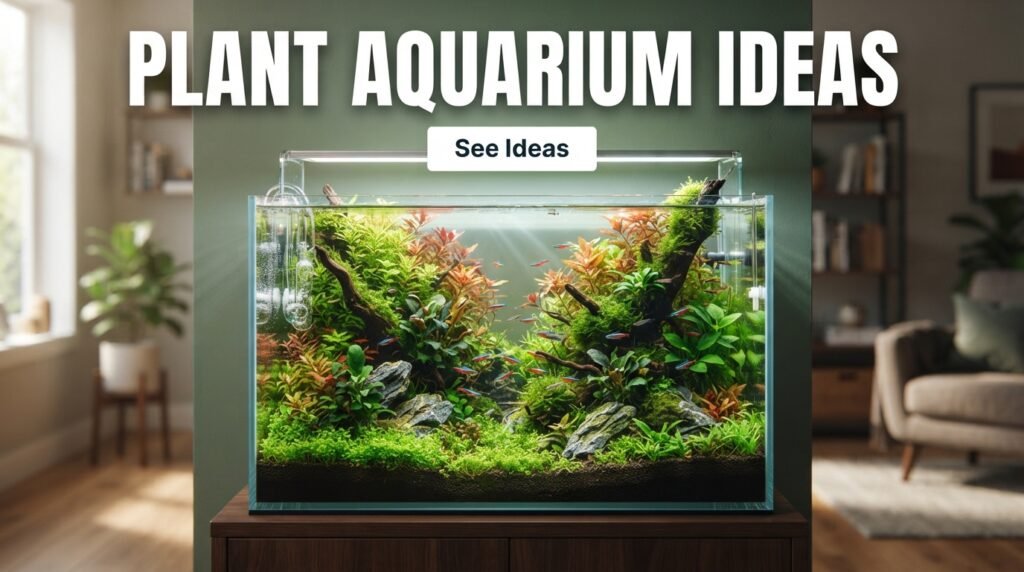
Include:
- Moss
- Small-leaf plants
- Driftwood
- Small rocks
- Gentle filtration
Plants provide surfaces where shrimp can graze on naturally occurring biofilm.
10. Tetra Planted Aquarium
Small schooling fish such as tetras look beautiful against green plants.
Create:
- Dense vegetation along the back
- Open swimming space in the center
- Low plants in the foreground
- A dark natural background
The open central area allows the school to move naturally.
11. Guppy Planted Aquarium
Guppies can be kept in attractive planted community aquariums.
Use:
- Vallisneria
- Java Fern
- Anubias
- Floating plants
- Moss
Dense plants can also provide shelter for fry.
12. Betta Planted Aquarium
A planted aquarium can create a peaceful environment for a betta.
Use broad-leaf plants and gentle vegetation while leaving enough surface access for the betta to breathe.
Good options include:
- Anubias
- Java Fern
- Cryptocoryne
- Java Moss
- Floating plants
Avoid sharp decorations that could damage delicate fins.
13. Low-Tech Planted Aquarium
A low-tech aquarium is designed without pressurized CO2 injection.
Choose hardy plants such as:
- Anubias
- Java Fern
- Cryptocoryne
- Java Moss
- Vallisneria
- Hornwort
Low-tech tanks can be easier to manage, although plant growth may be slower.
14. High-Tech Planted Aquarium
A high-tech aquarium typically uses stronger lighting, fertilizers, and often supplemental CO2.
These systems can support demanding plants and dense carpeting layouts.
They require more careful management of:
- Lighting
- CO2
- Nutrients
- Water parameters
- Algae control
15. Natural River Aquarium
Create a river-inspired design using:
- Fine sand
- Rounded stones
- Branch-like driftwood
- Aquatic plants
- Open swimming areas
This design works particularly well with peaceful freshwater fish.
16. Blackwater Planted Aquarium
A blackwater aquarium can combine plants with driftwood and tannin-rich water.
Use:
- Dark substrate
- Driftwood
- Suitable leaf litter
- Shade-tolerant plants
- Soft lighting
This creates a warm, forest-stream appearance.
Best Plants for Fish Tanks
| Plant | Best Use | Difficulty |
|---|---|---|
| Anubias | Hardscape | Easy |
| Java Fern | Wood and rocks | Easy |
| Java Moss | Moss and shrimp tanks | Easy |
| Cryptocoryne | Midground | Easy to moderate |
| Vallisneria | Background | Easy |
| Amazon Sword | Large tanks | Easy to moderate |
| Bucephalandra | Hardscape | Easy to moderate |
| Dwarf Hairgrass | Foreground | Moderate |
Plant difficulty depends on aquarium conditions and the specific variety.
How to Arrange Plants
A good planted aquarium usually has three visual levels.
Foreground
Use short plants and carpeting species.
Midground
Use medium-sized plants, rocks, and driftwood.
Background
Use tall plants to create height and depth.
This arrangement prevents the aquarium from looking flat.
Choosing the Right Substrate
Different plants have different substrate requirements.
Common choices include:
- Aquarium gravel
- Fine sand
- Aquasoil
- Nutrient-rich planted substrates
Root-feeding plants may benefit from nutrient-rich substrate or root tabs.
Lighting for Plant Aquariums
Lighting is essential for photosynthesis.
Consider:
- Aquarium-specific LED lighting
- Adjustable brightness
- Consistent daily schedule
- Appropriate intensity for the plants
Too much light without adequate plant growth and nutrient balance can contribute to algae problems.
Do Planted Aquariums Need CO2?
Not every planted aquarium needs supplemental CO2.
Low-tech plants can grow without injected CO2, while demanding carpeting and high-light plants may benefit significantly from additional carbon availability.
Choose plants according to the equipment and maintenance level you want.
Fish for Planted Aquariums
Good choices depend on the tank size and plant layout.
Popular options include:
- Tetras
- Rasboras
- Guppies
- Corydoras
- Gouramis
- Small livebearers
- Shrimp
- Snails
Avoid fish that constantly uproot or eat plants if you want a dense planted aquascape.
Planted Aquarium Maintenance
Regular maintenance keeps plants healthy.
Important tasks include:
- Removing dead leaves
- Trimming overgrown plants
- Cleaning aquarium glass
- Performing partial water changes
- Checking water parameters
- Maintaining filtration
- Controlling algae
- Replanting loose stems
Common Planted Aquarium Mistakes
Too Much Light
Excessive lighting can encourage algae growth.
Planting Too Densely
Give plants room to grow.
Choosing Plants Without Research
Some plants require stronger light, CO2, or specific water conditions.
Overstocking Fish
High waste levels can create water-quality problems.
Neglecting Trimming
Fast-growing plants can quickly block light from slower-growing species.
Conclusion
These plant aquarium ideas for fish tanks can help you create everything from a simple beginner-friendly aquarium to a dense underwater jungle. Driftwood, rocks, moss, carpeting plants, floating plants, and tall background vegetation can all be combined to create depth and character.
Start with hardy plants if you are new to planted aquariums, provide appropriate lighting and filtration, and select fish that are compatible with the plants and tank size. With regular care, a planted fish tank can become a beautiful living centerpiece in your home.
Frequently Asked Questions
What are the easiest aquarium plants?
Anubias, Java Fern, Java Moss, Cryptocoryne, and Vallisneria are popular beginner-friendly choices.
Can aquarium plants grow without CO2?
Yes. Many hardy aquatic plants can grow successfully without injected CO2, especially when lighting and nutrients are appropriate.
What fish are best for planted aquariums?
Peaceful species such as tetras, rasboras, guppies, corydoras, and suitable gouramis can work well in planted community tanks.
Do planted aquariums need special soil?
Not always. Some plants can grow well in gravel or other substrates, while heavy root feeders may benefit from nutrient-rich substrate or root tabs.
How long should planted aquarium lights stay on?
A consistent lighting schedule is important. Many planted aquariums do well with roughly 6–8 hours of light per day, adjusted according to plant growth and algae levels.
Are planted aquariums difficult to maintain?
They require regular trimming, water changes, glass cleaning, and nutrient management. A low-tech setup with hardy plants can be relatively easy for beginners.