
 By admin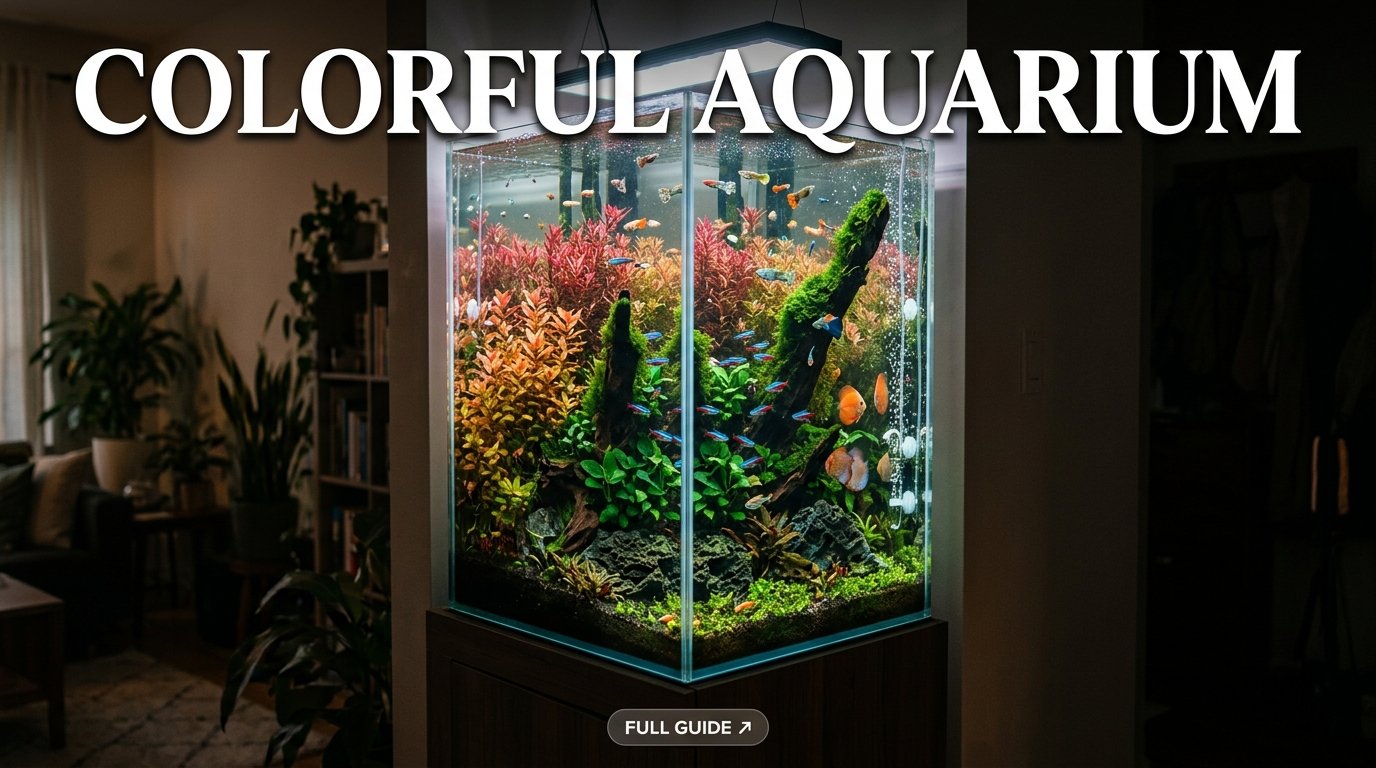
A colorful aquarium is a beautiful way to bring bright colors, natural movement, and a lively atmosphere into your home. With colorful fish, vibrant aquatic plants, decorative rocks, coral-inspired arrangements, and creative lighting, an aquarium can become an eye-catching centerpiece in a living room, bedroom, office, or any other suitable space.
There are many ways to create a colorful aquarium. Some people prefer tanks filled with bright tropical fish, while others enjoy planted aquariums with different shades of green, red, and orange. You can also combine colorful fish with natural driftwood, attractive stones, and carefully selected backgrounds to create a balanced underwater landscape.
The best colorful aquarium designs combine visual appeal with the health and comfort of the fish. Choosing compatible species, maintaining good water quality, and using appropriate lighting are essential for creating a vibrant aquarium that remains beautiful over time.
Best Colorful Aquarium Ideas
| Aquarium Style | Main Colors | Best Feature |
|---|---|---|
| Tropical Fish Aquarium | Blue, orange, yellow | Bright, active fish |
| Colorful Guppy Aquarium | Red, blue, green, yellow | Flowing, colorful tails |
| Planted Aquarium | Green, red, pink | Natural underwater scenery |
| Betta Fish Aquarium | Blue, red, purple | Elegant individual fish |
| Rainbow Community Aquarium | Multiple colors | Variety of fish |
| Colorful Shrimp Aquarium | Red, orange, yellow | Small, fascinating animals |
| Neon Aquarium | Blue and green accents | Glowing visual effect |
| Reef-Style Aquarium | Multiple bright colors | Coral-inspired scenery |
| White Sand Aquarium | Bright fish against white | Clean, elegant appearance |
| Black Background Aquarium | Vivid fish colors | Strong visual contrast |
1. Colorful Tropical Fish Aquarium
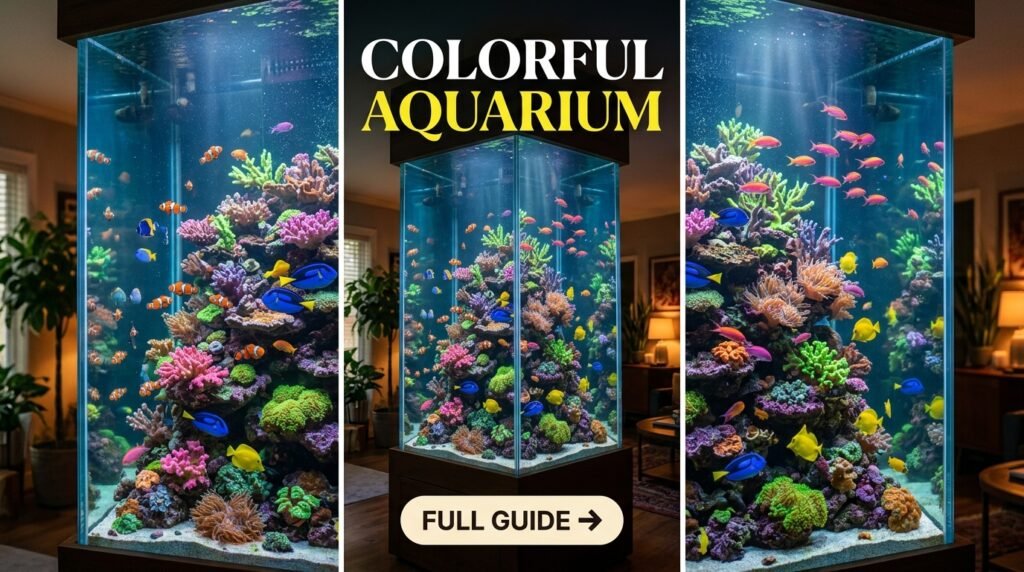
A tropical fish aquarium is one of the most popular ways to create a vibrant underwater display. Tropical freshwater fish come in many shapes, patterns, and colors, making it possible to design a tank that looks lively without relying on artificial decorations.
You can choose fish with blue, orange, yellow, red, and silver markings. Aquatic plants and natural rocks provide additional contrast.
For a balanced appearance, choose compatible species that have similar water requirements. Avoid selecting fish only because their colors look attractive together.
2. Colorful Guppy Aquarium
Guppies are excellent choices for colorful aquariums because they come in an enormous variety of colors and tail patterns.
A guppy aquarium can look especially attractive with a dark background, green plants, and a simple substrate. Remember that guppies reproduce readily, so plan for population growth and provide enough space.
3. Colorful Aquarium With Live Plants
Live plants add depth and make an aquarium feel more natural. Different plant species provide various shades of green, while some plants develop red, bronze, or pink tones under suitable growing conditions.
You can create a layered arrangement with short foreground plants, medium-height plants in the center, and taller plants toward the back.
Popular options include Java fern, Anubias, Amazon sword, Cryptocoryne, and suitable red-stem plants. Plant requirements vary, so choose species that match your lighting, substrate, and maintenance routine.
4. Colorful Betta Fish Aquarium
Betta fish are known for their striking colors and elegant fins. Depending on the variety, they may display blue, red, turquoise, purple, white, or multicolored patterns.
A single betta can become the main attraction in a thoughtfully designed aquarium.
Use suitable filtration, gentle water movement, hiding places, and live or artificial aquarium-safe plants. Avoid housing two male bettas together, as they can fight. The aquarium should also provide enough space and stable, appropriate water conditions.
5. Rainbow Aquarium With Multiple Fish Colors
A rainbow aquarium features fish with several different colors. Red, yellow, blue, orange, and silver fish can create a lively display when chosen carefully.
Instead of mixing unrelated species at random, select a compatible community with similar water requirements and temperament.
Small schooling fish often look most attractive when kept in appropriate groups. Their coordinated movement creates a colorful display that feels natural rather than crowded.
6. Colorful Aquarium With Neon Fish
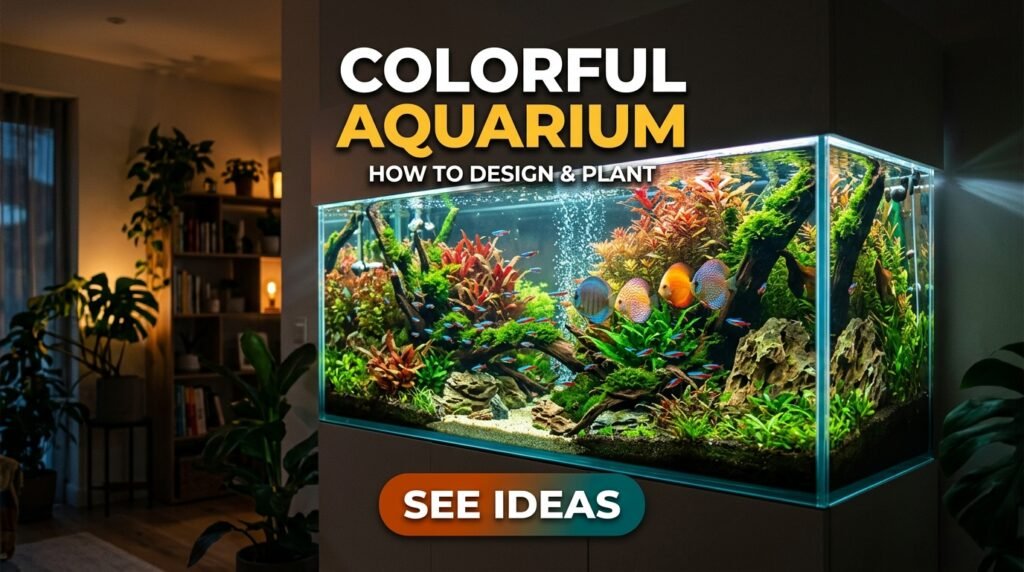
Neon tetras and similar small schooling fish can create a striking effect because their bright markings contrast with darker surroundings.
Neon tetras have blue and red coloration, while other suitable species may offer green, orange, or golden tones.
Use subdued background colors and aquatic plants to make the fish stand out. Keep schooling species in appropriately sized groups and avoid combining them with fish that may prey on them.
7. Colorful Aquarium With White Sand
White sand creates a bright, clean background for colorful fish.
Red, orange, blue, and black markings can become more noticeable against the pale substrate.
For a balanced design, add green plants and a few pieces of natural driftwood or aquarium-safe stone. Avoid excessive decoration because the white substrate already provides a strong visual foundation.
Choose substrate that is appropriate for the fish and easy to maintain.
8. Colorful Aquarium With a Black Background
A black background is a simple way to make bright fish appear more vivid.
The dark surface creates contrast with colorful scales, flowing fins, and green plants. It also helps hide wires and equipment positioned behind the tank.
This design works particularly well with guppies, bettas, neon tetras, and many other colorful freshwater fish.
Use moderate, appropriate aquarium lighting rather than relying on excessively bright lights to create the effect.
9. Colorful Aquarium With Driftwood and Rocks
Natural driftwood and rocks provide structure and visual depth.
Arrange the larger pieces toward the back or sides, leaving open swimming space in the center. Add plants around the hardscape to soften the edges.
Colorful fish become the main attraction when the decorations create a natural background instead of competing for attention.
Only use rocks and wood that are safe for aquarium use.
10. Colorful Aquarium for a Living Room
A colorful aquarium can serve as a focal point in a living room.
A medium-sized planted tank can sit on a dedicated aquarium cabinet, while a larger tank can become part of a custom feature wall.
Choose a design that complements the furniture. A dark cabinet works well with bright fish, while natural wood can complement a planted aquarium.
Make sure the tank remains accessible for feeding, cleaning, and equipment maintenance.
11. Colorful Aquarium for a Bedroom
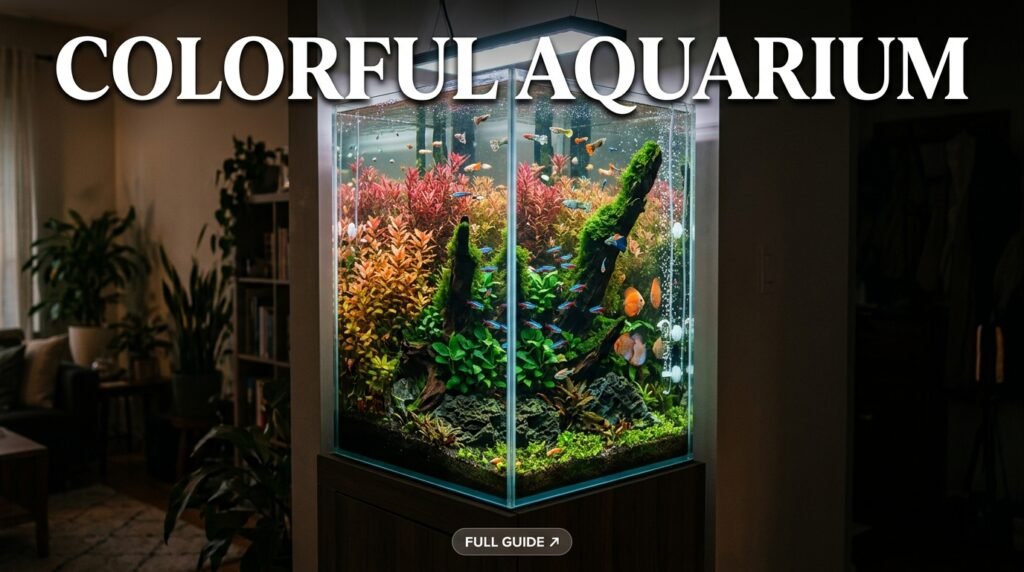
A smaller colorful aquarium can add personality to a bedroom.
A simple layout with a few plants and one suitable fish species can look attractive without making the space feel crowded.
Keep lighting on a regular schedule and switch the aquarium light off at night. Avoid positioning the tank in direct sunlight or near sources of excessive heat.
12. Colorful Aquarium for an Office
An aquarium can make an office feel more inviting.
A compact planted aquarium or a carefully arranged community tank can provide an attractive visual break from work.
Choose a quiet filtration system and place the aquarium on a stable surface designed to support its weight. Keep water away from computers, power strips, and other electronics.
13. Colorful Aquarium With Red Plants
Red aquatic plants provide a strong contrast against green foliage and colorful fish.
Depending on the species, red plants may need stronger lighting, suitable nutrients, and sometimes added carbon dioxide to maintain their best coloration.
Arrange red plants in selected areas instead of spreading them everywhere. This creates focal points and gives the aquascape a more intentional appearance.
14. Colorful Aquarium With Artificial Decorations
Artificial plants and ornaments can be useful when you want a colorful design without growing live plants.
Choose aquarium-safe decorations with smooth edges and materials that will not release harmful substances into the water.
Bright artificial plants can produce a playful appearance, while realistic silk plants can create a more natural look.
Avoid filling every part of the aquarium with decorations. Fish still need adequate swimming space and access to suitable hiding places.
15. Colorful Aquarium With LED Lighting
Lighting can enhance the appearance of fish and plants, but it should be selected carefully.
Appropriate aquarium LEDs can help plants grow and make fish colors more visible. Adjustable lighting can also allow you to create different visual effects during the day.
Avoid constant color changes, flashing effects, or excessive brightness. Too much light can encourage algae growth and disturb the aquarium’s normal day-night cycle.
How to Choose Fish for a Colorful Aquarium
Start by considering the aquarium’s size, water conditions, and filtration capacity. Then choose fish with compatible temperaments and similar environmental needs.
| Fish Type | Color Appeal | Important Consideration |
|---|---|---|
| Guppies | Red, blue, yellow, multicolor | Breed readily |
| Neon Tetras | Blue and red | Need suitable groups |
| Platies | Orange, red, yellow | Check compatibility |
| Mollies | Black, orange, silver | Need appropriate water conditions |
| Bettas | Blue, red, purple, multicolor | Males should not be housed together |
| Cherry Shrimp | Bright red | Need stable water conditions |
| Rainbowfish | Multiple iridescent colors | Many species need ample swimming space |
These are general options rather than a recommendation to combine every species in one tank. Research the needs of each species before choosing tankmates.
How to Make Aquarium Colors Look Brighter
You do not need special decorations to make fish colors stand out. A few simple design choices can make a major difference.
First, maintain excellent water quality. Healthy fish generally display their natural colors better than fish living under stressful conditions.
Second, use a background that contrasts with the fish. Dark backgrounds can make bright colors stand out, while pale backgrounds can suit darker fish.
Third, choose lighting appropriate for the fish and plants. The goal is to reveal their natural colors without causing stress.
Finally, avoid overcrowding. When the aquarium has enough open space, individual fish are easier to see.
Best Aquarium Size for Colorful Fish
The ideal size depends on the species, adult size, group requirements, and equipment.
A larger aquarium is often easier to keep stable than a very small one because water conditions generally change more slowly. However, the aquarium must still be appropriate for the fish you choose.
Before buying fish, consider their adult size, swimming behavior, social needs, and compatibility. Do not rely on a tank’s appearance alone to determine whether it can support a particular species.
Common Mistakes When Creating a Colorful Aquarium
One common mistake is mixing incompatible fish because their colors look attractive together. Aggressive fish may injure peaceful species, while larger fish may eat smaller tankmates.
Another mistake is adding too many fish too quickly. The biological filter needs time to process fish waste, so the aquarium should be properly cycled and stocked gradually.
Excessive lighting, unsuitable decorations, and inadequate maintenance can also cause problems.
Avoid choosing fish only for their color. Their long-term health, proper housing, and compatibility should always come first.
Final Thoughts
A colorful aquarium can transform a simple fish tank into a vibrant underwater display. From bright guppies and elegant bettas to planted aquascapes and colorful community fish, there are many ways to create a design that suits your home and personal style.
The most attractive aquariums combine colors thoughtfully. A dark background, healthy plants, carefully selected fish, and suitable lighting can produce a beautiful result without excessive decoration.
Start with a clear design idea, choose compatible species, and create an environment that meets their needs. With regular maintenance and thoughtful aquascaping, your colorful aquarium can remain a beautiful feature for years.
Frequently Asked Questions
What is the most colorful aquarium fish?
Many fish are known for vivid colors, including fancy guppies, bettas, discus, dwarf cichlids, and certain rainbowfish. The best choice depends on your aquarium size and experience.
How do I make my aquarium more colorful?
Choose compatible colorful fish, add suitable live plants, use an attractive background, and arrange aquarium-safe decorations carefully.
Are colorful fish good for beginners?
Some colorful fish, including guppies and platies, can suit beginners when their water conditions, tank size, and compatibility requirements are met.
What background makes aquarium fish look brighter?
A black or dark background often creates strong contrast with bright fish, although the best choice depends on the fish and the overall design.
Can I mix different colorful fish in one aquarium?
Yes, if the species have compatible temperaments, water requirements, adult sizes, and social needs. Not all colorful fish can safely live together.
Do LED lights make fish more colorful?
Appropriate aquarium lighting can make natural colors easier to see. Excessive brightness or unsuitable lighting can cause problems, especially for planted tanks.
Are live plants better than artificial plants?
Live plants can provide natural growth and additional habitat, but artificial plants can be easier to maintain. Both should be selected according to the needs of the fish.
What is the best colorful aquarium for a small room?
A properly maintained small planted aquarium with a suitable fish species can work well. Choose the tank based on the animal’s needs rather than selecting the smallest possible size.
How can I keep colorful fish healthy?
Maintain suitable water conditions, provide appropriate food, avoid overcrowding, use effective filtration, and perform regular maintenance.
Why are my aquarium fish losing their color?
Color changes can result from stress, poor water quality, illness, diet, genetics, or environmental conditions. Check water parameters and behavior, and seek species-specific advice if the change continues.
Can I create a colorful aquarium without live plants?
Yes. You can use aquarium-safe artificial plants, rocks, driftwood, and decorations. The fish still need suitable water conditions, filtration, and adequate swimming space.
How often should I clean a colorful aquarium?
Maintenance depends on the tank’s size, stocking, filtration, and plant growth. Regular partial water changes, glass cleaning, and filter maintenance are important, but filter media should be cleaned according to its needs rather than replacing everything at once.
Remove all image and grid markupExpand each aquarium idea with practical details