
 By admin
Aquarium rack ideas can help you organize multiple fish tanks, save space, and create a beautiful aquarium display in your home. Whether you keep guppies, betta fish, tropical fish, shrimp, or planted aquariums, choosing the right rack makes your fishkeeping setup more attractive, functional, and easier to maintain. A well-designed aquarium rack provides reliable support for heavy tanks while creating enough room for filters, lighting, fish food, and cleaning equipment.
Aquarium racks are available in many styles, including metal shelving systems, wooden stands, industrial racks, custom-built frames, and compact storage units. The best option depends on the number and size of your aquariums, the available floor space, your budget, and the overall appearance you want to achieve.
1. Metal Aquarium Rack Ideas
Metal aquarium racks are among the most practical options for fishkeepers who want to display multiple tanks in one location. Their simple appearance, efficient use of vertical space, and strong frame construction make them popular for fish rooms, breeding setups, and home aquariums.
<PRIVATE_PERSON>Choose a rack made from appropriately rated steel or another corrosion-resistant metal. Each shelf must be designed to support the full weight of the aquarium, including water, glass, substrate, rocks, and decorations. Use a level, stable floor and secure tall racks against tipping.
A black metal rack can create a modern industrial appearance, while a powder-coated white frame may look better in a bright living space. Before purchasing, check the manufacturer’s load ratings for each shelf rather than relying only on the rack’s total advertised capacity.
2. Two-Tier Aquarium Rack
A two-tier aquarium rack is a great choice for beginners who want to keep two tanks without using too much floor space. You can place a main display aquarium on the upper level and a smaller tank below it.
For example, the upper tank could contain colorful guppies, while the lower tank could be used for shrimp, aquatic plants, or a separate fish setup. This arrangement creates a coordinated display and allows you to manage both aquariums in one area.
Make sure the lower aquarium has enough clearance for maintenance, water changes, and removing equipment. The upper tank should be positioned at a comfortable height, and the rack must be engineered to safely support the combined load.
3. Three-Tier Aquarium Rack Ideas
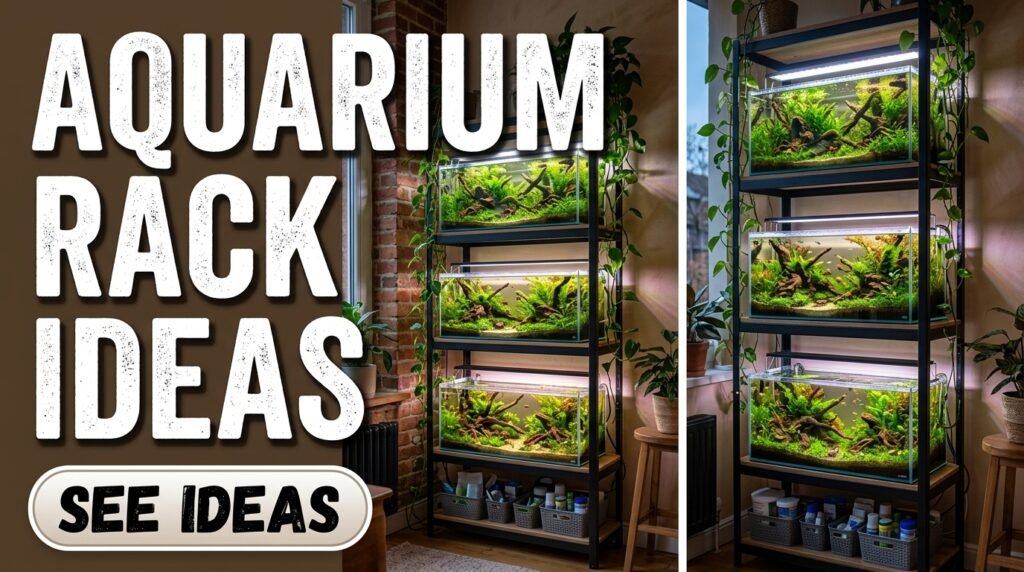
A three-tier aquarium rack makes efficient use of vertical space and can accommodate several small or medium-sized aquariums. It is particularly useful for hobbyists who maintain different fish varieties or want separate tanks for breeding and growing plants.
A practical arrangement might include a planted aquarium on top, a guppy tank in the middle, and a shrimp aquarium at the bottom. Keeping the tanks organized by purpose can make feeding, monitoring, and maintenance easier.
However, three-tier racks require careful planning. The upper levels may be difficult to reach, while the lowest tank can be inconvenient to clean. Choose shelf spacing that allows access to lids, lights, filters, and other equipment.
Never assume that an ordinary household storage shelf can safely hold several filled aquariums. Select a rack specifically rated for the intended load and install it according to the manufacturer’s instructions.
4. Wooden Aquarium Rack Ideas
Wooden aquarium racks are ideal for people who want their fish tanks to complement their home furniture. They can look especially attractive in living rooms, bedrooms, offices, and dedicated aquarium spaces.
Natural oak, walnut, pine, and dark-stained wood finishes offer different decorative styles. A wooden rack with cabinet doors can also hide fish food, nets, water conditioners, spare filter media, and other aquarium supplies.
The main consideration is moisture. Water spills, humidity, and splashes can damage untreated wood, weaken joints, or cause swelling. Use a properly designed aquarium cabinet or moisture-resistant finish, and promptly dry any spilled water.
For large or heavy aquariums, a purpose-built cabinet designed for the exact tank dimensions is usually a better choice than a general-purpose wooden shelf.
5. Industrial-Style Aquarium Rack
An industrial-style aquarium rack combines a sturdy-looking metal frame with simple lines and a functional design. This style works well in modern homes, fish rooms, garages, and hobby spaces.
Black steel frames paired with wooden shelves can create a warm industrial appearance. You can use matching storage boxes underneath or beside the tanks to keep equipment organized.
For a more polished look, route electrical cables neatly, use appropriate cable management, and position lighting so that it illuminates the aquariums without creating excessive glare.
The decorative style should never compromise structural support. Any wooden shelf or metal crossbar must be designed for the actual aquarium load.
6. Aquarium Rack With Storage Cabinets
An aquarium rack with enclosed storage is useful when you want your fishkeeping area to look neat and organized. Instead of leaving supplies on open shelves, you can store them behind cabinet doors.
A custom unit might include the aquarium on top, a cabinet for food and water treatments below, and a separate compartment for testing equipment and maintenance tools.
Storage compartments should remain dry and well ventilated. Electrical equipment, power strips, and extension connections must be kept away from splashes and potential leaks. Do not place electrical components in an enclosed, damp compartment unless the setup is specifically designed for that environment.
This design is particularly suitable for living rooms because it can make the aquarium look like a piece of furniture rather than a utility setup.
7. Small Aquarium Rack Ideas for Apartments

Small aquarium racks help apartment residents keep fish without occupying an entire wall or corner. A compact two-level unit may accommodate two nano aquariums, while a single-tank stand can create a clean focal point.
Consider a small planted tank on the upper level and a shrimp tank below, provided the rack is properly rated for both. Alternatively, a single aquarium with a storage shelf underneath may be more practical if you prefer easy maintenance.
Choose a location with a level floor, convenient access to water for maintenance, and an appropriate electrical supply. Avoid placing aquariums where direct sunlight causes excessive algae growth or temperature fluctuations.
Before adding more tanks, consider the weight of the complete setup. Even a relatively small aquarium becomes heavy once filled with water, substrate, rocks, and equipment.
8. Aquarium Rack for Guppy Breeding
A dedicated aquarium rack is particularly helpful for guppy breeders because it can separate adult fish, fry, grow-out groups, and breeding projects.
A multi-tier system may contain individual tanks for different guppy strains. Clear labels can identify each strain, hatch date, or breeding group, reducing confusion during feeding and maintenance.
Use separate nets or disinfect equipment appropriately between tanks to reduce the risk of spreading disease. If you use a shared filtration system, make sure it is designed for the combined water volume and that disease-management needs are considered.
Keep enough space around each tank to remove fry, inspect fish, clean glass, and perform water changes. A rack that fits many tanks but makes maintenance difficult can quickly become frustrating.
9. Aquarium Rack for Betta Fish
Betta fish may benefit from a rack that keeps individual aquariums separate and easy to observe. This can be useful because male bettas generally should not be housed together.
Choose tanks with suitable volume, heating, filtration, and secure lids where needed. A rack should allow every aquarium to maintain stable water conditions rather than forcing you to prioritize the number of tanks over fish welfare.
Avoid placing aquariums so close together that the fish are constantly stressed by seeing rivals. Opaque dividers or carefully arranged backgrounds can help create a calmer environment.
Keep the shelves accessible so that you can inspect each fish, clean the tank, and maintain equipment without disturbing neighboring aquariums.
10. Aquarium Rack With LED Lighting
LED lighting can make a multi-tank rack look modern and help provide appropriate illumination for planted aquariums.
You can install individual lights above each tank or use a coordinated lighting arrangement across the rack. Separate timers allow different aquariums to have lighting schedules suited to their plants and inhabitants.
Choose lights based on the needs of the aquarium rather than appearance alone. A low-light aquarium may not need the same intensity as a planted tank with demanding plants.
Keep light fixtures, plugs, and cable connections protected from splashes. Use drip loops on electrical cords where appropriate, and ensure all electrical equipment is suitable for use around water.
11. Wall-Side Aquarium Rack Ideas

A wall-side aquarium rack is an effective way to organize tanks along one side of a room. It can work well in a fish room, study, utility area, or spacious living room.
A long rack with several compartments can create a neat, organized display. You can group aquariums by fish species, tank size, or aquascaping style.
Leave adequate space between the rack and the wall for ventilation, cable access, and maintenance. Secure the rack against tipping if its design requires it, and ensure the wall attachment is suitable for the wall structure.
Avoid blocking windows, doors, heating vents, or important access routes. The location should allow you to reach every aquarium without moving other tanks or equipment.
12. DIY Aquarium Rack Ideas
Building your own aquarium rack can be useful when standard aquarium stands do not match your available space or tank dimensions.
A DIY project typically starts with measuring every aquarium and calculating the combined load. The rack design must account for the weight of water, glass, substrate, rocks, equipment, and the structure itself.
Metal frames may be suitable for custom multi-tier designs, while properly engineered wooden cabinets can work well for individual tanks. Materials, joints, braces, shelf spans, and support points must all be selected for the expected load.
If you lack experience with structural design, ask a qualified fabricator or carpenter to build the rack to a suitable specification. Do not improvise a load-bearing design for several large aquariums.
13. Aquarium Rack for Planted Tanks
Planted aquariums often require specialized lighting, tools, fertilizers, and water-testing supplies. A dedicated rack can help keep these items organized while creating a consistent display.
You might place a high-light planted aquarium on one shelf and lower-maintenance planted tanks on another. Store fertilizers and water treatments in their original, labeled containers and follow their instructions.
If you use CO₂ equipment, make sure cylinders are secured upright where required and that the installation follows the manufacturer’s safety guidance. Leave enough room to access regulators, tubing, and valves.
A well-organized planted-tank rack makes it easier to monitor plant growth, maintain equipment, and compare different aquascaping approaches.
14. Aquarium Rack for Shrimp Tanks
Shrimp keepers often maintain multiple small tanks for different color varieties or breeding groups. A suitable rack can make these aquariums easier to organize.
Small tanks with sponge filters may be practical for some shrimp setups, but each aquarium still needs suitable filtration, water conditions, and maintenance.
Label each tank clearly, especially when keeping different shrimp varieties. Use a dedicated net or clean tools carefully when moving shrimp between tanks to reduce the risk of contamination.
Since shrimp can be sensitive to sudden changes in water chemistry, organize the rack so that testing and water changes are straightforward.
15. Aquarium Rack Ideas for a Fish Room
A fish room allows you to organize several aquariums in a dedicated space. Multiple racks can separate breeding tanks, quarantine tanks, planted aquariums, and display tanks.
Plan the room around maintenance before purchasing the racks. You may need space for water storage, a sink or water-change system, cleaning equipment, and safe electrical connections.
Use adequate lighting and ventilation, and make sure the floor can support the total weight of the aquariums. Large collections can create substantial loads, particularly when several racks are placed together.
Keep pathways clear so that you can move buckets, siphons, and equipment without bumping into tanks.
16. Best Aquarium Rack Materials
The right material depends on tank size, room conditions, appearance, and the rack’s intended use.
| Rack material | Main advantage | Important consideration |
|---|---|---|
| Steel | Suitable for engineered heavy-duty racks | Protect against corrosion and confirm load ratings |
| Aluminum | Lightweight and corrosion-resistant | Frame design must support the required load |
| Solid wood | Warm, furniture-style appearance | Needs suitable construction and moisture protection |
| Plywood cabinet | Useful for custom aquarium furniture | Thickness, bracing, joints, and finish matter |
| Plastic shelving | Lightweight and moisture-resistant | Often unsuitable for heavy aquariums unless specifically rated |
| Concrete or masonry base | Can provide a stable permanent support | Must be level and designed for the load |
The material alone does not determine safety. A well-designed frame with suitable supports is more important than choosing a material simply because it looks strong.
17. How to Choose the Right Aquarium Rack Size
Before buying or building a rack, measure the aquarium’s length, width, and height. Include space for the light, lid, filter, hoses, and access needed for cleaning.
The shelf should support the aquarium according to the tank manufacturer’s requirements. Many glass aquariums need continuous, level support around the base or across the entire bottom, depending on their design. Follow the tank manufacturer’s specific instructions.
Also consider the total weight. Water alone weighs approximately one kilogram per liter, and substrate, rocks, glass, and equipment add more. A 100-liter aquarium therefore weighs substantially more than 100 kilograms when fully set up.
For multi-tier racks, confirm the safe load for each individual shelf and for the entire frame. Place the rack on a suitable, level floor and obtain professional advice if you are uncertain about floor capacity.
18. Aquarium Rack Organization Tips
A good rack should make aquarium maintenance easier rather than simply fit the largest number of tanks.
- Label tanks with species, breeding groups, or maintenance notes.
- Keep food, test kits, and water treatments organized in dry storage.
- Leave enough clearance for feeding, cleaning, and equipment removal.
- Arrange cords neatly and keep electrical connections away from water.
- Use suitable lighting for each aquarium.
- Keep a maintenance log if you manage multiple tanks.
- Inspect the rack, fasteners, shelves, and signs of corrosion regularly.
- Avoid stacking tanks beyond the rack’s rated capacity.
These simple practices can improve both the appearance and everyday usability of your aquarium setup.
19. Common Aquarium Rack Mistakes to Avoid
One common mistake is using ordinary furniture shelving without confirming that it can support the weight of a filled aquarium. A shelf that holds books or storage boxes may not be suitable for a heavy glass tank.
Another mistake is ignoring shelf clearance. If you cannot reach the filter, remove the lid, or clean the glass easily, routine maintenance becomes much harder.
Poor moisture management can also damage wooden shelves or corrode metal frames. Wipe up spills promptly and inspect the structure regularly.
Finally, avoid overloading a rack, placing it on an unsuitable floor, or relying on improvised supports. A failure can damage the aquarium, injure people, and harm the fish.
Frequently Asked Questions
What is the best rack for aquariums?
The best rack is one specifically designed and rated for the size and weight of your aquariums. Heavy-duty metal racks and purpose-built wooden aquarium cabinets are common options, depending on the setup.
Can I use a metal storage rack for fish tanks?
Yes, but only if the rack is rated for the complete aquarium load and provides the correct shelf support. Ordinary storage racks should not be assumed safe for aquariums.
How many aquariums can fit on one rack?
The number depends on tank dimensions, shelf spacing, and the rack’s load capacity. Two or three tiers may suit smaller setups, but safety and maintenance access should take priority over the number of tanks.
Is a wooden aquarium rack safe?
A properly designed wooden aquarium rack can be safe. It needs suitable structural support, strong joints, adequate moisture protection, and dimensions appropriate for the aquarium.
What is the best rack for guppy breeding?
A multi-tier rack with enough space for individual tanks, labels, and maintenance access is useful for guppy breeding. Make sure every tank has appropriate filtration and stable water conditions.
Do aquarium racks need to be waterproof?
They should tolerate the moisture expected in their environment, but no rack should be left continually wet. Protect wood from spills, use corrosion-resistant materials where appropriate, and clean up water promptly.
How much weight can an aquarium rack hold?
The safe capacity depends on the rack’s design, materials, construction, and installation. Check the manufacturer’s stated load rating for each shelf and the entire unit, and never exceed it.
Can I build an aquarium rack myself?
Yes, if you have the necessary skills and can ensure that the design is structurally suitable. For heavy or multi-tier systems, a qualified fabricator or carpenter can help build a rack with appropriate supports and load capacity.
Conclusion
Aquarium rack ideas range from compact two-tier stands to large metal systems, custom wooden cabinets, and dedicated fish-room installations. The right design can save space, improve organization, and create an attractive home for your aquariums.
Before choosing a rack, consider your tank dimensions, total filled weight, available space, maintenance needs, and the material’s resistance to moisture. Most importantly, select a properly rated structure and provide adequate support for every aquarium. A safe, well-planned rack will make fishkeeping more convenient while helping you maintain a healthy and organized aquarium collection.