
 By admin
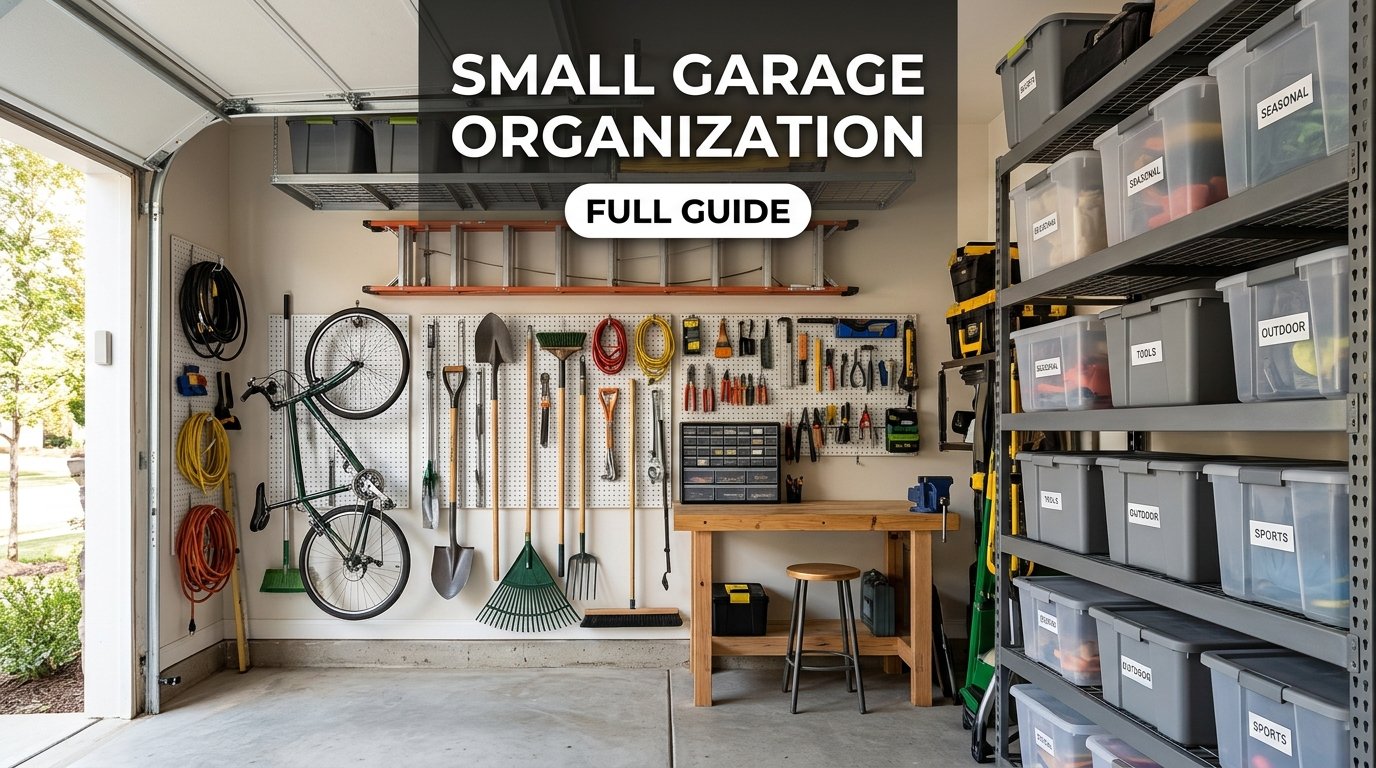
Small garage organization can be challenging when you need to fit vehicles, tools, bicycles, household supplies, and seasonal belongings into a limited space. A small garage can quickly become overcrowded if everything is stored on the floor or placed wherever an empty spot is available. However, with the right storage solutions and a little planning, even the smallest garage can become clean, functional, and easy to maintain.
The secret to organizing a small garage is making better use of every available area. Walls, corners, ceilings, cabinet interiors, and unused spaces can all provide valuable storage opportunities. Instead of adding more bulky furniture, choose compact storage systems that keep belongings accessible without taking up unnecessary room.
Whether you have a single-car garage, a narrow garage, or a small space attached to your home, these small garage organization ideas will help you create a practical storage system that works for your everyday needs.
1. Start by Decluttering Your Small Garage
Before purchasing storage products, remove unnecessary belongings from your garage. Decluttering is one of the most important steps because it helps you understand how much storage space you actually need.
Take everything out if possible, or organize one section at a time. Separate your belongings into categories such as tools, automotive accessories, gardening equipment, sports supplies, seasonal decorations, and household items.
Create separate groups for items you want to keep, donate, sell, or throw away. Broken equipment, empty boxes, unused furniture, and duplicate tools may be taking up valuable space.
Once you finish sorting, clean the floor, walls, and corners. You will have a much better idea of how to arrange the remaining belongings.
2. Use Vertical Wall Storage
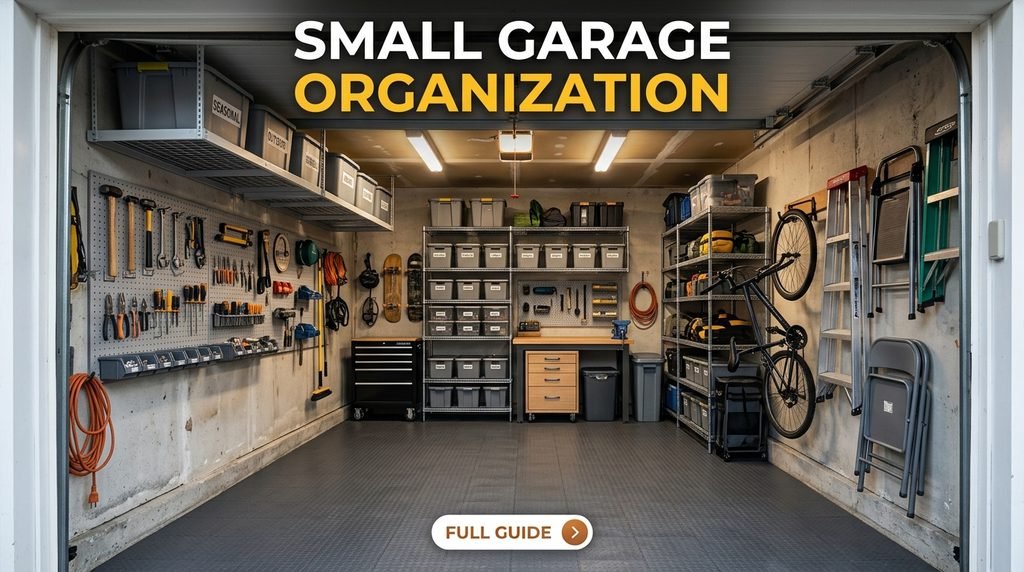
Vertical storage is one of the best solutions for small garage organization. When floor space is limited, using the walls allows you to store more belongings without making the garage feel crowded.
Install wall-mounted hooks, rails, brackets, and adjustable organizers to keep frequently used items off the ground.
You can use wall storage for:
- Garden rakes and shovels
- Brooms and mops
- Extension cords
- Hoses
- Hand tools
- Folding chairs
- Sports equipment
- Lightweight ladders
Arrange frequently used items at a comfortable height and keep heavier belongings secured according to the storage system’s weight limits.
3. Install Overhead Garage Storage
The ceiling is often an overlooked storage area in small garages. Overhead racks can help you store items that are not needed every day while keeping the floor and walls available for more frequently used belongings.
Ceiling-mounted storage racks are useful for seasonal decorations, camping equipment, empty luggage, and lightweight storage containers.
Before installation, check the ceiling structure and make sure the mounting hardware is suitable. Follow the manufacturer’s weight limits and installation instructions.
Avoid storing heavy or fragile objects above vehicles, walkways, or frequently occupied areas.
4. Choose Slim Garage Storage Cabinets
Large cabinets can consume too much space in a small garage. Instead, choose slim cabinets that fit against available walls without blocking vehicle doors or walking areas.
Tall, narrow cabinets are particularly useful because they provide vertical storage while occupying a relatively small floor area.
Use cabinets to store cleaning supplies, automotive accessories, hardware, gardening products, and household maintenance items.
Consider cabinets with adjustable shelves so you can change the interior arrangement as your storage needs develop.
5. Use a Pegboard for Small Tools
A pegboard is an affordable and practical way to organize tools in a limited space. It keeps frequently used equipment visible and accessible without requiring a large toolbox.
Install a pegboard above a workbench or on an unused wall. Add compatible hooks, holders, baskets, and small shelves to arrange your tools.
You can organize screwdrivers, pliers, measuring tapes, wrenches, scissors, and other small equipment in separate sections.
For a cleaner appearance, group similar tools together and leave enough space between them so you can remove and return each item easily.
6. Add Floating Shelves
Floating shelves are useful when you want additional storage without installing large cabinets or bulky shelving units.
They can be installed above workbenches, near garage entrances, or along unused wall sections.
Use floating shelves for lightweight containers, small equipment, cleaning supplies, and frequently used accessories. Check the wall material and use appropriate brackets and anchors for the intended load.
Avoid placing heavy objects on shelves that are not designed to support them.
7. Install a Wall-Mounted Bicycle Rack
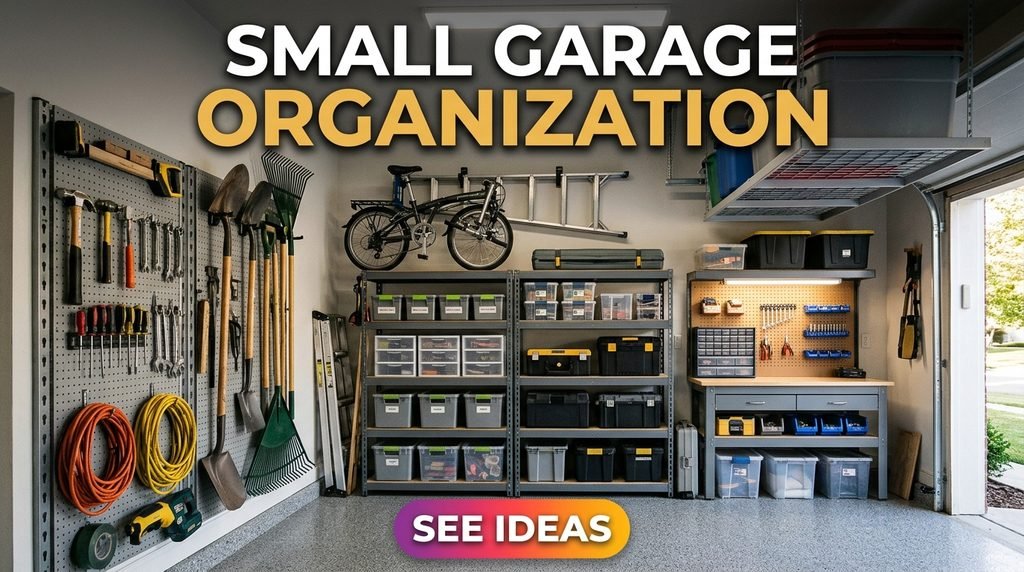
Bicycles can occupy a surprising amount of floor space in a small garage. A wall-mounted bicycle rack provides a simple solution by keeping bikes off the ground.
Depending on your garage layout, you can choose horizontal hooks, vertical bike holders, or folding bicycle storage brackets.
For multiple bicycles, arrange them carefully so handlebars and pedals do not interfere with each other. Check that the rack is compatible with your bicycle’s weight, frame, and wheel design.
This solution works particularly well for families who need to store bicycles while keeping enough room for a vehicle.
8. Use Stackable Storage Bins
Stackable storage bins help you make better use of shelves and corners. They are especially useful for belongings that do not need to remain visible.
Choose containers in consistent sizes so they can be stacked safely and arranged neatly.
Use separate bins for:
- Holiday decorations
- Car accessories
- Camping supplies
- Children’s toys
- Gardening products
- Electrical accessories
- Sports equipment
Label each container clearly. Clear bins are useful when you want to see the contents without opening them, while opaque bins create a more uniform appearance.
9. Make Use of Garage Corners
Corners are often wasted in small garages because people focus mainly on the main walls.
Install corner shelves or narrow corner cabinets to store small containers, household supplies, and accessories.
You can also use corner hooks for lightweight equipment or create a compact vertical tool storage area.
Measure the available space before purchasing corner units. Make sure they do not interfere with vehicle doors, walking paths, or access to important garage equipment.
10. Create a Compact Workbench
A small garage can still have a useful workspace. You simply need to choose a workbench that fits your available space.
A folding or wall-mounted workbench is a practical choice because it can be folded away when it is not being used.
Add a small drawer unit or pegboard above the work surface to organize tools and accessories.
A compact workbench can be used for household repairs, DIY projects, small woodworking tasks, and equipment maintenance.
Keep the surface clear after completing each project so it remains ready for the next task.
11. Use Rolling Storage Carts
Rolling storage carts are useful when you need flexible storage in a small garage. They can hold tools, cleaning products, hardware, and project supplies.
Choose a narrow cart that fits beside a workbench or cabinet. Models with locking wheels are useful because they remain in place while you work.
The main advantage is flexibility. You can move the cart when you need additional floor space or bring your tools closer to the area where you are working.
12. Install a Ceiling-Mounted Hose and Cord Organizer
Garden hoses, electrical cords, and air hoses can quickly become tangled and occupy unnecessary space.
Use wall-mounted reels, hose holders, and cord organizers to keep them neatly stored.
Place each organizer near the area where the equipment is commonly used. This makes it easier to access and return everything after use.
Keep electrical cords away from sharp edges, water, and areas where vehicles could drive over them.
13. Organize the Space Above the Garage Door
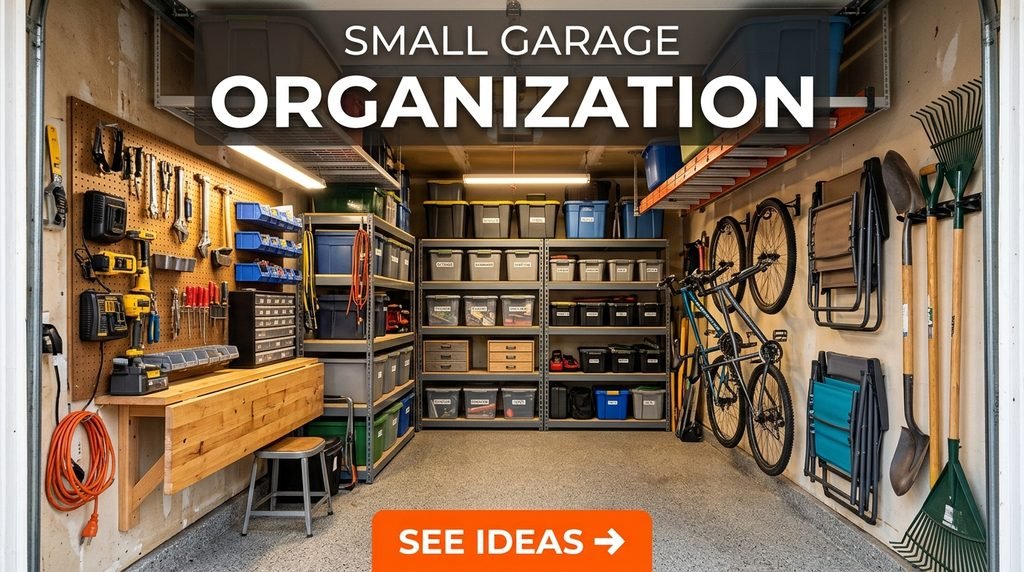
The area above a garage door may provide additional storage opportunities, depending on the garage design and door mechanism.
A narrow shelf or suitable storage rack can sometimes be installed above the door opening to hold lightweight seasonal belongings.
However, make sure any storage installation does not interfere with the garage door tracks, springs, opener, or moving components.
Never place objects where they could fall onto the door or obstruct its operation.
14. Choose Multi-Purpose Storage Furniture
When space is limited, multi-purpose storage products can be more practical than separate pieces of furniture.
For example, a workbench with built-in drawers provides both a working surface and tool storage. A storage bench can provide seating and a place for small accessories.
You can also choose cabinets with integrated hooks or shelving units with baskets.
The goal is to reduce the number of separate storage units while making every piece more useful.
15. Create a Dedicated Automotive Storage Area
If you park your vehicle in the garage, reserve a small section for automotive supplies.
Use a compact cabinet or wall-mounted organizer to store microfiber towels, car cleaning accessories, tire pressure gauges, and other maintenance products.
Keep frequently used supplies near the garage entrance or a convenient wall.
Store automotive chemicals in their original containers and follow their safety instructions. Keep hazardous products secured and away from children and pets.
16. Use Magnetic Tool Holders
Magnetic tool holders can help organize certain metal tools while saving drawer and shelf space.
Install them above a workbench or on a suitable wall. They can hold compatible screwdrivers, small metal tools, and other lightweight equipment.
Make sure the magnetic holder is rated for the tools you intend to store. Keep sharp tools secured and avoid placing magnetic strips where children can easily reach them.
17. Use Behind-the-Door Storage
The back of a garage entry door or an unused cabinet door can provide additional storage space.
Install suitable hooks, narrow organizers, or hanging baskets for lightweight belongings such as gloves, small cleaning accessories, and household tools.
Before installing anything, check the door’s clearance and make sure stored objects will not prevent it from closing properly.
This is a particularly useful idea when the main garage walls are already occupied by shelves and cabinets.
18. Install Foldable Storage Solutions
Foldable storage products are ideal for small garages because they can be put away when not needed.
Consider folding chairs, collapsible workbenches, foldable utility carts, and wall-mounted folding tables.
These products provide extra functionality without permanently occupying floor space.
Store folding items vertically or on suitable wall hooks when they are not being used.
19. Organize Small Items with Drawer Dividers
Small accessories such as screws, nails, washers, bolts, batteries, and connectors can easily become mixed together.
Use drawer dividers and compartment organizers to separate these items by type and size.
Transparent small-parts boxes are also useful because you can identify their contents quickly.
Label each compartment and avoid mixing different hardware sizes. This makes repairs and DIY projects much easier.
20. Improve Lighting in a Small Garage
Good lighting can make a small garage look cleaner and more spacious. It also helps you locate stored items and work safely.
Install bright LED ceiling lights to improve general visibility. Add task lighting above the workbench and inside areas where you frequently organize tools.
If the garage has dark corners, additional lighting can make shelves and cabinets easier to access.
Choose lighting suitable for the garage environment and use a qualified electrician for electrical work when necessary.
21. Keep the Garage Floor Clear
One of the most effective ways to make a small garage feel larger is to keep the floor as clear as possible.
Move tools, boxes, bicycles, and cleaning equipment onto suitable wall-mounted storage or shelving systems.
Leave enough room for vehicle doors to open and for people to walk safely.
You can also use floor markings to identify parking boundaries and walking areas.
Avoid placing storage units in front of emergency exits, electrical panels, fire extinguishers, or other important safety equipment.
22. Use a Narrow Shelving Unit
A narrow shelving unit can provide useful storage without taking up too much floor space.
Choose a tall, slim design that fits into an unused wall section or beside a cabinet.
Use it for lightweight containers, cleaning accessories, gardening supplies, and small household items.
Make sure the shelving unit is stable and secured against tipping, particularly if children use the garage.
23. Organize Seasonal Items Separately
Seasonal belongings should not take up the most accessible storage areas throughout the year.
Place holiday decorations, winter equipment, camping supplies, and occasional-use items in labeled containers.
Store them on higher shelves or suitable overhead racks, while keeping everyday tools and supplies within easy reach.
Rotate seasonal belongings when needed so the items you currently use are always accessible.
24. Make Your Small Garage Look Bigger
Organization is not only about increasing storage capacity. It is also about making the garage feel comfortable and visually spacious.
Use light-colored walls to improve brightness. Choose matching storage bins and cabinets for a cleaner appearance.
Avoid placing too many large objects in one area. Keep the center of the garage open and use vertical storage wherever possible.
A simple layout with clearly defined storage zones often looks more spacious than a garage filled with unrelated storage products.
25. Follow a Simple Garage Organization Routine
Once your garage is organized, regular maintenance will prevent clutter from returning.
Create a simple routine:
- Return tools to their storage locations after use.
- Put sports equipment back in its designated area.
- Keep storage bins properly labeled.
- Remove unnecessary packaging and empty boxes.
- Clean shelves and work surfaces regularly.
- Review seasonal belongings every few months.
- Check that shelves and wall-mounted systems remain secure.
A few minutes of maintenance can save hours of reorganizing later.
Small Garage Organization Ideas by Storage Type
| Storage Solution | Best Use | Main Advantage |
|---|---|---|
| Wall hooks | Tools and garden equipment | Saves floor space |
| Overhead racks | Seasonal belongings | Uses ceiling space |
| Slim cabinets | Household supplies | Compact enclosed storage |
| Pegboards | Hand tools | Easy access |
| Floating shelves | Lightweight accessories | Uses unused wall areas |
| Bicycle racks | Bikes | Clears floor space |
| Stackable bins | Seasonal and small items | Organized storage |
| Folding workbench | DIY projects | Saves space when not in use |
| Rolling carts | Tools and supplies | Easy to move |
| Drawer dividers | Small hardware | Keeps accessories separated |
Frequently Asked Questions About Small Garage Organization
1. How do I organize a very small garage?
Start by removing unnecessary belongings and grouping the items you want to keep. Use vertical wall storage, slim cabinets, overhead racks, stackable bins, and compact shelving. Keep the floor clear and create separate zones for different categories.
2. How can I maximize space in a one-car garage?
Use wall-mounted hooks, narrow shelving, ceiling storage, and compact cabinets. Store seasonal items overhead and keep frequently used equipment near the entrance. Measure your vehicle and available walking space before installing storage systems.
3. What is the best storage for a small garage?
Wall-mounted storage is one of the best options because it uses unused vertical space. Pegboards, hooks, slim cabinets, adjustable shelves, and compact overhead racks can help maximize storage capacity.
4. How do I organize a small garage on a budget?
Declutter first, reuse suitable containers, add inexpensive hooks, and install basic shelving. You can also use pegboards, drawer dividers, and labels to improve organization without purchasing an expensive storage system.
5. How can I fit storage and a car in a small garage?
Keep large storage units against the walls and use overhead storage for suitable seasonal items. Choose narrow cabinets and wall-mounted organizers. Make sure vehicle doors can open comfortably and maintain safe walking space.
6. Are overhead storage racks good for small garages?
Yes. Overhead racks can provide extra storage without occupying floor space. They are useful for lightweight seasonal belongings and occasional-use items when installed correctly and within their rated weight limits.
7. What should not be stored in a garage?
Avoid storing items that can be damaged by temperature changes or moisture, including sensitive electronics, important documents, and certain delicate household belongings. Follow the manufacturer’s storage instructions for chemicals, batteries, and other potentially hazardous products.
8. How do I organize garage tools in a small space?
Use pegboards, magnetic holders, compact tool cabinets, and drawer organizers. Group similar tools together and keep frequently used equipment near your work area.
9. How can I make a small garage look less cluttered?
Use matching storage containers, label boxes, install cabinets with doors, and keep the floor clear. Store belongings in designated zones and avoid leaving loose equipment around the garage.
10. What is the best way to organize a small garage without removing parking space?
Use vertical walls, narrow cabinets, overhead racks, and folding storage products. Keep bulky belongings away from vehicle doors and maintain enough clearance for safe parking and walking.
Conclusion
Small garage organization does not require a large renovation or an expensive storage system. The right combination of vertical wall storage, overhead racks, compact cabinets, pegboards, stackable bins, and folding furniture can make a significant difference.
Start by decluttering your space, measure the available areas, and choose storage solutions that match your needs. Create dedicated zones for tools, automotive supplies, gardening equipment, and seasonal belongings.
Most importantly, keep the floor clear and return items to their designated places after use. With a thoughtful layout and a simple maintenance routine, even a very small garage can become a clean, organized, and highly functional space.