
 By admin
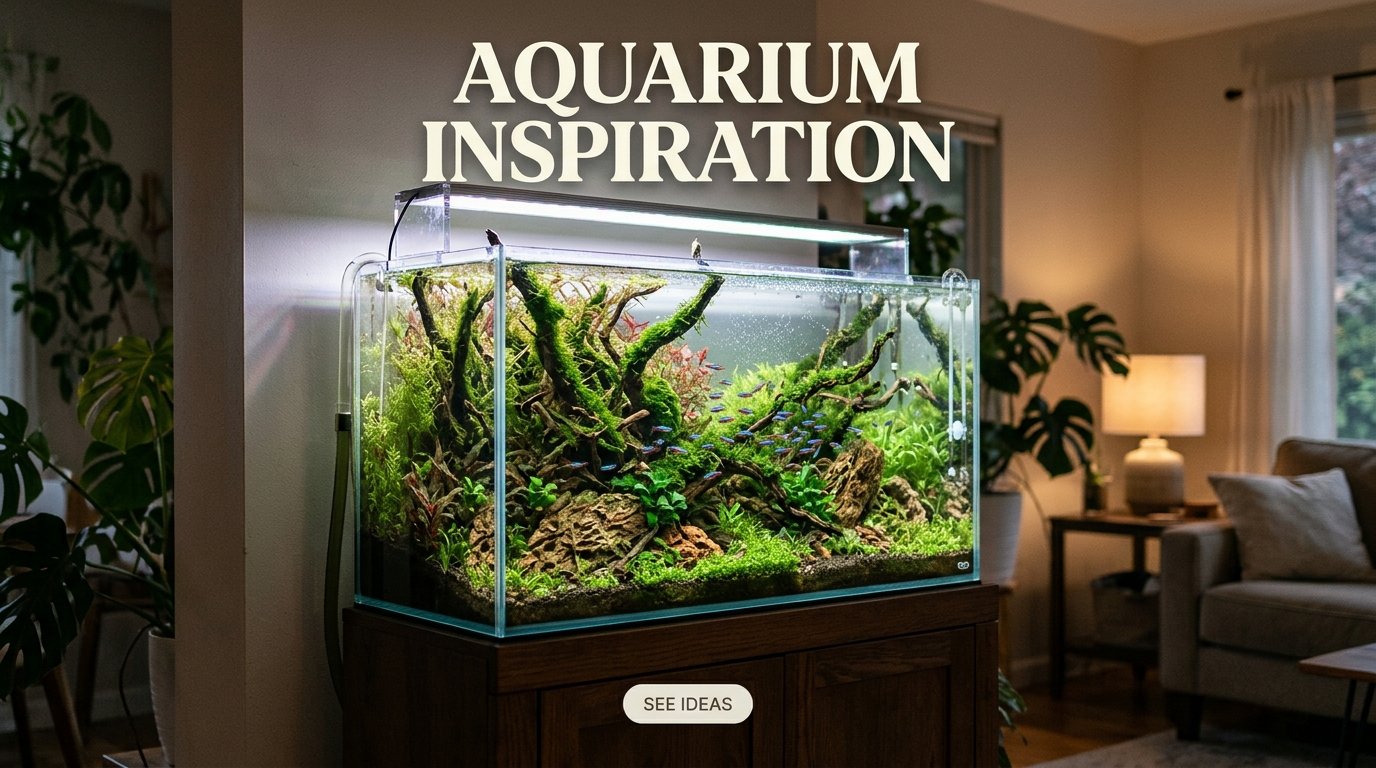
Finding the right aquarium inspiration can help you transform an ordinary fish tank into a beautiful underwater display. Whether you prefer a simple freshwater aquarium, a colorful tropical fish tank, a natural planted aquarium, or a dramatic aquascape, there are countless ways to create an attractive aquatic environment. With the right combination of fish, plants, rocks, lighting, and decorations, an aquarium can become a stunning feature in your home.
Aquariums are more than decorative displays. They create a peaceful atmosphere, bring a touch of nature indoors, and offer an opportunity to explore the fascinating world of aquatic life. From small desktop tanks to large living-room aquariums, every setup can have its own personality and style.
If you are looking for fresh aquarium ideas, this guide explores different aquarium styles, creative layouts, decoration options, and practical tips to help you design a beautiful and healthy underwater world.
1. Natural Planted Aquarium Inspiration
A natural planted aquarium is one of the most beautiful choices for anyone who loves greenery and peaceful underwater landscapes. Instead of filling the tank with artificial decorations, this style uses live aquatic plants, natural rocks, and driftwood to create an environment inspired by nature.
Popular plants include Java fern, Anubias, Amazon sword, Vallisneria, and carpeting plants such as dwarf hairgrass.
You can arrange plants at different heights to create depth and make the aquarium look more natural. Taller plants work well in the background, while shorter plants can cover the foreground.
A natural planted aquarium is especially attractive with small schooling fish, shrimp, and peaceful community species.
2. Minimalist Aquarium Design
A minimalist aquarium focuses on simplicity, clean lines, and open swimming space. It avoids excessive decorations and uses only a few carefully selected elements.
A simple arrangement might include:
- One attractive piece of driftwood
- A few natural stones
- A small selection of aquatic plants
- A clean sand or gravel substrate
- A simple black or transparent background
This style is perfect for modern homes, offices, and spaces where you want the aquarium to look elegant without becoming visually crowded.
3. Aquascaping Aquarium Ideas
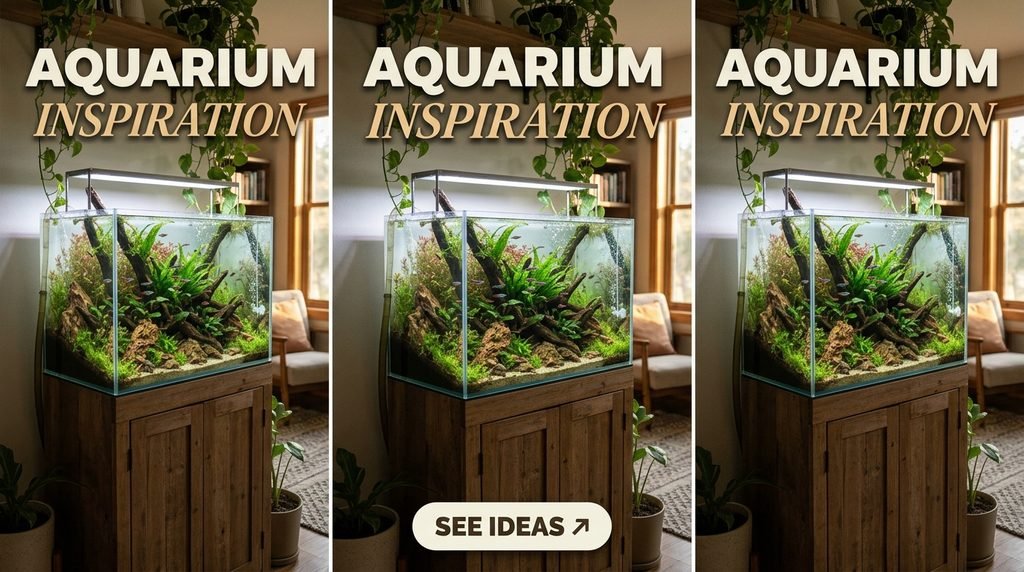
Aquascaping is the art of arranging aquatic plants, rocks, driftwood, and other natural materials to create an underwater landscape.
It is one of the most creative ways to design an aquarium because the entire tank becomes a miniature natural scene.
Popular aquascaping styles include Iwagumi, Dutch, Nature Aquarium, Jungle, and biotope designs.
Each style has its own arrangement principles, but all aim to create visual balance and a pleasing underwater environment.
4. Small Aquarium Inspiration
Small aquariums can be attractive additions to bedrooms, desks, kitchens, and offices. Their compact size makes them suitable for limited spaces, although they still require careful maintenance.
A small tank can feature:
- A simple planted layout
- Natural stones and small driftwood
- A carefully selected background
- Gentle aquarium lighting
- Suitable small aquatic species
A properly maintained 5-gallon or 10-gallon aquarium can become a beautiful decorative feature.
Remember that smaller aquariums are not necessarily easier to maintain. Water conditions can change quickly in limited volumes, so regular monitoring is important.
5. Large Aquarium Ideas
A large aquarium creates a dramatic visual statement. It can become the centerpiece of a living room, entrance hall, office, or dedicated aquarium room.
Large tanks provide more opportunities for creative layouts, larger schools of compatible fish, and detailed aquascaping.
You can design a large aquarium around a natural river scene, tropical underwater forest, rocky landscape, or colorful planted environment.
Before choosing fish, consider their adult size, swimming needs, social behavior, and compatibility.
6. Aquarium With Driftwood
Driftwood can add a natural and artistic appearance to an aquarium. Its irregular shapes create interesting focal points and provide structure for plants such as Anubias and Java fern.
You can use a single large branch as the main centerpiece or combine several smaller pieces to create a forest-like layout.
Different driftwood arrangements can produce completely different looks.
Choose aquarium-safe driftwood, prepare it properly, and avoid wood that may release harmful substances into the water.
7. Rock-Based Aquarium Design
A rock-based aquarium uses stones as the main decorative feature.
You can create mountain-inspired layouts, rocky riverbeds, caves, or dramatic underwater cliffs.
Popular aquarium rocks include Seiryu stone, dragon stone, lava rock, and other aquarium-safe materials.
Arrange rocks in a natural-looking composition rather than placing them randomly. Pay attention to their shapes, sizes, and visual balance.
Always check whether the selected rocks are suitable for your fish and water chemistry.
8. Betta Fish Aquarium Inspiration
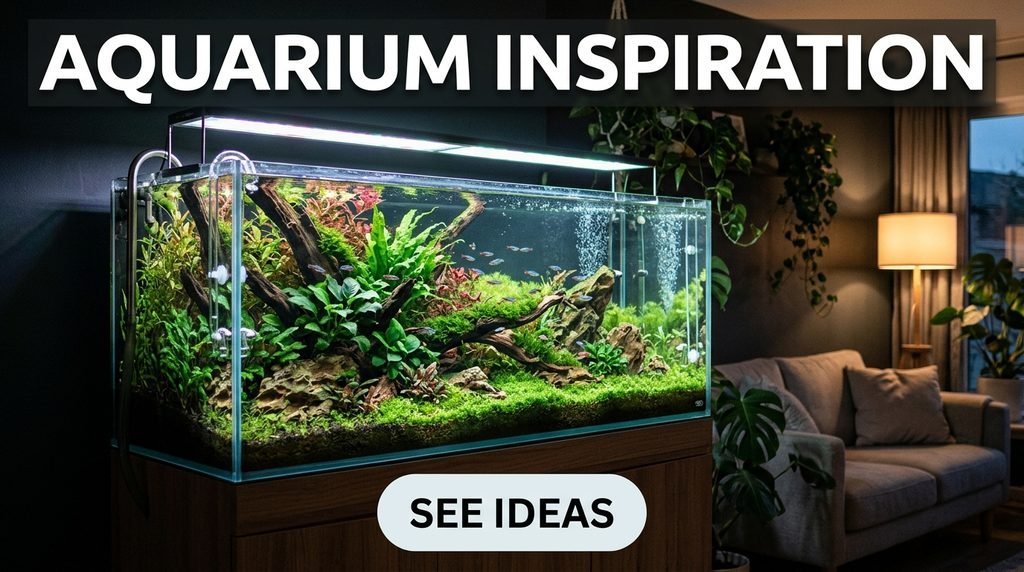
Betta aquariums are popular because these fish have beautiful fins and vibrant colors.
A well-designed betta aquarium can include live plants, gentle lighting, natural substrate, and carefully selected decorations.
Anubias, Java fern, and floating plants can create attractive planted layouts.
Bettas need warm, stable water, gentle filtration, and enough space to swim. A heated and filtered aquarium of at least 5 gallons is a common starting recommendation for a single betta.
Avoid sharp decorations and strong water currents that can damage delicate fins or make swimming difficult.
9. Guppy Aquarium Ideas
A guppy aquarium is an excellent choice for colorful freshwater displays.
Guppies are available in many varieties, including colorful mosaic, cobra, tuxedo, and fancy-tail types.
A planted aquarium with green aquatic plants creates a beautiful contrast against their bright colors.
You can use a dark background to make guppy patterns stand out or choose a natural layout with driftwood and stones.
Guppies reproduce readily, so plan for population growth and avoid overcrowding. Provide suitable filtration, stable water conditions, and enough swimming space.
10. Black Background Aquarium
A black background is a simple design choice that can dramatically change the appearance of an aquarium.
It makes bright fish, green plants, and colorful decorations stand out.
This style works particularly well with guppies, neon tetras, angelfish, and planted aquariums.
A black background can also hide equipment such as filter tubes and wires, giving the aquarium a cleaner appearance.
11. Aquarium With LED Lighting
Lighting plays an important role in aquarium appearance.
LED lights are available in different colors, brightness levels, and programmable settings.
White lighting can provide a natural daylight appearance, while blue lighting can create an ocean-inspired atmosphere.
For planted aquariums, choose lighting suitable for the plants you keep. Excessive lighting can encourage algae growth, so balance the light intensity and daily lighting period with the aquarium’s needs.
12. Jungle Aquarium Inspiration
A jungle aquarium recreates the appearance of a dense underwater forest.
It usually features abundant aquatic plants, driftwood, shaded areas, and natural-looking decorations.
You can combine tall background plants, broad-leaved species, floating plants, and smaller foreground plants.
The result is a rich green environment that looks like a miniature underwater jungle.
Jungle aquariums are especially attractive when viewed from the front because layers of plants create depth and texture.
13. Iwagumi Aquarium Design
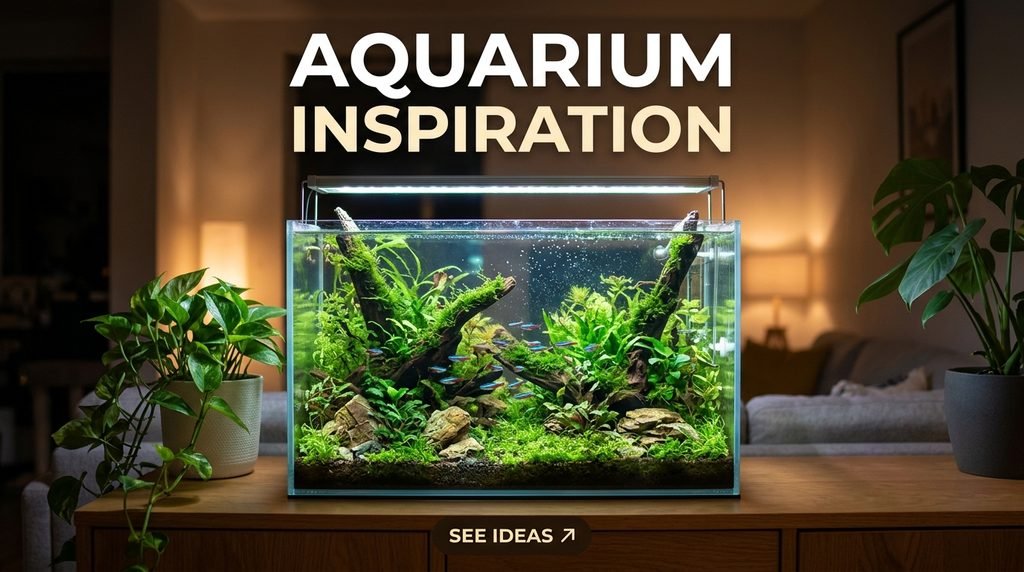
Iwagumi is a Japanese-inspired aquascaping style that uses carefully arranged stones as its main visual feature.
A traditional Iwagumi layout often includes one dominant stone and several supporting stones arranged in a balanced composition.
Carpeting plants such as dwarf hairgrass or Monte Carlo can create a soft green foreground.
This style is ideal for people who appreciate simple, peaceful, and artistic aquarium designs.
14. Dutch Aquarium Inspiration
A Dutch aquarium focuses on colorful aquatic plants rather than rocks or driftwood.
It uses carefully organized plant groups to create layers of color, height, and texture.
Red, green, and different shades of yellow-green plants can produce a beautiful underwater garden.
Regular trimming and maintenance are important because plant growth is a major part of the design.
15. Nature Aquarium Design
A Nature Aquarium takes inspiration from landscapes found in nature.
The layout may resemble a forest, mountain valley, riverbank, or underwater woodland.
Driftwood, stones, mosses, and carefully arranged plants help create a natural scene.
This style is especially popular among aquascaping enthusiasts who enjoy building detailed underwater landscapes.
16. Aquarium With a Waterfall Effect
A waterfall-inspired aquarium can create the appearance of flowing water and a natural landscape.
Some aquarium designs combine an aquatic tank with an above-water section, rocks, and plants to create a miniature stream or waterfall effect.
Water circulation and filtration must be designed carefully to maintain suitable conditions for the animals.
Never use a decorative waterfall arrangement that creates excessive current for fish that prefer calm water.
17. Aquarium Divider Ideas
An aquarium divider can separate different sections of a tank while maintaining an attractive appearance.
Dividers may be used for temporary separation, breeding arrangements, or separating fish that cannot safely live together.
Some designs use clear dividers, while others incorporate plants and decorations to create separate visual areas.
Choose a divider with suitable openings and material for the intended purpose. It should not create sharp edges, restrict filtration, or compromise water quality.
18. Corner Aquarium Inspiration
A corner aquarium is an excellent way to use space that might otherwise remain empty.
Corner tanks are available in different shapes and sizes, including curved-front and triangular designs.
A natural planted layout can make a corner aquarium look especially attractive.
Before purchasing one, make sure the stand provides proper support and the location allows easy access for maintenance.
19. Wall-Mounted Aquarium Design
A wall-mounted aquarium can create a modern and unusual feature in a home or office.
It may resemble a living underwater picture, especially when installed with a clean frame and attractive lighting.
However, wall-mounted aquariums require careful structural planning because water is heavy.
The wall, mounting system, filtration, access panels, and maintenance arrangements must all be suitable for the tank.
20. Aquarium With Live Shrimp
A shrimp aquarium can be a beautiful alternative to a traditional fish tank.
Freshwater shrimp, especially Neocaridina varieties, are available in attractive colors such as red, blue, yellow, and orange.
A planted aquarium with moss, stones, and small driftwood pieces provides an attractive environment.
Shrimp need stable water conditions, suitable filtration, and safe spaces for grazing and hiding.
21. Reef Aquarium Inspiration
A reef aquarium recreates the appearance of a tropical marine reef.
It may include live rock, corals, marine fish, and carefully managed saltwater conditions.
Reef tanks can be incredibly colorful and detailed, but they require specialized equipment and regular monitoring.
Important considerations include salinity, temperature, water chemistry, lighting, and nutrient management.
A reef aquarium is generally more demanding than a basic freshwater setup, so research the requirements before starting one.
22. Biotope Aquarium Ideas
A biotope aquarium recreates a particular natural aquatic habitat.
Instead of mixing species from different environments, the goal is to represent a specific ecosystem.
Examples include:
- Amazon River biotope
- African lake biotope
- Southeast Asian stream biotope
- Blackwater aquarium
- Rocky river aquarium
A well-planned biotope uses suitable plants, substrate, water conditions, and compatible species from the selected region.
23. Aquarium With Natural Sand
Sand can give an aquarium a soft and natural appearance.
It works particularly well in river-inspired aquariums, planted layouts, and tanks designed around bottom-dwelling fish.
Choose aquarium-safe sand and avoid materials that may contain harmful chemicals or sharp particles.
Some plants and fish require particular substrate conditions, so select the material according to the aquarium’s inhabitants.
24. Aquarium With Floating Plants
Floating plants create a peaceful natural appearance and provide shade for fish.
Popular options include Amazon frogbit, red root floaters, and Salvinia, depending on local availability and suitability.
Floating plants can also absorb nutrients from the water and provide shelter for some fish.
However, they should not cover the entire surface. Leave open areas for gas exchange and ensure that fish receive appropriate lighting.
25. Luxury Aquarium Inspiration
A luxury aquarium combines attractive design with professional equipment and carefully planned placement.
It may include a large viewing panel, custom cabinetry, a planted aquascape, high-quality lighting, and an advanced filtration system.
Some luxury aquariums are built into walls or designed as room dividers.
The best luxury aquarium is not simply the largest or most expensive one. It should combine visual beauty, reliable equipment, accessibility, and suitable conditions for its inhabitants.
Aquarium Ideas for Different Rooms
The location of an aquarium can influence its design, size, and overall appearance.
| Room | Aquarium Inspiration | Design Style |
|---|---|---|
| Living room | Large planted aquarium | Elegant and natural |
| Bedroom | Small peaceful aquarium | Minimalist |
| Office | Desktop aquarium | Simple and modern |
| Kitchen | Compact planted aquarium | Clean and decorative |
| Hallway | Wall-mounted aquarium | Contemporary |
| Dining room | Custom built-in aquarium | Luxury |
| Study room | Small natural aquascape | Calm and relaxing |
Choose a location away from direct sunlight, excessive temperature changes, and areas where the aquarium may be knocked or disturbed.
How to Choose the Right Aquarium Design
Before selecting an aquarium style, consider the space available, your experience level, budget, and the animals you want to keep.
Consider Your Aquarium Size
Small tanks are suitable for compact spaces, but they require careful maintenance. Larger aquariums often provide more stable water conditions and more opportunities for creative layouts.
Choose a tank size based on the needs of your intended fish rather than appearance alone.
Select a Suitable Theme
Decide whether you prefer a natural, minimalist, tropical, colorful, or dramatic aquarium.
A consistent theme makes it easier to choose decorations, plants, lighting, and substrate.
Choose Compatible Fish
Research each species before purchasing it.
Consider adult size, water temperature, pH preferences, temperament, swimming requirements, and social behavior.
Do not select fish only because their colors look attractive together.
Plan Filtration and Heating
A beautiful aquarium must also be functional.
Choose an appropriate filter, heater when required, and lighting system. Make sure the equipment can support the tank’s size and inhabitants.
Keep Maintenance in Mind
Some aquarium styles require more care than others.
Heavily planted aquariums may need regular trimming and fertilization, while reef aquariums require more specialized monitoring.
Choose a design that fits the amount of time you can dedicate to aquarium care.
Common Aquarium Design Mistakes to Avoid
Even attractive aquarium designs can become difficult to maintain if important details are overlooked.
Avoid these common mistakes:
- Adding too many decorations and leaving insufficient swimming space.
- Keeping incompatible fish together.
- Choosing an aquarium that is too small for the selected species.
- Using decorations that release harmful substances.
- Installing lighting that is too strong or runs for too long.
- Ignoring filtration and water circulation.
- Adding too many fish before the aquarium is properly cycled.
- Placing the tank in direct sunlight.
- Using unstable rocks or heavy decorations without proper support.
- Choosing a complicated design without understanding its maintenance requirements.
A successful aquarium should be beautiful, stable, and appropriate for its inhabitants.
Frequently Asked Questions About Aquarium Inspiration
What is the best aquarium design for beginners?
A simple freshwater aquarium with easy-care plants, a suitable filter, and peaceful fish is a good starting point. Avoid complicated aquascapes until you understand basic aquarium maintenance.
How can I make my aquarium look beautiful?
Use a consistent theme, natural decorations, suitable lighting, and carefully arranged plants. Keep the aquarium clean and avoid overcrowding it with unnecessary decorations.
What are the most popular aquarium styles?
Popular styles include Nature Aquarium, Iwagumi, Dutch, Jungle, minimalist, biotope, reef, and tropical community aquariums.
What is the best background color for an aquarium?
Black backgrounds are popular because they make fish and plants stand out. Blue backgrounds create an ocean-inspired appearance, while transparent backgrounds provide a more open look.
Are planted aquariums better than artificial aquariums?
Live planted aquariums can provide natural beauty and additional biological benefits, but they require suitable lighting and maintenance. Artificial decorations can be easier to arrange, provided they are aquarium-safe.
What are some good aquarium ideas for small spaces?
Desktop tanks, small planted aquariums, compact shrimp tanks, and carefully designed nano aquariums are attractive options for limited spaces.
How do I create a natural-looking aquarium?
Use natural stones, prepared driftwood, suitable substrate, and aquatic plants. Arrange them in layers to create depth and avoid overly symmetrical designs.
What fish look best in a planted aquarium?
Small schooling fish such as neon tetras, rasboras, and suitable danios can look attractive in planted aquariums. Guppies and other compatible species can also work well.
How often should I clean my aquarium?
Maintenance depends on tank size, stocking, filtration, and plant growth. Many freshwater aquariums benefit from regular partial water changes, substrate cleaning when needed, and routine filter maintenance.
Can I design an aquarium without live plants?
Yes. You can create an attractive aquarium using aquarium-safe artificial plants, rocks, driftwood, and other suitable decorations. Make sure the design provides enough space and does not create hazards for fish.
What lighting is best for an aquarium?
The best lighting depends on the aquarium’s inhabitants. Low-light plants need less intense lighting than demanding aquatic plants. Choose a suitable aquarium light and maintain a consistent daily schedule.
Are large aquariums easier to maintain than small ones?
Larger aquariums generally have more stable water conditions because changes occur more gradually. However, they require more space, equipment, and water for maintenance.
Conclusion
Finding the right aquarium inspiration is the first step toward creating a beautiful underwater world. From minimalist freshwater tanks and colorful guppy aquariums to natural planted layouts and impressive reef displays, there are designs to suit almost every space and preference.
The most successful aquarium combines attractive styling with healthy aquatic conditions. Choose suitable fish, plan your layout carefully, invest in reliable equipment, and select decorations that complement the natural environment.
Whether you are creating a small desktop tank or a luxurious living-room aquarium, a thoughtful design can turn an ordinary fish tank into a stunning centerpiece that you can enjoy for years.