
 By admin
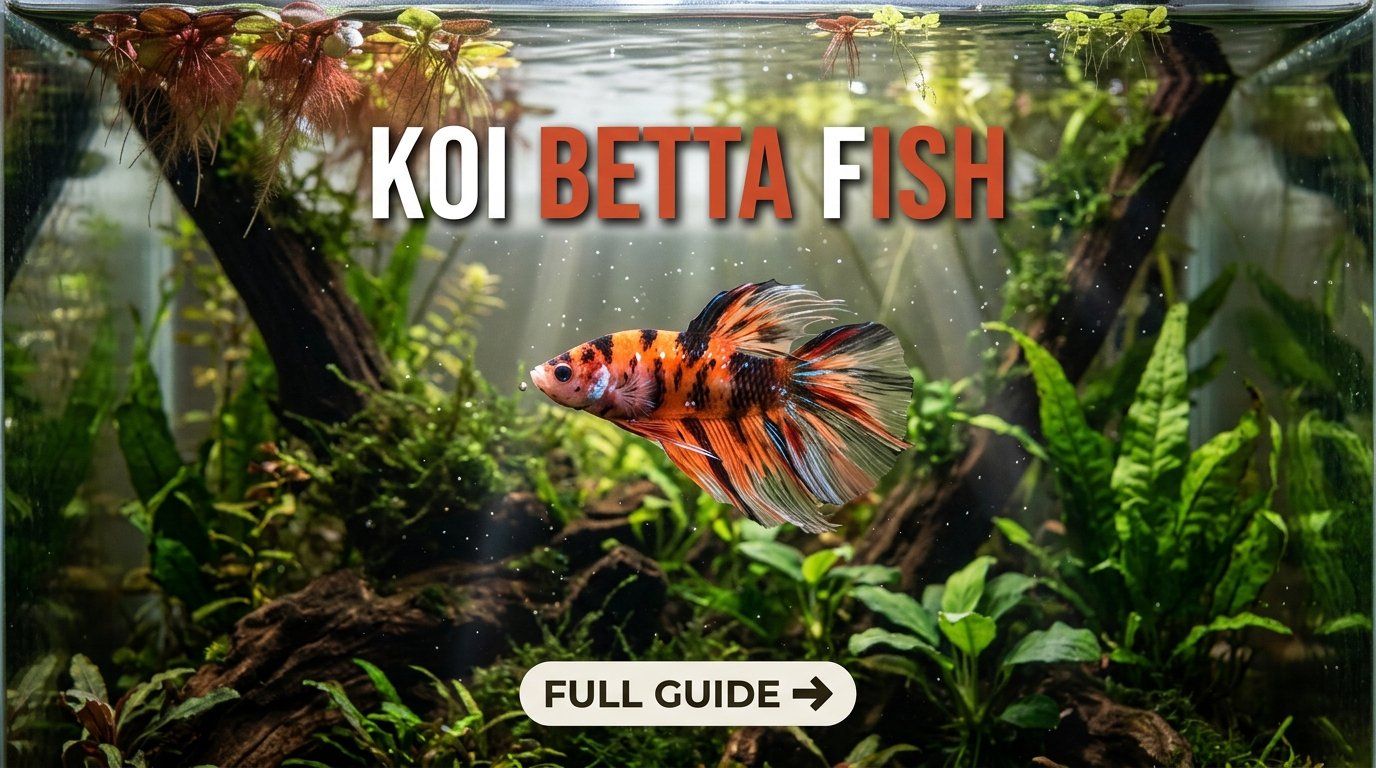
A koi betta fish is one of the most attractive freshwater aquarium fish, admired for its colorful patterns, unique markings, and beautiful flowing fins. Inspired by the appearance of traditional koi carp, these bettas display combinations of red, orange, white, black, yellow, and other shades across their bodies. Every koi betta can have a slightly different pattern, making each fish look unique.
Koi bettas are selectively bred varieties of Betta splendens, commonly known as Siamese fighting fish. They are popular among aquarium enthusiasts who want a colorful fish with an interesting personality. Their distinctive appearance makes them an excellent choice for planted aquariums, minimalist fish tanks, and creative aquascaping designs.
Although koi bettas look different from traditional solid-colored bettas, their care requirements are generally the same. They need warm, clean water, a suitable aquarium, nutritious food, and a comfortable environment. Understanding their different varieties, colors, behavior, and tank requirements can help you keep a healthy and beautiful koi betta.
What Is a Koi Betta Fish?
A koi betta fish is a selectively bred betta with multicolored markings that resemble the patterns found on ornamental koi carp. These patterns often include patches of red, orange, white, black, and other colors.
Unlike solid-colored bettas, koi bettas usually have irregular markings across their bodies and fins. Some have large patches of contrasting colors, while others display smaller spots and marbled patterns.
Koi bettas are not a separate fish species. They belong to Betta splendens and have the same general body structure, behavior, and aquarium requirements as other domestic bettas.
One interesting feature of some koi bettas is their changing coloration. Certain varieties carry marble-pattern genetics, which can cause their colors and markings to change as they grow older.
What Does a Koi Betta Fish Look Like?
Koi bettas are known for their distinctive multicolored appearance. Their bodies may have a white or light-colored base with irregular red, orange, black, or yellow patches.
Their fins can also display colorful markings, creating an attractive combination of patterns and shapes.
Common characteristics include:
- Irregular multicolored body patterns.
- Red, orange, white, black, and yellow markings.
- Short or long fins depending on the variety.
- A compact freshwater fish body.
- Bright colors that may change over time.
No two koi bettas necessarily look exactly alike. Even fish from the same breeding line can have different markings.
Popular Types of Koi Betta Fish
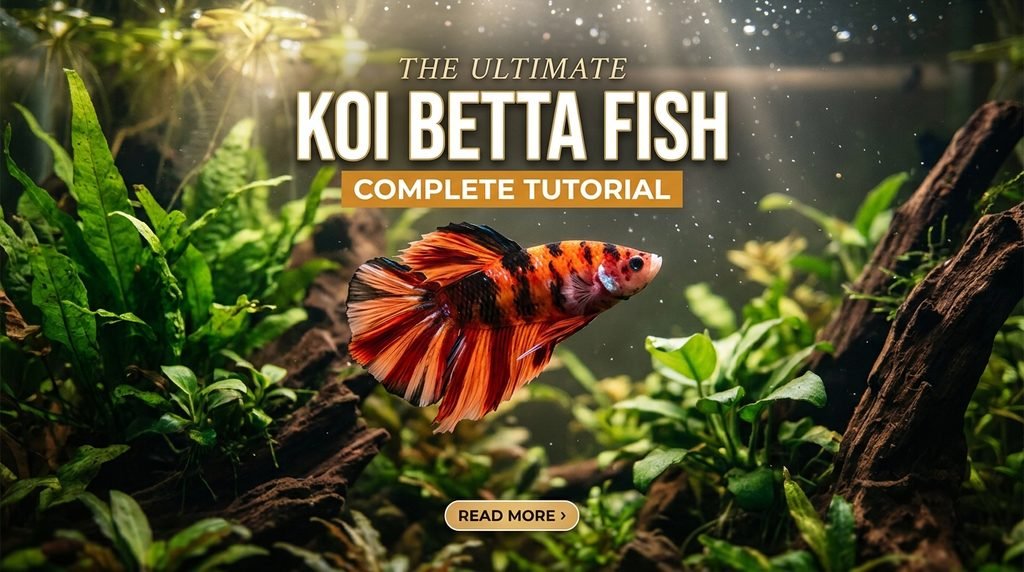
Koi bettas are available in several attractive color combinations and fin varieties. Their patterns are one of the main reasons they are so popular among collectors.
1. Traditional Koi Betta Fish
Traditional koi bettas have color patterns inspired by classic ornamental koi carp. Their bodies commonly display red, white, orange, and black patches.
The colors are usually distributed irregularly, giving each fish a distinctive appearance.
2. Galaxy Koi Betta Fish
Galaxy koi bettas are known for their colorful bodies and sparkling metallic scales. Their appearance may include red, blue, white, orange, and dark markings.
The iridescent scales reflect light, creating a galaxy-like effect. This variety is particularly popular among aquarium enthusiasts who appreciate unusual color combinations.
3. Candy Koi Betta Fish
Candy koi bettas are recognized for their bright and varied color patterns. They may display red, orange, yellow, blue, white, and black markings.
Their colorful appearance makes them stand out in both planted and minimalist aquariums.
4. Nemo Koi Betta Fish
Nemo koi bettas often have bright orange, red, yellow, and white coloration. Some display patterns that resemble the colorful appearance of clownfish.
Their warm colors create a vibrant look, especially against dark aquarium backgrounds.
5. Samurai Koi Betta Fish
Samurai-inspired bettas are known for contrasting scale patterns, often featuring metallic or dragon-scale characteristics. Some selectively bred fish may combine these features with koi-like coloration.
Their appearance can be dramatic because of the contrast between darker areas and lighter metallic scales.
6. Short-Finned Koi Plakat Betta
Koi plakat bettas have shorter fins and a compact body shape. They display the same attractive koi-inspired patterns as other varieties but have a different fin structure.
Their shorter fins create a more streamlined appearance.
7. Halfmoon Koi Betta Fish
Halfmoon koi bettas combine multicolored koi patterns with a broad, fan-shaped tail. When the fish displays its fins, the tail may spread into a semicircular shape.
They are especially attractive to people who enjoy bettas with impressive fin structures.
8. Female Koi Betta Fish
Female koi bettas can be just as colorful as males. They often have shorter fins, but their bodies may display beautiful red, orange, white, black, and metallic patterns.
Female koi bettas are also known for individual personalities and can be territorial despite their smaller fins.
Koi Betta Fish Colors and Patterns
The most interesting feature of koi bettas is their variety of colors. Their patterns are influenced by selective breeding and genetics.
| Color or Pattern | Appearance |
|---|---|
| Red and white | Bright red patches on a light body |
| Orange and black | Warm orange markings with dark areas |
| Multicolor koi | A combination of several irregular colors |
| Galaxy | Metallic or iridescent scales |
| Candy | Bright mixed-color markings |
| Nemo | Orange, yellow, red, and white patterns |
| Marble | Irregular patches that may change over time |
The appearance of a koi betta may change as it matures. This is particularly noticeable in fish with marble genetics.
Why Do Koi Betta Fish Change Color?
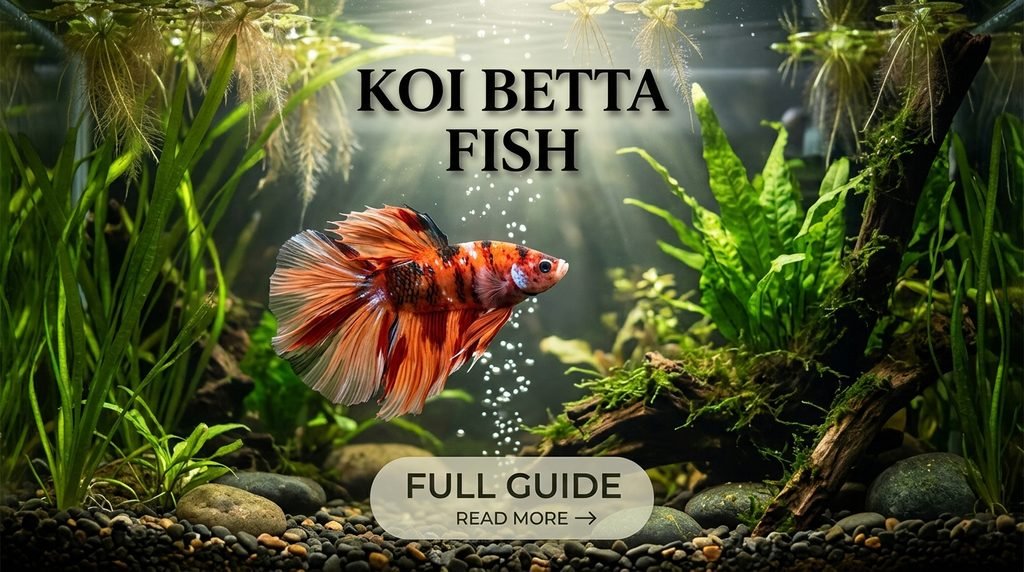
Some koi bettas have a genetic characteristic commonly called the marble gene. It can cause pigmentation patterns to change throughout the fish’s life.
A young koi betta may have a mostly white body with a few red or black patches. As it matures, additional colors may develop, existing markings may become darker, or certain patches may fade.
These changes are not necessarily a sign of illness.
However, sudden paleness accompanied by loss of appetite, clamped fins, unusual swimming, or lethargy should not automatically be considered normal color development. Check the water conditions and look for other signs of stress or disease.
Koi Betta Fish Tank Size
A suitable aquarium is essential for keeping a koi betta healthy. Although bettas can survive in small containers for limited periods, tiny bowls are not suitable permanent homes.
A 5-gallon aquarium is a practical minimum for one koi betta. A 10-gallon tank provides more room for swimming, plants, decorations, and creative aquascaping.
| Tank Size | Suitable Setup |
|---|---|
| 5 gallons | Simple planted aquarium |
| 10 gallons | Natural aquascape with driftwood |
| 15 gallons | Larger planted layout |
| 20 gallons | Detailed aquascaping design |
Choose an aquarium with a secure lid because bettas can jump. Provide gentle filtration and enough open space for swimming.
Best Aquarium Setup for Koi Betta Fish
A koi betta aquarium should be attractive while providing a safe and comfortable environment.
Consider including the following:
Gentle filtration: Use a sponge filter or adjustable filter that does not create a strong current.
Aquarium heater: Maintain a stable tropical temperature with a reliable heater.
Natural substrate: Sand, gravel, or planted aquarium substrate can create an attractive foundation.
Live plants: Anubias, Java fern, Java moss, and Cryptocoryne are suitable choices for many betta aquariums.
Driftwood: Aquarium-safe driftwood adds natural structure and hiding areas.
Smooth decorations: Avoid sharp ornaments that could damage delicate fins.
Open swimming space: Do not overcrowd the aquarium with plants and decorations.
Best Plants for a Koi Betta Fish Tank
Live plants can make a koi betta aquarium look like a natural underwater garden. Green plants also create an attractive contrast with the fish’s red, orange, white, and black coloration.
Popular plant choices include:
| Plant | Main Benefit |
|---|---|
| Anubias nana | Broad leaves for resting |
| Java fern | Easy-care natural decoration |
| Java moss | Soft cover for rocks and wood |
| Amazon sword | Large background foliage |
| Cryptocoryne | Attractive midground planting |
| Water sprite | Dense, leafy growth |
| Amazon frogbit | Floating shade and hanging roots |
Choose plants according to your aquarium lighting and maintenance routine. Some plants require stronger lighting or additional nutrients.
Keep floating plants from covering the entire water surface because bettas need access to atmospheric air.
Ideal Water Conditions for Koi Betta Fish
Koi bettas need stable, clean water. Poor water quality can cause stress, fin damage, and health problems.
| Water Parameter | Recommended Range |
|---|---|
| Temperature | 76–82°F (24–28°C) |
| pH | Approximately 6.5–7.5 |
| Ammonia | 0 ppm |
| Nitrite | 0 ppm |
| Nitrate | Preferably below 20 ppm |
| Water flow | Gentle |
Always cycle the aquarium before introducing your koi betta. Beneficial bacteria help process ammonia and nitrite, which are toxic to fish.
Perform regular partial water changes and test the water to maintain suitable conditions.
What Do Koi Betta Fish Eat?
Koi bettas are carnivorous fish that need a protein-rich diet. In the wild, bettas feed on insects, insect larvae, and other small aquatic organisms.
A high-quality betta pellet should form the main part of their diet. Additional foods can provide variety.
Suitable options include:
- High-quality betta pellets.
- Frozen brine shrimp.
- Daphnia.
- Frozen bloodworms as an occasional treat.
- Suitable insect larvae.
Feed small portions that your fish can finish within a few minutes. Avoid overfeeding because excess food can cause digestive problems and reduce aquarium water quality.
A varied, balanced diet supports healthy growth and overall condition.
Koi Betta Fish Behavior and Personality
Koi bettas are curious and intelligent fish with individual personalities. Some actively explore every part of their aquarium, while others prefer resting among plants and decorations.
Common behaviors include swimming near the surface, investigating new objects, exploring plants, and approaching the aquarium glass during feeding time.
Do Koi Betta Fish Flare Their Fins?
Yes. Koi bettas can flare their fins and gill covers when they feel threatened or see another betta.
Flaring is a natural territorial display. Occasional flaring is normal, but repeated exposure to stressful situations should be avoided.
Are Koi Betta Fish Aggressive?
Koi bettas can be territorial, just like other domesticated bettas. Their temperament varies between individuals.
A colorful appearance does not mean a fish is peaceful. Keeping two bettas together can result in aggression and injuries.
Can Koi Betta Fish Live With Other Fish?
Some koi bettas can live with peaceful tank mates, but compatibility depends on the individual fish and the aquarium environment.
Potential tank mates for a suitably sized aquarium include certain peaceful rasboras, Corydoras catfish, and some freshwater snails.
Avoid aggressive fish, fin-nipping species, and other bettas. Even peaceful fish may cause stress if the aquarium is too small or crowded.
For beginners, keeping one koi betta in its own aquarium is usually the safest choice.
Male vs. Female Koi Betta Fish
Both male and female koi bettas can display attractive multicolored patterns.
Male koi bettas often have longer fins, depending on their variety, while females usually have shorter fins and may have slightly rounder bodies.
| Feature | Male Koi Betta | Female Koi Betta |
|---|---|---|
| Fin length | Often longer | Usually shorter |
| Body shape | Generally streamlined | Often slightly rounder |
| Color patterns | Highly varied | Highly varied |
| Temperament | Can be territorial | Can also be territorial |
| Egg production | Does not produce eggs | Produces eggs |
Color alone cannot reliably identify the sex of a koi betta.
Common Health Problems in Koi Betta Fish
Koi bettas can experience several common freshwater fish health problems. Regular maintenance and suitable water conditions help reduce the risk.
Fin Rot
Fin rot causes the fins to become ragged or deteriorate. It is often associated with poor water quality or other stress factors.
Test the water and correct any underlying problems. Seek appropriate treatment if the condition continues.
Ich
Ich is a parasitic disease that causes small white spots on the body and fins. Affected fish may rub against decorations or become less active.
Appropriate treatment and careful aquarium management are important.
Swim Bladder Problems
A fish with a buoyancy problem may struggle to maintain a normal swimming position. It might float near the surface or sink toward the bottom.
Possible causes include digestive problems, injury, and other illnesses. Check water conditions and seek veterinary advice if symptoms persist.
Stress and Loss of Appetite
Stress may cause a koi betta to hide, become less active, lose appetite, or display clamped fins.
Common causes include temperature changes, poor water quality, aggressive tank mates, and excessive water flow.
How Long Do Koi Betta Fish Live?
Koi betta fish commonly live around 2–5 years when provided with proper care.
Their lifespan depends on genetics, diet, aquarium conditions, and overall health.
To support a healthy life, maintain stable water temperature, provide nutritious food, perform regular water changes, and avoid unnecessary stress.
When purchasing a koi betta, look for an active fish with clear eyes, intact fins, normal swimming behavior, and no visible sores.
How to Make a Koi Betta Fish Look More Beautiful
A healthy koi betta naturally displays attractive colors and patterns. You do not need special products to change its natural coloration.
A few simple aquarium design choices can make its appearance stand out:
- Use a dark background to highlight bright colors.
- Add green live plants for natural contrast.
- Choose smooth stones and driftwood.
- Provide suitable aquarium lighting.
- Maintain clean, stable water.
- Feed a balanced, protein-rich diet.
- Avoid unnecessary stress.
A natural planted aquarium often provides a beautiful setting for koi bettas because their colorful markings stand out against green foliage.
Frequently Asked Questions About Koi Betta Fish
Are koi betta fish rare?
Koi bettas are selectively bred varieties and may be less common than traditional solid-colored bettas in some local aquarium shops. Their availability depends on breeders and location.
Why are koi betta fish so colorful?
Their coloration comes from selective breeding and genetic variation. Different pigmentation patterns create the distinctive red, orange, white, black, and metallic markings.
Do koi betta fish change color as they grow?
Yes. Some koi bettas have marble genetics that can cause their patterns and colors to change as they mature.
How big do koi betta fish get?
Most adult koi bettas reach approximately 2–3 inches in body length, excluding their fins.
How much does a koi betta fish cost?
The price depends on the breeder, color pattern, fin type, quality, and local availability. Specialty varieties may cost more than common bettas.
Can koi betta fish live in a 5-gallon tank?
Yes. A 5-gallon aquarium is a practical minimum for one koi betta. A larger aquarium offers more space for plants and decorations.
Are koi betta fish good for beginners?
Yes. They can be suitable for beginners who understand basic betta care, aquarium cycling, water testing, heating, and regular maintenance.
Can koi betta fish live with shrimp?
Some koi bettas tolerate shrimp, but others may chase or eat them. Compatibility is never guaranteed, so provide hiding places and have a backup plan.
What is the best food for koi betta fish?
High-quality betta pellets are a suitable staple. Frozen brine shrimp and daphnia can be offered occasionally for variety.
Are koi betta fish male or female?
Koi bettas are available as both males and females. Their colorful patterns are not exclusive to one sex.
Final Thoughts
Koi betta fish are beautiful freshwater aquarium pets known for their colorful patterns, distinctive markings, and curious personalities. From traditional red-and-white koi patterns to galaxy, candy, and Nemo-inspired varieties, there are many attractive options for aquarium enthusiasts.
Their care requirements are similar to those of other betta fish. A suitable heated aquarium, gentle filtration, clean water, nutritious food, and a comfortable planted environment are essential for their health.
With the right setup and consistent care, a koi betta fish can become a stunning centerpiece in your home aquarium for years.
Add a compelling SEO titleInclude a meta description and slug