
 By weeebooo70@gmail.com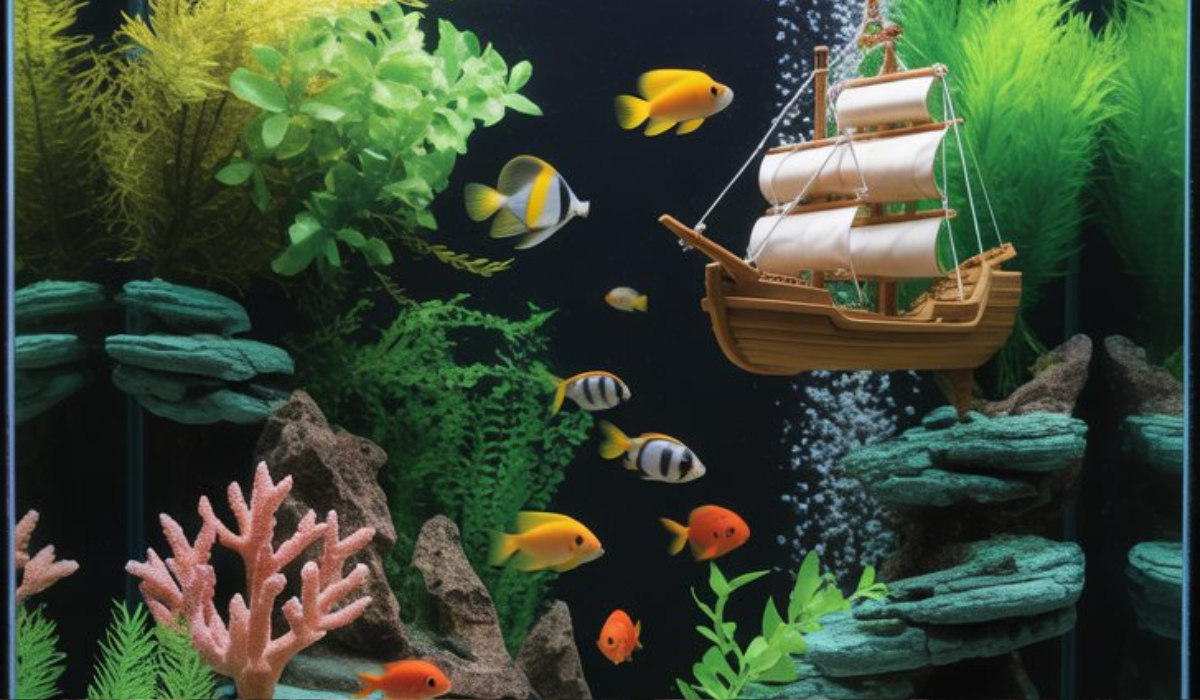
Creating a stunning aquarium is more than just adding fish and filling a tank with water. The real magic begins when you incorporate aquarium decor—the plants, rocks, driftwood, substrates, ornaments, and background elements that make your tank visually appealing and comfortable for its inhabitants. Whether you’re building a peaceful freshwater planted tank, a vibrant guppy habitat, or a sophisticated aquascape, the right decor can transform your aquarium into a breathtaking underwater world.
In this comprehensive guide, you’ll learn everything about aquarium decor—its types, functions, benefits, how to choose the best pieces, how to arrange them, and how to maintain your aquascape for long-term beauty and fish health.
What Is Aquarium Decor?
Aquarium decor refers to any structural or aesthetic item placed inside an aquarium to enhance appearance, simulate natural habitats, or provide functional benefits for fish. This includes:
- Rocks and stones
- Driftwood and branches
- Live and artificial plants
- Substrates (gravel, sand, soil)
- Caves, hides, and shelters
- Background sheets or 3D backgrounds
- Resin ornaments and figures
Good aquarium decor does more than make a tank look pretty—it also supports fish behavior, breeding, stress reduction, and overall well-being.
Why Aquarium Decor Is Important
1. Enhances Fish Comfort and Natural Behavior
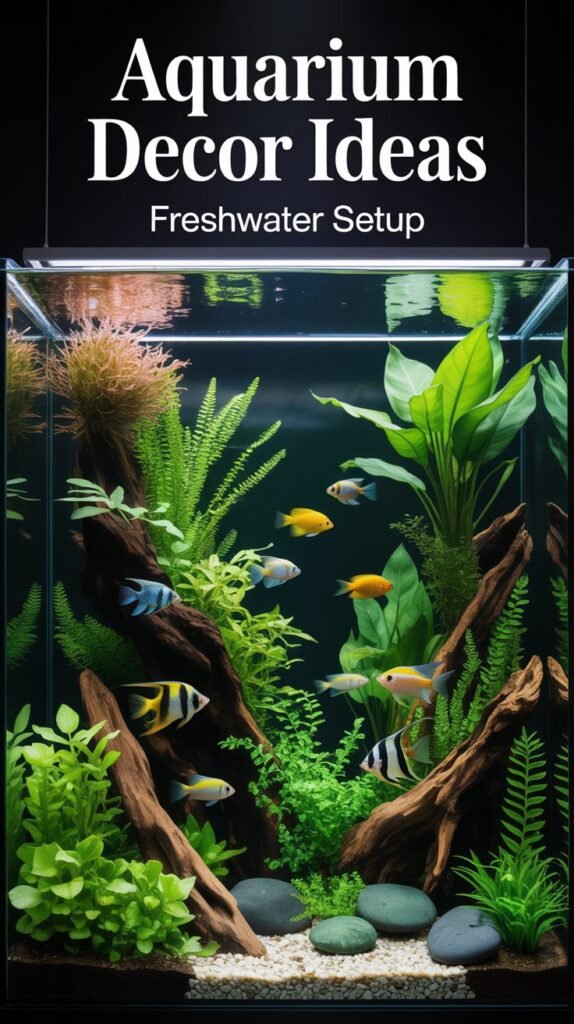
Different fish species feel secure when they have hiding spots, caves, or dense plant cover. Decor mimics natural habitats and encourages behaviors like:
- Foraging
- Breeding
- Territorial displays
- Shoaling and schooling
- Resting
Without proper decor, fish can become stressed, aggressive, or inactive.
2. Increases Aesthetic Appeal
Decor transforms a plain glass box into a living artwork. A well-decorated aquarium creates a relaxing, beautiful environment in your home or office and becomes a point of attraction.
3. Provides Shelter and Territory
Fish like bettas, cichlids, plecos, shrimp, and guppies use decor as personal territory. This helps reduce aggression and overcrowding stress.
4. Improves Biological Filtration
Live plants, rocks, and porous decor harbor beneficial bacteria that help maintain stable water parameters. They support the nitrogen cycle and promote a healthier environment.
5. Promotes Breeding
Many species, such as guppies, mollies, shrimp, and tetras, prefer dense plant cover or caves when breeding. Fry and baby fish survive better in a well-decorated tank.
Types of Aquarium Decor
1. Rocks and Stones
Rocks are essential for creating structure and depth. Common aquarium-safe rocks include:
- Seiryu Stone – Great for aquascaping layouts
- Dragon Stone (Ohko Stone) – Beautiful textures and crevices
- Lava Rock – Light, porous, excellent for beneficial bacteria
- Slate – Perfect for caves and stacked structures
- River Rocks – Smooth, natural aesthetic
Benefits:
- Adds vertical height
- Supports aquascape layouts
- Provides hiding places
- Enhances water chemistry in some cases (e.g., limestone raises hardness)
Avoid rocks that contain metal or minerals that can leach harmful substances.
2. Driftwood
Driftwood is a favorite decor element because it creates a natural and earthy appearance. Popular types include:
- Malaysian Driftwood
- Mopani Wood
- Spider Wood
- Cholla Wood
Benefits:
- Creates natural shelters
- Releases tannins that slightly lower pH
- Provides grazing surfaces for plecos and shrimp
- Works perfectly in planted aquariums
Before adding driftwood, always soak or boil it to remove tannins and ensure it sinks.
3. Live Plants
Live plants are both decorative and functional. Examples include:
- Anubias
- Java Fern
- Amazon Sword
- Vallisneria
- Rotala
- Guppy Grass
- Cryptocoryne
Benefits:
- Oxygenate water
- Absorb nitrates
- Provide shelter for fish and fry
- Enhance the aquascape’s realism
Plants are ideal for beginners and advanced aquascapers alike.
4. Artificial Plants
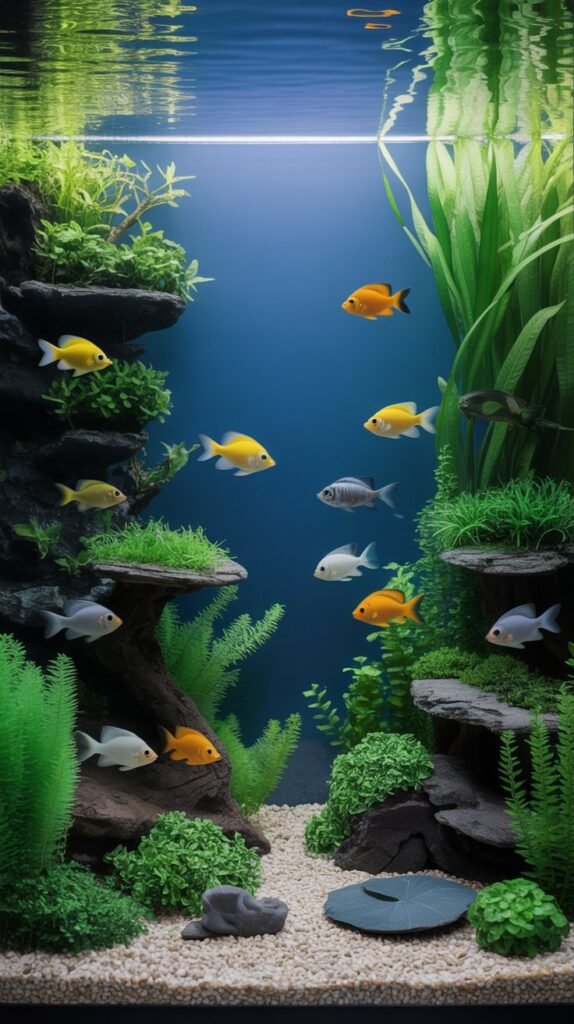
For those who want a low-maintenance setup, artificial plants offer color and texture without needing trimming or fertilizers.
Benefits:
- Cannot die or rot
- Safe for beginners
- Easy to clean
- Perfect for fish that dig heavily, like cichlids
Choose soft-silk options to avoid fin damage.
5. Substrates
Substrate is the base layer of the aquarium and plays a major role in overall design.
Common types:
- Gravel – Best for general freshwater tanks
- Sand – Ideal for bottom dwellers and natural biotopes
- Soil – Nutrient-rich for planted tanks
- Crushed Coral – Raises pH for African cichlids
- Bare Bottom – Preferred for breeding or grow-out tanks
A well-chosen substrate enhances the aquascape’s theme and supports plant growth.
6. Caves and Hiding Structures
Decor like ceramic caves, coconut shells, clay pots, and resin rocks are useful for fish such as:
- Betta fish
- Plecos
- Cichlids
- Loaches
- Shrimp
These shelters make fish feel secure and encourage natural behavior.
7. Backgrounds and 3D Walls
The background of the aquarium sets the tone for the entire aquascape. You can use:
- Printed backgrounds
- Solid color sheets (black and frosted are most popular)
- Textured 3D backgrounds
Benefits:
- Hides cables and equipment
- Increases visual depth
- Creates a professional appearance
How to Choose the Right Aquarium Decor
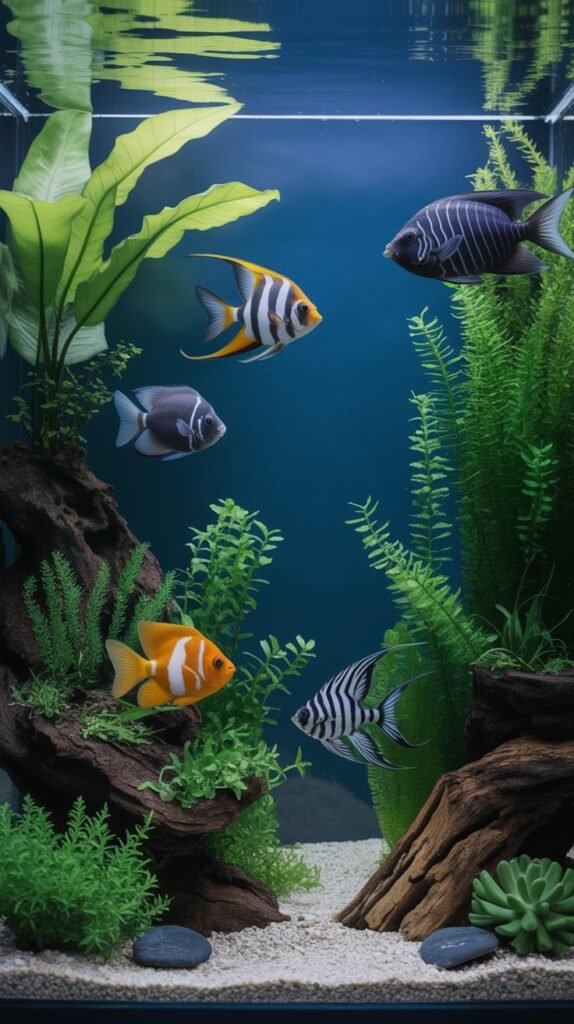
1. Match the Decor to Your Fish Species
Different fish have different needs:
- Guppies and tetras – prefer plants and open swimming areas
- Cichlids – need rocks and caves for territory
- Shrimp – thrive with moss, driftwood, and hiding spots
- Bettas – need gentle plants and caves for resting
Always research your fish before decorating the tank.
2. Consider the Aquarium Size
In small tanks (5–20 gallons), less is more. Too much decor can:
- Reduce swimming space
- Trap debris
- Make cleaning difficult
In large aquariums, you can create dramatic landscapes with:
- Mountain-like rock structures
- Large driftwood roots
- Dense plant arrangements
3. Ensure All Decor Is Aquarium-Safe
Never use items that may:
- Rust
- Leach chemicals
- Change water parameters unpredictably
- Break down over time
Always choose decor specifically labeled as aquarium-safe.
4. Stay Consistent With a Theme
Popular themes include:
- Nature Aquarium – rocks, wood, and plants
- Jungle Style – heavy planting and driftwood
- Biotope – recreates a real habitat
- Minimalist – simple, open layout
- Fantasy – castles, ornaments, colorful structures
A consistent theme enhances beauty and balance.
How to Arrange Aquarium Decor (Step-by-Step)
1. Start With the Hardscape
Hardscape includes rocks, wood, and substrate. These are the foundation of your layout.
- Place large pieces first
- Create height and focal points
- Ensure stability to prevent collapse
- Use the “golden ratio” for visual appeal
2. Add Substrate Layers
Use a mix of:
- Coarse gravel on bottom for drainage
- Soil (if using planted tank)
- Sand or fine gravel on top
Sloping the substrate from back to front increases depth.
3. Plant the Aquarium
Use a combination of:
- Foreground plants (carpet plants)
- Midground plants (bushy species)
- Background plants (tall grasses)
Arrange plants so they grow into a balanced layout.
4. Add Decorations and Shelters
Place caves, hides, or ornaments in areas that do not block swimming paths.
5. Leave Space for Equipment
Make sure filtration, heaters, and air pumps fit without disturbing the design.
Maintenance of Aquarium Decor
1. Clean decor regularly
- Use algae scrapers or brushes
- Boil or soak artificial plants if needed
- Vacuum substrate during water changes
2. Trim live plants
Remove dead leaves, prune stems, and control growth to maintain visual balance.
3. Monitor driftwood and rocks
If tannins or pH levels fluctuate, adjust as needed.
4. Replace worn-out decor
Crumbling or sharp pieces can injure fish.
Common Mistakes to Avoid
- Overcrowding the tank with too many decorations
- Using unsafe or untreated materials
- Choosing decor that blocks water flow
- Mixing incompatible themes
- Adding heavy rocks without securing them
Conclusion
Aquarium decor plays a crucial role in creating a beautiful, healthy, and natural environment for your fish. From rocks and driftwood to plants and backgrounds, each element contributes to the aesthetic appeal and well-being of the tank’s inhabitants. By choosing the right decor and arranging it thoughtfully, you can transform your aquarium into a thriving aquatic ecosystem that brings joy and relaxation.
FAQs About Aquarium Decor
1. Is it necessary to add decor to an aquarium?
Yes. Decor provides shelter, reduces stress, supports natural behavior, and improves aesthetics.
2. Can I use outdoor rocks in my aquarium?
Only if they’re safe, non-metallic, and tested. Many outdoor rocks can alter water chemistry or leach harmful substances.
3. Are artificial plants safe for fish?
Yes, as long as they are made from soft, aquarium-safe materials that do not scratch delicate fins.
4. How often should I clean my aquarium decor?
Clean decor during regular water changes, usually once every two to four weeks.
5. Does driftwood change water chemistry?
Yes. Driftwood can release tannins that slightly lower pH and tint water brown—this is safe for most fish.
6. What is the best decor for guppies?
Live plants, hiding spaces, and gentle driftwood are ideal for guppies and their fry.
7. Can too much decor harm fish?
Overdecorating reduces swimming space and can trap debris, leading to water quality issues.