
 By admin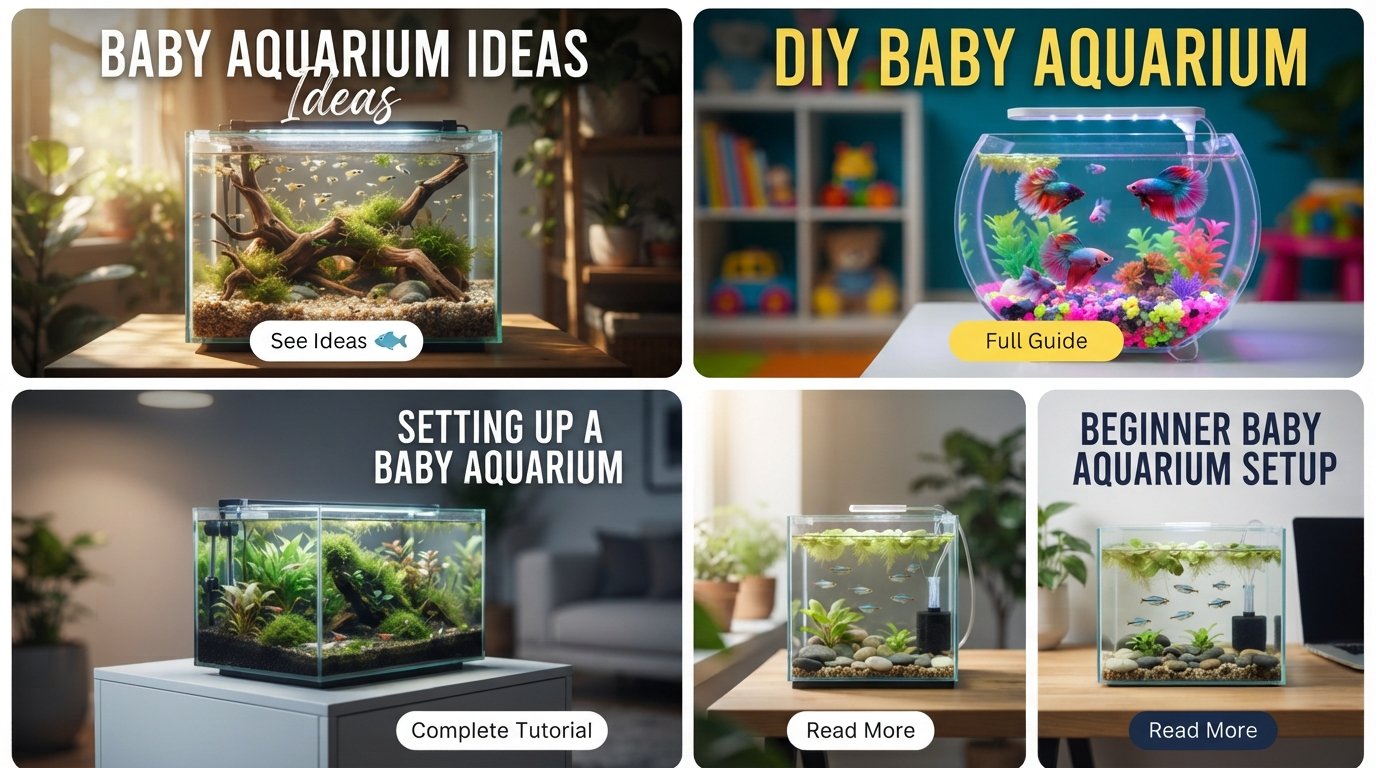
A baby aquarium is a small, carefully designed tank used to raise baby fish, also known as fry. Whether you are breeding guppies, bettas, mollies, or other fish species, a dedicated baby aquarium provides a safe environment where young fish can grow without the risk of being eaten by adult fish.
This guide covers everything you need to know about setting up and maintaining a successful baby aquarium.
What Is a Baby Aquarium?
A baby aquarium is a tank specifically designed for:
- Newborn fish (fry)
- Juvenile fish
- Breeding projects
- Raising young shrimp
- Quarantining delicate fish
Baby aquariums usually have gentle filtration, stable water conditions, and plenty of hiding places.
Why Do Baby Fish Need a Separate Aquarium?
Many adult fish eat their young, even their own offspring. A separate baby aquarium provides several benefits:
- Protects fry from predators
- Makes feeding easier
- Improves survival rates
- Allows better monitoring
- Reduces competition for food
For livebearers like guppies and mollies, a baby tank can dramatically increase the number of fry that survive.
Choosing the Right Tank Size
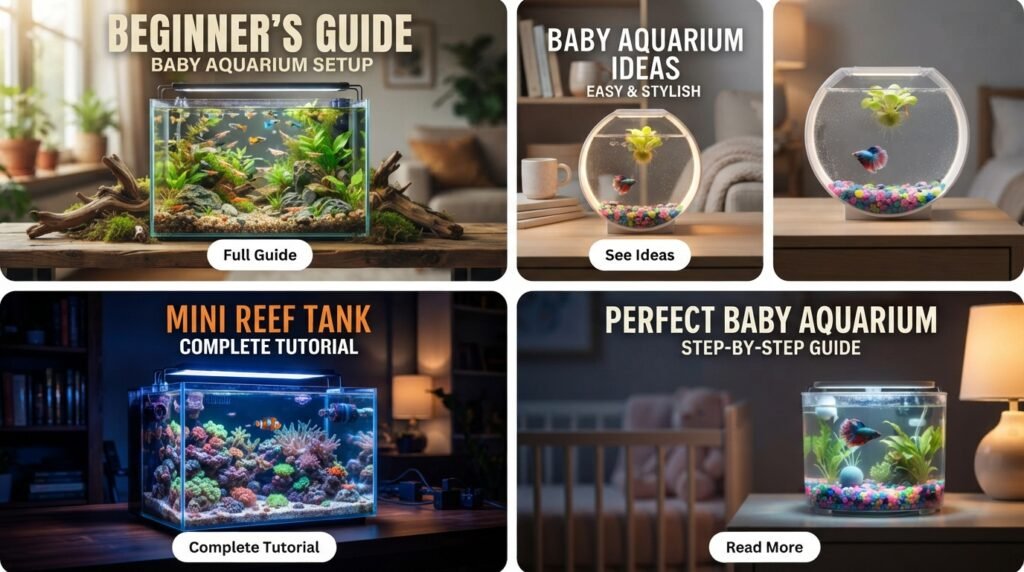
5-Gallon Aquarium
Suitable for:
- Small groups of fry
- Betta fry
- Guppy fry
10-Gallon Aquarium
Perfect for:
- Most breeding projects
- Larger numbers of baby fish
- Beginner fish breeders
20-Gallon Aquarium
Ideal for:
- Multiple batches of fry
- Fast-growing species
- Long-term grow-out tanks
Essential Equipment
Sponge Filter
A sponge filter is one of the best filtration options for baby fish.
Benefits:
- Gentle water flow
- Excellent biological filtration
- Safe for tiny fry
Heater
Most tropical baby fish require stable temperatures.
Thermometer
Helps monitor temperature changes.
Aquarium Light
Moderate lighting is sufficient for most baby tanks.
Best Substrate for a Baby Aquarium
Many breeders prefer:
- Bare-bottom tanks
- Fine sand
- Thin layers of gravel
Bare-bottom tanks are easy to clean and make it easier to monitor the fry.
Best Plants for Baby Fish
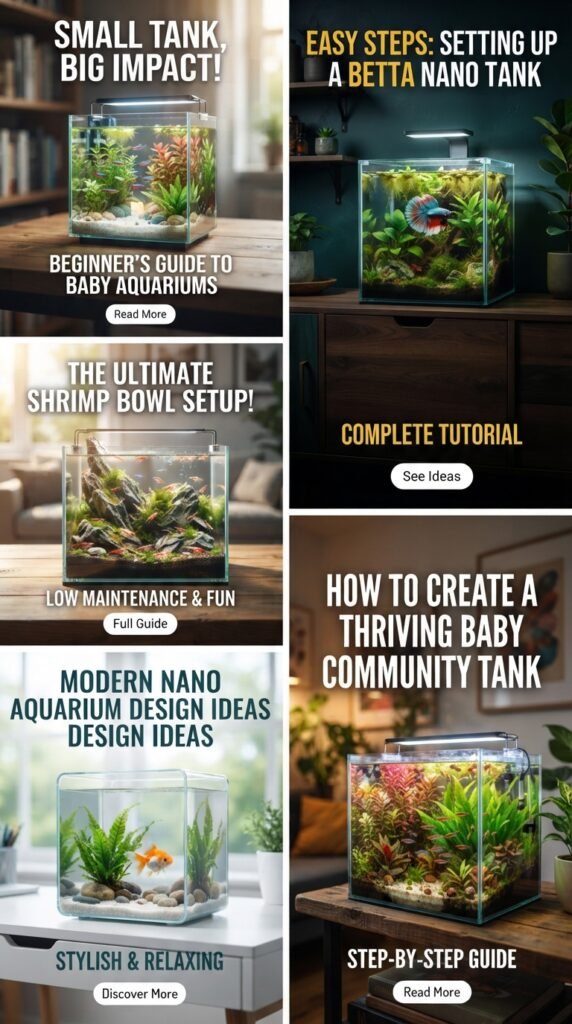
Plants provide hiding places and improve water quality.
Popular choices include:
- Java Moss
- Hornwort
- Guppy Grass
- Water Sprite
- Anacharis
- Floating plants
Dense plants help fry feel secure.
Hiding Places for Baby Fish
Good hiding places include:
- Moss balls
- Fine-leaved plants
- Small caves
- Floating roots
The more hiding spots available, the safer baby fish will feel.
Water Parameters
Stable conditions are extremely important.
| Parameter | Recommended Range |
|---|---|
| Temperature | 75–80°F (24–27°C) |
| pH | 6.8–7.8 |
| Ammonia | 0 ppm |
| Nitrite | 0 ppm |
| Nitrate | Low levels |
Always test water regularly.
Feeding Baby Fish
Baby fish require frequent feeding.
Popular foods include:
- Infusoria
- Baby brine shrimp
- Powdered fry food
- Crushed flakes
- Microworms
Feed small amounts several times per day.
Best Fish for a Baby Aquarium Setup
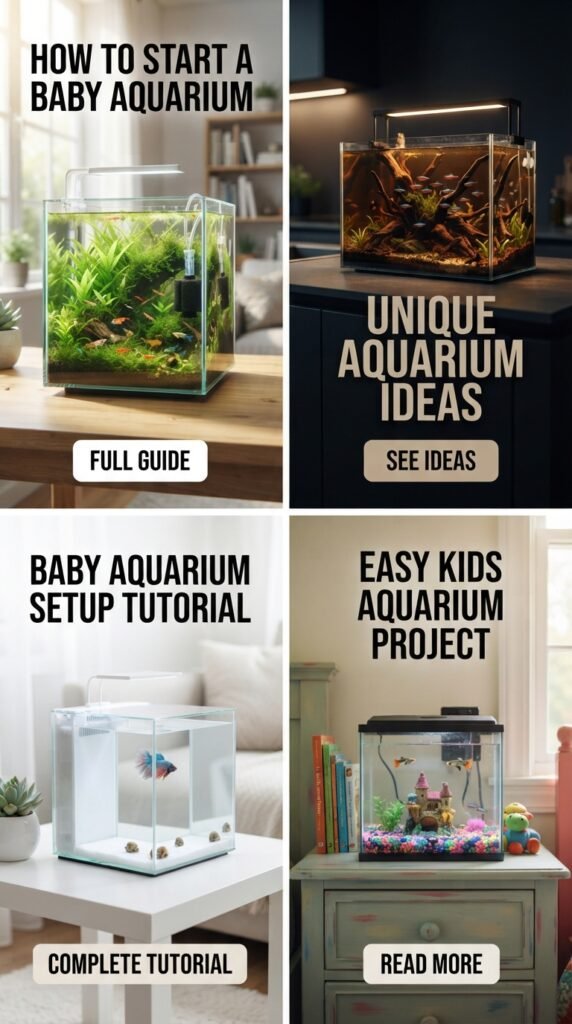
Baby aquariums are commonly used for:
- Guppy fry
- Molly fry
- Platy fry
- Swordtail fry
- Betta fry
- Angelfish fry
Each species has slightly different care requirements.
Aquarium Ideas for Baby Fish
Natural Nursery Tank
Features:
- Live plants
- Sponge filter
- Gentle lighting
Bare-Bottom Breeding Tank
Advantages:
- Easy cleaning
- Better monitoring
- Efficient feeding
Planted Grow-Out Tank
Provides:
- Natural appearance
- Biological filtration
- Hiding places
Maintenance Tips
Perform Frequent Water Changes
Baby fish are sensitive to poor water quality.
Avoid Strong Currents
Tiny fish can struggle in powerful water flow.
Remove Uneaten Food
Prevent water pollution.
Monitor Growth
Separate larger fry if necessary.
Test Water Regularly
Stable conditions improve survival rates.
Common Mistakes to Avoid
Overfeeding
Excess food can quickly pollute the water.
Using Strong Filters
Powerful filters can harm small fry.
Overstocking
Crowded conditions may stunt growth.
Sudden Temperature Changes
Maintain stable water conditions.
Skipping Water Changes
Clean water is essential for healthy development.
When Can Baby Fish Join the Main Aquarium?
Baby fish can usually move to the main aquarium when they are large enough that adult fish cannot eat them.
The exact timing depends on:
- Fish species
- Size of adult fish
- Aquarium conditions
Patience is important to ensure their safety.
Benefits of a Baby Aquarium
A dedicated baby aquarium offers many advantages:
- Higher fry survival rates
- Easier feeding
- Better growth
- Improved monitoring
- Reduced stress
- More successful breeding projects
For fish breeders, a baby aquarium is one of the most valuable tools.
Conclusion
A baby aquarium provides a safe and controlled environment for raising young fish. Whether you’re breeding guppies, mollies, or bettas, a properly designed baby tank can significantly improve the survival and growth of your fry.
By using gentle filtration, maintaining excellent water quality, and providing proper nutrition, you can successfully raise healthy and colorful baby fish that thrive as they mature.
Frequently Asked Questions
What is a baby aquarium?
A baby aquarium is a tank specifically designed for raising baby fish or fry.
What filter is best for baby fish?
Sponge filters are generally considered the safest option.
Do baby fish need plants?
Plants are highly beneficial because they provide hiding places and improve water quality.
How often should baby fish be fed?
Most fry benefit from several small feedings each day.
Can baby fish stay with adult fish?
Many species should be separated because adults may eat the fry.
What size tank is best for raising fry?
A 10-gallon aquarium is an excellent choice for most beginner fish breeders.