
 By weeebooo70@gmail.com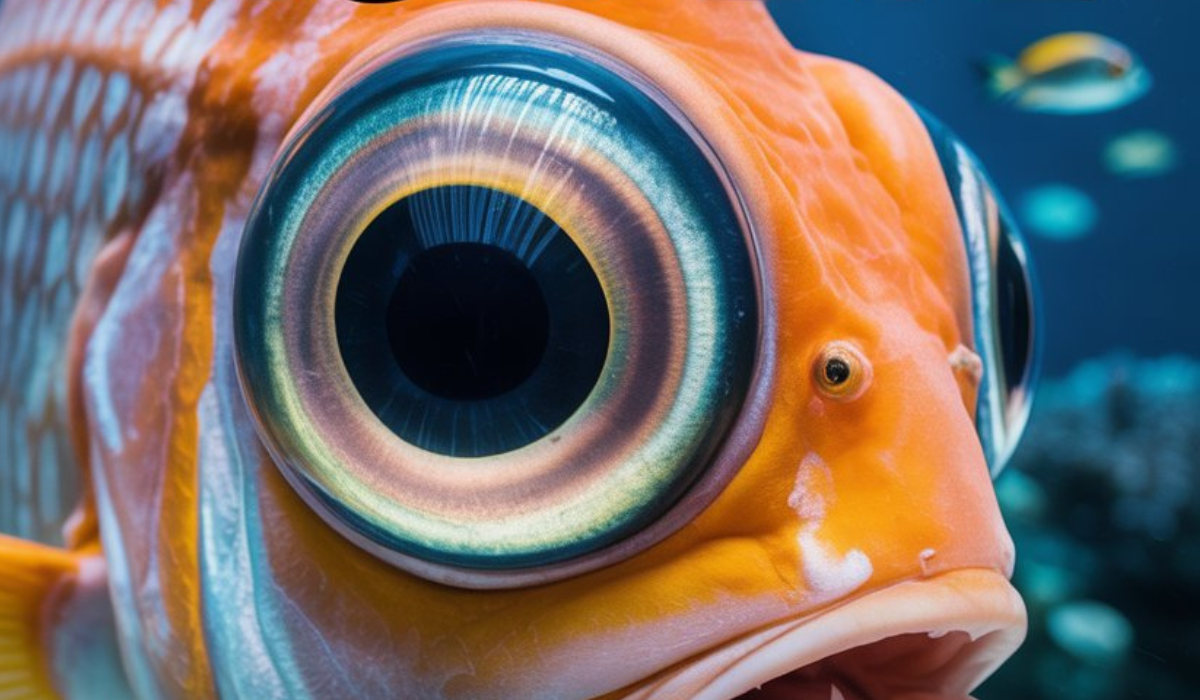
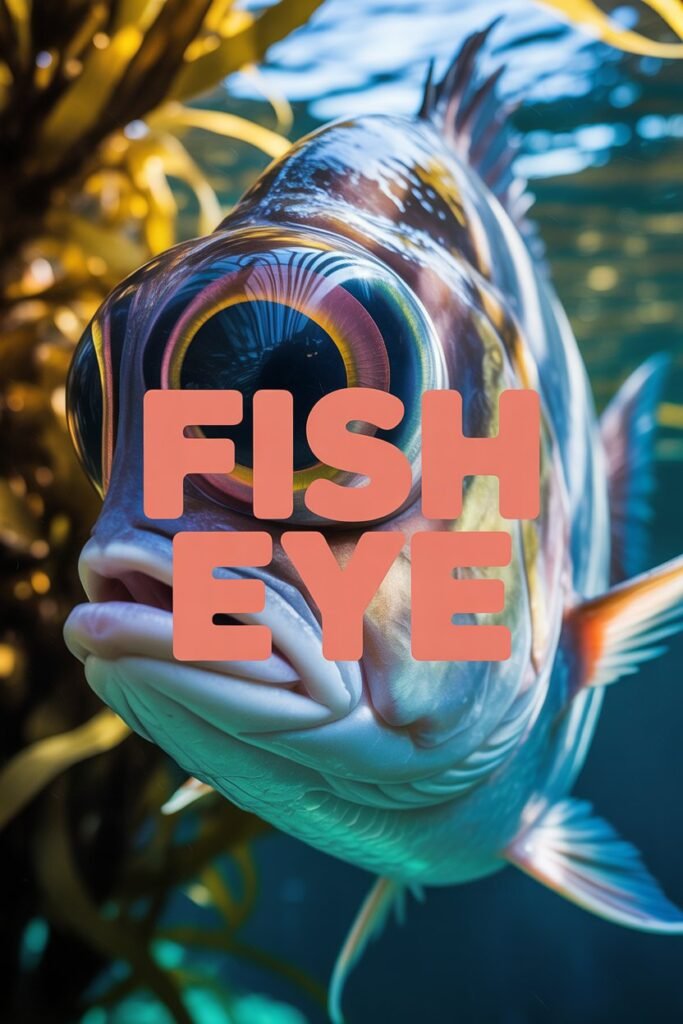
Fish eyes are specially adapted organs that allow fish to see clearly in underwater environments. Vision is extremely important for fish because they rely on it to find food, avoid predators, navigate their surroundings, and communicate with other fish. Although fish eyes may look similar to human eyes at first glance, they have several unique features that make them perfectly suited for life in water.
This article explores how fish eyes work, their structure, how fish see the world, and some fascinating facts about fish vision.
What Is a Fish Eye?
A fish eye is the visual organ that allows fish to detect light, movement, shapes, and colors underwater. Fish eyes are designed to function efficiently in water, which bends light differently than air.
Unlike human eyes, fish eyes are typically more rounded and have a large lens that helps focus light correctly underwater. Because of this adaptation, fish can often see clearly in conditions where humans would struggle.
Structure of a Fish Eye
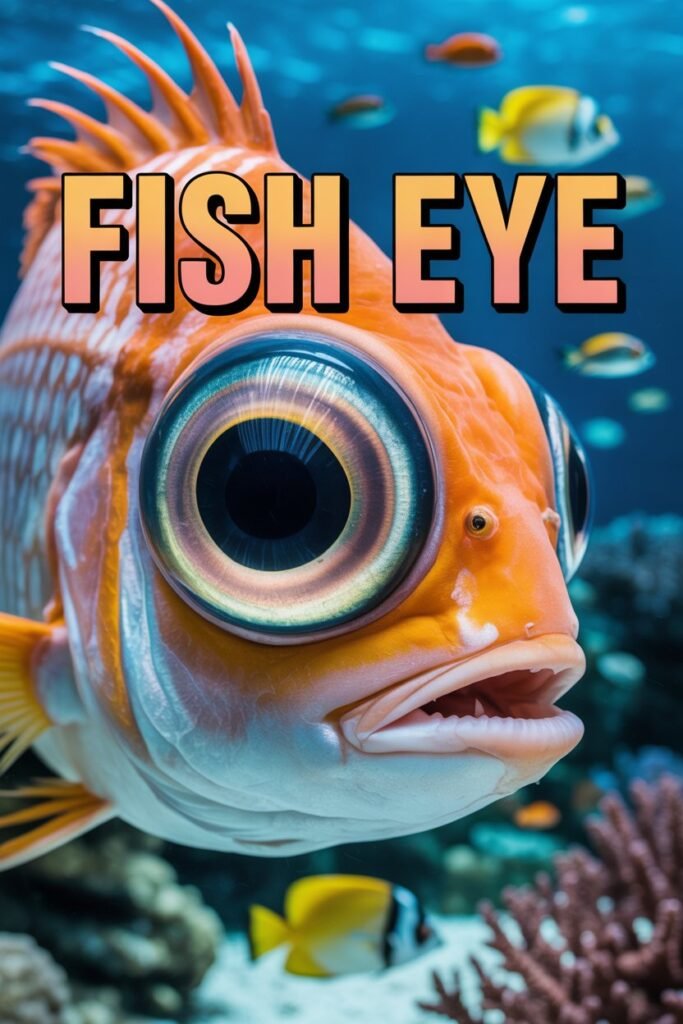
The basic structure of a fish eye is similar to other vertebrates, but with important differences.
Cornea
The cornea is the outer transparent layer of the eye. In fish, the cornea plays a smaller role in focusing light because water and the cornea have similar densities.
Lens
The lens is the most important focusing part of a fish eye. Fish lenses are round and dense, which helps them focus light underwater. Instead of changing shape like human lenses, fish move the lens backward and forward to focus.
Retina
The retina contains light-sensitive cells that detect images. It converts light into signals that travel to the brain through the optic nerve.
Many fish have specialized retinas that help them see in low-light environments.
Pupil
The pupil controls how much light enters the eye. In many fish species, the pupil does not change size as dramatically as in humans.
How Fish See Underwater
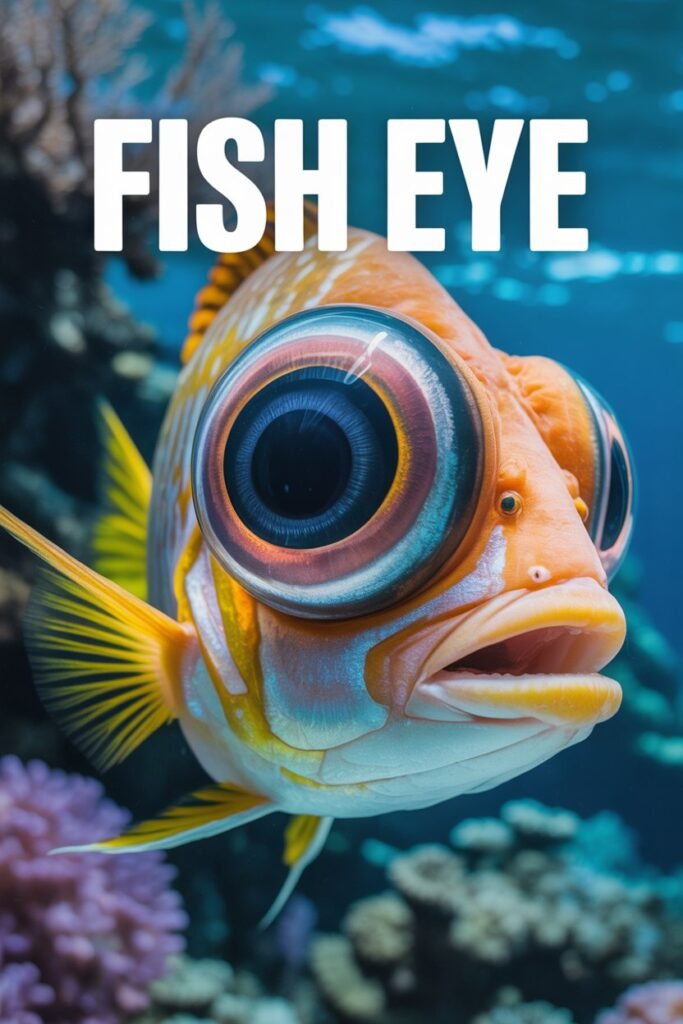
Water changes the way light travels, so fish eyes evolved to adapt to this environment. The spherical lens helps focus light correctly underwater, giving fish clear vision.
Some fish have excellent eyesight and can detect tiny movements. This ability helps them catch prey and avoid predators.
Fish living in shallow water often have better color vision, while deep-sea fish rely more on light sensitivity.
Do Fish See Color?
Many fish species can see colors. In fact, some fish may see a wider range of colors than humans.
Species such as the Mandarinfish are known for their bright colors, which suggests that fish can recognize and respond to colorful patterns.
Color vision helps fish identify mates, find food, and recognize members of their own species.
Fish Vision in Different Environments
Fish eyes vary depending on the habitat where they live.
Freshwater Fish
Freshwater fish often live in rivers, lakes, and ponds where lighting conditions can change quickly. Many of these fish have eyes adapted for detecting movement in murky water.
Species such as the Neon Tetra use bright coloration to communicate and stay together in schools.
Deep-Sea Fish
Fish living deep in the ocean face extremely low light levels. Many deep-sea fish have very large eyes or highly sensitive retinas that allow them to detect faint light.
Some species can even detect bioluminescent light produced by other marine organisms.
Surface Fish
Fish that swim near the water surface can see both underwater and above the surface. This allows them to detect insects, birds, and other predators.
Can Fish See in the Dark?
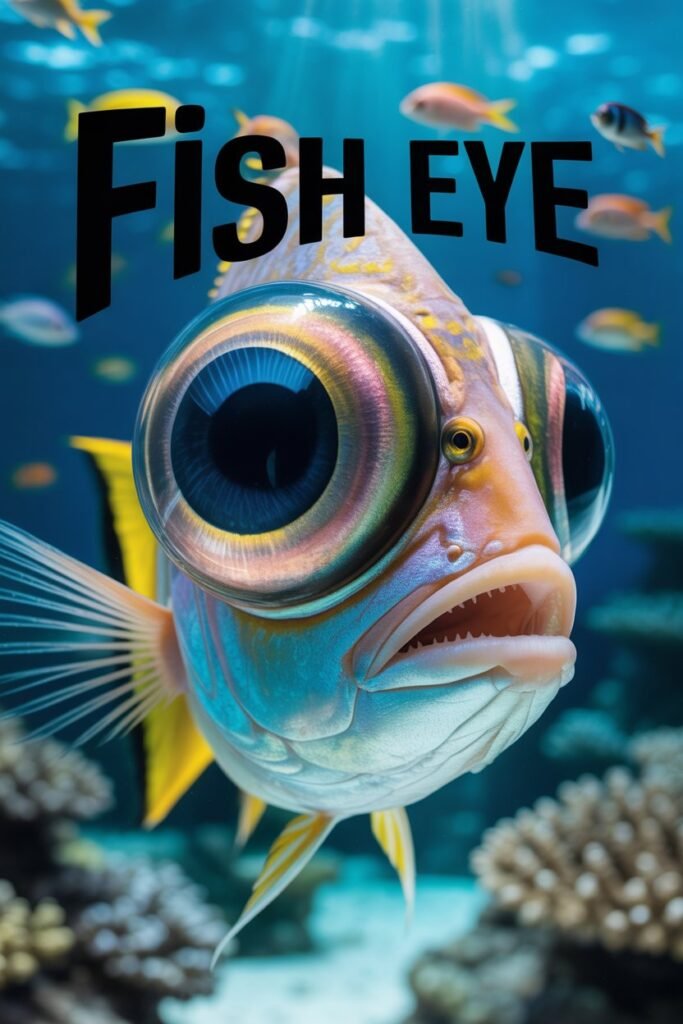
Fish cannot see in complete darkness, but many species can see extremely well in low-light conditions.
Some fish have specialized cells in their eyes that increase sensitivity to light. This helps them hunt or navigate at night or in deep water.
Fish Eye Movement
Unlike humans, fish cannot move their eyes very much. Instead, they move their entire body to look around. Because many fish have eyes positioned on the sides of their head, they have a wide field of vision.
This wide vision helps fish detect predators approaching from different directions.
Why Fish Have Bulging Eyes
Many fish have eyes that appear large or slightly bulging. This design improves their field of view and allows them to see more of their surroundings without moving their head.
For example, the Goldfish has large eyes that help it detect movement in aquariums or ponds.
Some ornamental goldfish varieties even have extremely large eyes due to selective breeding.
Fish Eye Health Problems
Just like other animals, fish can develop eye-related health problems.
One common condition is called popeye, where the fish’s eye becomes swollen or protrudes outward. This can be caused by infections, poor water quality, or injuries.
Maintaining clean water and a healthy environment is important for preventing eye problems in aquarium fish.
Interesting Facts About Fish Eyes
Fish cannot blink because they do not have eyelids.
Many fish can see almost 180 degrees around them because their eyes are located on the sides of their heads.
Some fish can see ultraviolet light, which helps them locate food or communicate with other fish.
Deep-sea fish may have extremely large eyes to capture as much light as possible.
Certain species can adjust their vision depending on whether they are in bright sunlight or dim underwater environments.
Fish Eyes in Aquariums
Aquarium owners often notice that fish seem to watch movement outside the tank. Fish can detect motion through the glass and may respond to feeding times or human presence.
Keeping aquarium lighting balanced and maintaining good water quality helps protect fish eyesight and overall health.
Frequently Asked Questions
Can fish see humans?
Yes, many fish can see humans outside the aquarium. They often learn to recognize people who feed them.
Do fish close their eyes?
Fish do not close their eyes because they lack eyelids. Their eyes remain open all the time.
Why are fish eyes so large?
Large eyes allow fish to gather more light and detect movement more effectively underwater.
Can fish see at night?
Many fish can see in very dim light but not in complete darkness.
Do all fish see colors?
Many fish see colors, but the ability varies by species and environment.
Final Thoughts
Fish eyes are remarkable adaptations that allow fish to survive in diverse underwater environments. From detecting predators to finding food and recognizing mates, vision plays a crucial role in fish behavior and survival. Their round lenses, wide viewing angles, and light-sensitive retinas make fish eyes perfectly suited for life beneath the water’s surface.