
 By weeebooo70@gmail.com
A fish tank filter is one of the most important pieces of equipment in any aquarium, whether you keep a small bowl with a single fish or a large community tank with dozens of species. Many beginners focus on fish, decorations, and lighting, but filtration is what truly keeps an aquarium healthy, stable, and clear.
Without a proper fish tank filter, waste builds up quickly, water quality drops, and fish become stressed or sick. In this complete guide, you will learn what a fish tank filter is, how it works, why it is essential, and how to choose the right one for your aquarium. We will also explore all types of fish tank filters, their pros and cons, and how to maintain them for long-term success.
What Is a Fish Tank Filter?
A fish tank filter is a device designed to remove waste, toxins, and debris from aquarium water while also supporting beneficial bacteria. These bacteria play a vital role in breaking down harmful substances such as ammonia and nitrites, which are produced by fish waste, uneaten food, and decaying plant matter.
In simple words, a fish tank filter:
- Keeps water clean and clear
- Removes harmful chemicals
- Improves oxygen circulation
- Creates a healthy environment for fish
A good filter mimics the natural purification process found in rivers and lakes, allowing fish to thrive in a closed aquarium system.
Why a Fish Tank Filter Is Essential
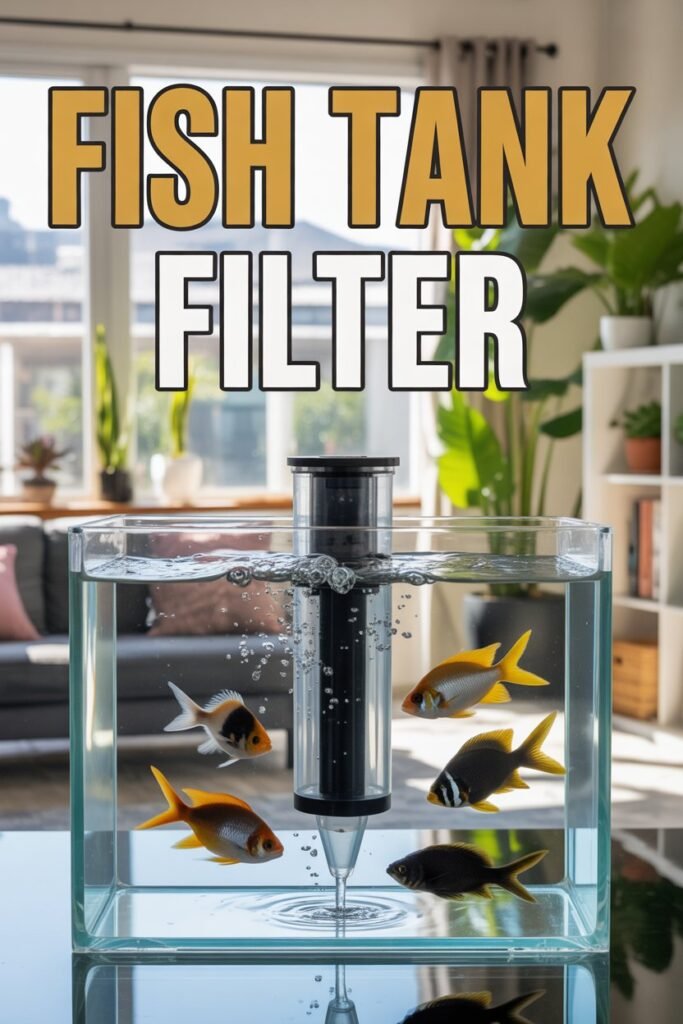
Many people ask whether a fish tank filter is really necessary. The answer is yes, especially for most modern aquariums.
1. Maintains Water Quality
Fish constantly release waste into the water. Without a filter, toxins accumulate rapidly, making the water unsafe.
2. Prevents Fish Stress and Disease
Dirty water stresses fish, weakens their immune system, and increases the risk of disease outbreaks.
3. Supports Beneficial Bacteria
A fish tank filter provides a surface for beneficial bacteria to grow, completing the nitrogen cycle.
4. Improves Oxygen Levels
Most filters create surface movement, helping oxygen dissolve into the water.
5. Reduces Maintenance Effort
With a proper filter, water stays cleaner for longer, reducing the frequency of water changes.
How a Fish Tank Filter Works
A fish tank filter usually performs three main types of filtration:
Mechanical Filtration
This removes visible debris such as fish waste, uneaten food, and plant matter using sponges or filter pads.
Biological Filtration
This is the most important type. Beneficial bacteria grow on filter media and convert toxic ammonia into less harmful substances.
Chemical Filtration
This removes dissolved impurities using materials like activated carbon, which helps eliminate odors, discoloration, and chemicals.
Most modern fish tank filters combine all three filtration methods.
Types of Fish Tank Filters
There are several types of fish tank filters available, each designed for different tank sizes, fish species, and setups. Below is a detailed explanation of all types of fish tank filters.
1. Hang-On-Back (HOB) Fish Tank Filter
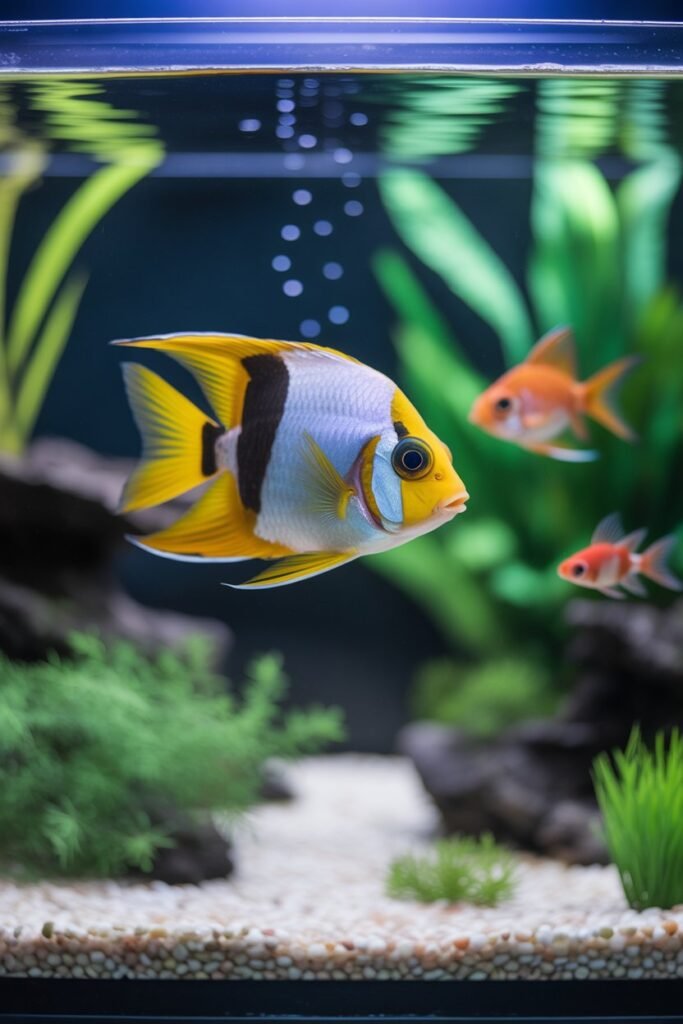
A hang-on-back fish tank filter hangs on the rear wall of the aquarium and draws water up through an intake tube.
Advantages:
- Easy to install and maintain
- Affordable and widely available
- Suitable for beginners
- Good mechanical and biological filtration
Disadvantages:
- Visible from outside the tank
- Can be noisy if water level drops
Best for small to medium aquariums and community tanks.
2. Internal Fish Tank Filter
An internal fish tank filter is placed entirely inside the aquarium, usually attached to the glass with suction cups.
Advantages:
- Compact and quiet
- Ideal for small tanks and quarantine tanks
- Easy to clean
Disadvantages:
- Takes up space inside the tank
- Limited filtration power for large aquariums
Best for nano tanks, hospital tanks, and betta aquariums.
3. Sponge Fish Tank Filter
A sponge fish tank filter uses air pressure to pull water through a sponge, trapping debris and housing beneficial bacteria.
Advantages:
- Excellent biological filtration
- Gentle water flow
- Safe for fry and shrimp
- Very affordable
Disadvantages:
- Limited mechanical filtration
- Requires an air pump
Best for breeding tanks, shrimp tanks, and fry tanks.
4. Canister Fish Tank Filter
A canister fish tank filter is a powerful external filter placed below the aquarium and connected with hoses.
Advantages:
- High filtration capacity
- Suitable for large tanks
- Customizable filter media
- Very efficient and quiet
Disadvantages:
- More expensive
- Requires careful setup and maintenance
Best for large aquariums, planted tanks, and heavily stocked tanks.
5. Undergravel Fish Tank Filter
An undergravel fish tank filter sits beneath the substrate and pulls water through the gravel.
Advantages:
- Hidden from view
- Uses gravel as biological media
- Low cost
Disadvantages:
- Difficult to clean
- Not suitable for planted tanks
- Can trap debris in substrate
Best for simple setups with low bioload.
6. Power Fish Tank Filter
A power fish tank filter is an electrically driven filter that offers strong water circulation and filtration.
Advantages:
- Strong mechanical filtration
- Adjustable flow in some models
- Reliable performance
Disadvantages:
- May create strong currents
- Higher energy consumption
Best for active fish species that enjoy water movement.
7. Wet/Dry Fish Tank Filter
A wet/dry fish tank filter exposes filter media to air, increasing oxygen and bacterial efficiency.
Advantages:
- Excellent biological filtration
- Ideal for high bioload tanks
- Stable water parameters
Disadvantages:
- More complex setup
- Requires space under the tank
Best for advanced aquariums and large systems.
Choosing the Right Fish Tank Filter
When selecting a fish tank filter, consider the following factors:
Tank Size
Choose a filter rated for your tank size or slightly larger.
Fish Type
Delicate fish need gentle flow, while active fish tolerate stronger currents.
Stocking Level
Heavily stocked tanks require more powerful filtration.
Freshwater or Saltwater
Some filters are better suited for saltwater systems.
Maintenance Preference
Choose a filter you can clean easily and regularly.
How to Set Up a Fish Tank Filter
- Rinse all filter components with clean water
- Install the filter according to manufacturer instructions
- Place filter media in correct order
- Fill the tank with water
- Plug in and test the filter
- Adjust water flow if possible
Never wash filter media with tap water containing chlorine, as it can kill beneficial bacteria.
Fish Tank Filter Maintenance Tips
- Clean mechanical media every 2–4 weeks
- Replace chemical media only when needed
- Never replace all filter media at once
- Monitor water flow regularly
- Perform regular water changes
Proper maintenance ensures long filter life and stable water quality.
Common Fish Tank Filter Mistakes
- Using an undersized filter
- Overcleaning filter media
- Turning off the filter for long periods
- Ignoring unusual noises
- Not cycling the aquarium properly
Avoiding these mistakes will keep your aquarium healthy.
Benefits of Using a High-Quality Fish Tank Filter
- Clear and odor-free water
- Healthier fish
- Stable aquarium ecosystem
- Reduced algae growth
- Less frequent maintenance
A good fish tank filter is an investment in your fish’s well-being.
Fish Tank Filter FAQs
What size fish tank filter do I need?
Choose a filter that can process at least 4–6 times your tank’s water volume per hour.
Can I use more than one fish tank filter?
Yes, using multiple filters can improve filtration and provide backup protection.
How often should I clean my fish tank filter?
Most filters should be cleaned every 2 to 4 weeks, depending on tank load.
Can fish live without a fish tank filter?
Fish can survive short-term without a filter, but long-term health requires proper filtration.
Is a sponge fish tank filter enough?
For small tanks, fry tanks, or shrimp tanks, a sponge fish tank filter can be sufficient.
Does a fish tank filter remove ammonia?
Indirectly, yes. The beneficial bacteria in the filter convert ammonia into less harmful substances.
Should I turn off my fish tank filter at night?
No, a fish tank filter should run continuously to maintain water quality.
Final Thoughts
A fish tank filter is the heart of any successful aquarium. Whether you are a beginner or an experienced aquarist, choosing the right filter and maintaining it properly will make a huge difference in water quality and fish health. By understanding the different types of fish tank filters and how they work, you can create a clean, stable, and beautiful aquatic environment that your fish will thrive in.