
 By weeebooo70@gmail.com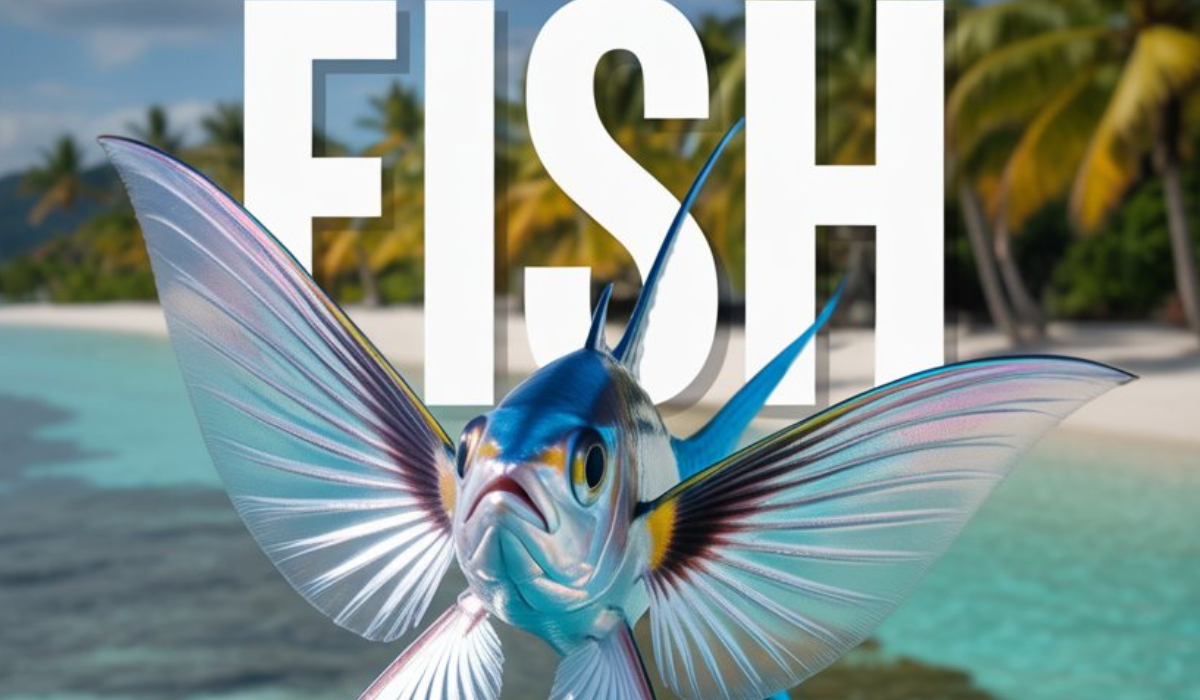
The Flying fish is one of the most extraordinary creatures in the ocean. Famous for its ability to glide above the water, this fish appears to “fly” across the sea surface. While it does not truly fly like birds, its gliding skill is an amazing survival adaptation that has fascinated people for centuries.
In this complete guide, you will learn everything about flying fish, including their behavior, habitat, diet, and unique abilities.
What Is a Flying Fish
Flying fish are a group of marine fish belonging to the family Exocoetidae. There are more than 60 species of flying fish found in oceans around the world.
They are known for their long, wing-like pectoral fins, which allow them to glide above the water. This ability helps them escape predators and travel quickly across the ocean surface.
Flying fish are usually small to medium in size and have streamlined bodies designed for speed.
Why Are They Called Flying Fish
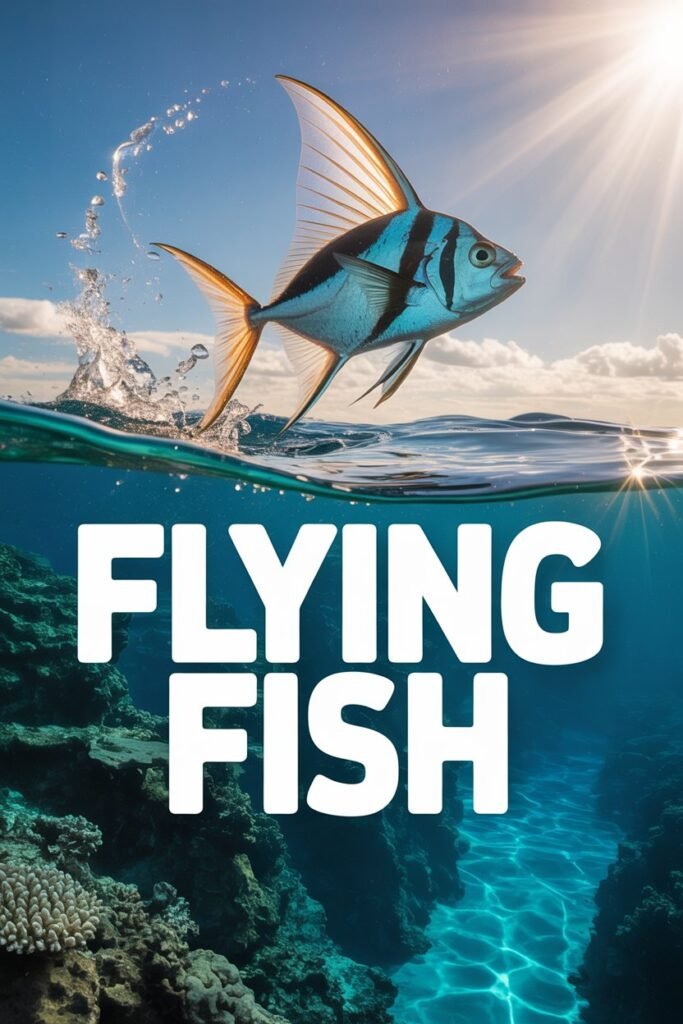
Flying fish are named for their ability to leap out of the water and glide through the air.
However, they do not flap their fins like birds. Instead, they use a combination of speed and air resistance to stay airborne.
Their movement is more accurately described as gliding rather than true flight.
How Flying Fish Glide
The gliding process of flying fish is both simple and fascinating.
First, the fish swims very fast underwater, building up speed. Then it launches itself out of the water and spreads its large fins like wings.
Once in the air, it can glide for distances of up to 50 meters or more. Some species can even touch the water surface with their tail to gain extra speed and extend their glide.
This ability allows them to escape predators such as larger fish, dolphins, and seabirds.
Physical Characteristics
Flying fish have several unique features that help them glide.
- Large wing-like pectoral fins
- Streamlined body shape
- Forked tail for powerful swimming
- Lightweight body structure
Some species also have enlarged pelvic fins, giving them a “four-winged” appearance.
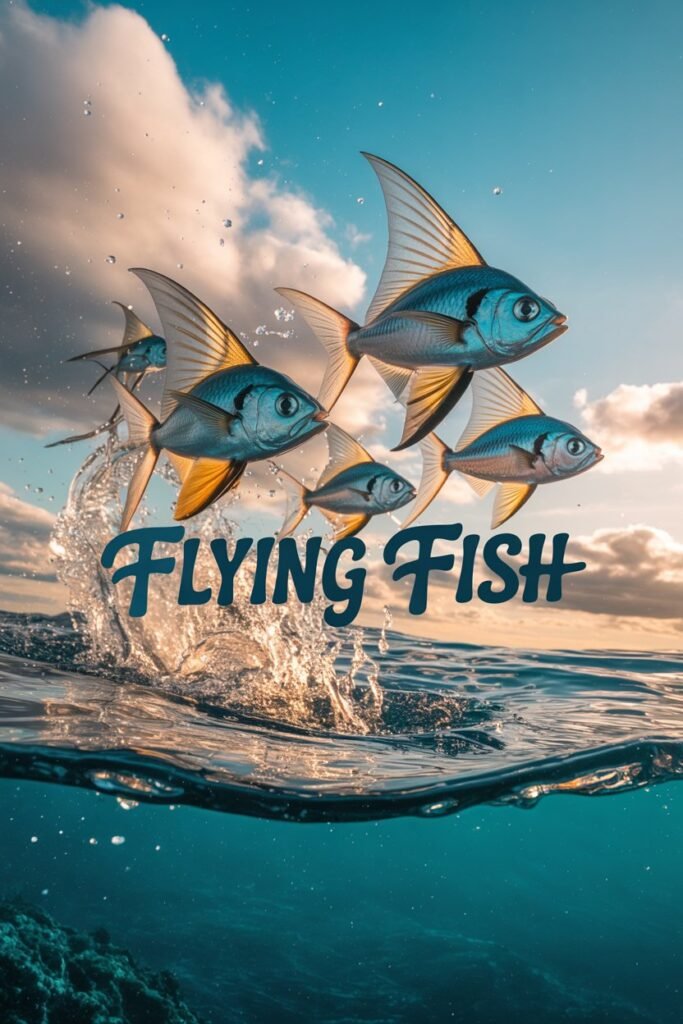
Their colors are usually blue or silver, which helps them blend into the ocean and avoid predators.
Habitat
Flying fish are found in warm tropical and subtropical oceans around the world.
They are commonly seen in:
- Pacific Ocean
- Atlantic Ocean
- Indian Ocean
They usually stay near the surface of the water, where they can quickly escape into the air when threatened.
Diet
Flying fish are omnivores and feed on small organisms found near the ocean surface.
Their diet includes:
- Plankton
- Small crustaceans
- Tiny fish
- Algae
They play an important role in the marine food chain, serving as both predators and prey.
Behavior
Flying fish are active and alert creatures.
They often swim in schools, which provides safety in numbers. When threatened, a group of flying fish may leap out of the water at the same time, creating a spectacular sight.
Their gliding behavior is mainly used as a defense mechanism rather than for regular movement.
Predators
Flying fish have many natural predators.
These include:
- Larger fish like tuna and mahi-mahi
- Dolphins
- Seabirds
Even while gliding, they are not completely safe, as birds can catch them in mid-air.
Reproduction
Flying fish reproduce by laying eggs.
Females release eggs into the water, which attach to floating objects such as seaweed or debris.
The eggs develop and hatch into small fish, which grow quickly in the warm ocean environment.
Lifespan
Flying fish generally have a short lifespan.
- Average lifespan: around 3 to 5 years
Their life cycle is fast, which helps maintain their population despite many predators.
Flying Fish and Humans
Flying fish are important to humans in several ways.
In some regions, they are used as food and are considered a delicacy.
They are also a popular attraction for tourists and sailors, who enjoy watching them glide over the water.
In places like the Caribbean, flying fish are part of local culture and cuisine.
Interesting Facts About Flying Fish
- They can glide up to 50 meters or more
- Some species can stay airborne for several seconds
- They cannot truly fly like birds
- They use speed and fin structure to glide
- They often travel in groups for protection
Why Flying Fish Are Unique
Flying fish are unique because they have adapted to both water and air environments.
Their gliding ability is a perfect example of evolution, helping them survive in a world full of predators.
Very few fish species have developed such an advanced escape mechanism.
Conclusion
Flying fish are truly remarkable creatures that combine speed, agility, and unique adaptations. Their ability to glide above the ocean makes them one of the most fascinating species in marine life.
Whether you see them in the wild or learn about them through science, flying fish remind us of the incredible diversity and creativity of nature.
FAQs
Can flying fish really fly?
No, they glide through the air but do not have powered flight like birds.
How far can flying fish glide?
They can glide up to 50 meters or more depending on the species.
Where are flying fish found?
They live in tropical and subtropical oceans around the world.
Why do flying fish jump out of the water?
They do this to escape predators.
Are flying fish edible?
Yes, they are eaten in many parts of the world and are considered a delicacy in some regions.