
 By weeebooo70@gmail.com
A pre filter sponge is one of the most underrated yet highly effective aquarium accessories. While it may look simple, this small piece of sponge can dramatically improve water quality, protect fish, extend filter life, and make aquarium maintenance much easier. From nano tanks to large aquariums, a pre filter sponge is a smart addition for both beginners and experienced aquarists.
In this detailed guide, you will learn everything about pre filter sponges, including what they are, how they work, different types, benefits, proper usage, maintenance tips, and how to choose the best one for your aquarium.
What Is a Pre Filter Sponge?
A pre filter sponge is a porous sponge placed over the intake tube of an aquarium filter. Its primary job is to trap debris before it enters the main filter.
By stopping waste early, a pre filter sponge:
- Prevents debris from clogging the filter
- Protects fish, shrimp, and fry
- Adds extra biological filtration
- Improves overall water quality
Pre filter sponges are compatible with most aquarium filter types and tank sizes.
Why a Pre Filter Sponge Is Important
Aquarium filters pull water directly from the tank. Without a pre filter sponge, uneaten food, plant debris, fish waste, and even small fish can be sucked into the filter.
A pre filter sponge acts as a first line of defense by:
- Catching large particles
- Reducing strain on the filter motor
- Maintaining steady water flow
- Preventing livestock loss
This makes it an essential accessory for many aquariums.
How a Pre Filter Sponge Works
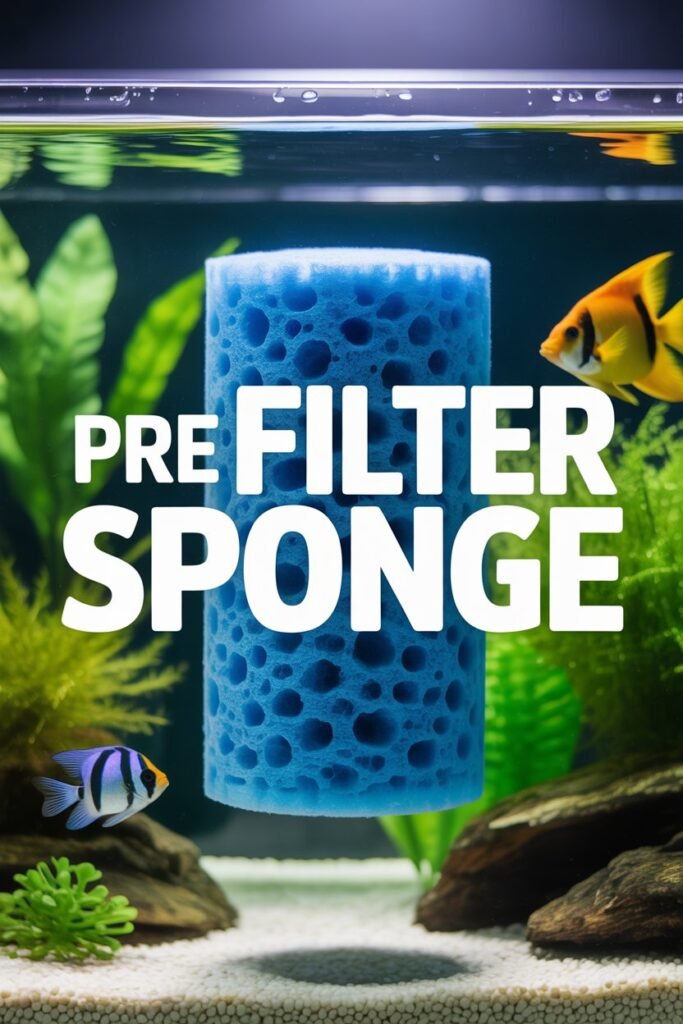
A pre filter sponge works through mechanical and biological filtration.
Mechanical Filtration
The sponge traps:
- Uneaten food
- Fish waste
- Plant debris
- Floating particles
Biological Filtration
Beneficial bacteria colonize the sponge surface and help break down:
- Ammonia
- Nitrites
Over time, the pre filter sponge becomes a valuable biological filter.
Types of Pre Filter Sponges
Pre filter sponges come in various types and designs to suit different aquarium setups.
Intake Tube Pre Filter Sponge
This is the most common type.
Features:
- Slides directly onto the intake tube
- Easy to install and remove
- Available in multiple sizes
Best For:
- Hang-on-back filters
- Internal filters
- Canister filter intakes
Cylindrical Pre Filter Sponge
These sponges have a tube-like shape with a hole in the center.
Features:
- Large surface area
- High debris-holding capacity
- Durable design
Best For:
- Medium to large aquariums
- High bioload tanks
Fine Pore Pre Filter Sponge
Fine pore sponges have tightly packed foam.
Features:
- Excellent debris trapping
- Protects very small fry and shrimp
Best For:
- Shrimp tanks
- Breeding aquariums
- Fry tanks
Coarse Pore Pre Filter Sponge
Coarse sponges allow higher water flow.
Features:
- Less clogging
- Strong water circulation
- Easy cleaning
Best For:
- Large fish tanks
- Goldfish aquariums
- High flow filters
Dual-Layer Pre Filter Sponge
These sponges combine fine and coarse layers.
Features:
- Balanced filtration
- Long-lasting performance
Best For:
- Community tanks
- Mixed fish sizes
Benefits of Using a Pre Filter Sponge
Protects Fish, Fry, and Shrimp
Pre filter sponges prevent small or weak fish from being sucked into the filter.
Extends Filter Life
By stopping debris early, the main filter stays cleaner longer.
Improves Water Quality
Extra biological filtration stabilizes the nitrogen cycle.
Reduces Maintenance
Filters need less frequent cleaning.
Controls Water Flow
Helps reduce strong suction in small tanks.
Limitations of a Pre Filter Sponge
While very useful, pre filter sponges have some limitations:
- Require regular cleaning
- Can reduce flow if clogged
- May look less aesthetic
- Not a replacement for full filtration
Used correctly, these limitations are easy to manage.
Pre Filter Sponge for Different Aquarium Types
Freshwater Aquariums
Ideal for community tanks, goldfish tanks, and planted aquariums.
Shrimp Aquariums
Essential for protecting baby shrimp and preventing losses.
Betta Fish Tanks
Helps reduce strong water flow that can stress bettas.
Breeding Tanks
Protects fry and improves biological stability.
Planted Aquariums
Prevents plant debris from clogging filters.
Saltwater Aquariums
Can be used but requires more frequent cleaning.
Pre Filter Sponge and Filter Compatibility
Pre filter sponges work with:
- Hang-on-back filters
- Internal aquarium filters
- Canister filter intakes
- Powerhead intakes
They are not typically used on sponge filters since those already act as pre filters.
How to Choose the Right Pre Filter Sponge
Intake Size
Measure your filter intake tube diameter.
Sponge Pore Size
- Fine pore for shrimp and fry
- Coarse pore for large fish
Tank Bioload
Heavily stocked tanks benefit from larger sponges.
Flow Rate
Choose a sponge that doesn’t restrict water movement too much.
How to Install a Pre Filter Sponge
- Rinse the sponge with aquarium water
- Slide it over the intake tube
- Ensure a snug but not forced fit
- Check water flow after installation
Installation takes only a few seconds.
How to Clean a Pre Filter Sponge
Cleaning Frequency
- Every 1–2 weeks in most tanks
- More often in heavily stocked aquariums
Proper Cleaning Method
- Remove sponge carefully
- Rinse in old tank water
- Squeeze gently to remove debris
- Never use tap water
This preserves beneficial bacteria.
How Long Does a Pre Filter Sponge Last?
With proper care, a pre filter sponge can last:
- 6 months to several years
Replace only if:
- Sponge starts breaking down
- Loses shape
- No longer fits intake securely
Pre Filter Sponge vs No Pre Filter
Without a pre filter sponge:
- Filters clog faster
- Fry and shrimp are at risk
- Maintenance increases
With a pre filter sponge:
- Water stays cleaner
- Fish are safer
- Filters last longer
The difference is noticeable.
Common Mistakes When Using a Pre Filter Sponge
- Choosing the wrong size
- Letting it clog completely
- Cleaning with tap water
- Ignoring flow reduction
Avoiding these mistakes ensures optimal performance.
Tips to Maximize Pre Filter Sponge Performance
- Use the largest sponge that fits
- Clean regularly
- Combine with good biological filtration
- Avoid overfeeding
Is a Pre Filter Sponge Necessary?
While not mandatory, a pre filter sponge is highly recommended for:
- Shrimp tanks
- Breeding tanks
- Nano aquariums
- Tanks with delicate fish
It’s a low-cost upgrade with high benefits.
Frequently Asked Questions (FAQs)
What does a pre filter sponge do?
It traps debris before it enters the main filter and protects fish.
Is a pre filter sponge good for shrimp?
Yes, it is one of the best accessories for shrimp tanks.
How often should I clean a pre filter sponge?
Every 1–2 weeks, depending on tank conditions.
Can a pre filter sponge reduce water flow?
Yes, if clogged, which is why regular cleaning is important.
Can I use a pre filter sponge on a canister filter?
Yes, it works very well on canister filter intakes.
Does a pre filter sponge add biological filtration?
Yes, beneficial bacteria grow on the sponge.
Can I cut a pre filter sponge to size?
Yes, as long as it fits securely on the intake.
Is a pre filter sponge safe for fry?
Yes, it is one of the safest options for fry protection.
Final Thoughts
A pre filter sponge may be small, but its impact on aquarium health is significant. It protects fish, improves water quality, reduces maintenance, and enhances biological filtration—all at a very low cost. Whether you keep shrimp, fry, bettas, or large fish, adding a pre filter sponge is one of the smartest upgrades you can make.