
 By weeebooo70@gmail.com
A 100 gallon fish tank is one of the most versatile and rewarding aquarium sizes in the hobby. It offers enough space to house larger fish species, create stunning aquascapes, and maintain rock-solid water stability compared to smaller tanks. Whether you’re upgrading from a smaller aquarium or planning your dream fish setup, a 100 gallon tank gives you endless possibilities.
In this comprehensive guide, you’ll learn all types, features, stocking ideas, setup guides, filtration options, maintenance tips, and everything you need to know before buying and keeping a 100 gallon fish tank.
What Is a 100 Gallon Fish Tank?
A 100 gallon fish tank is a large aquarium with a water capacity of approximately 100 gallons (about 378 liters). It typically measures between:
- 48–72 inches long
- 18–24 inches wide
- 20–24 inches tall
Exact size varies by model, type, and brand, but a 100 gallon tank is always considered a large aquarium, perfect for medium to big fish, community setups, planted aquariums, and showpiece displays.
Why Choose a 100 Gallon Fish Tank?
1. More Stocking Options
A 100 gallon aquarium allows you to keep fish species that cannot comfortably live in smaller tanks, such as:
- Angelfish
- Discus
- Flowerhorn
- Oscars
- African Cichlids
- Severums
- Large schools of tetras
- Livebearers in big colonies
- Fancy goldfish
You can create a thriving community or a species-specific tank.
2. Better Water Stability
More water = more stability.
A 100 gallon fish tank makes it easier to maintain:
- Stable temperature
- Balanced pH
- Reduced ammonia spikes
- Healthier biological filtration
This makes it ideal for beginners who want fewer maintenance challenges.
3. Amazing Aquascaping Potential
You have plenty of room for:
- Natural aquascapes
- Planted tanks
- Hardscape-focused layouts
- Rock and wood structures
- Reef-style designs (for saltwater)
4. Showcase Tank for Your Home
A big tank becomes a centerpiece in any room—whether in a living room, office, or lounge.
Types of 100 Gallon Fish Tanks
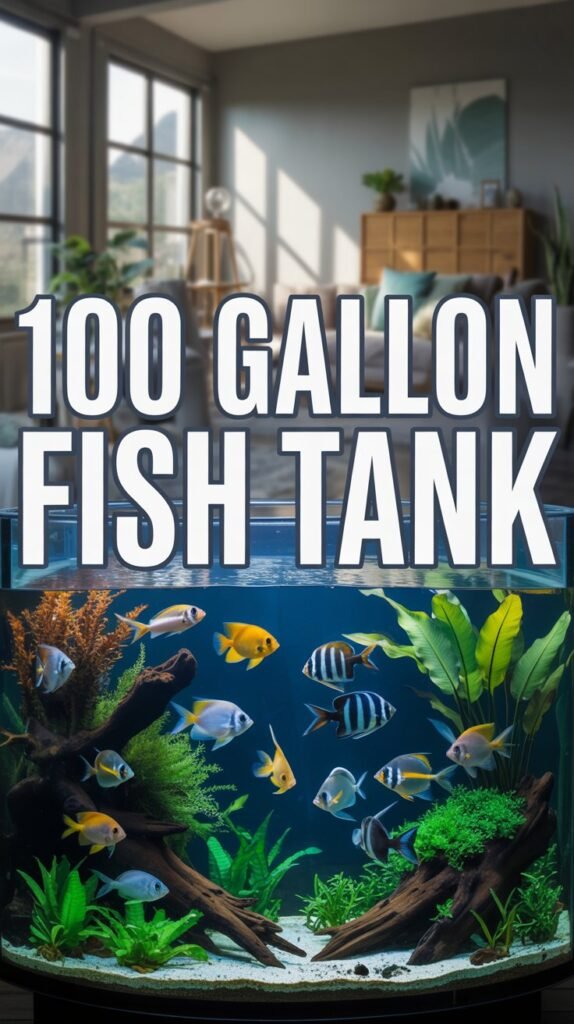
There are many types of 100 gallon aquariums depending on material, purpose, and shape.
1. Glass 100 Gallon Fish Tank
The most common type.
Pros:
- Scratch resistant
- Clear viewing
- Affordable
- Durable
Cons:
- Heavy
- Can crack if mishandled
2. Acrylic 100 Gallon Fish Tank
Lightweight alternative.
Pros:
- Lightweight
- Strong impact resistance
- Ideal for custom shapes
Cons:
- Scratches easily
- Expensive
3. Rimless 100 Gallon Fish Tank
Modern and clean look.
Pros:
- Minimalistic design
- Great for aquascapes
- Premium look
Cons:
- Costly
- Requires precise leveling
4. 100 Gallon Saltwater Tank
Designed for marine setups.
Features:
- Extra bracing
- Sump compatibility
- Strong lighting support
5. 100 Gallon Freshwater Tank
Normally used for:
- Planted tanks
- Community tanks
- Cichlid setups
- Goldfish
6. 100 Gallon Cube Tank
Square-shaped for coral reefs or planted scapes.
7. 100 Gallon Breeder Tank
Ideal for breeding large fish, aquascaping, and community setups due to wider dimensions.
8. 100 Gallon Long Tank
Great for fish that need swimming length such as:
- Rainbowfish
- Giant danios
- Oscars
100 Gallon Fish Tank Dimensions (Most Common)
| Type | Dimensions (L × W × H) |
|---|---|
| Standard 100 Gallon | 72″ × 18″ × 20″ |
| 100 Gallon Long | 72″ × 20″ × 18″ |
| 100 Gallon Breeder | 48″ × 24″ × 20″ |
| 100 Gallon Cube | 30″ × 30″ × 24″ |
What You Can Keep in a 100 Gallon Fish Tank
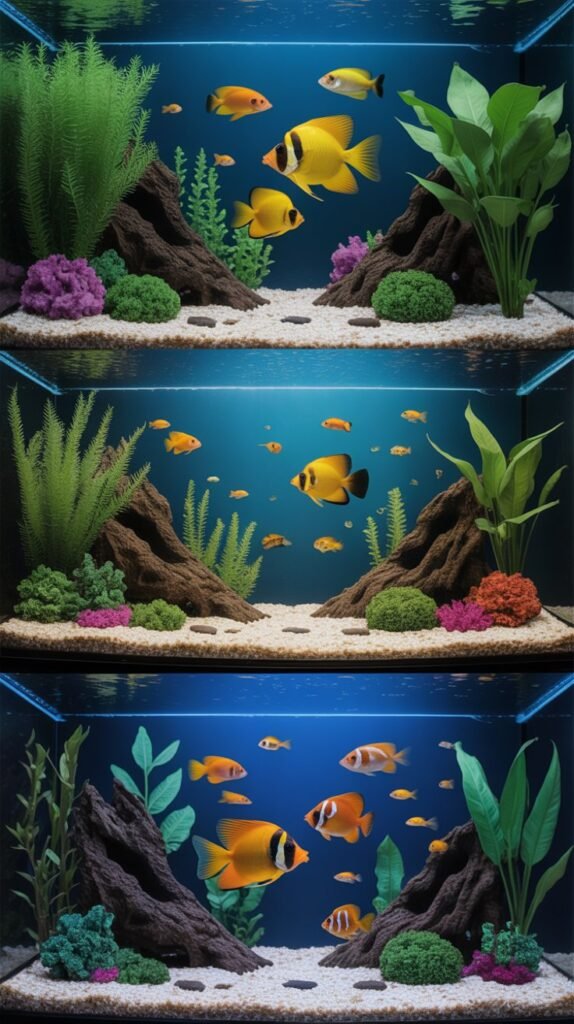
A 100 gallon aquarium opens the door to many creative stocking ideas.
Popular Freshwater Stocking Ideas
1. Oscar Tank
- 1–2 Oscars
- Large pleco
- Silver dollars
- Severums
2. African Cichlid Tank
- 25–35 mbuna cichlids
- Rock aquascape
- Strong filtration
3. Planted Community Tank
- 30–40 tetras
- 10–15 rasboras
- 6–8 angelfish
- Shrimp
- Livebearers
- Snails
4. Goldfish Tank
Perfect for fancy varieties:
- 6–8 large goldfish
- Strong filtration
- No heaters required
5. Discus Tank
- 8–10 discus
- Cardinal tetras
- Corydoras
- Warm water plants
Saltwater Stocking Ideas
1. Reef Tank
- Clownfish
- Tangs
- Wrasses
- Coral colonies
2. FOWLR (Fish-Only with Live Rock)
- Angelfish
- Butterflyfish
- Triggerfish
- Damsels
Equipment Needed for a 100 Gallon Fish Tank
A large tank needs strong support and reliable equipment.
1. Sturdy Stand
The tank plus water weighs over 850 pounds.
A solid stand is mandatory.
2. Filter System
Best options:
- Canister filters (excellent for clarity)
- Sump filters (best for saltwater)
- Power filters (backup)
- Internal filters (for extra circulation)
Recommended flow rate:
At least 600–800 GPH.
3. Heater
For tropical fish:
- Two heaters of 200–300W each
- Keeps temperature even
4. Air Pump
Improves oxygen levels in large tanks.
5. Lighting
Depends on setup:
- Planted tanks: high-quality LED
- Fish-only tanks: standard lighting
- Saltwater tanks: reef-capable LED lights
6. Substrate
Choose according to fish:
- Sand for cichlids
- Soil for plants
- Gravel for communities
7. Hardscape
- Driftwood
- Rocks
- Caves
- Background visuals
8. Water Test Kits
Maintains water quality:
- Ammonia
- Nitrite
- Nitrate
- pH
How to Set Up a 100 Gallon Fish Tank (Step-by-Step Guide)
Step 1: Pick the Tank Location
Choose a place that is:
- Level
- Away from sunlight
- Close to electrical outlets
- Not near vibrations
Step 2: Prepare the Stand
Ensure stability before placing the tank.
Step 3: Add Substrate
Rinse gravel or sand and add 2–3 inches.
Step 4: Arrange Hardscape
Position:
- Rocks
- Caves
- Wood
Do this before adding water.
Step 5: Fill the Tank
Use a plate to avoid disturbing substrate.
Step 6: Install Filter & Heater
Do not turn on until the tank is filled.
Step 7: Cycle the Aquarium
This is crucial.
Cycling builds beneficial bacteria that remove toxins.
Time required: 2–4 weeks.
Step 8: Add Plants
Live plants improve water quality.
Step 9: Add Fish Slowly
Introduce small groups at a time to avoid ammonia spikes.
Maintenance Guide for a 100 Gallon Fish Tank
A large tank requires consistent but easy maintenance.
Weekly Tasks
- 20–30% water change
- Vacuum debris
- Clean filters lightly
- Wipe glass
- Test water parameters
Monthly Tasks
- Deep clean canister filter
- Re-adjust aquascape if needed
Bi-Annual Tasks
- Replace filter media
- Inspect seals
Large tanks thrive with regular care and reward you with stunning visuals and healthy fish.
Best Fish for a 100 Gallon Tank
For Freshwater
- Angels
- Discus
- Goldfish
- Pearl gourami
- Congo tetra
- Rainbowfish
- Bala sharks (3–4 max)
- Polypterus
- Large catfish
- Severums
For Saltwater
- Clownfish
- Tangs
- Dwarf angels
- Gobies
- Wrasses
- Chromis
Aquascaping Ideas for a 100 Gallon Tank
1. Nature Style Aquascape
- Driftwood centerpiece
- Carpet plants
- Schools of tetras
2. Cichlid Rockscape
- Heavy rocks
- Caves
- Strong filters
3. Minimalist Planted Tank
- Open space
- Few plants
- Large angels or discus
4. Reef Tank Design
- Live rocks
- Coral shelves
- Bright lighting
How Much Does a 100 Gallon Fish Tank Cost?
Approximate pricing:
- Tank only: $250–$500
- Stand: $200–$400
- Filter: $150–$300
- Lights: $100–$300
- Heater: $30–$60
- Substrate & decor: $100–$300
- Fish: $50–$300
Total estimated cost:
$800 – $2,000+ depending on setup.
Pros & Cons of a 100 Gallon Fish Tank
Pros
- Great for large fish
- Beautiful showpiece
- Easy to maintain stability
- Many aquascaping options
- Suitable for freshwater & saltwater
Cons
- Expensive to set up
- Heavy and hard to move
- Requires strong stand
- Higher electricity usage
FAQs About 100 Gallon Fish Tanks
1. How many fish can I keep in a 100 gallon tank?
It depends on species:
- Community fish: 40–60 small fish
- Goldfish: 6–8
- Cichlids: 25–35
- Oscars: 1–2
2. Is a 100 gallon tank good for beginners?
Yes, because water stays more stable and easier to manage.
3. Do I need a canister filter?
Highly recommended due to the size of the tank.
4. How heavy is a 100 gallon aquarium?
Filled weight: 850–900 pounds.
5. Can I keep saltwater fish in a 100 gallon tank?
Absolutely, it’s ideal for both reef and FOWLR setups.
6. How often should I change water?
Once per week, 20–30%.
7. Is a heater required?
Yes for tropical fish; no for goldfish.
8. How long does cycling take?
Around 2–4 weeks.