
 By admin
Breeding fish at home is one of the most exciting and rewarding aspects of aquarium keeping. Watching your fish pair up, spawn, and then raise their fry is a fascinating experience that many aquarists aim to achieve. However, successful breeding requires the right environment, and this is where an aquarium breeding tank plays a crucial role.
In this detailed guide, we’ll cover everything you need to know about aquarium breeding tanks, including setup, equipment, species-specific needs, maintenance, and tips for success. Whether you are breeding guppies, angelfish, bettas, or cichlids, a well-prepared breeding tank can significantly increase your chances of raising healthy fry.
What Is an Aquarium Breeding Tank?
An aquarium breeding tank is a separate, specialized tank used to encourage fish to spawn and safely raise their fry. Unlike a regular display aquarium, a breeding tank is designed to provide the ideal conditions for reproduction while protecting delicate eggs or fry from being eaten by adult fish or stressed by tankmates.
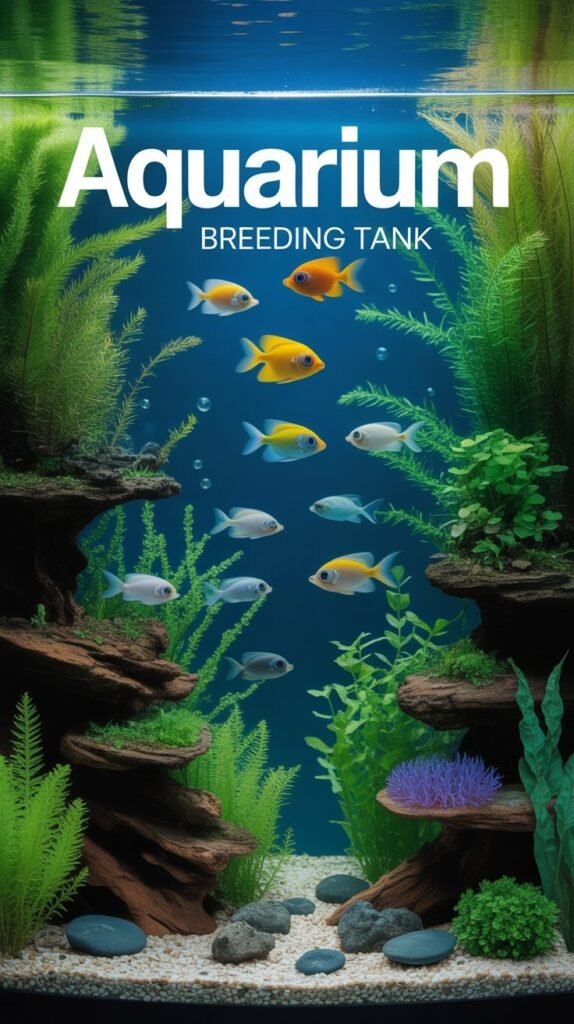
Breeding tanks can vary in size, but most aquarists use smaller aquariums (5–20 gallons) for livebearers and egg-layers, while larger tanks may be required for bigger species like cichlids or angelfish.
Why Use a Breeding Tank?
There are several reasons why using a dedicated breeding tank is beneficial:
- Protection for Fry – In community tanks, fry are often eaten by adults. A breeding tank gives them a safe start.
- Controlled Environment – Temperature, water parameters, and filtration can be optimized for spawning.
- Stress Reduction – Breeding pairs or pregnant females are less stressed in a separate environment.
- Improved Survival Rates – With no predators and stable conditions, more fry survive to adulthood.
- Easier Monitoring – You can track the progress of eggs, fry, and parent fish more easily.
Choosing the Right Aquarium Breeding Tank Size
The size of your breeding tank depends on the species of fish you plan to breed:
- Livebearers (Guppies, Mollies, Platies, Swordtails): 5–10 gallons is usually sufficient.
- Bettas: A 5-gallon tank works well for breeding and raising fry.
- Angelfish: 15–20 gallons or larger, depending on the pair.
- Cichlids: 20–40 gallons or more, depending on species.
- Tetras and Egg Scatterers: 10–20 gallons for breeding groups.
Essential Equipment for an Aquarium Breeding Tank
Setting up a breeding tank requires more than just a glass aquarium. To create the right conditions, you’ll need:
1. Heater
Most tropical fish require a stable temperature between 75–82°F. A reliable heater is essential for breeding success.
2. Sponge Filter
A sponge filter provides gentle filtration without creating strong currents that could harm fry. It also serves as a surface for beneficial bacteria and micro-organisms that fry can feed on.
3. Breeding Box or Net (Optional)
For livebearers, breeding traps or nets can help separate fry from parents immediately after birth.
4. Plants (Live or Artificial)
Plants such as Java moss, Hornwort, or artificial breeding grass provide hiding spots for fry and create a more natural environment.
5. Lighting
Moderate lighting helps mimic natural conditions. Avoid overly strong lights that may stress fish.
6. Substrate
Some breeders prefer bare-bottom tanks for easy cleaning, while others use marbles or mesh to protect eggs from being eaten.
7. Water Testing Kit
Monitoring ammonia, nitrite, nitrate, and pH is essential for fry survival.
Setting Up an Aquarium Breeding Tank
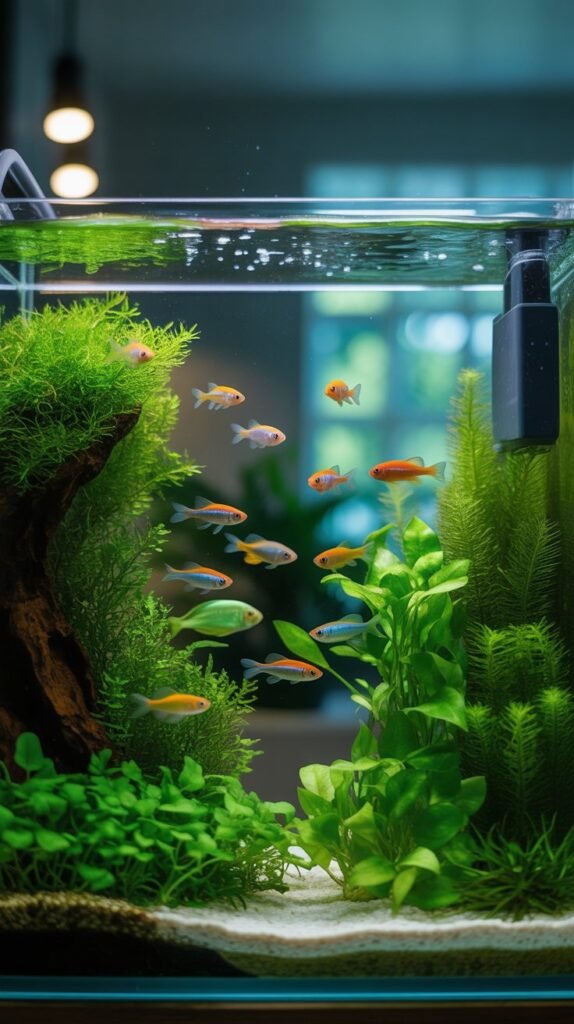
Here’s a step-by-step guide:
- Choose Tank Size – Select the right size based on species.
- Install Equipment – Place heater, sponge filter, and thermometer.
- Add Substrate (Optional) – For egg scatterers, use marbles or mesh. For livebearers, a bare bottom is often better.
- Add Plants and Decorations – Use fine-leaved plants like Java moss for fry hiding spots.
- Cycle the Tank – Ensure the tank is cycled to establish beneficial bacteria before adding breeding pairs.
- Introduce Breeding Pair or Female – Depending on species, add either a bonded pair or a gravid female.
- Adjust Water Conditions – For some fish, slightly softer or warmer water may trigger spawning.
Species-Specific Breeding Tips
Different species have unique breeding requirements. Let’s look at a few examples:
1. Livebearers (Guppies, Mollies, Platies, Swordtails)
- Pregnant females should be moved to the breeding tank before giving birth.
- Use plants or breeding grass to provide hiding spaces for fry.
- After birth, remove the female to prevent her from eating the fry.
2. Bettas
- Use a small, shallow tank (around 5 gallons).
- Males build bubble nests at the surface.
- Remove the female after spawning; males will care for eggs.
- Fry need infusoria or baby brine shrimp as first food.
3. Angelfish
- Provide flat surfaces like slate or leaves for egg laying.
- Pairs often guard eggs, but some may eat them.
- If parents eat eggs, consider removing them to a separate hatching tank.
4. Cichlids
- Many cichlids are parental, guarding fry after hatching.
- Provide caves, rocks, or flat stones for spawning sites.
- Some species are mouthbrooders, requiring specialized care.
5. Tetras and Egg Scatterers
- Use marbles or mesh to protect eggs from being eaten.
- Condition breeding groups with high-quality food before spawning.
- Remove adults after eggs are laid.
Caring for Fry in the Breeding Tank
Once fry are born or eggs hatch, proper care is essential:
- Feeding – Start with infusoria or liquid fry food. Progress to baby brine shrimp or crushed flakes.
- Water Quality – Perform gentle, frequent water changes to prevent ammonia spikes.
- Lighting – Keep moderate lighting for fry growth.
- Separation – As fry grow, separate them by size to reduce aggression.
Common Mistakes in Using a Breeding Tank
- Not Cycling the Tank – Fry are highly sensitive to ammonia and nitrite spikes.
- Overcrowding – Too many fish in a breeding tank leads to stress and poor survival rates.
- Wrong Water Parameters – Not matching species-specific needs reduces spawning chances.
- Feeding Too Little or Too Much – Underfeeding stunts growth; overfeeding pollutes water.
- Leaving Parents Too Long – Many species eat their eggs or fry if not removed in time.
Maintaining an Aquarium Breeding Tank
- Perform 20–30% water changes weekly, more often for fry tanks.
- Clean sponge filters gently in old tank water.
- Monitor water parameters daily during spawning and fry stages.
- Remove uneaten food promptly to avoid fouling the water.
Advanced Tips for Successful Breeding
- Conditioning Breeders: Feed live or frozen foods like brine shrimp and bloodworms before breeding.
- Mimicking Seasons: Some species breed when water changes simulate rainfall (slightly cooler, softer water).
- Multiple Tanks: Serious breeders often use separate tanks for breeding, hatching, and growing fry.
- Patience: Not all attempts succeed. Sometimes multiple tries are needed before breeding is successful.
Conclusion
An aquarium breeding tank is an essential tool for any aquarist serious about fish breeding. By providing a controlled, safe environment, you greatly increase the chances of successful spawning and raising healthy fry. From livebearers to egg-layers, each species has unique requirements, but with proper planning, equipment, and care, breeding can be an incredibly rewarding aspect of the aquarium hobby.
Whether you’re a beginner breeding guppies or an advanced aquarist working with cichlids, a well-set-up breeding tank will make all the difference.
FAQs About Aquarium Breeding Tanks
Q1. What size tank should I use for breeding fish?
It depends on the species. Livebearers often do well in 5–10 gallons, while cichlids and angelfish may require 20 gallons or more.
Q2. Do I need a filter in a breeding tank?
Yes, but it should be gentle. Sponge filters are ideal because they don’t suck up fry.
Q3. Should I use substrate in a breeding tank?
For livebearers, bare-bottom tanks are easier to clean. For egg scatterers, marbles or mesh protect eggs.
Q4. How long should fry stay in the breeding tank?
Until they are large enough to avoid being eaten in the main tank—usually 4–6 weeks for most species.
Q5. Do all fish need a breeding tank?
Not necessarily, but a breeding tank increases fry survival rates and makes breeding more controlled.
Q6. Can I breed multiple species in the same breeding tank?
No, it’s best to dedicate each breeding tank to one species to avoid stress and predation.
Q7. How do I feed newly hatched fry?
Start with infusoria or liquid fry food, then move to baby brine shrimp and crushed flakes.