
 By admin
Aquarium plants are more than just decorations—they play a key role in keeping a fish tank balanced, healthy, and visually appealing. Among the many aquarium plants available, Sagittaria subulata, commonly known as Dwarf Sagittaria, is one of the most versatile and beginner-friendly options. Its ability to thrive in different environments, spread across the substrate to form lush carpets, and provide shelter for fish makes it a popular choice for aquarists worldwide.
In this comprehensive guide, we’ll cover everything you need to know about Sagittaria subulata in aquariums—from its origins, benefits, and care requirements, to aquascaping ideas and troubleshooting common problems. By the end, you’ll see why this plant is often called the “beginner’s carpeting plant” and how you can use it to transform your tank into a thriving underwater garden.
What is Sagittaria subulata?
Sagittaria subulata is a species of aquatic plant in the Alismataceae family. It originates from the coastal regions of North and South America, where it grows naturally in shallow waters, marshes, and riverbanks. In the aquarium hobby, it is most commonly referred to as Dwarf Sagittaria due to its manageable size and ability to form dense carpets across the substrate.
Key Characteristics
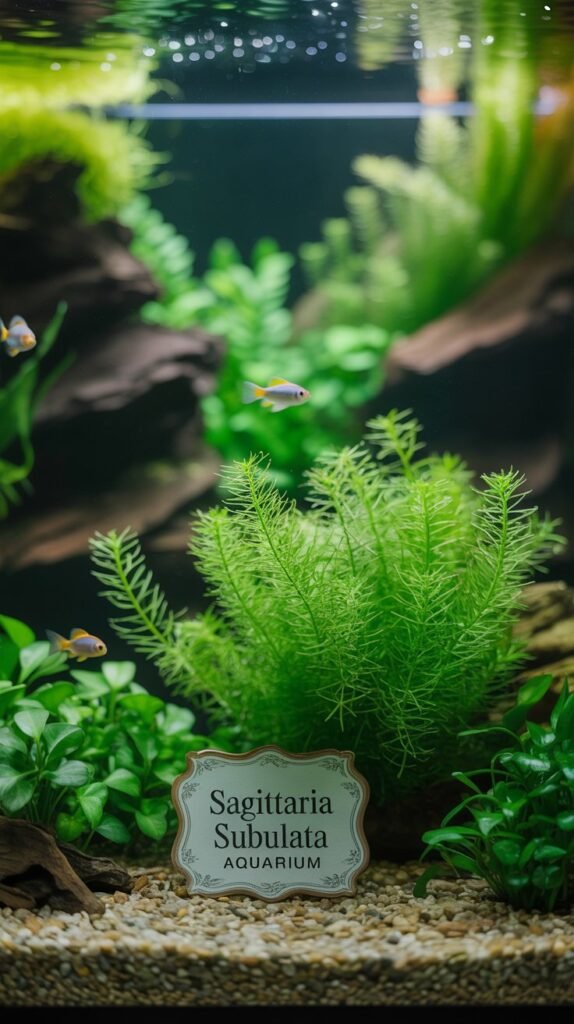
- Appearance: Long, narrow, grass-like leaves that are typically bright green.
- Size: Usually grows between 3 to 12 inches depending on tank conditions.
- Growth pattern: Spreads through runners, allowing it to cover the substrate quickly.
- Lighting needs: Adapts to a wide range, from low to high light.
- Difficulty: Easy, making it perfect for beginners.
Dwarf Sagittaria is often compared to Vallisneria or Chain Sword plants, but it remains shorter and more compact, making it excellent for foreground and midground planting.
Benefits of Sagittaria subulata in an Aquarium
Adding Sagittaria subulata to your aquarium provides multiple functional and aesthetic benefits:
1. Natural Carpet Plant
One of the biggest advantages of Dwarf Sagittaria is its ability to spread across the tank floor and form a lush, grassy carpet. This creates a natural, meadow-like look in aquascapes.
2. Low Maintenance
Unlike some carpeting plants that require CO₂ injection or intense lighting, Dwarf Sagittaria can thrive under moderate conditions, making it a beginner-friendly option.
3. Provides Shelter
Its dense growth provides cover for small fish, fry, and shrimp. Many bottom-dwelling fish, such as corydoras, enjoy exploring its grassy clusters.
4. Algae Prevention
By consuming excess nutrients in the water, Sagittaria subulata competes with algae and helps keep algae growth under control.
5. Oxygenation
Through photosynthesis, it releases oxygen into the water, supporting a healthier environment for fish and beneficial bacteria.
6. Adaptability
It can be used in foreground, midground, or background depending on how tall it grows in your aquarium. In smaller tanks, it may stay compact, while in larger tanks, it can reach midground height.
Tank Requirements for Sagittaria subulata
While this plant is very forgiving, providing optimal conditions will encourage faster growth and better coloration.
Water Parameters
- Temperature: 68–82°F (20–28°C)
- pH: 6.0–8.0 (very adaptable)
- Hardness: Soft to moderately hard water
Lighting
- Low to medium lighting is sufficient. However, with high light, Dwarf Sagittaria tends to stay shorter and spreads faster as a carpet.
- In low light, it may grow taller, functioning more like a background plant.
Substrate
- A nutrient-rich substrate is highly recommended because Sagittaria subulata is a root-feeding plant.
- Options like aquarium soil, Fluval Stratum, or even root tabs in inert sand/gravel will work.
CO₂ Requirement
- Not necessary, but with CO₂ injection, growth becomes faster and more compact.
- Without CO₂, it still grows well but may take longer to carpet.
Planting Sagittaria subulata in Your Aquarium
Step 1: Preparing the Plant
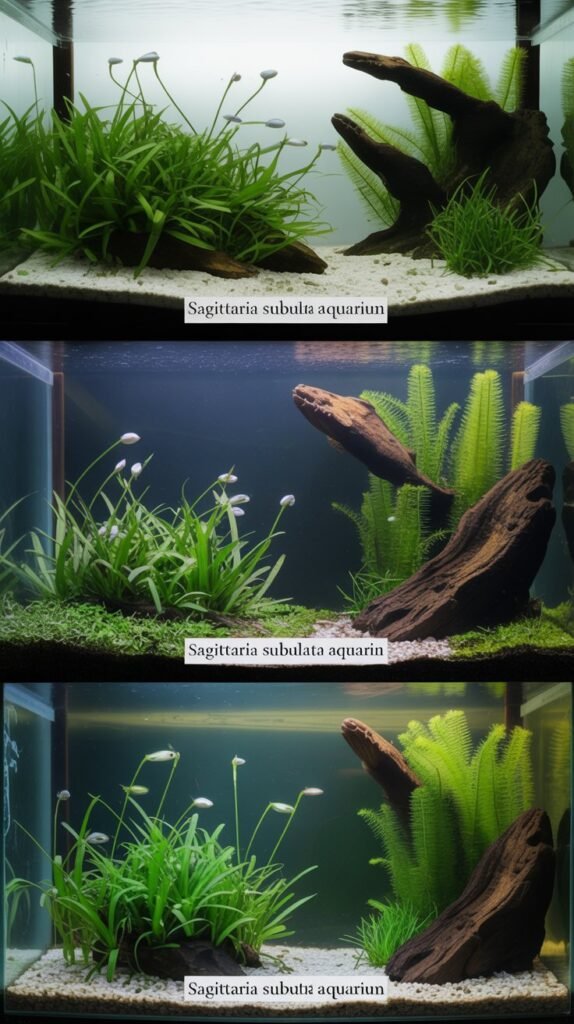
- Purchase healthy plants with strong roots.
- Separate the plantlets into small clusters for easier planting.
Step 2: Planting Technique
- Use aquascaping tweezers to insert each plantlet into the substrate.
- Plant them at least 1–2 inches apart so they have room to spread runners.
Step 3: Settling Period
- Initially, the plant may melt slightly as it adjusts to your tank conditions.
- Within a few weeks, it will recover and begin spreading.
Growth and Propagation
Dwarf Sagittaria reproduces through runners—small shoots that spread underground and sprout new plants.
- Once established, it spreads quickly, forming dense carpets.
- You can leave it to propagate naturally or trim and replant the runners where desired.
- Regular trimming prevents overcrowding and ensures a neat carpet appearance.
Maintenance and Care
Although Sagittaria subulata is easy to maintain, a few practices will ensure its long-term success:
1. Trimming
- Trim tall leaves to encourage horizontal runner growth.
- This helps keep the plant compact and prevents shading other plants.
2. Nutrient Supplementation
- Being a root feeder, it benefits from root tabs or nutrient-rich substrate.
- Liquid fertilizers containing nitrogen, potassium, and micronutrients can enhance color and growth.
3. Algae Management
- Excess lighting without proper nutrients may cause algae to grow on the leaves.
- Regular maintenance, balanced fertilization, and adding algae-eating species (like shrimp or snails) can help.
4. Preventing Overcrowding
- If left unchecked, Dwarf Sagittaria can spread aggressively. Regular thinning may be required to prevent it from overtaking the entire aquarium.
Tank Mates for Sagittaria subulata
This plant is highly compatible with most freshwater fish and invertebrates.
Best Tank Mates:
- Small schooling fish: tetras, rasboras, guppies, endlers
- Bottom dwellers: corydoras, kuhli loaches, otocinclus
- Shrimp and snails: Amano shrimp, cherry shrimp, nerite snails
- Livebearers: platies, mollies, swordtails
Fish to Avoid:
- Goldfish and large cichlids may uproot or eat the plant.
- Plant-eating species like silver dollars may damage it.
Sagittaria subulata in Aquascaping
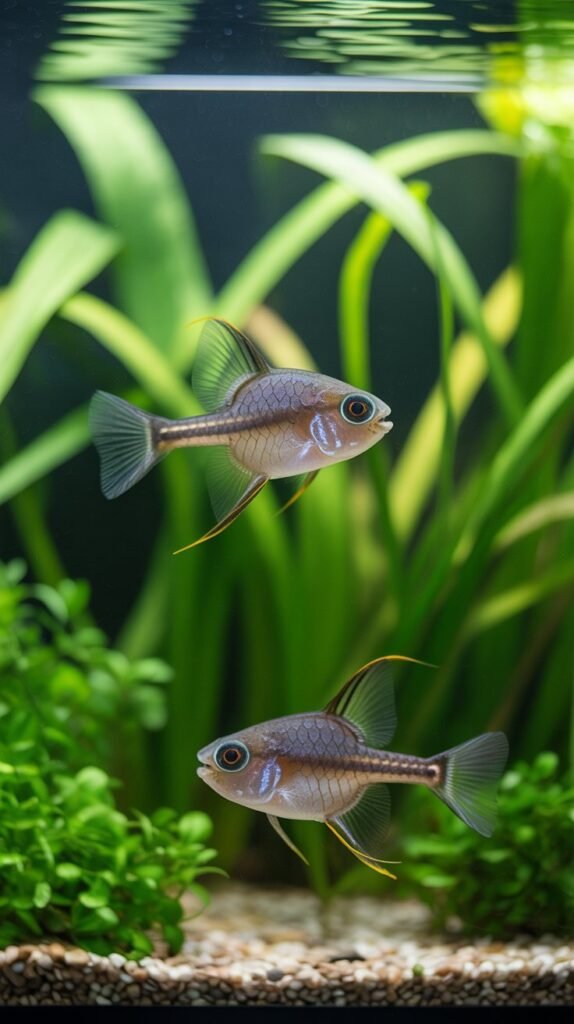
Aquascapers love using Dwarf Sagittaria due to its versatility. Depending on how it’s grown, it can serve different design roles:
1. Foreground Carpet
- Under high light and CO₂, it stays short and spreads horizontally.
- Creates a lush green carpet effect in planted aquariums.
2. Midground Plant
- In low to medium light, it grows taller and works well as a transition between carpet plants and taller background plants.
3. Background Plant in Nano Tanks
- In small aquariums, even its maximum height can serve as background greenery.
4. Natural Biotope Aquariums
- Its grassy appearance makes it perfect for simulating riverbeds, ponds, or marsh-inspired aquascapes.
Common Problems with Sagittaria subulata
Even though it’s hardy, some issues may arise:
1. Melting Leaves
- New plants may melt after planting due to adaptation stress.
- Solution: Trim away melted leaves and allow time for new growth.
2. Excessive Height
- If it grows too tall, it may be due to low light conditions.
- Solution: Increase light intensity to encourage horizontal carpeting growth.
3. Yellowing Leaves
- Usually a sign of nutrient deficiency, especially nitrogen or iron.
- Solution: Add root tabs or liquid fertilizers.
4. Algae Growth
- Can occur if there’s too much light without enough nutrients.
- Solution: Balance light, fertilization, and add algae eaters.
Comparison: Sagittaria subulata vs. Similar Plants
| Plant | Height Range | Growth Speed | Care Level | Best Placement |
|---|---|---|---|---|
| Sagittaria subulata | 3–12 inches | Fast | Easy | Foreground/Midground |
| Vallisneria | 12–24 inches | Fast | Easy | Background |
| Chain Sword (Echinodorus tenellus) | 2–6 inches | Medium | Medium | Foreground |
| Dwarf Hairgrass | 2–4 inches | Medium-Slow | Moderate | Foreground Carpet |
Sagittaria subulata stands out as a versatile option because it can serve both as a carpet and a midground plant, depending on tank conditions.
Best Aquarium Setups for Sagittaria subulata
- Beginner Community Tank
- Use Dwarf Sagittaria as a carpet with guppies, mollies, and tetras.
- Shrimp Tank
- Provides grazing surfaces and hiding spots for baby shrimp.
- Nature Style Aquascape
- Combine with driftwood, stones, and taller plants for a natural riverbed look.
- Iwagumi Layout
- Works as a carpet around rocks in minimalist aquascapes.
Conclusion
Sagittaria subulata (Dwarf Sagittaria) is one of the most reliable and versatile plants for aquariums. With its grassy appearance, adaptability to various conditions, and ease of care, it is ideal for beginners and advanced aquascapers alike. Whether you want a lush foreground carpet, a midground filler, or a natural background in nano tanks, Dwarf Sagittaria can adapt and thrive with minimal maintenance.
By providing proper lighting, a nutrient-rich substrate, and occasional trimming, you’ll be rewarded with a vibrant underwater meadow that enhances both the health and beauty of your aquarium.
FAQs About Sagittaria subulata Aquarium
1. Is Sagittaria subulata good for beginners?
Yes, it is one of the easiest carpeting plants to grow and requires little maintenance.
2. Does Sagittaria subulata need CO₂?
No, but CO₂ injection promotes faster growth and helps it stay shorter and denser.
3. Can Dwarf Sagittaria grow in sand?
Yes, but it will need root tabs since sand lacks nutrients.
4. How do you propagate Sagittaria subulata?
It propagates naturally through runners that spread across the substrate.
5. How tall does Dwarf Sagittaria grow?
Usually 3–12 inches depending on light and nutrient conditions.
6. Why is my Sagittaria subulata turning yellow?
This is often due to nutrient deficiencies, especially nitrogen or iron.
7. Can it be grown in low light?
Yes, but it may grow taller instead of spreading horizontally.
8. Is it safe for shrimp and fry?
Absolutely! It provides shelter and grazing areas for shrimp and young fish.
9. Will fish eat Dwarf Sagittaria?
Most fish ignore it, but goldfish and large plant-eaters may damage it.
10. Can it be used in outdoor ponds?
Yes, in warm climates it can thrive in shallow ponds as well.