
 By admin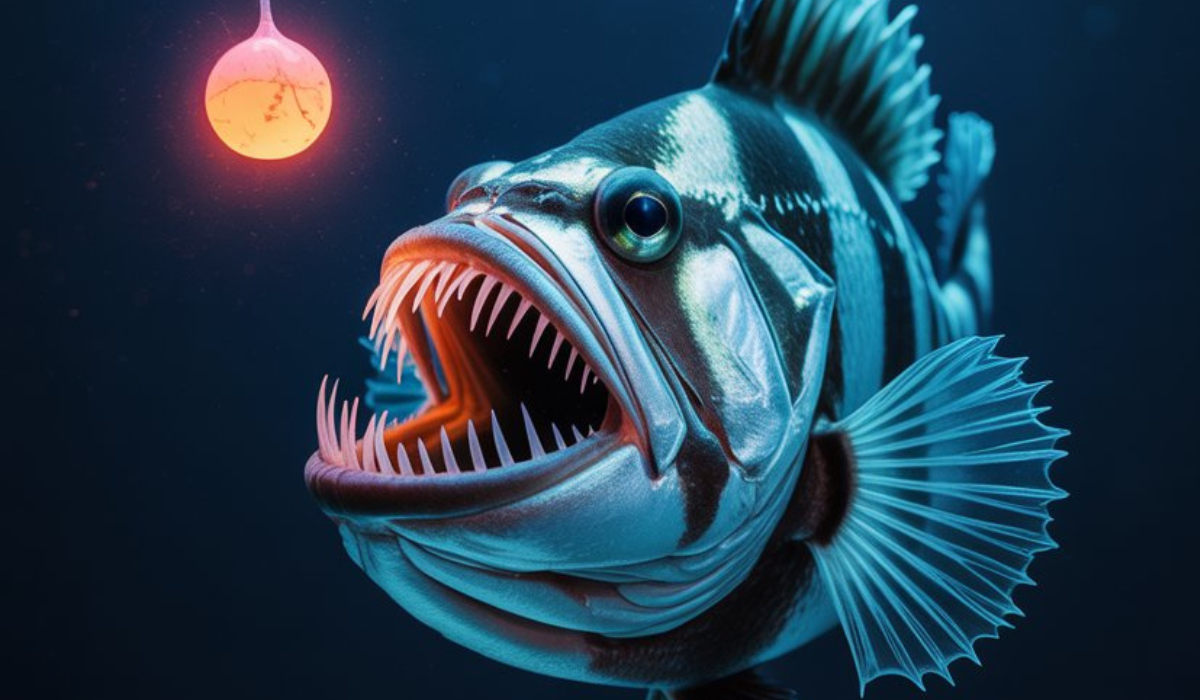
The deep ocean is home to some of the most mysterious and bizarre creatures on Earth, and among them, the angler fish stands out as one of the most astonishing. Known for its terrifying appearance, glowing lure, and strange reproductive strategy, the angler fish has fascinated scientists, photographers, and nature lovers for decades.
Angler fish are powerful predators living mostly in the darkest parts of the ocean, where sunlight never reaches. With needle-sharp teeth, large mouths, and a built-in fishing rod on their heads, they are perfectly designed for survival in the deep sea. This long-form guide explores every detail of angler fish — its biology, evolution, lifestyle, and the many species found around the world.
What is an Angler Fish?
An angler fish is a type of predatory fish belonging to the order Lophiiformes. Its most iconic feature is the bioluminescent lure, a modified dorsal spine that hangs over its head like a fishing rod to attract prey. This unique adaptation gives the angler fish its name — it literally “angles” for food.
Key Characteristics
| Feature | Description |
|---|---|
| Bioluminescent lure | Glowing tip attracts prey in dark waters |
| Huge mouth | Can swallow fish as large as itself |
| Sharp fang-like teeth | Helps trap prey instantly |
| Deep-sea habitat | Commonly found in the bathypelagic zone (1000–4000 m deep) |
| Extreme sexual dimorphism | Females are much larger; males attach to females |
The angler fish is a symbol of deep-sea evolution — a living example of how organisms adapt to cold, dark, high-pressure environments.
Appearance and Anatomy
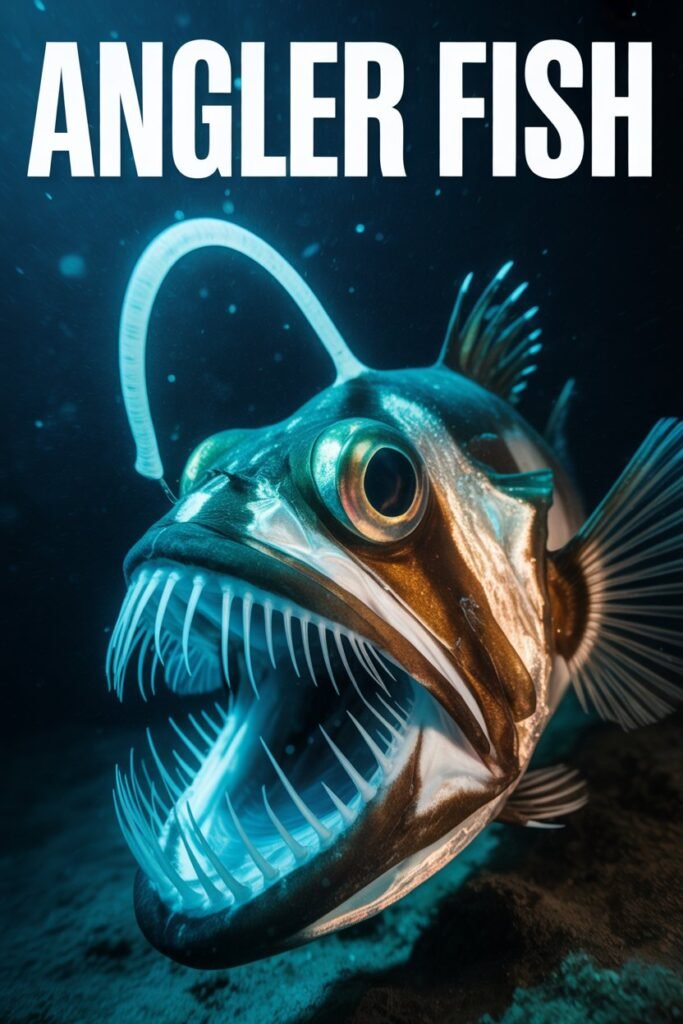
Angler fish have strange, alien-like bodies that suit their lifestyle.
| Body Feature | Function |
|---|---|
| Illicium (rod) | Modified fin spine acting as a fishing lure |
| Esca (light bulb) | Bioluminescent tip that glows in darkness |
| Large jaws | Allows consumption of large prey |
| Expandable stomach | Stores big meals for long periods |
| Slimy soft body | Adapted to crushing ocean pressure |
| Small eyes | Low-light vision for deep water survival |
The light comes from bioluminescent bacteria that live symbiotically inside the lure. This glowing tip tricks prey into approaching, making hunting effortless.
Habitat and Distribution
Angler fish are found in almost every ocean on the planet, especially in:
- Atlantic Ocean
- Pacific Ocean
- Indian Ocean
- Southern Ocean
- Deep trenches and continental slopes
Depth Range
| Ocean Zone | Depth | Light Availability |
|---|---|---|
| Mesopelagic | 200–1000 m | Low light |
| Bathypelagic (most common) | 1000–4000 m | No sunlight |
| Abyssopelagic | 4000+ m | Total darkness |
The deep sea is cold, pressurized, and food-scarce. The angler fish thrives in this extreme environment with efficient energy use and stealth predation.
Behavior and Feeding
Angler fish are ambush predators. They remain motionless, waving the light at the end of their lure to attract prey such as:
- Small fish
- Squid
- Crustaceans
- Shrimp
- Invertebrates
Once prey gets close:
✔ They strike instantly
✔ Teeth point inward to trap prey
✔ The prey cannot escape even if it struggles
Hunting Strategy
| Step | Action |
|---|---|
| 1 | Wiggle glowing lure to mimic small prey |
| 2 | Prey approaches closer |
| 3 | Sudden jaw expansion |
| 4 | Swallow whole |
This method conserves energy — essential in a place where food is rare.
Bioluminescence: The Deep-Sea Superpower
Bioluminescence is the ability to produce light. Angler fish do not create light on their own — they rely on symbiotic bacteria living inside the lure.
Why Do Angler Fish Use Light?
- Attract prey
- Communication
- Confuse predators
- Lure mates
The light is blue-white, which travels farthest underwater, making it highly visible in darkness.
Types of Angler Fish
There are over 200 known species of angler fish, classified into five main categorie
Deep-Sea Angler Fish (Suborder Ceratioidei)
- Most famous type, often seen in documentaries
- Females are large with glowing lures
- Males are tiny and parasitic
Example species:
- Black seadevil
- Triplewart seadevil
- Dragonfish angler
These species live thousands of meters below sea level
Frogfish
- Found in tropical reefs
- Masters of camouflage
- Walk on seabed using modified fins
Example species:
- Painted frogfish
- Hairy frogfish
They can change colors to blend into coral surroundings.
Monkfish (Goosefish)
- Found in shallow coastal waters
- Known as a seafood delicacy in some countries
- Large flat head with sharp teeth
Example species:
- American monkfish
- Common goosefish
They bury themselves in sand and ambush passing prey.
Batfish
- Flattened body with wing-like fins
- Not strong swimmers; “walk” on sea floor
- Some species have tiny lures on their snout
Example species:
- Red-lipped batfish
- Polka-dot batfish
Their unique looks make them popular subjects in marine studies.
Handfish
- Rare family found mostly in Australia
- Walk using hand-shaped fins
- Highly endangered due to habitat loss
Example species:
- Spotted handfish
- Pink handfish
Unlike deep-sea relatives, they live in shallow shore waters.
Evolution of Angler Fish
Angler fish evolved millions of years ago to survive in dark environments.
Major evolutionary adaptations:
| Adaptation | Benefit |
|---|---|
| Glowing lure | Improves hunting success |
| Stretchable body | Allows food storage when prey is rare |
| Reduced bone structure | Withstands deep-sea pressure |
| Female-male parasitic bond | Guarantees reproduction |
These traits show how extreme environments shape biological evolution.
Reproduction: The Strangest Strategy in the Ocean
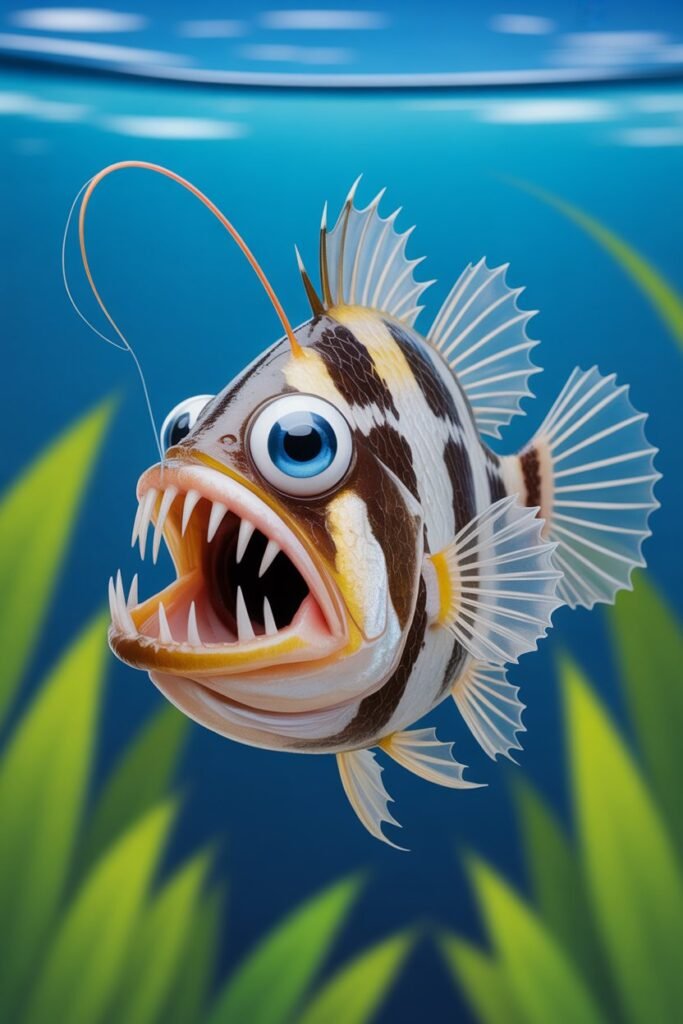
Angler fish reproduction is one of the most unusual in the animal kingdom.
Extreme Sexual Dimorphism
| Feature | Female | Male |
|---|---|---|
| Size | Large (up to 1 meter) | Tiny (few cm) |
| Teeth | Large fangs | Mostly harmless |
| Lifestyle | Independent hunter | Parasitic |
What Happens When They Mate?
- Male locates female by scent and light
- He bites into her skin
- His body fuses with hers
- Male becomes permanently attached
- He receives nutrients from her blood
- Female uses him for sperm when needed
A single female may carry multiple tiny males attached to her body.
This ensures successful reproduction in the vast deep sea where meeting a mate is rare.
Life Cycle
- Eggs are released into the water
- Larvae drift in shallower zones, feeding and growing
- As they mature, they sink deeper
- Adult females become predators; males search for mates
- Males attach to females permanently
Adaptations ensure maximum survival in harsh deep-sea conditions.
Predators and Threats
Few animals prey on angler fish due to:
- Deep-sea habitat
- Spiky bodies
- Light-producing lure that can scare predators
However, they may be attacked by:
- Deep-sea sharks
- Sperm whales
- Larger predatory fish
Their biggest threat today is human activity.
Angler Fish and Humans
People rarely encounter angler fish, but they have importance in:
- Marine research — understanding deep-sea biology
- Climate studies — indicators of ecosystem changes
- Deep-sea photography — symbolic of underwater mystery
- Cultural impact — featured in movies like Finding Nemo
Some species like monkfish are used as seafood, but deep-sea angler fish are not eaten.
Conservation Status
Most angler fish species live far from human exploitation, but threats still exist:
⚠ Deep-sea mining
⚠ Plastic pollution
⚠ Climate change affecting prey availability
⚠ Bycatch in commercial fishing
Many species are not yet studied enough to determine their conservation status.
Protection of deep-sea ecosystems is essential to preserving them.
Amazing & Fun Facts About Angler Fish
- Females can be 60 times larger than males
- Their stomachs stretch enough to swallow prey equal to their size
- They use chemical scent trails to locate mates
- Some species hunt close to ocean surface at night
- Their light can flash to communicate or distract predators
- Frogfish can swallow prey in 6 milliseconds — faster than a blink
Angler fish are some of the most extraordinary predators on Earth!
Scientific Classification
| Level | Classification |
|---|---|
| Kingdom | Animalia |
| Phylum | Chordata |
| Class | Actinopterygii |
| Order | Lophiiformes |
| Families | Ceratiidae, Antennariidae, Lophiidae, Ogcocephalidae, Brachionichthyidae |
Their classification includes both deep-sea and shallow-water species.
Role in the Ocean Ecosystem
Angler fish play a key role in:
- Regulating prey populations
- Maintaining balance in deep-sea food webs
- Supporting decomposer system by consuming weak or dying animals
They are essential contributors to underwater biodiversity.
Frequently Asked Questions (FAQs)
Q1. What is an angler fish?
A predatory deep-sea fish with a glowing lure used for attracting prey.
Q2. Where do angler fish live?
Mostly in the deep ocean, thousands of meters below the surface.
Q3. How do angler fish produce light?
Special bacteria inside their lure create a bioluminescent glow.
Q4. What do angler fish eat?
Fish, squid, crustaceans, and anything small enough to swallow whole.
Q5. Why are female angler fish bigger than males?
Females need to hunt and store energy, while tiny males attach to females to mate.
Q6. Are angler fish dangerous to humans?
No. Humans rarely meet them, and they do not attack divers.
Q7. How many types of angler fish exist?
More than 200 species, including deep-sea, frogfish, monkfish, batfish, and handfish.
Q8. Can angler fish come to the surface?
Some related species live in shallow waters, but true deep-sea angler fish remain below due to pressure differences.
Q9. Do angler fish glow all the time?
The light can be turned on and off depending on behavior and signals.
Conclusion
Angler fish are remarkable examples of survival in Earth’s most hostile environments. From their glowing lure to their bizarre mating methods, every part of their anatomy and behavior reflects deep-sea adaptation. Although frightening in appearance, they are essential to the health of ocean ecosystems.
Studying angler fish not only reveals the secrets of underwater life but also helps us understand how creatures adapt in extreme environments. These fish are more than just scary deep-sea monsters — they are evolutionary geniuses and guardians of the deep.