
 By admin
A 150 gallon fish tank is a dream setup for serious aquarium enthusiasts. It offers massive space, exceptional water stability, and unlimited possibilities for aquascaping, fish variety, and advanced aquarium designs. Whether you want a stunning freshwater community, a large predator tank, or a breathtaking saltwater reef, a 150 gallon fish tank provides the size and flexibility needed for long-term success.
In this complete guide, you will learn everything about a 150 gallon fish tank, including its types, dimensions, weight, fish stocking options, equipment needs, setup process, maintenance routine, and common mistakes to avoid.
What Is a 150 Gallon Fish Tank?
A 150 gallon fish tank is a large aquarium that holds approximately 568 liters of water. This size is considered a large to extra-large aquarium, suitable for experienced hobbyists and dedicated beginners willing to invest time and resources.
This tank size is commonly used for:
- Large freshwater community tanks
- African cichlid setups
- Monster fish tanks
- Planted display aquariums
- Marine fish-only systems
- Saltwater reef tanks
Why Choose a 150 Gallon Fish Tank?
1. Superior Water Stability
Large water volume reduces sudden changes in temperature, pH, and toxins.
2. More Fish Freedom
You can keep larger species and larger schools comfortably.
3. Stunning Visual Impact
A 150 gallon fish tank becomes a centerpiece in any room.
4. Advanced Aquascaping
Perfect for rocks, driftwood, plants, and natural layouts.
5. Long-Term Investment
Fish grow healthier and live longer in spacious tanks.
Standard Dimensions of a 150 Gallon Fish Tank
Dimensions may vary by manufacturer, but common sizes include:
- Length: 72 inches
- Width: 18–24 inches
- Height: 24–28 inches
Longer tanks are better for fish that require swimming space.
How Much Does a 150 Gallon Fish Tank Weigh?
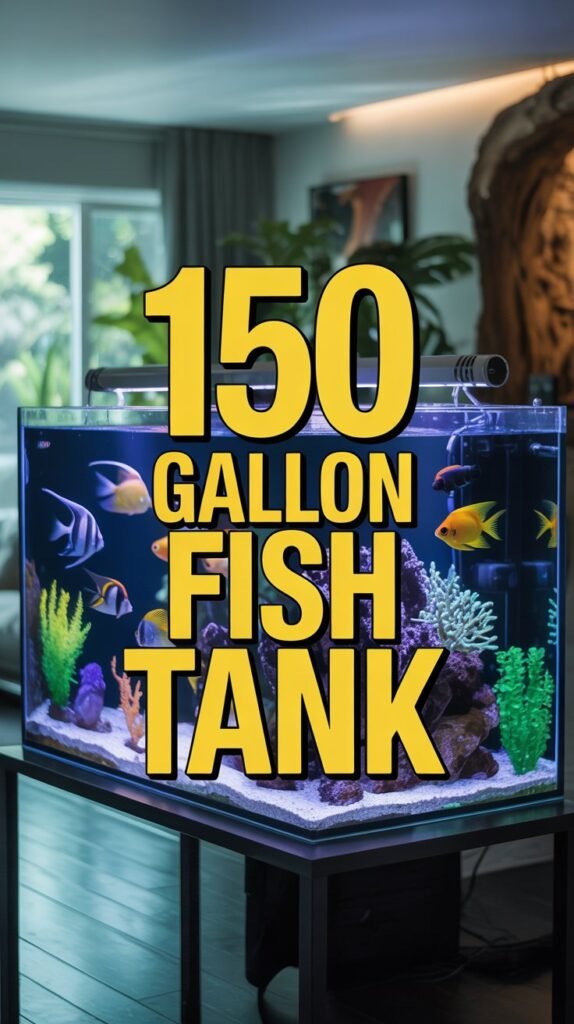
A fully set up 150 gallon fish tank is extremely heavy and requires a strong stand.
Approximate weight:
- Water: 568 kg
- Glass tank: 90–120 kg
- Substrate and décor: 50–80 kg
Total weight: 700–770 kg
Floor strength and proper support are critical.
Types of 150 Gallon Fish Tanks
A 150 gallon fish tank comes in many types based on material, shape, and purpose. Below is a complete breakdown of all major types.
1. Glass 150 Gallon Fish Tank
The most common and widely used option.
Advantages:
- Crystal-clear viewing
- Scratch resistant
- Durable and long-lasting
Disadvantages:
- Extremely heavy
- Requires strong stand
Best for permanent home installations.
2. Acrylic 150 Gallon Fish Tank
A premium alternative to glass.
Advantages:
- Lighter than glass
- Strong and impact resistant
- Seamless modern look
Disadvantages:
- Scratches easily
- Higher cost
Best for luxury and custom setups.
3. Rectangular 150 Gallon Fish Tank
The most fish-friendly design.
Advantages:
- Maximum swimming length
- Easy filtration placement
- Ideal oxygen exchange
Best for community and predator tanks.
4. Bow Front 150 Gallon Fish Tank
Curved front glass for enhanced depth.
Advantages:
- Attractive display
- Wide viewing angle
Disadvantages:
- Slight distortion
- Complex lighting placement
Best for show tanks.
5. Corner 150 Gallon Fish Tank
Designed to fit corners.
Advantages:
- Saves space
- Unique appearance
Disadvantages:
- Limited swimming length
Best for decorative setups.
6. Planted 150 Gallon Fish Tank
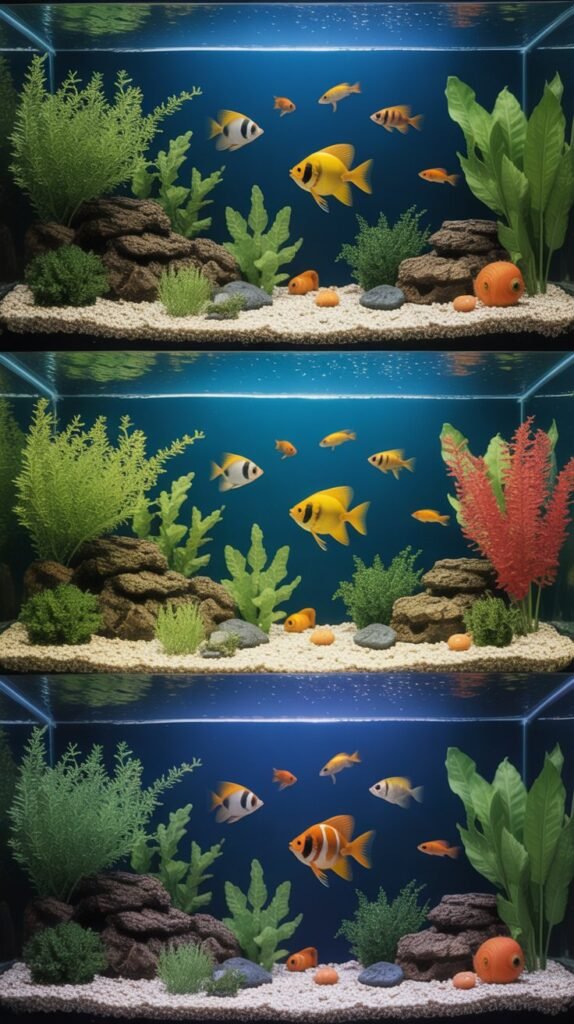
Focused on live aquatic plants.
Advantages:
- Natural ecosystem
- Improved water quality
- Reduced algae
Disadvantages:
- Strong lighting required
- Regular plant maintenance
Ideal for aquascaping enthusiasts.
7. African Cichlid 150 Gallon Fish Tank
Designed for aggressive territorial fish.
Advantages:
- Supports large colonies
- High rock structures
Disadvantages:
- Requires strong filtration
Best for Malawi and Tanganyika cichlids.
8. Predator 150 Gallon Fish Tank
Houses large, aggressive species.
Advantages:
- Supports monster fish
- Allows natural behavior
Disadvantages:
- Heavy feeding load
- Requires frequent maintenance
Best for experienced keepers.
9. Saltwater 150 Gallon Fish Tank
Used for marine fish and coral.
Advantages:
- Stunning colors
- Reef compatibility
Disadvantages:
- High cost
- Complex equipment
Best for advanced aquarists.
Best Fish for a 150 Gallon Fish Tank
This tank allows for a wide range of fish options.
Freshwater Community Fish:
- Angelfish
- Large tetras
- Rainbowfish
- Discus
Cichlids:
- Oscar fish
- Severum
- Peacock cichlids
- Frontosa
Predator Fish:
- Arowana (juvenile only)
- Bichirs
- Large catfish
- Snakeheads (where legal)
Saltwater Fish:
- Tangs
- Angelfish
- Wrasses
- Clownfish (groups)
How Many Fish Can a 150 Gallon Fish Tank Hold?
Stocking depends on species size and behavior.
General guidelines:
- Community fish: 40–60 small to medium fish
- Cichlids: 12–20 depending on aggression
- Predator fish: 3–6 large species
Always prioritize fish size and compatibility.
Equipment Needed for a 150 Gallon Fish Tank
Filtration System
High-capacity canister or sump filtration is essential.
Heater
Multiple heaters recommended for even heat distribution.
Lighting
Depends on fish-only or planted setup.
Air Pumps
Improves oxygen levels in large tanks.
Substrate
Sand, gravel, or planted soil.
Decorations
Rocks, driftwood, caves, and backgrounds.
Setting Up a 150 Gallon Fish Tank
Step-by-Step Setup:
- Position tank on a reinforced stand
- Install background and plumbing
- Add substrate and décor
- Fill tank slowly with water
- Install filtration and heaters
- Start cycling process
- Test water parameters
- Introduce fish gradually
Patience is key with large aquariums.
Cycling a 150 Gallon Fish Tank
Cycling establishes beneficial bacteria.
Benefits:
- Removes ammonia
- Stabilizes water chemistry
- Prevents fish loss
Cycling may take 3–6 weeks.
Maintenance of a 150 Gallon Fish Tank
Weekly Tasks:
- 20–30% water change
- Glass cleaning
- Fish health check
Monthly Tasks:
- Filter maintenance
- Equipment inspection
- Water testing
Large tanks require consistency, not frequency.
Common Mistakes with a 150 Gallon Fish Tank
- Underestimating weight
- Weak stand or floor support
- Overstocking fish
- Poor filtration
- Rushing fish addition
Avoiding these ensures long-term success.
Benefits of a 150 Gallon Fish Tank
- Exceptional stability
- Supports large fish
- Long fish lifespan
- Stunning centerpiece
- Endless design possibilities
150 Gallon Fish Tank FAQs
Is a 150 gallon fish tank good for beginners?
It can be, but only for beginners willing to learn and invest in proper equipment.
How many fish can I keep in a 150 gallon fish tank?
It depends on fish size, but generally far more than smaller tanks.
Do I need a sump for a 150 gallon fish tank?
A sump is highly recommended but not mandatory.
Can a 150 gallon fish tank be planted?
Yes, it is excellent for large planted aquariums.
Is a 150 gallon fish tank suitable for saltwater?
Yes, it is ideal for marine fish and reef systems.
How often should I clean a 150 gallon fish tank?
Weekly partial water changes are ideal.
Can I keep monster fish in a 150 gallon fish tank?
Yes, but choose species carefully based on adult size.
Final Thoughts
A 150 gallon fish tank is a powerful and rewarding aquarium choice that offers unmatched flexibility, beauty, and stability. Whether you prefer freshwater, saltwater, planted, or predator setups, this tank size allows fish to thrive in a natural, spacious environment. With proper planning, strong equipment, and consistent care, a 150 gallon fish tank can become the ultimate centerpiece of your home for many years.