
 By admin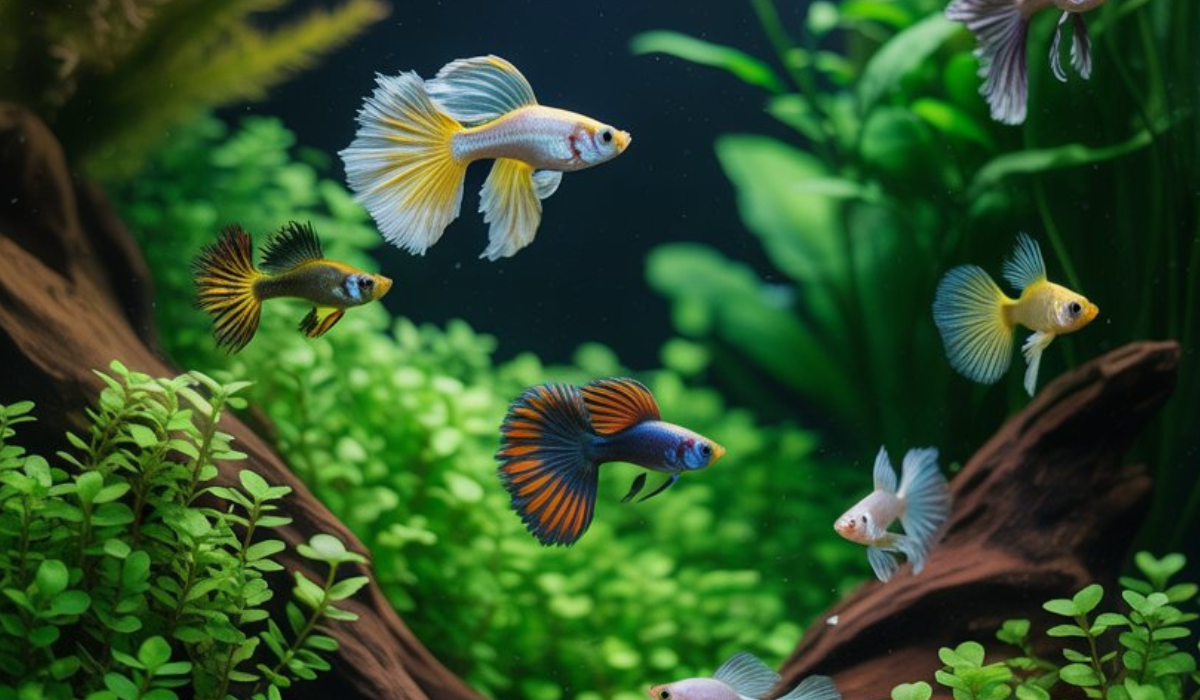
Guppies are among the most colorful and lively freshwater fish in the aquarium hobby. A well-designed aquascape not only enhances their beauty but also improves their health, breeding success, and natural behavior. This complete guide covers everything you need to know about building, maintaining, and perfecting a guppy aquascape.
The common guppy, scientifically known as Poecilia reticulata, is a hardy livebearer that thrives in planted aquariums with stable water conditions and open swimming space.
1. Understanding Guppies Before Aquascaping
Before designing your tank, it’s important to understand guppy behavior:
- Active mid-to-top swimmers
- Prefer gentle water flow
- Thrive in slightly alkaline water
- Breed frequently
- Males display bright colors and flowing fins
An aquascape for guppies should balance beauty, function, and practicality.
2. Choosing the Right Tank Size
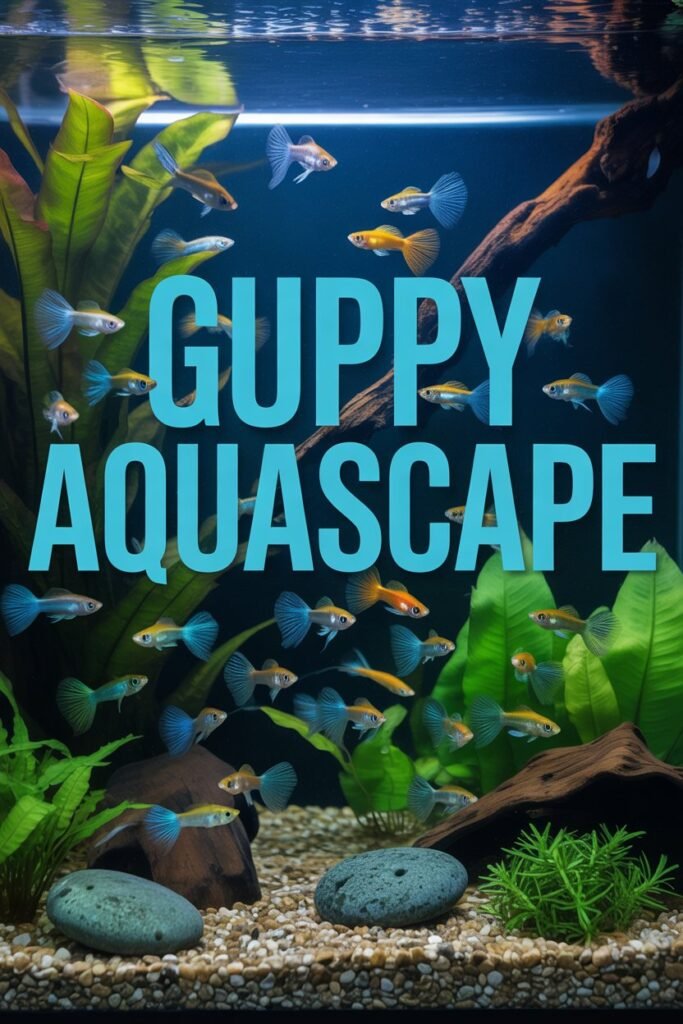
While guppies can survive in small tanks, aquascaping requires more room.
Minimum Size: 10 gallons
Recommended Size: 20 gallons or larger
Larger tanks:
- Maintain stable water parameters
- Allow better layout design
- Support plant growth
- Reduce aggression
3. Selecting an Aquascape Style
Nature-Style Aquascape
Inspired by natural streams with driftwood and plants.
Best for both display and breeding.
Jungle-Style Aquascape
Dense plant growth with minimal hardscape.
Excellent for fry survival.
Minimalist Layout
Open swimming area with one focal hardscape piece.
Ideal for showcasing fancy guppies.
4. Hardscape: The Foundation of Your Design
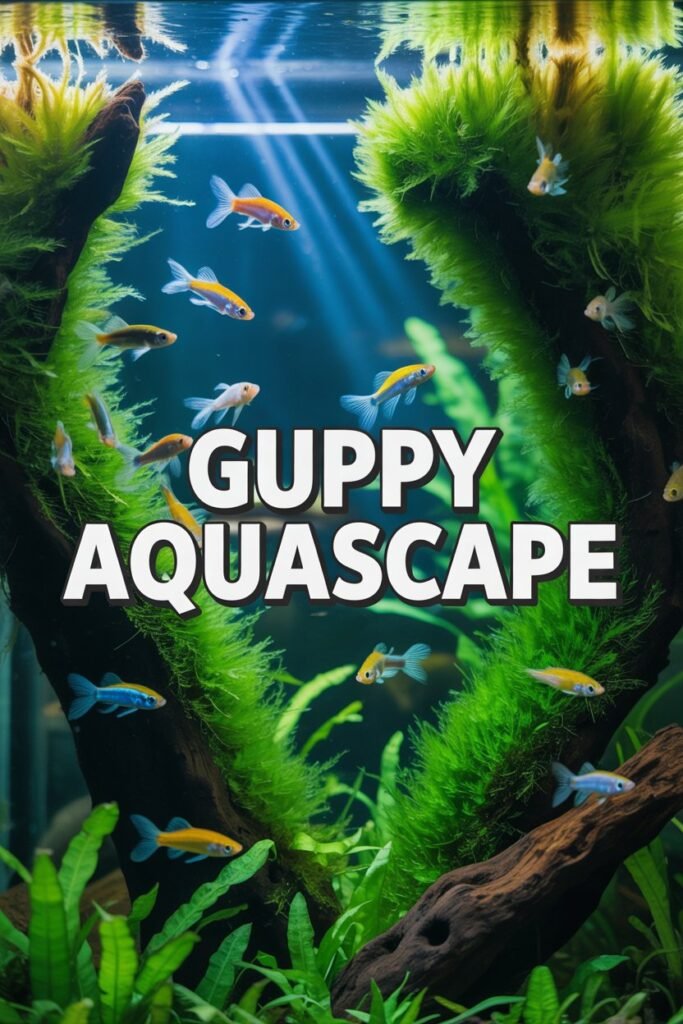
Hardscape creates structure and visual impact.
Driftwood
- Provides natural look
- Safe for guppies
- Ideal for attaching moss or Anubias
Rocks
Use smooth stones such as:
- Lava rock
- River stones
Avoid sharp edges to protect delicate guppy fins.
5. Choosing the Right Plants
Plants are essential in a guppy aquascape. They:
- Improve water quality
- Provide fry hiding spots
- Reduce stress
- Enhance visual depth
Beginner-Friendly Plants
- Java moss
- Anubias
- Java fern
- Water sprite
- Guppy grass
- Hornwort
Midground Plants
- Cryptocoryne
- Dwarf sagittaria
Background Plants
- Rotala
- Amazon sword
- Vallisneria
Floating plants such as water lettuce help diffuse light and create shelter.
6. Substrate Selection
Two main options:
Nutrient-Rich Aquasoil
Best for heavy planting.
Gravel or Sand + Root Tabs
Budget-friendly and effective.
Dark substrate often makes guppy colors appear more vibrant.
7. Lighting and CO₂
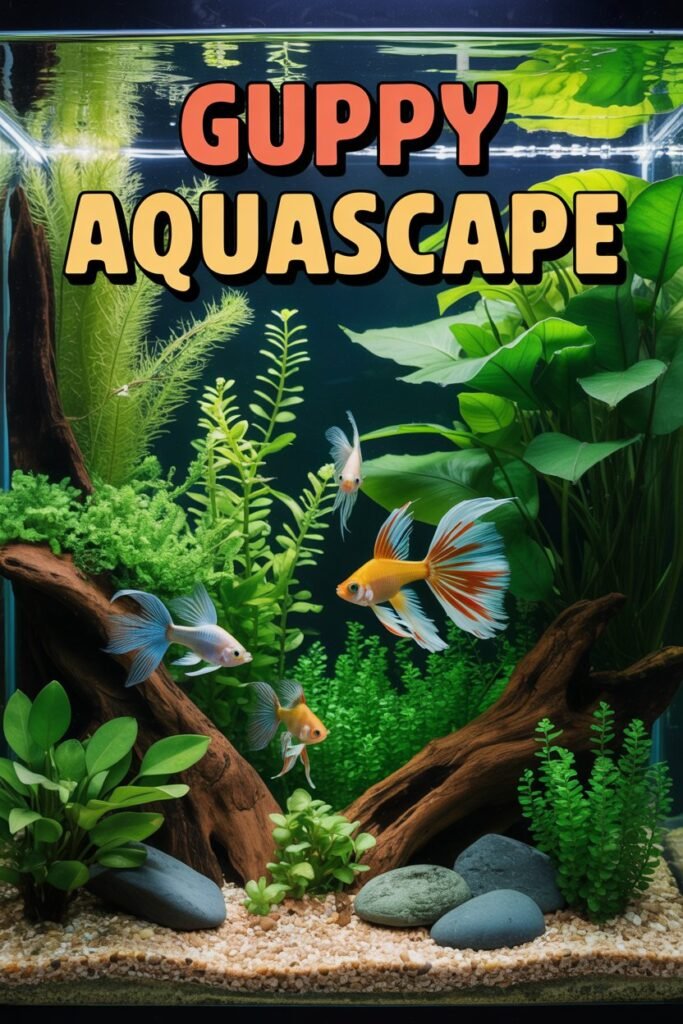
Low-Tech Setup (Most Recommended)
- Moderate LED light
- 6–8 hours daily
- No CO₂ required
High-Tech Setup
- Strong lighting
- CO₂ injection
- Faster plant growth
- More maintenance
Guppies do not require CO₂, so low-tech setups are ideal.
8. Filtration and Water Flow
Guppies prefer gentle flow.
Best filtration options:
- Sponge filter
- Adjustable hang-on-back filter
Avoid strong currents that stress fish and damage fins.
9. Ideal Water Parameters
| Parameter | Ideal Range |
|---|---|
| Temperature | 25–27°C |
| pH | 7.0–7.5 |
| Hardness | Moderate |
| Ammonia | 0 ppm |
| Nitrite | 0 ppm |
| Nitrate | Below 20 ppm |
Consistency is more important than chasing perfect numbers.
10. Designing the Layout
Rule of Thirds
Place your main focal point (driftwood or rock) slightly off-center.
Create Depth
- Tall plants at back
- Medium plants mid-level
- Short plants front
Leave Open Swimming Space
Guppies need room to swim and display.
11. Color Coordination Tips
Match aquascape tones with guppy strains:
- Red guppies → deep green plants
- Blue guppies → lighter greens
- Yellow guppies → dark hardscape
Contrast creates dramatic visual impact.
12. Stocking Considerations
Ideal group:
- 1 male per 2–3 females
OR - All-male display tank
Compatible tank mates:
- Corydoras
- Nerite snails
- Small peaceful tetras
Avoid fin-nipping fish.
13. Maintenance Routine
Weekly:
- 20–30% water change
- Trim plants
- Clean glass
Monthly:
- Light filter cleaning
- Check plant health
Stable maintenance ensures long-term success.
14. Breeding in a Display Aquascape
Guppies breed easily in planted tanks.
To improve fry survival:
- Add dense moss
- Use floating plants
- Reduce strong filtration
However, heavy planting makes selective breeding more difficult.
15. Common Mistakes to Avoid
- Overcrowding
- Poor lighting balance
- Strong water flow
- Ignoring plant trimming
- Mixing too many decorative elements
Simplicity often creates the most elegant aquascapes.
16. Example Setup Plan (20-Gallon Guppy Aquascape)
Substrate: Dark aquasoil
Hardscape: One large driftwood piece
Plants:
- Java moss (attached to wood)
- Rotala (background)
- Cryptocoryne (midground)
- Dwarf sag (foreground)
Filter: Sponge filter
Lighting: Moderate LED
This setup balances beauty, functionality, and breeding potential.
17. Final Thoughts
A guppy aquascape is more than just decoration—it creates a healthy ecosystem where vibrant fish and lush plants thrive together. By choosing the right tank size, gentle filtration, appropriate plants, and thoughtful design, you can build a stunning display that highlights the natural beauty of guppies.
Whether you are keeping guppies for enjoyment, breeding, or photography, a carefully planned aquascape will transform your aquarium into a living work of art.