
 By admin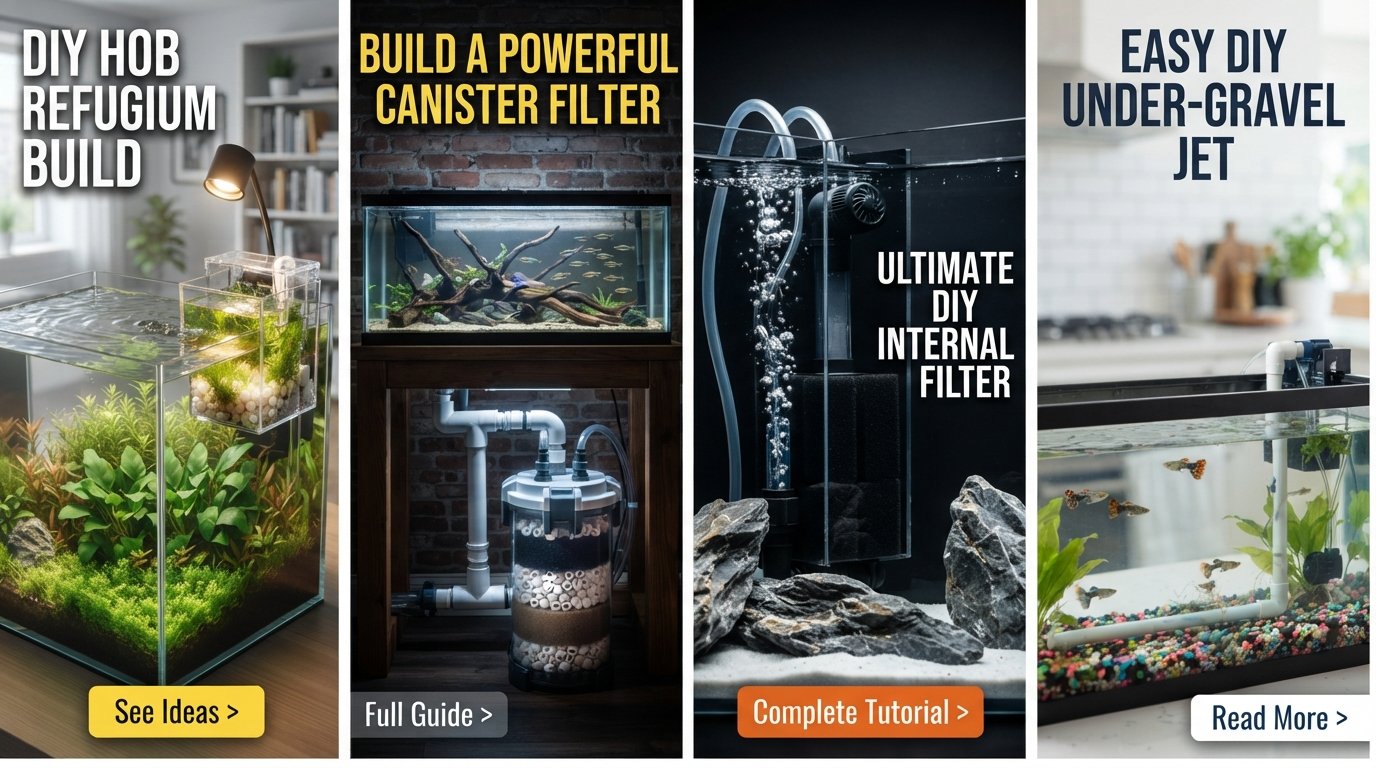
A DIY aquarium filter is an affordable and effective way to keep your fish tank clean and healthy. Building your own filter allows you to customize the filtration system according to your aquarium’s size, fish species, and budget. Whether you have a small nano tank or a large aquarium, a homemade filter can provide excellent mechanical and biological filtration when designed correctly.
This complete guide covers different DIY aquarium filter ideas, materials, step-by-step instructions, and maintenance tips.
Why Build a DIY Aquarium Filter?
Many aquarium hobbyists choose DIY filters because they offer several advantages:
- Lower cost than commercial filters
- Easy to customize
- Simple to repair
- Suitable for all tank sizes
- Great learning experience
- Allows the use of larger filter media
A properly designed DIY filter can perform as well as many commercial systems.
Understanding Aquarium Filtration
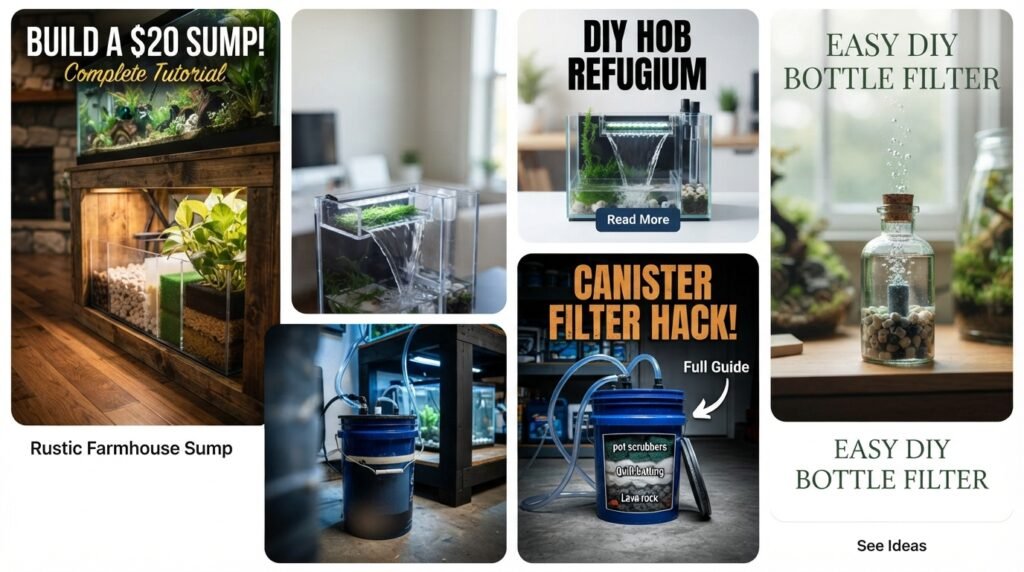
An effective aquarium filter usually performs three types of filtration.
Mechanical Filtration
Removes:
- Fish waste
- Uneaten food
- Debris
- Plant material
Biological Filtration
Provides a home for beneficial bacteria that convert harmful waste products into less harmful compounds.
Chemical Filtration
Uses materials such as activated carbon to remove impurities and odors when desired.
A good DIY filter should focus primarily on mechanical and biological filtration.
DIY Sponge Filter
One of the easiest filters to build.
Materials Needed
- Aquarium sponge
- Air pump
- Airline tubing
- Air stone or uplift tube
- PVC pipe
How It Works
Air bubbles pull water through the sponge, trapping debris and providing excellent biological filtration.
Benefits
- Inexpensive
- Safe for shrimp and fry
- Easy to maintain
- Excellent biological filtration
DIY Internal Filter
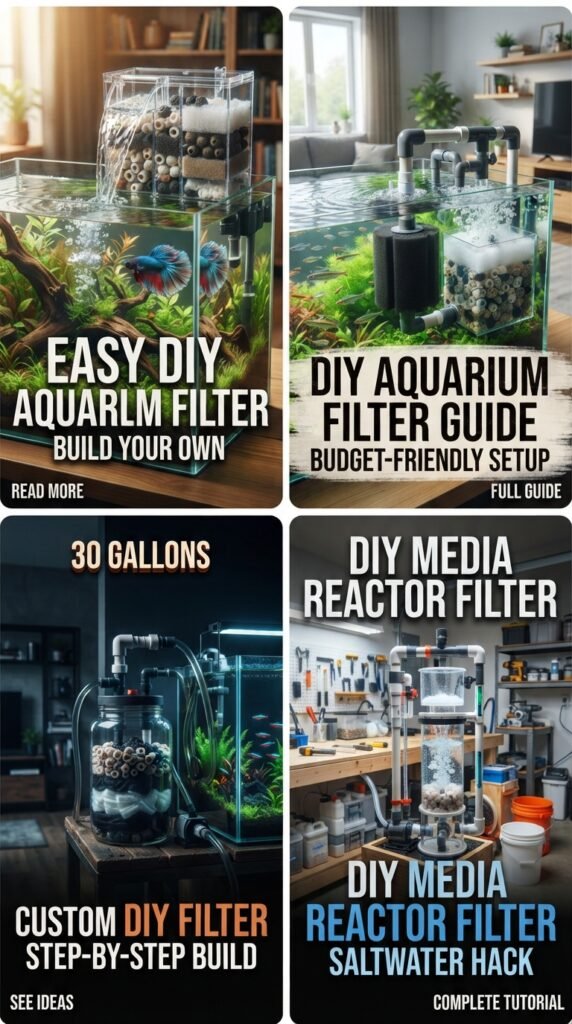
Materials
- Small plastic container
- Aquarium sponge
- Filter floss
- Small water pump
Assembly
- Drill small holes in the container.
- Place sponge and filter media inside.
- Install the water pump.
- Place the filter inside the aquarium.
This design works well for small and medium aquariums.
DIY Hang-On-Back Filter
Materials
- Plastic container
- Small pump
- Filter sponge
- Filter floss
- Biological media
Advantages
- Saves space inside the aquarium
- Easy to access for cleaning
- Highly customizable
DIY Canister Filter
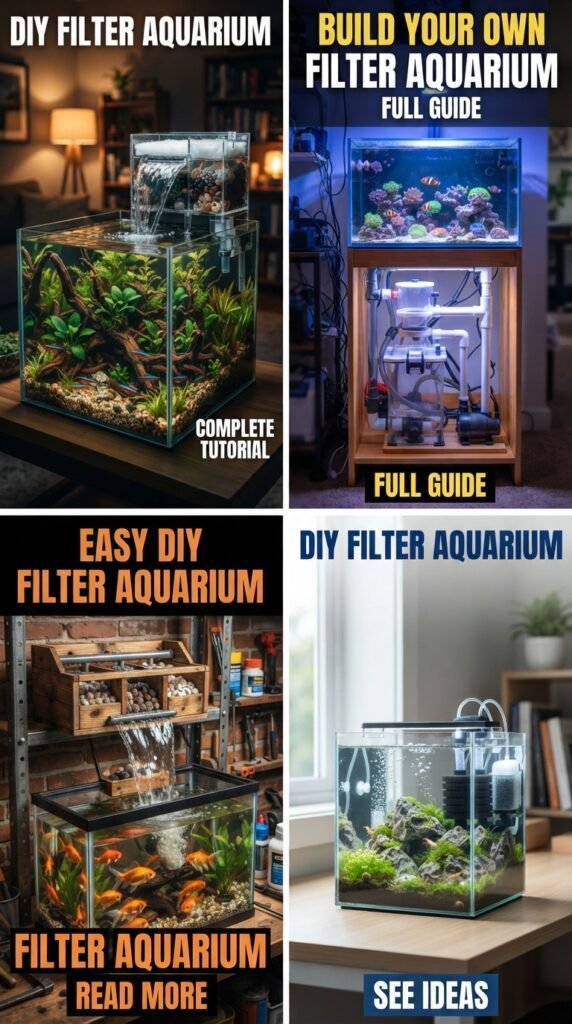
A canister filter can be built for larger aquariums.
Materials
- Sealed container
- Water pump
- Tubing
- Filter sponges
- Biological media
- Valves and connectors
Benefits
- High filtration capacity
- Large media volume
- Suitable for heavily stocked tanks
Ensure all connections are secure to prevent leaks.
DIY Bottle Filter
A simple beginner project.
Materials
- Plastic bottle
- Sponge
- Airline tubing
- Air pump
Steps
- Cut the bottle.
- Add sponge media.
- Install the airline.
- Place the filter inside the aquarium.
This design is useful for small tanks and breeding setups.
DIY Corner Filter
Materials
- Small plastic container
- Sponge
- Airline tubing
- Air pump
Corner filters fit neatly into small aquariums and provide gentle filtration.
DIY Overhead Filter
Materials
- Plastic box
- Water pump
- Filter media
- Return pipe
Water is pumped into the box and flows through multiple layers of filtration media before returning to the aquarium.
This design is suitable for medium and large aquariums.
Best Filter Media for DIY Filters
Mechanical Media
- Filter floss
- Sponge pads
- Foam blocks
Biological Media
- Ceramic rings
- Bio balls
- Lava rock
- Sponge material
Chemical Media
- Activated carbon
- Specialized chemical media when needed
Biological media is particularly important because it supports beneficial bacteria.
DIY Filter for a Nano Aquarium
A simple sponge filter is often the best choice for:
- Betta tanks
- Shrimp tanks
- Fry tanks
- Small planted aquariums
Nano aquariums generally benefit from gentle water flow.
DIY Filter for Large Aquariums
Larger aquariums may require:
- Large canister filters
- Overhead filters
- Sump systems
These designs provide greater filtration capacity and water circulation.
DIY Aquarium Sump Filter
A sump is one of the most powerful filtration systems available.
Components
- Overflow system
- Filter socks or sponges
- Biological media chamber
- Return pump
Benefits
- Huge media capacity
- Excellent water quality
- Easy maintenance
- Hidden equipment
Sumps are particularly useful for large freshwater and marine aquariums.
DIY Filter for Shrimp Tanks
Shrimp require gentle filtration.
Recommended options include:
- Sponge filters
- Air-driven corner filters
Avoid strong suction that may trap baby shrimp.
Decorating Around DIY Filters
You can hide filters using:
- Driftwood
- Rocks
- Tall plants
- Background panels
A concealed filter creates a more natural appearance.
Maintenance Tips
Regular maintenance keeps the filter functioning properly.
Clean the Sponge
Rinse in old aquarium water to preserve beneficial bacteria.
Replace Filter Floss
Replace only when necessary.
Check Pumps
Inspect pumps and tubing regularly.
Monitor Water Flow
Reduced flow often indicates that cleaning is needed.
Avoid Overcleaning
Cleaning all media at once can remove beneficial bacteria.
Common DIY Filter Mistakes
Using an Undersized Pump
The filter may not provide adequate circulation.
Overpacking Media
Restricting water flow can reduce filter efficiency.
Poor Sealing
Leaks can occur in homemade canister systems.
Cleaning With Tap Water
Chlorinated water may harm beneficial bacteria.
Ignoring Maintenance
A dirty filter can reduce water quality.
Benefits of DIY Aquarium Filters
A homemade filter offers many advantages.
- Budget-friendly
- Easy to customize
- Educational project
- Effective filtration
- Suitable for any tank size
- Simple to repair and modify
With careful design, a DIY filter can provide years of reliable service.
Conclusion
A DIY aquarium filter is an excellent way to maintain a healthy aquarium while saving money and learning more about aquarium filtration. Whether you choose a simple sponge filter, a hang-on-back design, or a large sump system, the key to success is providing adequate mechanical and biological filtration and maintaining the filter regularly.
By selecting the right materials and following proper maintenance practices, you can build an efficient filtration system that keeps your aquarium clean, clear, and healthy for your fish and plants.
Frequently Asked Questions
Are DIY aquarium filters effective?
Yes. Properly designed DIY filters can provide excellent filtration and perform similarly to many commercial systems.
What is the easiest DIY filter to build?
A sponge filter or bottle filter is usually the simplest option for beginners.
Can I use a DIY filter for a large aquarium?
Yes. Canister filters, overhead filters, and sump systems can be built for larger aquariums.
What filter media should I use?
A combination of sponge, filter floss, and biological media such as ceramic rings works well for many aquariums.
How often should I clean my DIY filter?
Clean the filter when water flow decreases or during regular maintenance, usually every few weeks depending on the aquarium.
Can I build a filter for a shrimp tank?
Yes. Air-driven sponge filters are among the best options because they provide gentle filtration and are safe for baby shrimp.