
 By admin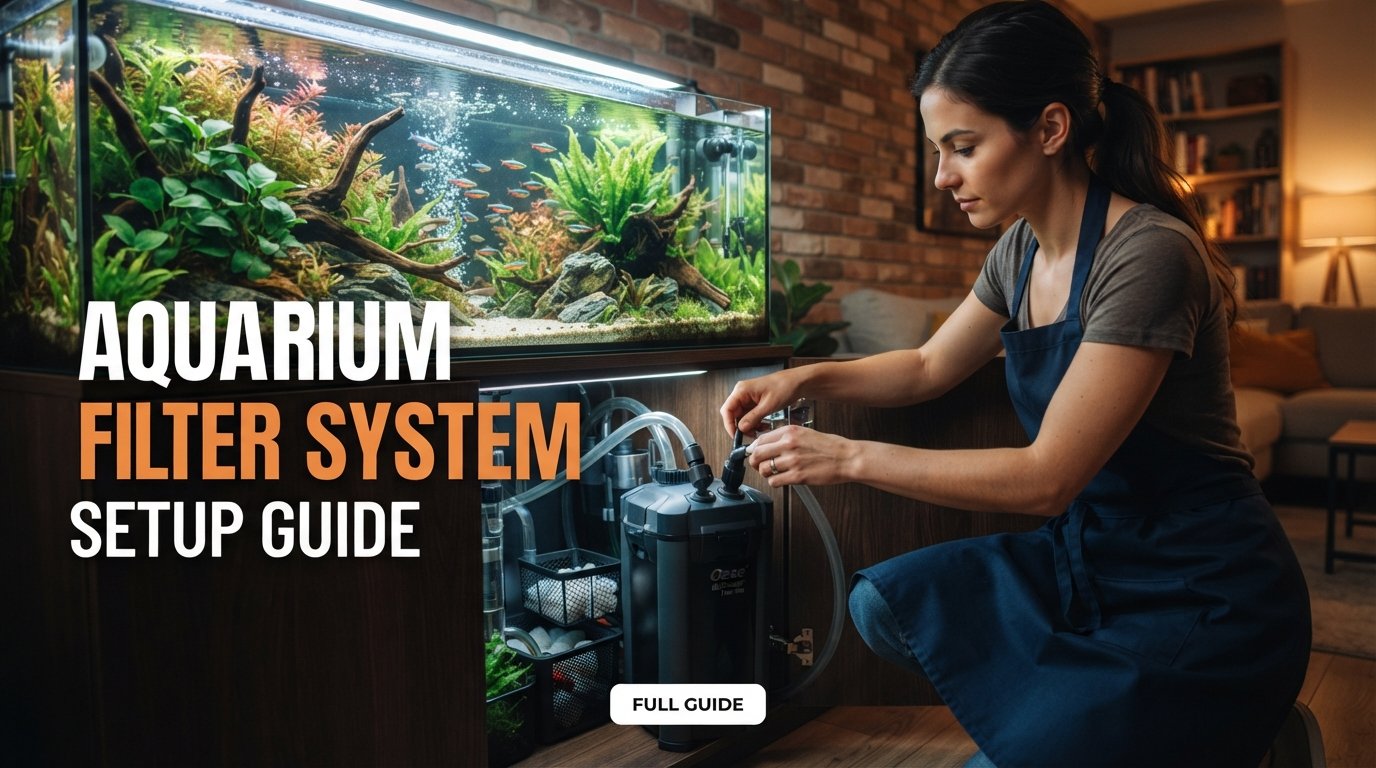
An aquarium filter system is one of the most important pieces of equipment in a fish tank. A good filter helps remove waste, keeps water clear, supports beneficial bacteria, and creates the water movement needed for a healthy aquatic environment.
Choosing the right filtration system depends on aquarium size, fish species, stocking level, plants, and maintenance preferences.
What Is an Aquarium Filter System?
An aquarium filter system circulates tank water through one or more filtration stages before returning the cleaned water to the aquarium.
Most aquarium filters provide three main types of filtration:
- Mechanical filtration – removes particles and debris.
- Biological filtration – provides surfaces for beneficial bacteria.
- Chemical filtration – uses materials such as activated carbon to remove certain dissolved substances.
Biological filtration is particularly important because beneficial bacteria help process toxic fish waste.
How Aquarium Filtration Works
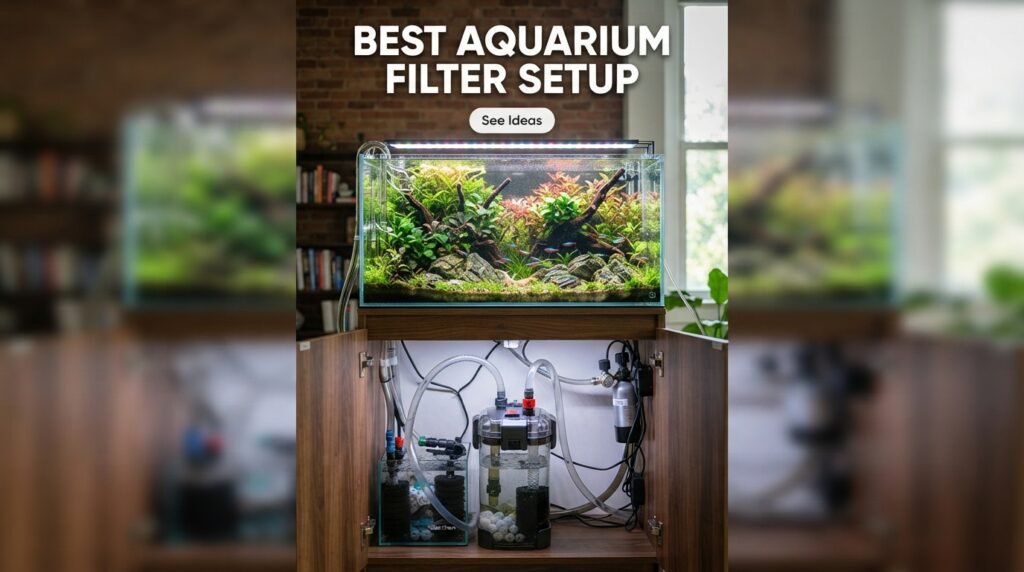
Water is drawn from the aquarium into the filter.
The water passes through filtration media that can trap debris and support beneficial microorganisms. It is then returned to the aquarium.
A typical filtration process looks like:
Aquarium water → Mechanical media → Biological media → Optional chemical media → Return to aquarium
The exact arrangement depends on the filter design.
Types of Aquarium Filters
There are several common filtration systems.
1. Sponge Filter
Sponge filters are simple, affordable, and popular for:
- Shrimp tanks
- Breeding tanks
- Fry tanks
- Small community aquariums
An air pump pushes water through the sponge, where beneficial bacteria colonize the surface.
2. Hang-On-Back Filter
A hang-on-back filter, often called an HOB filter, hangs on the rear of the aquarium.
Advantages include:
- Easy installation
- Good mechanical filtration
- Easy access to media
- Space-saving design
They are popular for small and medium freshwater aquariums.
3. Canister Filter
Canister filters sit outside the aquarium and circulate water through a sealed filtration chamber.
They can provide substantial mechanical and biological filtration and are commonly used for:
- Large planted aquariums
- Community tanks
- Cichlid aquariums
- High-stock aquariums
Their larger media capacity can be an advantage for demanding setups.
4. Internal Filter
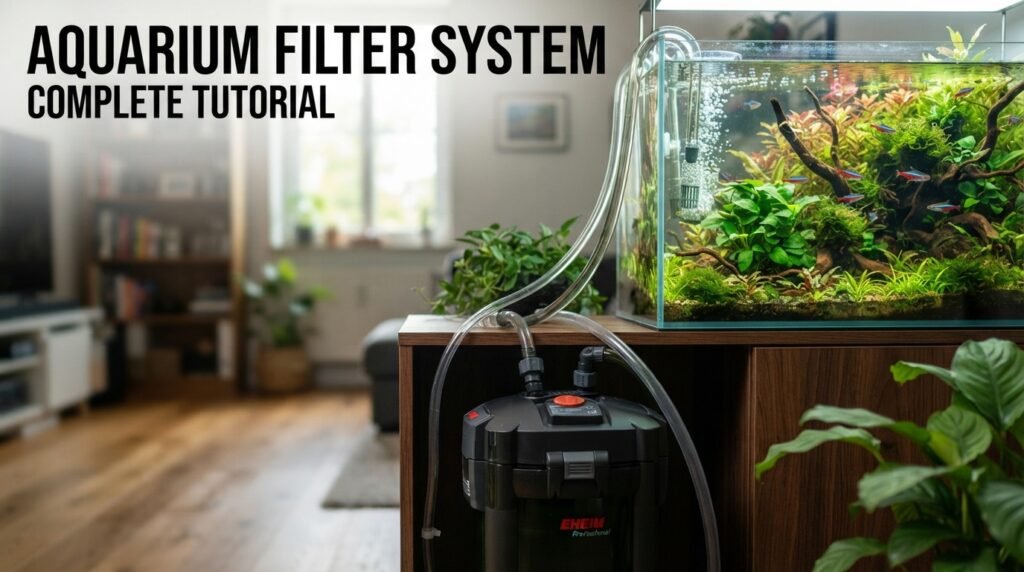
An internal filter sits inside the aquarium.
These filters are compact and can work well for smaller tanks.
They are generally easy to install but occupy some internal aquarium space.
5. Undergravel Filter
Undergravel systems pull water through the substrate.
They are less common in modern aquascaping but can still be useful in certain aquarium setups.
6. Sump Filter
A sump is a separate filtration chamber connected to the main aquarium.
Sumps provide a large amount of space for:
- Biological media
- Mechanical filtration
- Heaters
- Protein skimmers in marine systems
- Other equipment
They are particularly useful for large or specialized aquariums.
Aquarium Filter Media
Different media perform different jobs.
| Filter Media | Main Purpose |
|---|---|
| Filter floss | Mechanical filtration |
| Sponge | Mechanical and biological filtration |
| Ceramic media | Biological filtration |
| Bio balls | Biological filtration |
| Activated carbon | Chemical filtration |
| Filter pads | Mechanical filtration |
| Specialty resins | Targeted chemical filtration |
A filter does not necessarily need every type of media.
Mechanical Filtration
Mechanical media physically traps particles.
It can remove:
- Uneaten food
- Fish waste
- Plant debris
- Suspended particles
Fine filter floss can produce especially clear-looking water.
Mechanical media should be cleaned or replaced as appropriate because clogged material restricts water flow.
Biological Filtration
Biological filtration is essential for aquarium stability.
Beneficial bacteria colonize surfaces such as:
- Sponge
- Ceramic media
- Bio rings
- Filter pads
- Aquarium substrate
These microorganisms help convert toxic ammonia into nitrite and then nitrate as part of the nitrogen cycle.
Chemical Filtration
Chemical media can remove specific dissolved substances.
Activated carbon is commonly used for general chemical filtration, while specialized media may target particular compounds.
Chemical filtration is not always necessary for a healthy aquarium.
Choosing the Right Filter Size
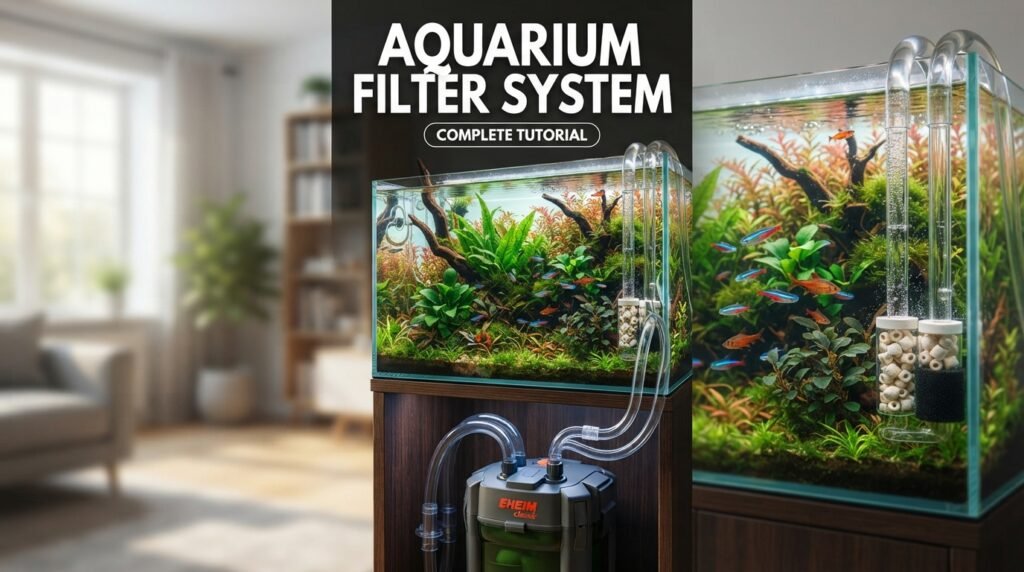
Do not select a filter solely by aquarium volume.
Consider:
- Fish species
- Number of fish
- Fish size
- Waste production
- Aquarium dimensions
- Desired water movement
- Filter media capacity
A lightly stocked aquarium may need less filtration than a heavily stocked aquarium of the same size.
Aquarium Filter Flow Rate
Filter manufacturers commonly provide a flow rating.
However, actual flow can be lower after adding media, tubing, and other components.
The ideal flow depends on the fish.
Some fish prefer strong currents, while delicate or slow-moving species may prefer gentler water movement.
Best Filter for a Planted Aquarium
A planted aquarium can use several filter types.
Canister filters are popular for medium and large planted tanks because they can provide substantial media capacity while keeping equipment outside the display.
Sponge filters can be excellent for smaller planted shrimp aquariums.
The best choice depends on aquarium size and livestock.
Best Filter for a Shrimp Aquarium
Sponge filters are especially popular for shrimp tanks.
They provide:
- Gentle water movement
- Biological filtration
- Low risk of shrimp being sucked into the intake
- Easy maintenance
A pre-filter sponge can also be used on suitable filter intakes.
Best Filter for a Cichlid Aquarium
Cichlids can produce significant waste, particularly larger species.
A powerful filtration setup may include:
- Canister filtration
- Large HOB filtration
- Sump filtration
- Additional sponge filtration
Choose filtration based on the species, aquarium size, and stocking level.
Aquarium Filter for Betta Fish
Bettas generally prefer gentle water movement.
A sponge filter or appropriately adjusted internal/HOB filter can work well.
If the current is too strong, use a flow-control feature, baffle, or other appropriate method to reduce turbulence.
Aquarium Filter for Goldfish
Goldfish produce substantial waste relative to their size.
They benefit from strong biological and mechanical filtration, along with adequate aquarium volume and regular maintenance.
Larger setups may benefit from multiple filtration methods.
Filter Placement
Place the filter where it can circulate water effectively.
Avoid creating areas where debris constantly accumulates because of poor circulation.
For many setups, positioning the return flow toward one side of the aquarium helps create a circulation pattern across the tank.
Aquarium Filter Maintenance
Regular maintenance keeps filtration working efficiently.
Mechanical Media
Rinse reusable mechanical media when it becomes clogged.
Biological Media
Avoid aggressively cleaning biological media because beneficial bacteria live on its surfaces.
If cleaning is necessary, use removed aquarium water rather than chlorinated tap water.
Filter Intake
Inspect the intake regularly for debris and plant material.
Impeller
Check and clean the impeller periodically according to the manufacturer’s instructions.
Should You Replace Filter Media?
Not every piece of filter media should be replaced at the same time.
Biological media can often be maintained for long periods.
Replacing all biological media simultaneously can unnecessarily reduce established beneficial bacteria.
Follow the manufacturer’s instructions for disposable media while prioritizing preservation of biological filtration.
Common Aquarium Filter Problems
Filter Is Too Loud
Check the impeller, water level, trapped air, and installation.
Weak Water Flow
Possible causes include:
- Clogged media
- Dirty intake
- Blocked tubing
- Dirty impeller
- Excessive filter media
Cloudy Water
Cloudiness can result from suspended particles, bacterial blooms, or other water-quality issues.
Strong Current
Reduce flow or redirect the outlet when fish struggle against the current.
Filter Stops Working
Check power, water level, intake blockage, impeller condition, and manufacturer instructions.
Aquarium Filter System Setup
A basic freshwater filtration setup can include:
Intake → Mechanical sponge → Fine mechanical media → Biological media → Return
The exact arrangement can vary depending on the filter.
For many aquariums, biological media should receive reasonably clean water so that excessive debris does not quickly clog it.
Can You Have Two Filters?
Yes. Using two filters can provide several benefits.
For example:
- More biological media
- Increased water circulation
- Backup filtration
- Easier maintenance
Two filters can be particularly useful in larger or heavily stocked aquariums.
Aquarium Filter and Water Changes
A filter does not replace water changes.
Filtration helps process waste and maintain water quality, but regular partial water changes remain an important part of aquarium maintenance.
The required schedule depends on:
- Stocking level
- Aquarium size
- Feeding
- Plant growth
- Nitrate accumulation
- Overall water quality
Conclusion
A properly selected aquarium filter system is the foundation of a healthy fish tank. Sponge filters, HOB filters, canister filters, internal filters, and sumps can all work effectively when matched to the aquarium and its inhabitants.
The most important considerations are adequate biological filtration, appropriate mechanical filtration, suitable water movement, and regular maintenance. Rather than choosing the biggest filter available, select a system that provides enough filtration for your livestock without creating excessive current.
A clean, properly maintained filter combined with stable water conditions can make aquarium keeping easier and create a healthier environment for fish, shrimp, plants, and other aquatic life.
Frequently Asked Questions
What is the best aquarium filter?
There is no single best filter for every aquarium. Sponge filters are excellent for many small tanks and shrimp setups, HOB filters work well for many small and medium aquariums, and canister or sump systems can be suitable for larger or heavily stocked tanks.
Does an aquarium filter provide oxygen?
Water movement from a filter can improve gas exchange at the surface, which can increase oxygen availability. The effect depends on the filter design and surface agitation.
How often should an aquarium filter be cleaned?
Clean the filter when flow becomes noticeably reduced or media becomes clogged. The exact schedule depends on the aquarium and filter.
Should biological filter media be replaced?
Usually, biological media does not need frequent replacement. Maintaining established biological media can help preserve beneficial bacteria.
Can a filter be too strong for fish?
Yes. Excessive current can stress fish that naturally prefer calm or slow-moving water.
Do planted aquariums need filters?
Most planted aquariums containing fish or other aquatic animals benefit from appropriate filtration. The plants themselves do not replace the need for proper biological filtration.
Can I run two aquarium filters?
Yes. Two filters can provide additional filtration, circulation, and redundancy, provided the combined flow is appropriate for the livestock.