
 By admin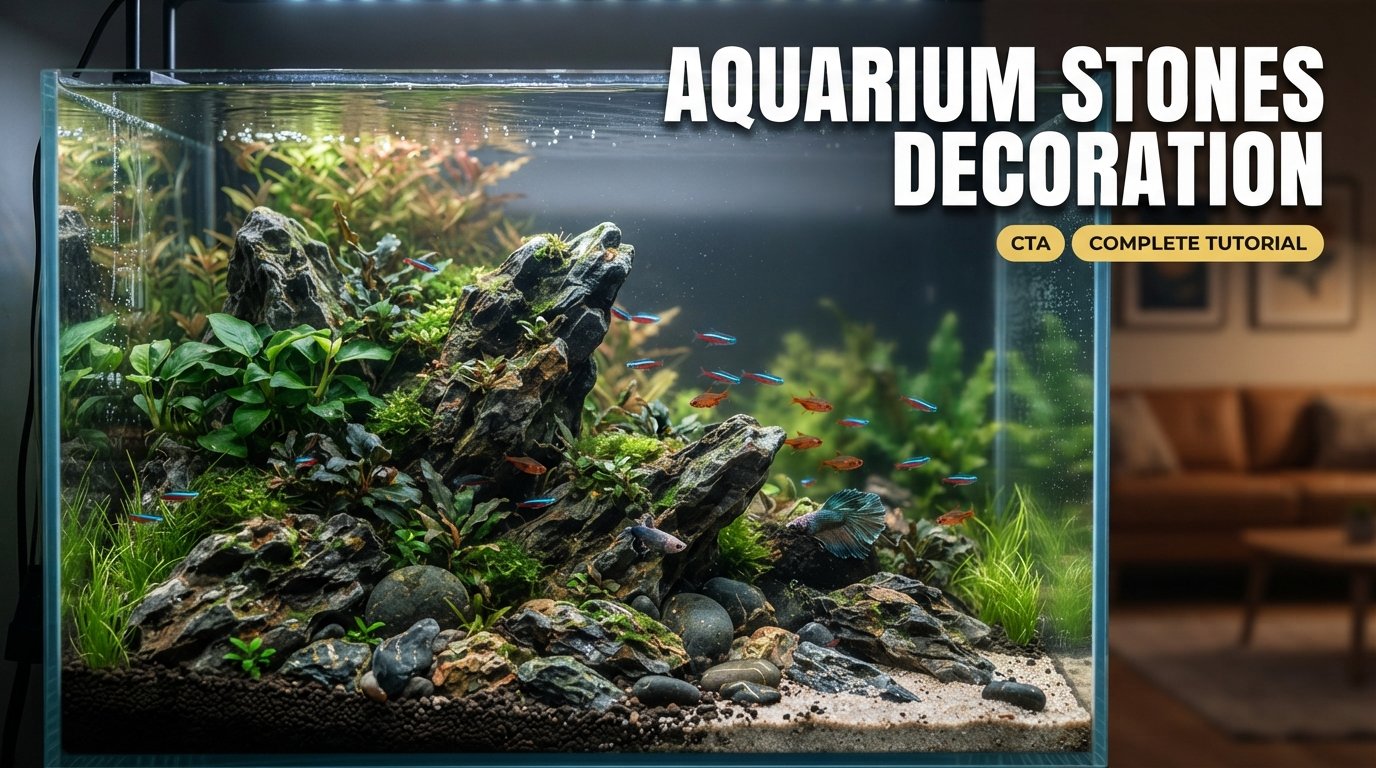
Aquarium stones decoration is one of the easiest ways to transform a simple fish tank into an attractive underwater landscape. Stones can create mountains, caves, pathways, islands, and natural-looking rock formations while providing structure for aquatic plants.
The best stone decoration is not simply about adding as many rocks as possible. A balanced arrangement with different sizes, natural textures, and open swimming space usually creates a much better result.
1. Natural Stone Aquarium
Create a simple natural landscape using stones in different sizes.
Place one large stone as the focal point and surround it with several smaller stones. Add aquatic plants around the base to soften the edges.
This design works well for both beginner and advanced aquascapes.
2. Aquarium Stone Mountain
Create an underwater mountain using several stones of similar color and texture.
Use:
- One dominant stone
- Medium supporting stones
- Small detail stones
- Low-growing plants
Angle the stones in a similar direction to make the formation look naturally connected.
3. Stone Cave Aquarium
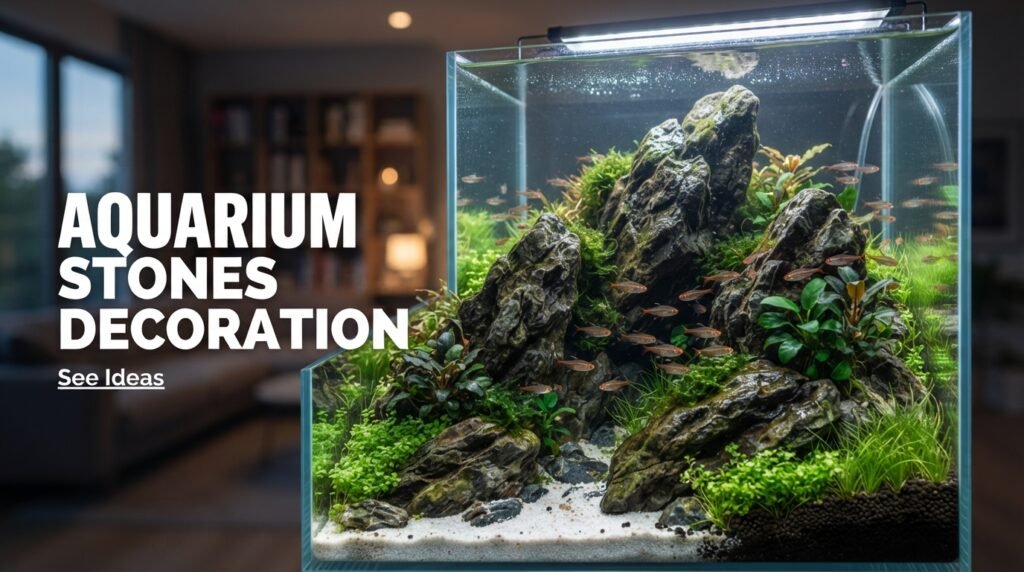
Stones can be arranged to create small caves and hiding areas.
Caves can provide shelter for suitable fish and create additional visual depth.
Always make sure the structure is stable before adding fish.
4. Stone and Sand Aquarium
A combination of smooth stones and sand creates a clean, natural appearance.
Try creating a narrow sand path between two groups of stones. The path can make the aquarium appear deeper and guide the viewer’s eye toward the background.
5. Stone and Driftwood Decoration
Combine rocks with driftwood to create a natural river or forest environment.
Place stones around the base of the wood so they look like part of the same landscape.
Add moss or Anubias to the wood for additional texture.
6. Minimal Stone Aquarium
You do not need many stones to create an impressive design.
A minimalist layout can contain:
- One large focal stone
- Three to five smaller stones
- Fine substrate
- A few aquatic plants
- Plenty of open space
This style is particularly attractive in modern interiors.
7. Iwagumi Stone Decoration
Iwagumi aquascaping places stones at the center of the design.
The layout typically includes a dominant stone accompanied by smaller supporting stones.
Add a carpet of low-growing plants to create a simple grass-covered landscape.
8. River Stone Aquarium
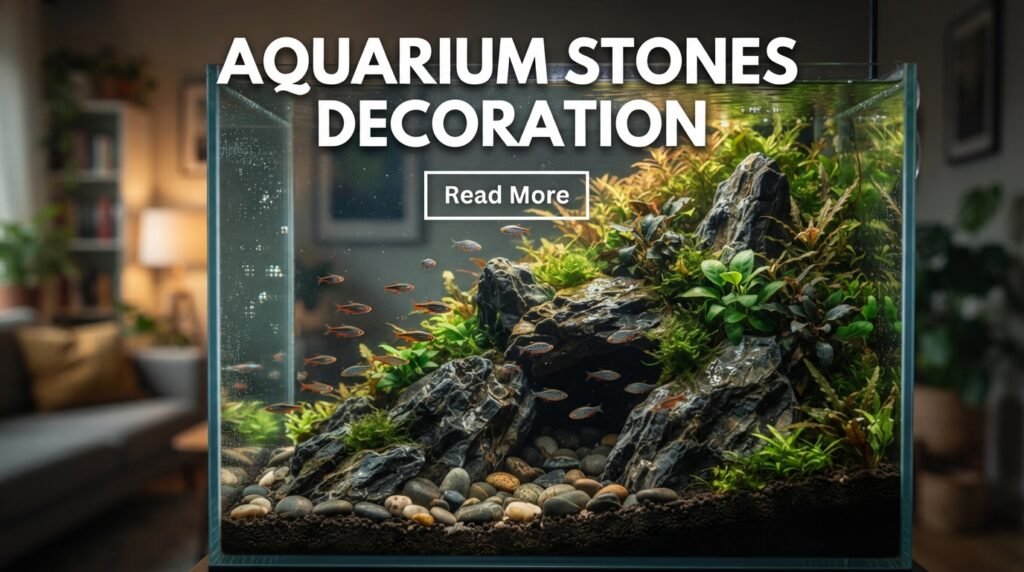
Smooth river stones can create the appearance of a freshwater stream.
Use:
- Rounded stones
- Small pebbles
- Fine sand
- Branch-like driftwood
- Stream-inspired plants
Arrange the stones along an imaginary water-flow direction.
9. Colorful Aquarium Stones
Some aquariums use decorative stones with different natural colors.
However, avoid mixing too many colors because the layout can quickly become visually distracting.
A limited palette of complementary stones usually looks more natural.
10. Black Stone Aquarium
Dark stones create strong contrast with green aquatic plants and colorful fish.
Combine:
- Black or dark rock
- Green plants
- Dark substrate
- Simple background
This style works especially well for minimalist aquariums.
11. White Stone Aquarium
Light-colored stones can create a bright and clean appearance.
Combine them with:
- Green plants
- Natural sand
- Light-colored substrate
- Small colorful fish
Be careful with very bright layouts because some fish may feel more exposed in highly illuminated environments.
12. Aquarium Stones With Moss
Moss can soften hard stone surfaces and make them appear naturally aged.
Attach suitable aquatic moss to selected stones and allow it to grow over time.
This can create a miniature landscape that resembles rocks covered with vegetation.
13. Stone Wall Aquarium
Flat stones can be arranged to create a layered wall effect.
This can work particularly well in:
- Cichlid aquariums
- Cave-style layouts
- Rocky biotopes
Make sure heavy stones are securely positioned.
14. Stone Island Aquarium
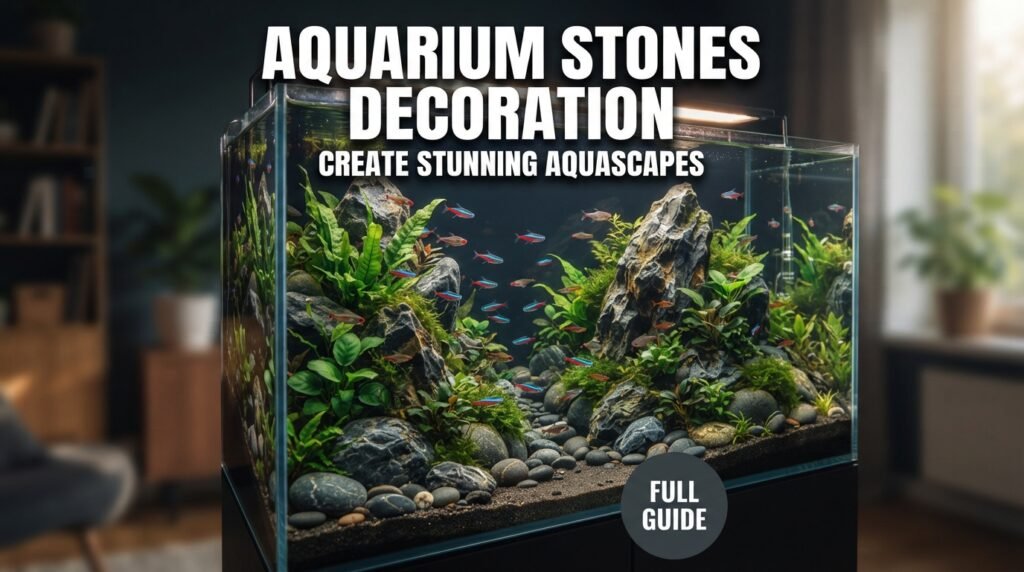
Create a central or off-center group of stones surrounded by open substrate.
Add plants around the base to create an underwater island.
An off-center island often creates a more dynamic composition than a perfectly centered one.
15. Aquarium Stone Pathway
A pathway made from small stones can create depth.
Start with larger stones near the front and gradually use smaller stones toward the back.
The narrowing perspective can make a small aquarium appear larger.
Popular Aquarium Stone Types
| Stone Type | Appearance | Popular Use |
|---|---|---|
| Dragon Stone | Rough and heavily textured | Mountain layouts |
| Seiryu-style Rock | Gray and layered | Iwagumi |
| Lava Rock | Dark and porous | Rock formations |
| Slate | Flat and layered | Walls and terraces |
| River Stones | Smooth and rounded | Natural streams |
| Granite | Hard and varied | Natural layouts |
| Pebbles | Small and smooth | Details and pathways |
Always confirm that a particular stone is aquarium-safe before using it.
How to Choose Aquarium Stones
Consider:
Size
The stone should be proportional to the aquarium.
Color
Choose colors that complement the substrate, plants, and fish.
Texture
Rough stones create a dramatic appearance, while smooth stones produce a softer riverbed style.
Shape
Irregular stones often look more natural than perfectly rounded decorative pieces.
Water Chemistry
Some stones contain minerals that can affect water hardness or pH.
How to Arrange Aquarium Stones
Start by choosing your focal stone.
Then:
- Position the largest stone.
- Add supporting stones.
- Use smaller stones for transitions.
- Create different elevations.
- Leave open swimming areas.
- Add substrate around the stones.
- Add plants after the structure is stable.
Avoid placing every stone at the same height.
Safety Tips for Aquarium Stones
Heavy aquarium stones need careful handling.
Before adding them:
- Clean and rinse them thoroughly.
- Check for sharp edges.
- Confirm they are aquarium-safe.
- Make sure the structure is stable.
- Avoid unstable piles.
- Consider the weight of the finished aquarium.
For large rock formations, placing stones securely on the aquarium base before adding substrate can reduce the risk of shifting.
Can Aquarium Stones Change Water Chemistry?
Yes. Certain mineral-rich rocks can increase water hardness or influence pH.
This can be useful in some setups, such as aquariums for fish that prefer harder water, but undesirable for species requiring softer water.
Research the particular stone before using it.
Common Aquarium Stone Decoration Mistakes
Using Too Many Stones
Overloading the aquarium can reduce swimming space.
Mixing Too Many Rock Types
Different colors and textures can make the aquascape look unnatural.
Unstable Rock Piles
A collapsing structure can injure fish or damage the aquarium.
Ignoring Fish Behavior
Digging fish can destabilize carefully arranged stones.
Using Sharp Stones
Sharp edges can injure fish, particularly species with delicate bodies or fins.
How to Make Stone Decorations Look Natural
Use stones from the same general type and color family.
Vary their size while keeping their texture consistent. Partially bury the bottom of larger stones in the substrate so they appear to emerge naturally from the ground.
Add plants around the base instead of placing plants randomly between every stone.
Conclusion
Aquarium stones decoration offers endless possibilities for creating beautiful fish tank designs. From simple minimalist layouts and Iwagumi landscapes to caves, mountains, riverbeds, and stone pathways, the right combination of rocks can give an aquarium structure and depth.
Choose aquarium-safe stones, consider their effect on water chemistry, and arrange them securely. Combine the stones with plants, driftwood, and open negative space to create a balanced underwater landscape that looks natural and remains practical for your fish.
Frequently Asked Questions
What stones are best for aquarium decoration?
Popular choices include Dragon Stone, Seiryu-style rock, lava rock, slate, granite, and smooth river stones. The best choice depends on the desired design and water chemistry.
Can I put normal decorative stones in an aquarium?
Only if they are confirmed to be aquarium-safe and free from harmful coatings, contaminants, or substances that could negatively affect water quality.
Do aquarium stones affect pH?
Some stones can increase water hardness and influence pH. Always check the properties of the specific stone before adding it.
How many stones should I put in a fish tank?
There is no fixed number. Use enough to create a balanced structure while leaving sufficient swimming space for the fish.
Should aquarium stones be cleaned?
Yes. Rinse and clean stones thoroughly before placing them in the aquarium. Avoid household soaps and chemical cleaners.
Can I use stones with aquarium plants?
Absolutely. Stones can provide excellent surfaces for attaching plants such as Anubias, Java Fern, Bucephalandra, and moss.