
 By admin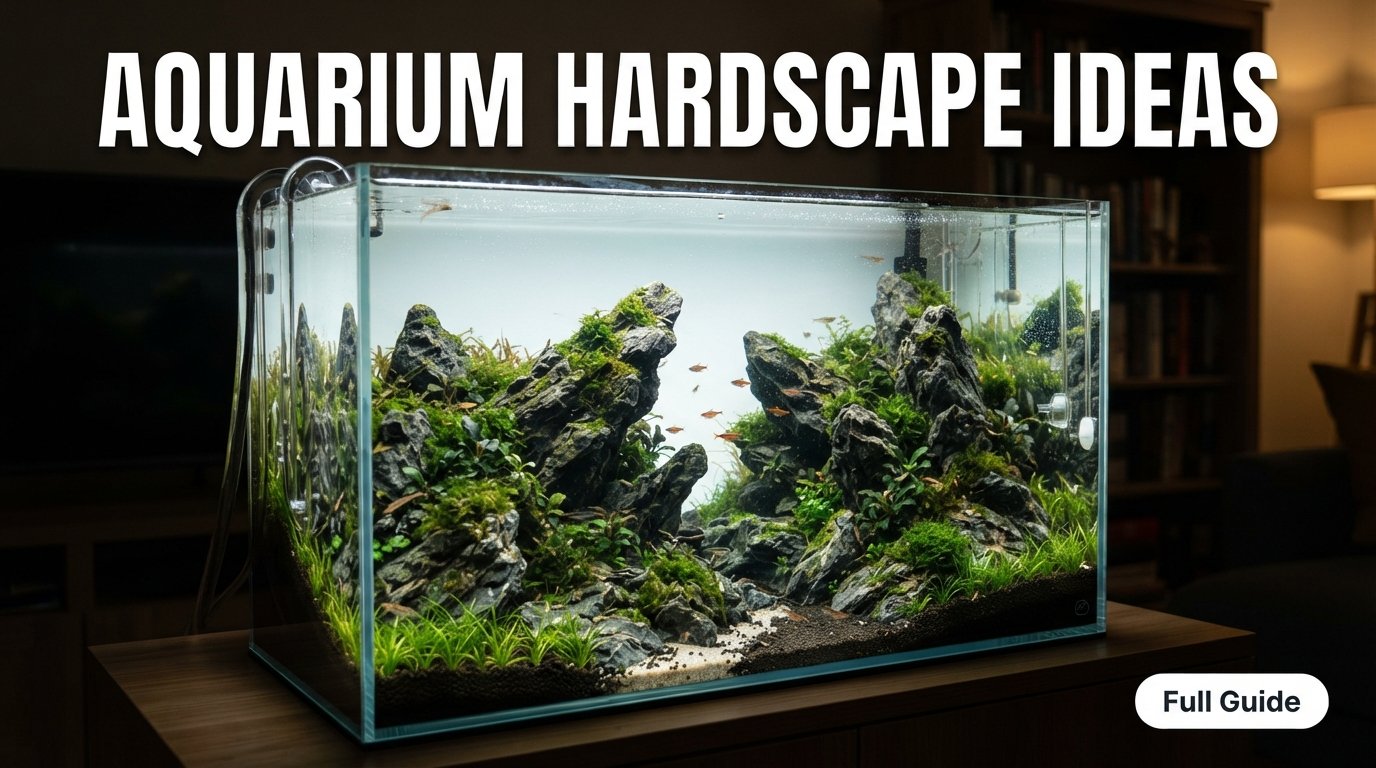
Aquarium hardscape is the foundation of an aquascape. It includes non-living materials such as rocks, driftwood, stones, and other aquarium-safe structures that create the shape and character of a fish tank.
A well-planned hardscape can make even a simple planted aquarium look dramatic and natural. The key is to create a strong focal point while leaving enough space for plants, fish, and maintenance.
1. Natural Rock Hardscape
A natural rockscape is one of the most popular aquarium designs.
Use rocks of different sizes to create:
- Mountain formations
- Valleys
- Caves
- Slopes
- Rocky islands
Choose aquarium-safe rocks and arrange them securely so they cannot collapse.
2. Driftwood Hardscape
Driftwood can create a natural underwater forest appearance.
Popular arrangements include:
- Branching tree roots
- Fallen branches
- Underwater forests
- Riverbank layouts
- Root arches
Add moss, Anubias, or Bucephalandra to the wood for a more natural appearance.
3. Rock and Driftwood Combination
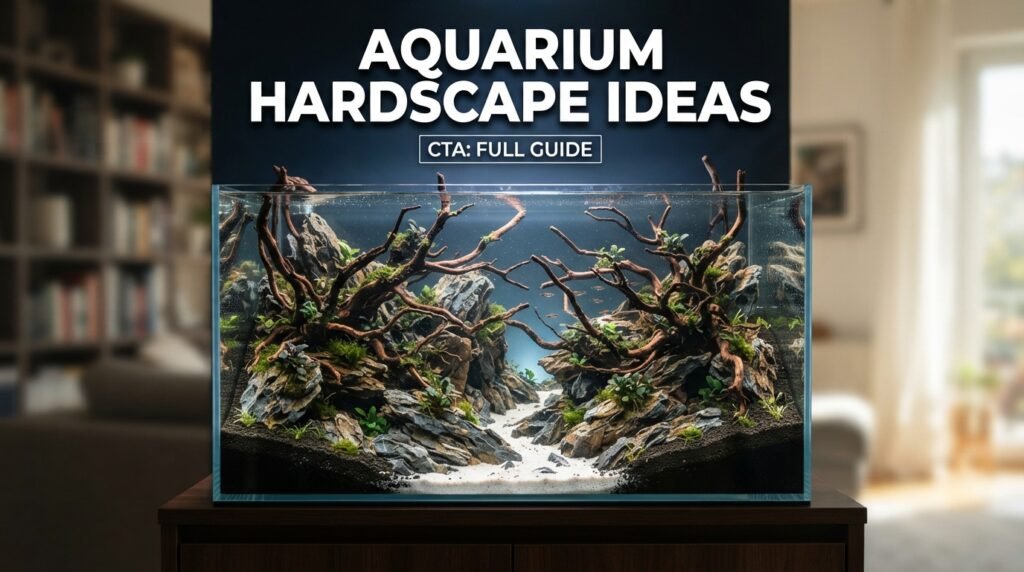
Combining rocks with driftwood creates more visual depth than using either material alone.
Place the wood between or behind rocks to make the two materials appear connected. Plants can then soften the transition.
4. Iwagumi Hardscape
Iwagumi is a minimalist style centered around rocks.
A typical layout uses:
- One dominant stone
- Several supporting stones
- Low-growing plants
- Open foreground space
The rocks should have similar visual characteristics while varying in size and orientation.
5. Mountain Hardscape
Create an underwater mountain range using several rocks.
Place the largest stones toward the back or focal area and gradually use smaller rocks toward the foreground.
Adding carpeting plants around the base can make the formation look more natural.
6. Valley Hardscape
Instead of building a central mountain, create two elevated sides with an open pathway running through the middle.
This creates the appearance of a valley or underwater canyon.
A narrow sand path can guide the viewer’s eye toward the back of the aquarium.
7. Cave Hardscape
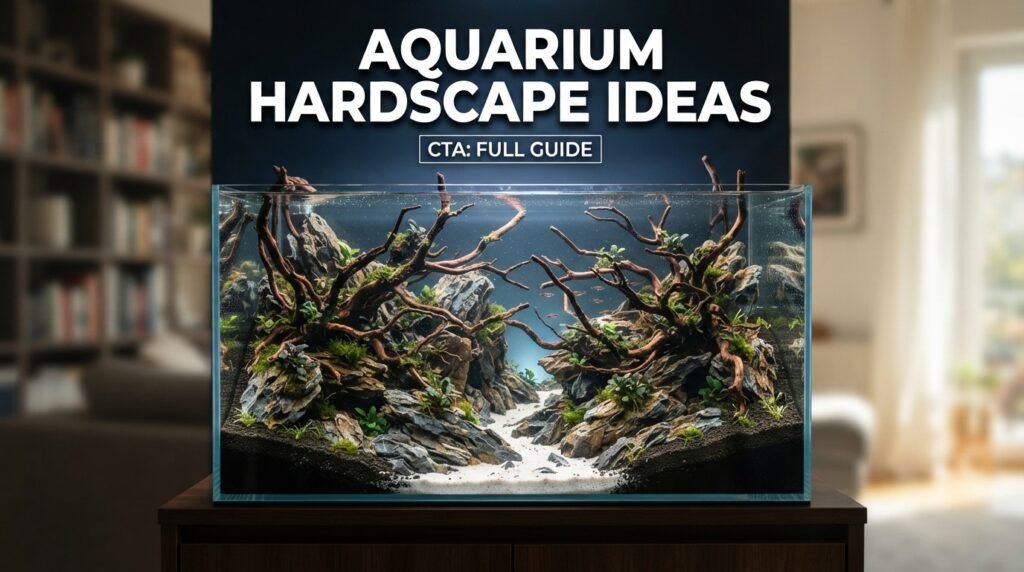
Caves provide both visual interest and potential shelter for suitable fish.
You can create caves using:
- Large rocks
- Natural stone formations
- Aquarium-safe ceramic structures
- Driftwood
Make sure structures are stable and cannot collapse or trap fish.
8. Island Hardscape
Create an island-style layout by grouping hardscape slightly off-center.
Surround the main formation with open substrate to make it look isolated.
This design works especially well with carpeting plants around the edges.
9. Riverbed Hardscape
A river-inspired aquarium can use:
- Smooth rounded stones
- Fine sand
- Branch-like driftwood
- Small pebbles
- Aquatic plants
Arrange the stones in the direction of the imaginary water flow to create movement.
10. Forest Hardscape
Use branching driftwood to create the appearance of underwater trees.
Add moss and small epiphytic plants to the branches.
Place taller plants behind the wood to create the illusion of a dense forest.
11. Minimalist Hardscape
A minimalist aquarium may need only one main rock or piece of driftwood.
For example:
One large stone + three small supporting stones + sand + a few plants
This simple approach can look much more sophisticated than an overcrowded aquarium.
12. Dragon Stone Hardscape
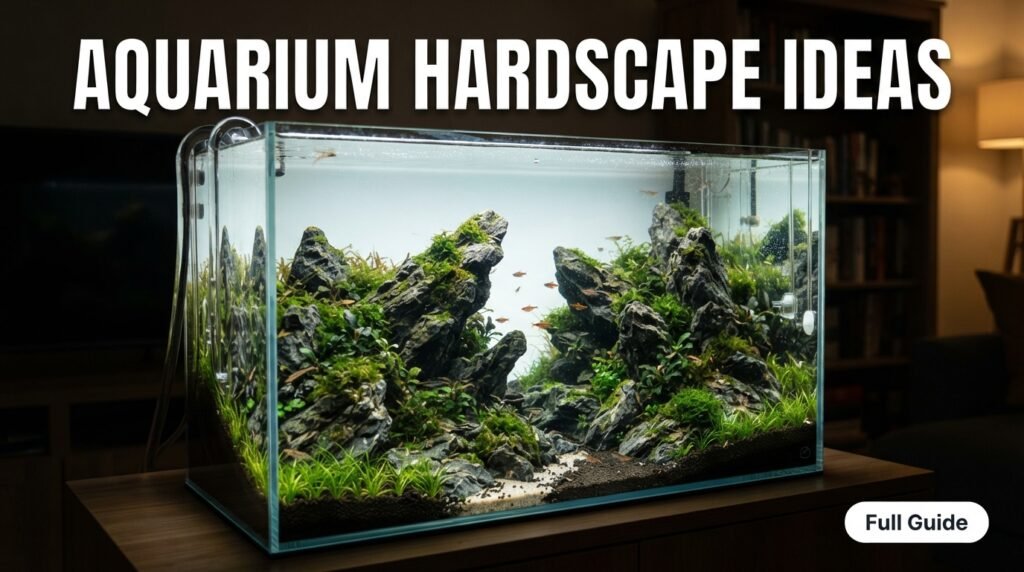
Dragon Stone is popular in aquascaping because of its rough, naturally eroded texture.
Its many holes and irregular surfaces can create dramatic rock formations.
Before using porous rocks, rinse and clean them thoroughly according to aquarium-safe preparation practices.
13. Seiryu-Style Rock Hardscape
Seiryu-style rocks are popular for mountain and Iwagumi-inspired layouts.
Their sharp ridges and layered texture can create a dramatic landscape.
They may influence water hardness and pH, so consider their effect when keeping species that require specific water conditions.
14. Slate Rock Hardscape
Slate can provide a clean, layered appearance.
It can be used to create:
- Rock walls
- Terraces
- Caves
- Mountain structures
Always verify that the material is aquarium-safe and free from harmful coatings or contaminants.
15. Lava Rock Hardscape
Lava rock is lightweight compared with many dense stones and has a rough texture.
It can be useful for:
- Building height
- Supporting larger rocks
- Creating caves
- Plant attachment
Its porous surface can also provide additional surfaces for beneficial microorganisms.
16. Sand Path Hardscape
A sand path can make an aquascape appear larger.
Create a narrow path that starts near the front glass and becomes narrower toward the background.
This creates a perspective effect that makes the aquarium appear deeper.
17. Terraced Hardscape
Build different levels using rocks and substrate.
A terraced design can create:
- Foreground
- Midground
- Background elevation
Secure heavy materials carefully so they cannot shift or collapse.
18. Jungle Hardscape
Use driftwood and rocks as the structural foundation, then surround them with dense plants.
Suitable plants may include:
- Java Fern
- Anubias
- Cryptocoryne
- Java Moss
- Vallisneria
The hardscape provides structure while the plants create the jungle effect.
Aquarium Hardscape Material Comparison
| Material | Appearance | Popular Use |
|---|---|---|
| Driftwood | Natural and organic | Forest layouts |
| Dragon Stone | Rough and textured | Mountain aquascapes |
| Seiryu-style Rock | Sharp and layered | Iwagumi |
| Lava Rock | Porous and rugged | Foundations |
| Slate | Flat and layered | Terraces |
| River Stones | Smooth and natural | Riverbeds |
| Pebbles | Small and subtle | Foreground details |
How to Arrange Aquarium Hardscape
Before adding water, place the hardscape inside the empty aquarium.
Follow these steps:
- Choose the main focal point.
- Position the largest rock or wood first.
- Add supporting pieces.
- Create different heights.
- Leave open swimming space.
- Add substrate around the hardscape.
- Plant around the structure.
- Check stability before filling the aquarium.
Taking a photo of the empty hardscape can help you identify areas that look unbalanced.
The Rule of Thirds
Avoid placing the main hardscape directly in the center.
Position the focal point approximately one-third from either side of the aquarium.
This usually creates a more natural composition and gives the viewer a clear visual path through the tank.
Creating Depth With Hardscape
You can make a tank look deeper by:
- Using larger rocks in the foreground
- Using smaller rocks toward the back
- Creating an angled pathway
- Raising substrate toward the rear
- Using progressively smaller details
Perspective is especially useful in small aquariums.
How Much Hardscape Should You Use?
There is no exact amount.
A good rule is to use enough hardscape to establish the structure while leaving room for plants and fish.
Too little hardscape can make the aquarium look empty, while too much can make it feel crowded and reduce swimming space.
Preparing Hardscape
Before placing rocks or wood into an aquarium:
- Remove dirt and loose particles.
- Rinse materials thoroughly.
- Inspect for sharp edges.
- Confirm they are aquarium-safe.
- Prepare driftwood appropriately.
- Avoid materials with unknown coatings or contaminants.
Do not use household cleaning chemicals on aquarium decorations.
Common Hardscape Mistakes
Making the Layout Symmetrical
Perfect symmetry can make the aquarium look artificial.
Using Too Many Rock Types
Combining unrelated rock colors and textures can make the layout look chaotic.
Unstable Rocks
Heavy rocks must be securely positioned.
Ignoring Fish Behavior
Some fish dig, rearrange substrate, or move decorations.
Blocking Swimming Space
Hardscape should not occupy the entire aquarium.
Forgetting Water Chemistry
Some rocks can alter water hardness or pH.
How to Make Hardscape Look Natural
Use repetition and variation.
For example, if you choose one type of rock, use different sizes of the same material rather than mixing many unrelated stones.
Orient rocks in similar geological directions and bury part of their base in substrate so they do not look artificially placed on top of it.
Conclusion
The right aquarium hardscape ideas can transform a basic fish tank into a convincing underwater landscape. Rocks, driftwood, sand paths, caves, terraces, and natural stones can be combined to create mountain, river, forest, island, and minimalist aquascapes.
Start with one strong focal point, build around it with supporting hardscape, and leave enough negative space for fish and plants. Most importantly, make sure every material is aquarium-safe and securely positioned. A thoughtful hardscape provides the foundation for a beautiful planted aquarium that becomes even more impressive as the plants grow.
Frequently Asked Questions
What is aquarium hardscape?
Aquarium hardscape refers to the non-living structural elements of an aquarium, including rocks, driftwood, stones, and other aquarium-safe materials.
What is the best rock for aquascaping?
There is no single best rock. Dragon Stone, Seiryu-style rock, lava rock, slate, and river stones are all popular depending on the desired design and water chemistry.
Can I use any rocks in an aquarium?
No. Some rocks may contain harmful contaminants or significantly alter water chemistry. Use materials known to be aquarium-safe and prepare them properly.
Should rocks or substrate go in first?
Hardscape should generally be positioned securely before adding the final substrate around it. This helps prevent heavy rocks from shifting or sinking.
Can aquarium hardscape affect pH?
Yes. Some mineral-rich rocks can increase water hardness and influence pH. This matters particularly when keeping fish that require specific water conditions.
Is driftwood good for planted aquariums?
Yes. Driftwood provides structure and can be combined with plants such as Anubias, Java Fern, Bucephalandra, and moss to create natural-looking aquascapes.