
 By admin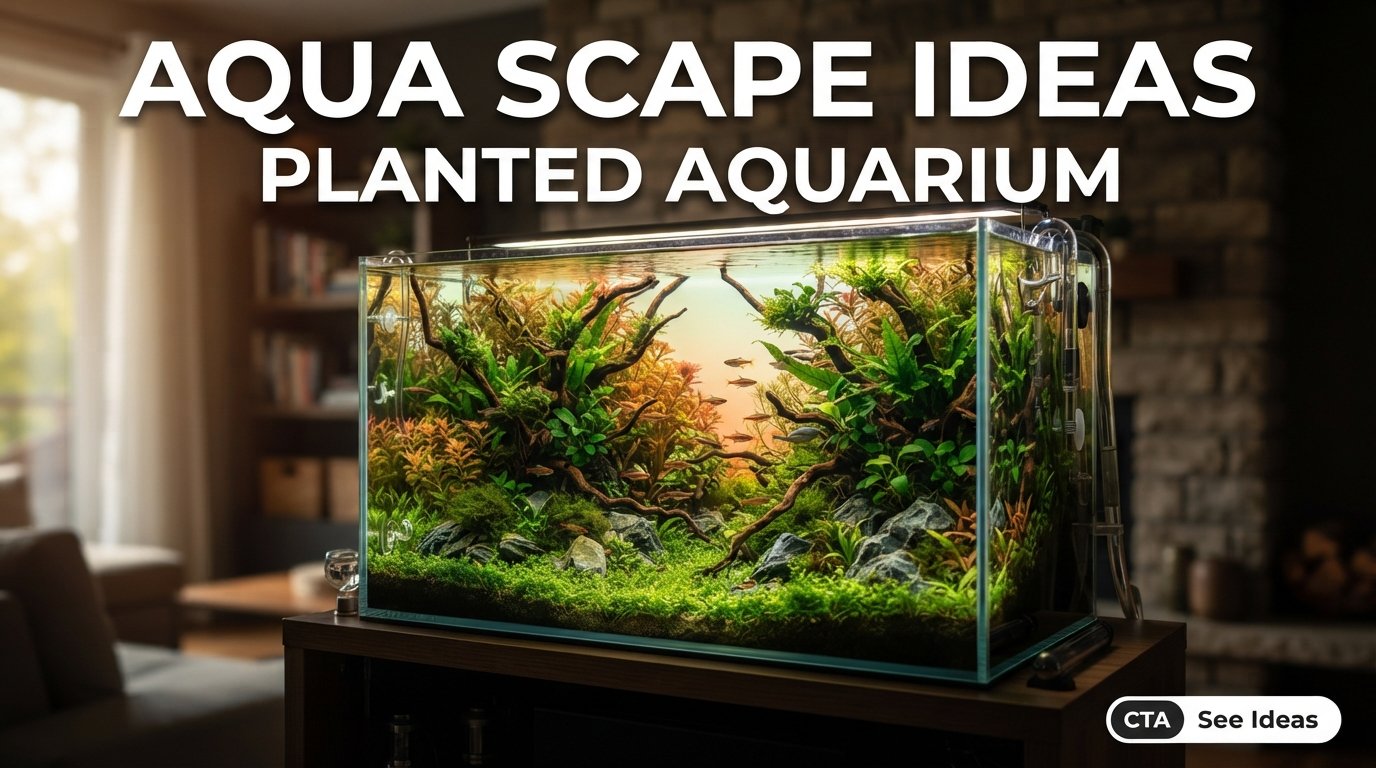
A planted aquarium aquascape can turn a simple fish tank into a beautiful underwater landscape. By combining aquatic plants, rocks, driftwood, substrate, and carefully planned negative space, you can create anything from a minimalist nature aquarium to a dense underwater jungle.
The key to a successful aquascape is balance. A beautiful layout should also provide suitable conditions for the fish, shrimp, and plants living inside the aquarium.
1. Simple Planted Aquascape
A simple aquascape is an excellent choice for beginners.
Use:
- One main piece of driftwood
- A few natural rocks
- Low-growing foreground plants
- Medium plants around the hardscape
- Taller plants in the background
Keep some open substrate visible so the aquarium does not look overcrowded.
2. Nature Aquarium
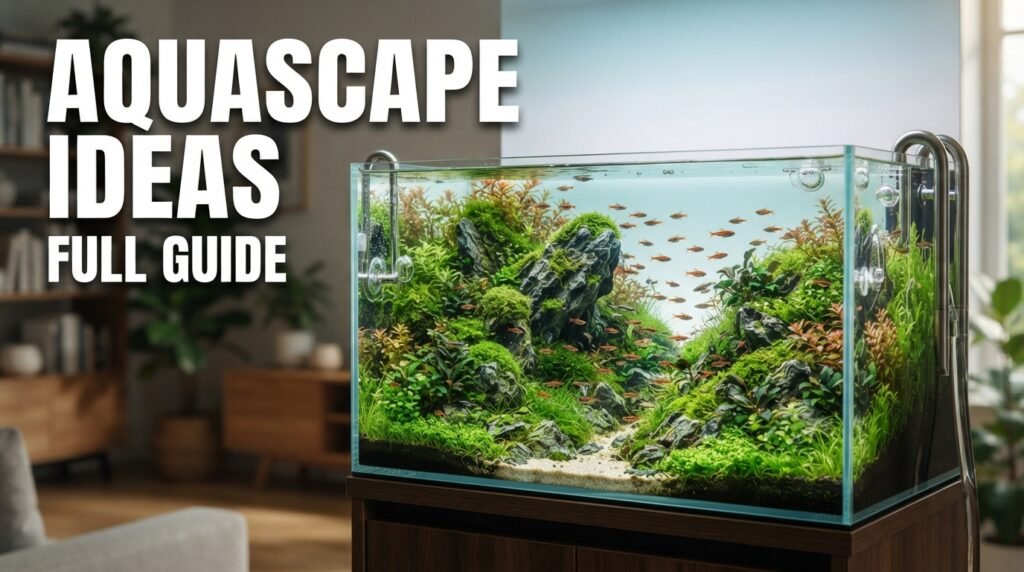
A nature-style aquascape recreates the appearance of a natural landscape.
Create:
- A main focal point
- Smaller supporting rocks
- Dense plant groups
- Open foreground
- A natural-looking substrate
Avoid arranging everything symmetrically. Slightly uneven placement usually creates a more natural appearance.
3. Jungle Aquascape
A jungle aquarium uses dense vegetation to create a wild underwater forest.
Combine:
- Tall stem plants
- Broad-leaf plants
- Java Fern
- Anubias
- Moss
- Floating plants
Allow plants to grow at different heights for a layered appearance.
4. Iwagumi Aquascape
Iwagumi is a rock-focused aquascaping style that uses carefully arranged stones as the main feature.
A classic layout includes:
- One dominant stone
- Smaller supporting stones
- Low carpeting plants
- Open foreground
- Minimal additional decoration
Dwarf Hairgrass and other suitable carpeting plants can create a grass-like appearance around the rocks.
5. Driftwood Aquascape
Driftwood can create dramatic shapes and natural movement.
Try:
- Branching wood
- Root-style wood
- Spiderwood-style arrangements
- Wood covered with moss
Attach plants such as Anubias, Java Fern, or Bucephalandra to the wood rather than burying their rhizomes in the substrate.
6. Planted Rockscape
Combine rocks and plants to create an underwater mountain scene.
Place the largest rock slightly away from the center and use smaller rocks to create a natural transition.
Add low plants around the rocks while keeping some open swimming space.
7. Underwater Forest Aquascape
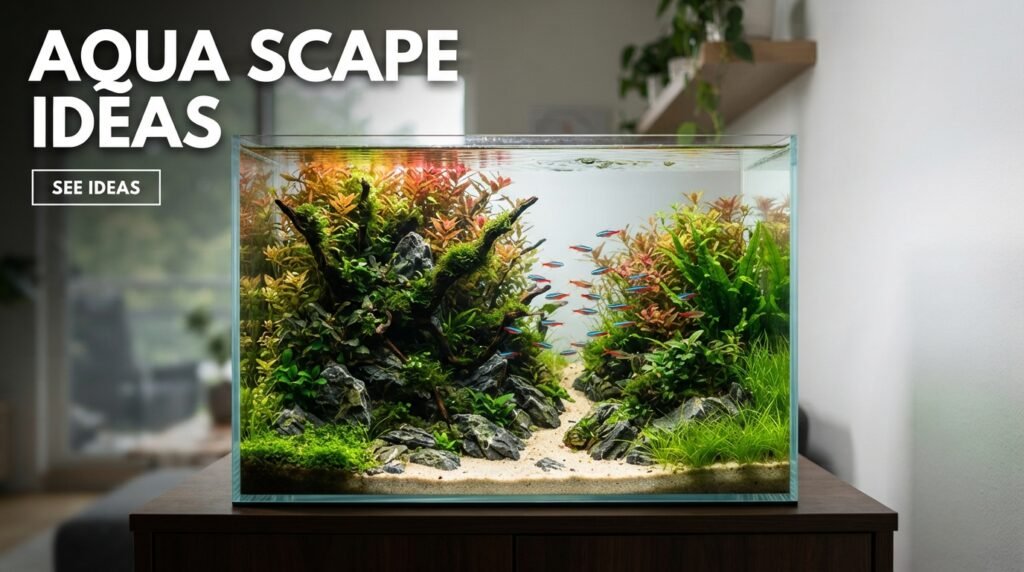
Create the impression of an underwater forest using tall, branch-like driftwood and plants.
Use moss or small epiphytes on the wood and taller plants behind it.
A dark background can make the wood and greenery stand out.
8. Carpet Plant Aquascape
A carpet-style aquarium focuses on low-growing plants that cover the foreground.
Possible plants include:
- Dwarf Hairgrass
- Monte Carlo
- Glossostigma
- Dwarf Baby Tears
Carpeting plants can have higher light and CO2 requirements, so choose species that match your equipment and experience.
9. Low-Tech Aquascape
You can create an attractive planted aquarium without using pressurized CO2.
Good plant choices include:
- Anubias
- Java Fern
- Cryptocoryne
- Java Moss
- Bucephalandra
- Vallisneria
Use moderate lighting and choose plants that naturally grow well under lower-tech conditions.
10. High-Tech Aquascape
A high-tech planted aquarium typically uses:
- Stronger plant lighting
- Pressurized CO2
- Nutrient-rich substrate
- Fertilizers
- Careful water management
This setup can support demanding plants and dense carpets but requires more attention to lighting, carbon, and nutrients.
11. Nano Aquascape
Small aquariums can still have impressive layouts.
Use miniature hardscape and plants that remain appropriately sized.
A simple nano layout might contain:
- One small rock formation
- A tiny piece of driftwood
- Moss
- Bucephalandra
- Small foreground plants
Avoid oversized decorations that make the aquarium feel cramped.
12. Shrimp Aquascape
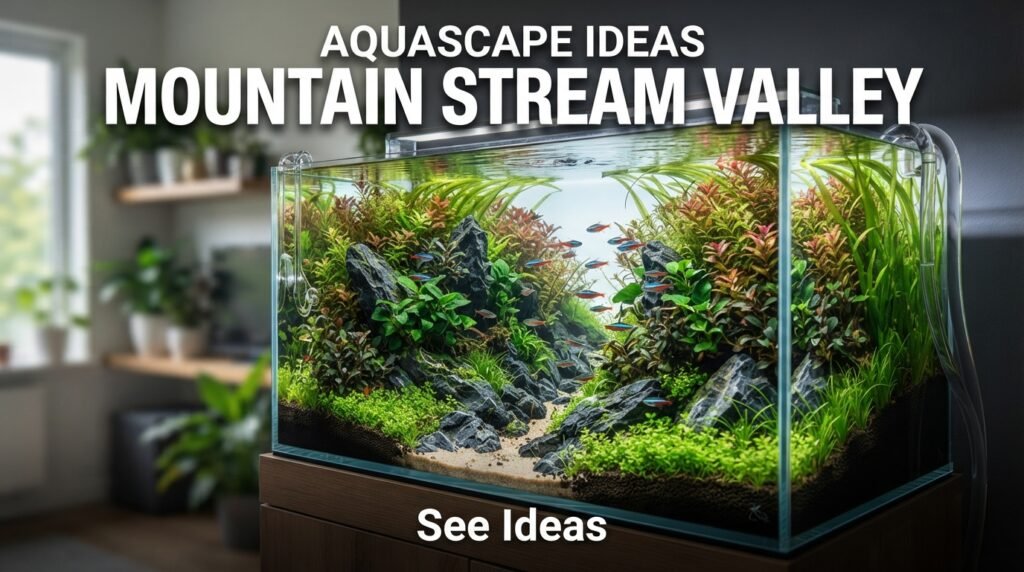
Shrimp look beautiful in densely planted aquariums.
Create a habitat with:
- Moss
- Small-leaf plants
- Driftwood
- Rocks
- Leaf litter when appropriate
- Gentle filtration
Plants and hardscape also create surfaces for biofilm, which shrimp naturally graze on.
13. Tetra Planted Aquascape
Tetras can look spectacular against a green planted background.
Create dense vegetation around the sides and rear while leaving the center relatively open for schooling.
Dark substrate and natural-colored hardscape can make colorful tetras stand out.
14. Guppy Aquascape
Guppies can be kept in attractive planted community aquariums.
Try:
- Vallisneria
- Anubias
- Java Fern
- Floating plants
- Moss
Leave sufficient open water for active swimming and avoid overcrowding.
15. Blackwater-Inspired Aquascape
A blackwater design can recreate the appearance of a shaded tropical stream.
Use:
- Driftwood
- Dark substrate
- Suitable leaf litter
- Subdued lighting
- Appropriate plants
Tannins from wood and leaves can tint the water naturally. Fish should be selected according to the intended water conditions.
Aquascape Design Comparison
| Aquascape Style | Main Feature | Difficulty |
|---|---|---|
| Simple Nature | Plants and natural hardscape | Easy |
| Jungle | Dense vegetation | Easy to moderate |
| Iwagumi | Rock formations | Moderate |
| Driftwood | Branching wood | Easy to moderate |
| Carpet | Low foreground plants | Moderate to advanced |
| Low-Tech | Hardy plants | Easy |
| High-Tech | Dense plants and CO2 | Advanced |
| Blackwater | Wood and natural leaf litter | Moderate |
| Nano | Small-scale layout | Moderate |
How to Arrange Plants
A successful planted aquascape usually has three planting zones.
Foreground
Use short plants or carpeting species.
Midground
Place medium plants around rocks and driftwood.
Background
Use tall plants to create height and hide equipment.
This arrangement creates depth and prevents the aquarium from looking flat.
Choosing Aquarium Substrate
Substrate should match both the aquascape and the plants.
Common choices include:
- Aquasoil
- Aquarium gravel
- Fine sand
- Nutrient-rich planted substrate
Root-feeding plants may benefit from nutrient-rich substrate or root tabs.
The Rule of Thirds
Avoid placing the main focal point directly in the center.
Instead, position the primary rock, wood, or plant group slightly to one side. This creates a more dynamic composition and leaves space for the eye to move through the aquarium.
Creating Negative Space
Empty space is an important part of aquascaping.
An open area of sand or substrate can:
- Make the aquarium appear larger
- Highlight the main hardscape
- Provide swimming space
- Prevent the layout from looking crowded
Do not feel that every part of the aquarium needs to be filled with plants.
Aquarium Lighting
Plants require appropriate light for photosynthesis.
Choose lighting based on:
- Plant species
- Tank depth
- Aquarium dimensions
- CO2 availability
- Desired growth rate
Too much light without sufficient plant growth and nutrient balance can encourage algae.
Do Planted Aquariums Need CO2?
Not every planted aquarium requires injected CO2.
Low-tech plants can grow successfully without it, while demanding carpeting plants and some high-light species may benefit greatly from additional CO2.
Choose the plants according to the equipment you want to use rather than selecting difficult plants first and trying to adapt the aquarium afterward.
Fish Selection
The fish should complement the aquascape without destroying it.
Popular planted-aquarium choices include:
- Tetras
- Rasboras
- Corydoras
- Small gouramis
- Guppies
- Shrimp
- Peaceful livebearers
Avoid species that constantly dig, uproot plants, or aggressively disturb the hardscape if you want to maintain a delicate aquascape.
Common Aquascaping Mistakes
Using Too Many Plants
A large number of different species can make the layout look chaotic.
Making the Tank Too Symmetrical
Natural-looking layouts usually have more visual movement.
Choosing Oversized Hardscape
Large rocks and driftwood can overwhelm a small aquarium.
Ignoring Plant Requirements
Different plants require different levels of light, nutrients, and carbon.
Filling Every Empty Space
Negative space is essential for creating visual balance.
Poor Maintenance
Even a beautiful aquascape can quickly lose its appearance if plants become overgrown or algae covers the glass.
How to Make a Planted Aquascape Look Professional
- Choose one clear focal point.
- Use only a few types of hardscape.
- Group plants rather than scattering them randomly.
- Create foreground, midground, and background layers.
- Leave intentional open space.
- Use plants with different leaf shapes and heights.
- Hide equipment where practical.
- Keep the glass and substrate clean.
- Trim plants regularly.
- Maintain stable water conditions.
Conclusion
These aquascape ideas for planted aquariums can help you create a wide range of underwater landscapes, from simple low-tech tanks to dramatic high-tech planted displays. Nature aquariums, Iwagumi layouts, jungle tanks, driftwood forests, rockscapes, and carpet aquariums all offer different visual styles.
Start with a design that matches your experience and equipment. Choose plants according to their actual requirements, provide suitable lighting and filtration, and leave enough open space for your fish. With patience and regular maintenance, even a simple planted aquarium can develop into a stunning aquascape.
Frequently Asked Questions
What is the easiest aquascape for beginners?
A simple nature-style or low-tech planted aquarium using Anubias, Java Fern, Cryptocoryne, and moss is a good starting point.
What plants are best for aquascaping?
Anubias, Java Fern, Bucephalandra, Cryptocoryne, mosses, Vallisneria, and suitable carpeting plants are popular choices.
Does aquascaping require CO2?
No. Many attractive aquascapes can be created without injected CO2. However, demanding plants and dense carpets may benefit from it.
What is the best substrate for a planted aquarium?
Aquasoil is popular for planted aquariums, but gravel, sand, and other suitable substrates can also work depending on the plants.
How do I make my aquascape look deeper?
Use larger hardscape toward the foreground, smaller elements toward the background, plants of different heights, and an open pathway or area that leads the viewer’s eye into the layout.
How long does it take for a planted aquascape to mature?
It varies by plant species and setup. Fast-growing plants can fill in relatively quickly, while slower plants and mosses may take considerably longer. Regular trimming and stable conditions help the layout develop naturally.