
 By admin
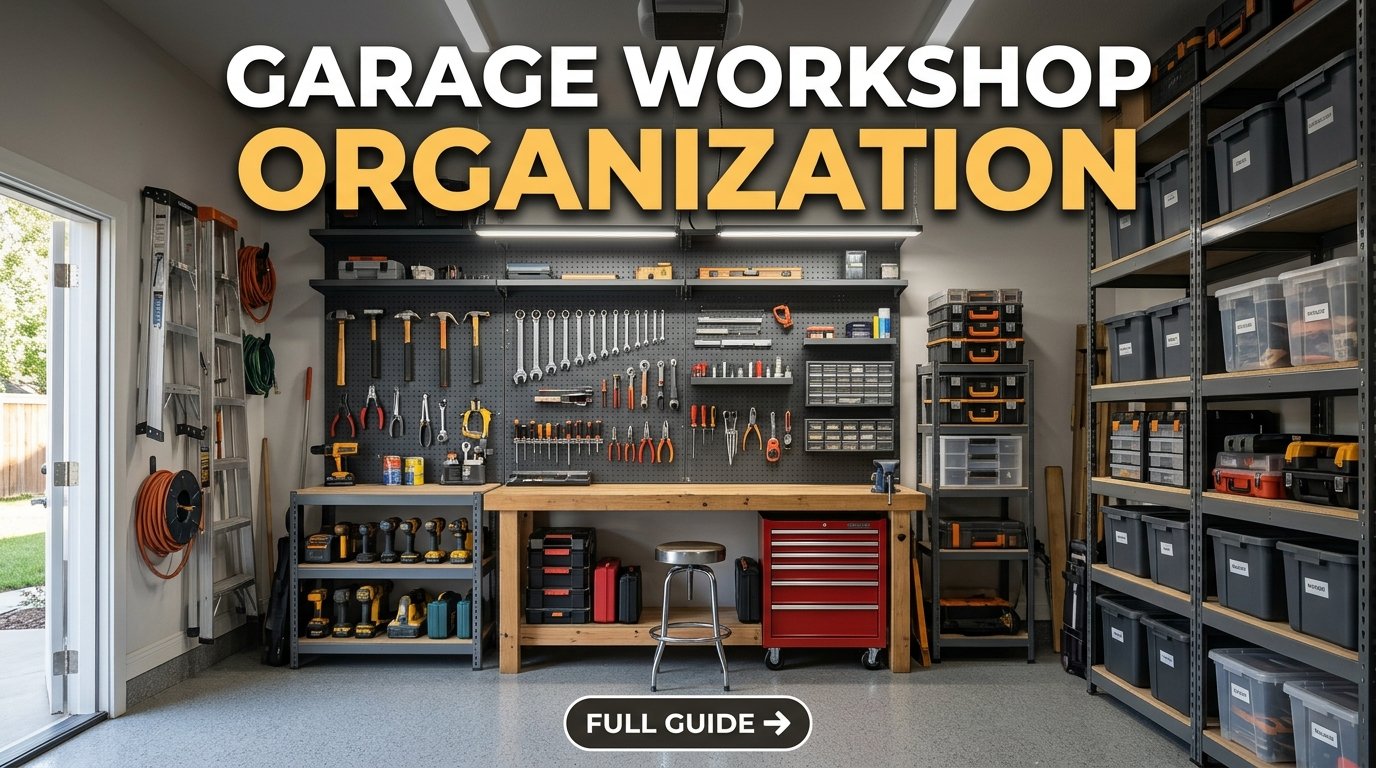
Garage workshop organization is essential for creating a workspace where tools are easy to find, projects are easier to complete, and every available inch is used efficiently. Whether you have a small garage workshop for occasional DIY projects or a large space for woodworking, automotive repairs, and home improvement, the right organization system can make a significant difference.
A disorganized workshop can waste valuable time, create safety hazards, and make even simple projects frustrating. Tools get misplaced, workbenches become cluttered, and supplies take up space that could be used for productive work. With thoughtful planning, suitable storage systems, and a few practical organization habits, you can transform almost any garage into a functional workshop.
This guide explores practical garage workshop organization ideas, storage solutions, workbench layouts, tool organization methods, and space-saving strategies to help you build a workshop that works for your needs.
1. Start by Planning Your Garage Workshop Layout
Before purchasing storage cabinets or installing shelves, consider how you use your workshop. A good layout should support your regular activities while allowing enough room to move safely.
Start by identifying the main tasks you perform in the garage. These might include woodworking, metalworking, automotive repairs, gardening equipment maintenance, crafting, or general DIY projects.
Divide your garage into functional zones based on these activities. For example, keep woodworking tools near the workbench, automotive equipment close to the vehicle maintenance area, and frequently used hand tools within easy reach.
Consider the following zones:
- Workbench zone: A dedicated area for assembling, repairing, measuring, and completing projects.
- Tool storage zone: A place for hand tools, power tools, and accessories.
- Material storage zone: Shelves or racks for lumber, hardware, and project supplies.
- Cleaning zone: Space for cleaning products, shop vacuums, brushes, and waste containers.
- Equipment zone: Storage for larger machines, compressors, and workshop equipment.
Keep walkways clear and avoid placing frequently used equipment in difficult-to-reach corners.
2. Install a Pegboard Wall for Hand Tools
A pegboard wall is one of the most useful solutions for garage workshop organization. It allows you to store frequently used tools vertically instead of filling drawers and work surfaces.
You can install a pegboard above your workbench and arrange screwdrivers, pliers, wrenches, measuring tapes, hammers, and other small tools.
Use different hooks, holders, and small baskets to accommodate various tool shapes and sizes. Group similar tools together so you can quickly locate what you need.
One helpful trick is to outline each tool on the pegboard. This makes it easy to identify missing tools and return everything to its proper location after use.
Choose a strong pegboard material and secure it properly to wall studs, especially if you plan to hang heavier tools.
3. Build a Functional Workshop Workbench
A sturdy workbench is the centerpiece of most garage workshops. It provides a stable surface for repairs, woodworking, assembling projects, and other activities.
Choose a workbench size based on your available space. A large workbench is useful for bigger projects, but a compact design may be better for a small garage.
Look for a workbench with:
- A durable and level work surface
- Strong legs and a stable frame
- Built-in drawers or lower shelves
- Enough depth for your regular projects
- Space for a bench vise or other accessories
You can also build a custom workbench using plywood, hardwood, or metal framing.
To keep the surface organized, avoid permanently storing tools on top of the bench. Keep only frequently used items nearby and return everything else to its designated storage location.
4. Use Wall-Mounted Shelves for Workshop Supplies
Wall-mounted shelving is an excellent way to free up floor space and organize workshop materials.
Install shelves above workbenches or along unused walls. Use them for storage bins, paint supplies, spare parts, adhesives, hardware containers, and other lightweight equipment.
Adjustable shelving is particularly useful because you can change the height as your storage needs evolve.
For better organization, label each storage container. For example, create separate containers for screws, nails, bolts, electrical accessories, plumbing supplies, and woodworking hardware.
Avoid placing extremely heavy items on shelves that are not designed to support them. Always use appropriate brackets, anchors, and wall studs.
5. Organize Power Tools in Dedicated Storage
Power tools can quickly make a garage workshop look cluttered. Drills, circular saws, sanders, grinders, and other equipment should have designated storage locations.
Consider installing a power tool cabinet with adjustable shelves or drawers. A cabinet protects tools from dust and accidental damage while keeping them accessible.
You can also use wall-mounted holders for frequently used tools. Keep batteries and chargers together in a dedicated charging station.
A practical storage system includes:
- Separate compartments for different power tools
- Labeled spaces for batteries and chargers
- Storage for accessories and replacement parts
- Protection from moisture and excessive dust
- Proper cable management
Remove batteries from tools when appropriate and follow the manufacturer’s instructions for charging and storage.
6. Create a Small Parts Organization System
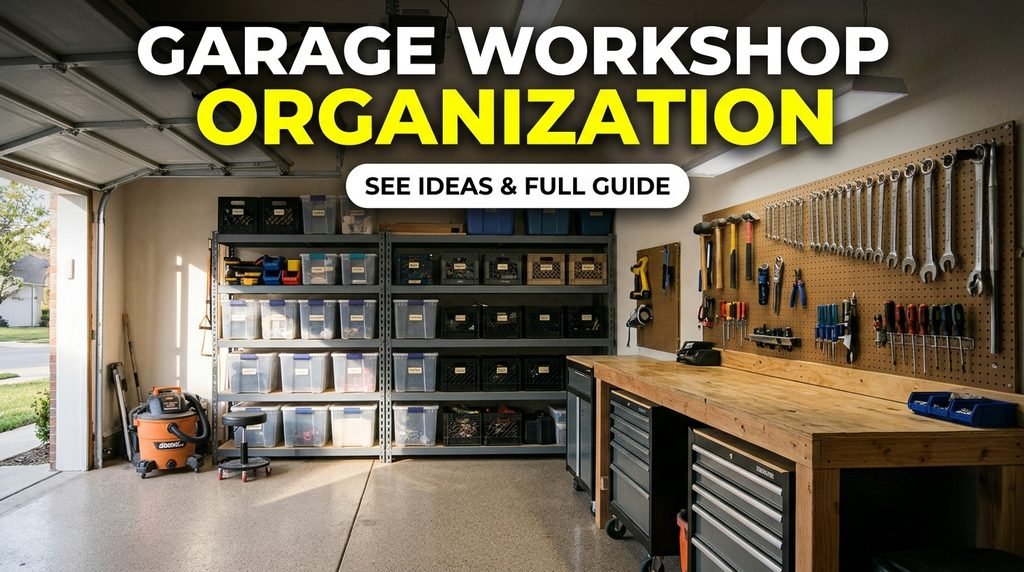
Small workshop supplies are among the easiest items to lose. Screws, washers, nuts, bolts, nails, drill bits, and other hardware should be stored in an organized system.
A drawer organizer or transparent plastic storage cabinet can make a big difference.
Use separate compartments for different sizes and types of hardware. Label each drawer clearly so you do not have to open several containers to find one item.
Clear containers are especially useful because you can see their contents without opening them.
For larger collections, consider organizing hardware by category and size. For example, keep wood screws in one section, machine screws in another, and wall anchors in a separate compartment.
7. Install a Tool Storage Cabinet
A tool storage cabinet provides enclosed storage for equipment that you do not want to leave exposed.
Metal cabinets are particularly useful in workshops because they are generally durable and can support substantial weight when properly installed.
Choose cabinets with adjustable shelves, drawers, and lockable doors if you need to store valuable equipment.
You can organize the cabinet into different sections:
| Cabinet Section | Items to Store |
|---|---|
| Top shelves | Lightweight accessories and spare parts |
| Middle shelves | Power tools and tool cases |
| Drawers | Hand tools and small equipment |
| Lower shelves | Heavy tools and supplies |
| Side compartments | Measuring tools and accessories |
Place heavier items on lower shelves to improve stability and make lifting safer.
8. Make Use of Ceiling Storage
The ceiling is often an overlooked storage area in a garage workshop. When floor and wall space are limited, overhead storage can provide additional room for seasonal or occasionally used equipment.
Install suitable overhead racks for lightweight storage containers, camping equipment, empty boxes, or other items that are not needed regularly.
Before installing ceiling storage, check the ceiling structure and the manufacturer’s load limits. Secure the rack to appropriate structural supports rather than relying on drywall alone.
Avoid storing heavy machinery or frequently accessed tools overhead. Keep overhead storage away from garage door tracks, lights, and moving equipment.
9. Add a Dedicated Woodworking Storage Area
If you regularly work with wood, create a separate storage area for lumber, plywood, cutting tools, and woodworking accessories.
Vertical lumber racks can help store long boards along a wall without taking up too much floor space. Horizontal racks are another option when you have enough wall clearance.
Store sheet materials in a suitable rack that prevents bending and makes them easier to access.
Keep measuring tools, clamps, sanding supplies, and woodworking accessories close to your workbench.
For a more efficient woodworking setup, consider grouping your equipment according to the order in which you use it. This can reduce unnecessary movement during projects.
10. Organize Automotive Tools Separately
Many garage workshops serve two purposes: vehicle parking and mechanical repairs. If you work on cars or motorcycles, keeping automotive tools organized separately can improve efficiency.
Use a rolling tool chest for sockets, ratchets, wrenches, pliers, and other automotive equipment.
A mobile tool cart is useful because it can be moved close to the vehicle during repairs. Choose a model with locking wheels and secure drawers.
Keep automotive fluids, lubricants, and cleaning products in suitable containers and follow their storage instructions. Flammable materials should be kept away from ignition sources and stored according to local safety requirements.
Never allow automotive tools or equipment to block emergency exits or vehicle movement areas.
11. Use Rolling Carts for Flexible Storage
Rolling carts are excellent for workshops where projects change frequently.
You can use a rolling cart to hold tools, accessories, cleaning supplies, or materials needed for a specific project.
A three-tier cart provides several storage levels without taking up much space. Models with locking wheels are especially useful because they remain stable when you are working.
Some practical uses include:
- A mobile power tool station
- A woodworking accessory cart
- A painting and finishing supplies cart
- An automotive repair cart
- A general-purpose project cart
When a project is complete, move the cart back to its designated parking space.
12. Improve Workshop Lighting
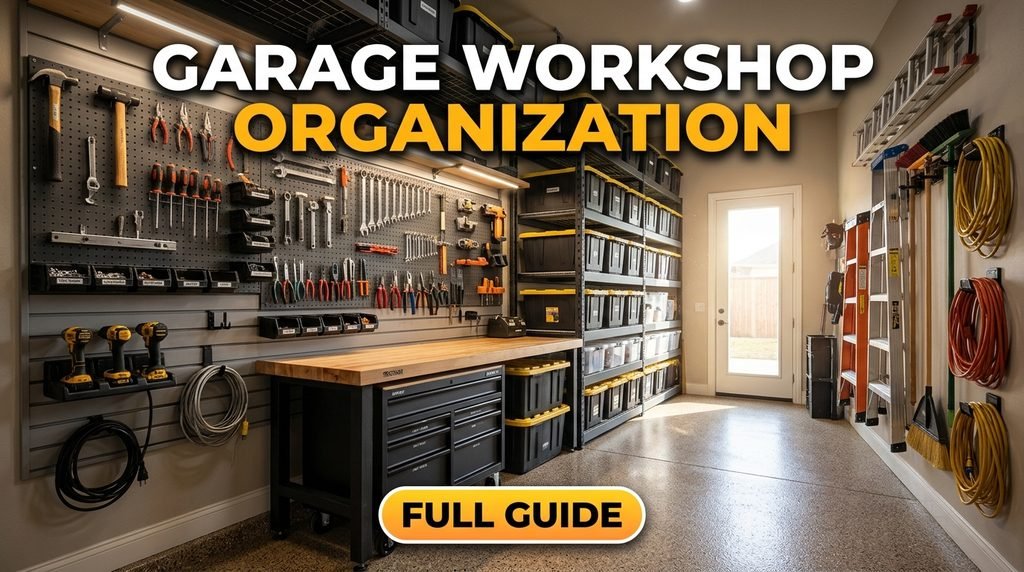
Good lighting is essential for a comfortable and productive workshop. Poor lighting makes it difficult to measure accurately, inspect materials, and complete detailed work.
Install bright overhead LED lights to illuminate the entire garage. Add task lighting above the workbench and near machines where precise visibility is important.
Consider adjustable lamps for detailed projects such as electronics repair, model building, and small woodworking tasks.
Try to eliminate dark corners and shadows around frequently used work areas.
Choose lighting suitable for the workshop environment and install electrical equipment safely.
13. Manage Cables and Electrical Equipment
Loose electrical cords can create tripping hazards and make a workshop look untidy.
Use cable clips, wall-mounted cord organizers, and retractable reels where appropriate. Keep extension cords away from sharp edges, hot surfaces, and areas where vehicles or equipment could damage them.
Install sufficient electrical outlets so you do not need to rely on multiple extension cords.
For workshops with several power tools, consider a properly installed electrical setup that meets the equipment’s power requirements. Electrical upgrades should be handled by a qualified electrician.
14. Create a Safe Storage Area for Chemicals and Paint
Workshops often contain paint, solvents, adhesives, lubricants, cleaning products, and other chemicals.
These products should be stored carefully in their original, clearly labeled containers. Follow the manufacturer’s instructions for temperature, ventilation, compatibility, and disposal.
Keep incompatible chemicals separated and store flammable products in suitable approved cabinets where required.
Make sure chemicals are inaccessible to children and pets. Never store chemicals in food or drink containers.
A dedicated storage cabinet can help keep these materials away from work surfaces and general workshop supplies.
15. Keep the Garage Floor Clear
A clean floor makes a workshop safer and easier to use.
Avoid storing tools, boxes, and materials directly in walkways. Use wall-mounted storage, cabinets, and rolling equipment to reduce clutter.
Consider marking different areas on the floor to identify work zones, equipment parking spaces, and walking paths.
A shop vacuum, broom, and dustpan should have a designated storage location so cleaning does not become a difficult task.
For workshops that generate sawdust or metal particles, establish a regular cleaning routine appropriate for the materials and equipment involved.
16. Use Labels to Maintain Long-Term Organization
Labels make it easier to maintain an organized workshop, particularly when several people use the same space.
Label drawers, shelves, bins, cabinets, and tool storage areas. Use clear descriptions instead of vague labels such as miscellaneous.
For example:
- Drill bits
- Wood screws
- Measuring tools
- Sandpaper
- Electrical supplies
- Automotive sockets
- Painting accessories
- Safety equipment
You can use printed labels, waterproof stickers, or a label maker.
A consistent labeling system prevents supplies from being placed in random locations and makes it easier to identify items that need restocking.
17. Design a Small Garage Workshop Efficiently
A small garage does not need to be disorganized. The key is to use vertical space and select storage solutions that serve multiple purposes.
Choose a foldable workbench if you need to park a vehicle in the same space. Wall-mounted cabinets and pegboards can keep frequently used tools accessible without occupying the floor.
Use stackable storage containers for materials and small accessories.
Consider these space-saving ideas:
- Install pegboards above the workbench.
- Use narrow vertical shelving.
- Choose cabinets with multiple drawers.
- Add a folding work surface.
- Use magnetic tool holders for suitable metal tools.
- Store rarely used equipment overhead.
- Choose mobile carts that can be moved when necessary.
Measure your garage carefully before purchasing furniture or storage equipment. Remember to leave enough space for doors, vehicles, and safe movement.
18. Add a Dedicated Cleaning and Maintenance Station
A small cleaning station can help keep your garage workshop in good condition.
Store brushes, microfiber cloths, suitable cleaning products, waste bags, and a shop vacuum in one area.
If you work with wood, metal, or automotive equipment, cleaning tools after use can prevent dust and debris from accumulating.
Create a simple end-of-project routine:
- Return tools to their designated storage locations.
- Remove waste and leftover materials.
- Clean the workbench.
- Vacuum or sweep the floor.
- Check electrical cords and equipment.
- Put away chemicals and finishing products safely.
Regular maintenance prevents clutter from building up again.
19. Set Up a Safety Equipment Station
Safety equipment should always be easy to access.
Create a dedicated area for protective eyewear, hearing protection, work gloves, dust masks or respirators appropriate to the task, and other required protective equipment.
Keep a suitable first-aid kit in an accessible location. A fire extinguisher appropriate for the hazards in your workshop should also be available and maintained according to its instructions.
Do not place safety equipment behind heavy storage containers or inside locked cabinets that could delay access during an emergency.
20. Maintain Your Garage Workshop Organization System
Organizing a garage workshop is not a one-time project. A good system needs regular attention to remain useful.
Spend a few minutes at the end of each work session returning tools, clearing surfaces, and putting materials away.
Every few months, review your storage arrangement. Remove items you no longer need, repair damaged storage systems, and reorganize areas that have become cluttered.
Avoid buying new storage products before identifying the actual problem. Sometimes moving a shelf, adding labels, or changing the location of a tool is enough to improve the entire workshop.
Garage Workshop Organization Ideas by Budget
You do not need an expensive renovation to create an organized workshop. The right improvements depend on your available budget and the type of work you perform.
| Budget Level | Organization Solutions |
|---|---|
| Low budget | DIY pegboard, recycled containers, labels, simple wall hooks |
| Moderate budget | Metal shelving, tool cabinets, rolling carts, drawer organizers |
| Higher budget | Custom workbench, modular cabinets, overhead racks, dedicated tool stations |
| Professional workshop | Heavy-duty storage systems, specialized workstations, dust collection, upgraded lighting |
Start with the improvements that solve your biggest problems. For example, if you frequently lose small hardware, drawer organizers may be more useful than an expensive cabinet.
Common Garage Workshop Organization Mistakes to Avoid
Even a well-designed workshop can become difficult to use if the storage system is poorly planned.
Buying storage before planning: Purchasing shelves and cabinets without measuring the space can create unnecessary clutter. Plan your layout first.
Keeping everything on the workbench: A workbench should provide a clear surface for projects. Store tools in drawers, cabinets, or wall organizers.
Ignoring vertical space: Unused walls can provide valuable storage. Install suitable shelves, pegboards, and cabinets.
Overloading shelves: Exceeding weight limits can cause shelves to fail. Check the manufacturer’s specifications and secure storage systems correctly.
Mixing all tools together: Grouping tools by task or category makes them easier to find and return.
Ignoring safety: Keep walkways clear, store chemicals properly, and make protective equipment accessible.
Failing to maintain the system: Even the best organization setup will eventually become cluttered without regular maintenance.
Conclusion
Garage workshop organization can transform an ordinary garage into a clean, practical, and efficient workspace. By planning functional zones, installing pegboards, adding storage cabinets, organizing power tools, and keeping the workbench clear, you can make better use of your available space.
Whether you have a small DIY workshop or a large professional garage, focus on creating a storage system that matches your projects and working habits. Start with simple improvements, maintain clear walkways, and return tools to their designated locations after every project.
With consistent organization and thoughtful planning, your garage workshop can become a more productive, comfortable, and safer place to work.
Frequently Asked Questions
1. How do I organize a garage workshop?
Start by removing unnecessary items and dividing the garage into functional zones. Install pegboards, shelves, cabinets, and tool organizers. Keep frequently used equipment near the workbench and label storage containers.
2. What is the best way to organize workshop tools?
Group tools according to their type and purpose. Use pegboards for frequently used hand tools, drawer organizers for small equipment, and cabinets for power tools. Label each storage location to make tools easier to find.
3. How can I organize a small garage workshop?
Use vertical storage, wall-mounted shelves, pegboards, foldable workbenches, and compact cabinets. Keep the floor clear and choose mobile carts that can be moved when additional workspace is needed.
4. What should every garage workshop have?
A basic garage workshop should have a sturdy workbench, essential hand tools, suitable power tools, organized storage, good lighting, electrical outlets, cleaning equipment, and appropriate safety gear.
5. How do I store power tools in a garage workshop?
Store power tools in dedicated cabinets, drawers, or wall-mounted holders. Keep accessories and batteries organized separately, protect equipment from moisture, and follow manufacturer recommendations for storage and charging.
6. Are pegboards good for garage workshop organization?
Yes. Pegboards are useful for storing hand tools, measuring equipment, and frequently used accessories. They make tools visible and accessible while freeing up drawer and workbench space.
7. How do I organize screws, nails, and small hardware?
Use transparent storage containers, compartment boxes, or labeled drawer organizers. Separate hardware by type and size so you can quickly find the correct item.
8. How can I maximize space in a garage workshop?
Use wall-mounted storage, overhead racks for suitable lightweight items, narrow shelving, rolling carts, and multifunctional workbenches. Organize the garage vertically and avoid unnecessary floor storage.
9. What is the best workbench for a garage workshop?
The best workbench depends on your projects and available space. Choose a stable design with a durable surface, suitable height, enough working area, and optional drawers or shelves for storage.
10. How often should I clean and organize my workshop?
Perform basic cleanup after every project or work session. Return tools to their locations, remove waste, and clear the workbench. Review the entire storage system every few months to prevent clutter from accumulating.
11. How do I make my garage workshop look professional?
Use matching storage cabinets, labeled drawers, organized pegboards, consistent shelving, good lighting, and a clean workbench. Keeping equipment in designated zones also creates a more professional appearance.
12. What is the cheapest way to organize a garage workshop?
Start with DIY pegboards, reused containers, affordable wall hooks, simple shelving, and homemade labels. Reorganizing existing tools and removing unnecessary items can also improve the workshop without requiring a large investment.