
 By weeebooo70@gmail.com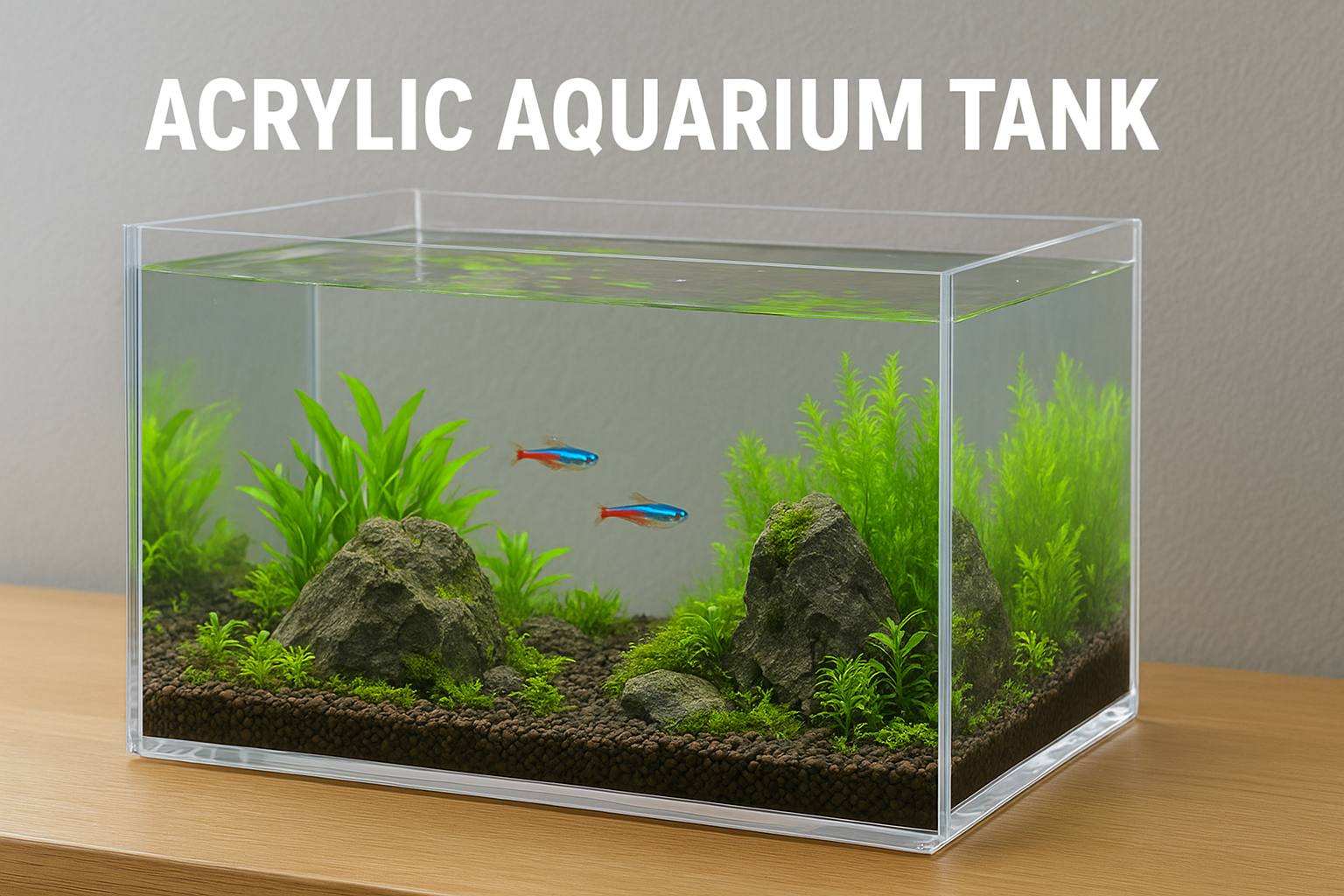
Aquariums are more than just homes for fish; they are living art pieces that bring relaxation, beauty, and a slice of nature into your space. While glass aquariums have long been the traditional choice, more aquarists are now turning towards acrylic aquarium tanks for their durability, lightweight nature, and design flexibility.
Whether you are setting up your first fish tank, upgrading to a larger system, or planning a custom aquarium, acrylic tanks offer many unique benefits. In this guide, we’ll explore everything you need to know about acrylic aquariums, including their advantages, disadvantages, design options, maintenance tips, and cost considerations.
What Is an Acrylic Aquarium Tank?
An acrylic aquarium tank is a fish tank made from acrylic sheets instead of glass. Acrylic is a type of clear, durable plastic that is lighter than glass but significantly stronger. This material allows manufacturers to design aquariums in unique shapes and sizes that are difficult or impossible to achieve with glass.
Because of its flexibility, acrylic has become a top choice for both home aquariums and large public aquarium displays around the world.
Benefits of Acrylic Aquarium Tanks
Acrylic aquariums have several key advantages that make them popular among aquarists:
1. Lightweight Construction
Acrylic is about 50% lighter than glass, making it easier to move, install, and place on stands or furniture. This is especially beneficial for larger tanks.
2. Greater Strength and Durability
Acrylic is stronger than glass and far less likely to crack or shatter. Even if it gets bumped or dropped, acrylic usually bends slightly rather than breaking.
3. Excellent Clarity
Unlike glass, which can have a greenish tint, acrylic offers higher clarity and better light transmission. This means your fish, plants, and corals appear more vibrant.
4. Flexible Design Options
Because acrylic can be molded, you can find tanks in unique shapes such as cylinders, hexagons, and bowfronts. Custom designs are much easier to achieve with acrylic than glass.
5. Better Insulation
Acrylic retains heat more efficiently than glass, which helps maintain stable water temperatures for your fish.
6. Safer for Children and Pets
Since acrylic does not shatter like glass, it’s a safer option for households with kids or pets.
Drawbacks of Acrylic Aquarium Tanks
While acrylic tanks are highly versatile, they also come with some disadvantages:
1. Susceptibility to Scratches
Acrylic scratches much more easily than glass. Even cleaning with the wrong scrubber can leave marks. However, most scratches can be buffed out with polishing kits.
2. Higher Price
Acrylic tanks generally cost more than standard glass aquariums, especially in larger sizes.
3. Warping Over Time
Very large acrylic tanks may warp or bow slightly if not properly reinforced. Choosing a professional builder helps prevent this.
4. Maintenance Challenges
Because acrylic is prone to scratches, you must be careful when cleaning algae and decorations.
Acrylic Aquarium Tank vs. Glass Aquarium Tank
To help you decide, here’s a side-by-side comparison of acrylic vs. glass tanks:
| Feature | Acrylic Aquarium | Glass Aquarium |
|---|---|---|
| Weight | Lightweight | Heavy |
| Strength | Impact-resistant, flexible | Brittle, can shatter |
| Clarity | Clearer (no green tint) | Slight green tint |
| Shapes Available | Many custom shapes | Mostly rectangular |
| Scratch Resistance | Easily scratched | Scratch-resistant |
| Price | More expensive | More affordable |
| Heat Insulation | Better | Moderate |
Popular Shapes of Acrylic Aquarium Tanks
Because acrylic is moldable, it allows aquarists to experiment with creative shapes:
- Rectangular Acrylic Tanks – Classic design, suitable for beginners.
- Bowfront Acrylic Tanks – Curved front panel for a panoramic view.
- Hexagon Acrylic Tanks – Stylish, tall tanks ideal for corners.
- Cylinder Acrylic Tanks – Great for 360-degree viewing, popular in hotels and offices.
- Wall-Mounted Acrylic Tanks – Sleek, modern look, doubles as art.
- Custom-Shaped Acrylic Tanks – Endless possibilities for unique designs.
Sizes of Acrylic Aquarium Tanks
Acrylic aquariums are available in all sizes, from small nano tanks to massive public displays. Common categories include:
- Nano Acrylic Tanks (5–20 gallons): Perfect for bettas, shrimp, and small fish.
- Medium Acrylic Tanks (30–75 gallons): Great for community fish setups.
- Large Acrylic Tanks (100–300 gallons): Popular for advanced freshwater or marine aquariums.
- Extra-Large Acrylic Tanks (400+ gallons): Used in restaurants, hotels, and public exhibits.
Cost of Acrylic Aquarium Tanks
The cost depends on size, design, and customization:
- Small acrylic tanks (under 20 gallons): $100 – $400
- Medium acrylic tanks (30–75 gallons): $400 – $1,500
- Large acrylic tanks (100–300 gallons): $2,000 – $7,000
- Custom acrylic tanks (300+ gallons): $10,000 – $50,000+
Other factors affecting cost:
- Stand and cabinetry
- Filtration system
- Lighting setup
- Heating/cooling equipment
- Professional installation
Maintenance Tips for Acrylic Aquarium Tanks
Maintaining an acrylic aquarium requires special care to avoid scratches and keep water clear:
- Use Acrylic-Safe Cleaning Tools – Avoid rough sponges or metal scrapers. Instead, use magnetic cleaners or soft pads.
- Be Careful with Gravel and Sand – If grains stick to cleaning tools, they can scratch the tank walls.
- Polish Scratches if Needed – Small scratches can be buffed out with an acrylic polishing kit.
- Regular Water Changes – Perform 10–20% weekly water changes to maintain water quality.
- Monitor Water Parameters – Use test kits to check ammonia, nitrate, nitrite, and pH levels.
- Avoid Harsh Chemicals – Only use aquarium-safe cleaning solutions.
Best Uses of Acrylic Aquarium Tanks
Acrylic tanks are ideal for various applications:
- Home aquariums – Stylish centerpiece in living rooms.
- Office aquariums – Adds relaxation and professionalism.
- Restaurants and hotels – Eye-catching design element.
- Public aquariums – Extra-large tanks with custom designs.
- Breeding tanks – Lightweight tanks that are easy to move and maintain.
Acrylic Aquarium Tank Setup Guide
If you’re considering an acrylic tank, here’s a step-by-step setup process:
- Choose the Location – Away from direct sunlight and on a level, sturdy surface.
- Install the Stand – Make sure it’s designed to handle the tank’s full weight.
- Add Substrate – Sand or gravel depending on your fish.
- Place Decorations – Rocks, driftwood, and plants (avoid sharp edges that may scratch acrylic).
- Install Filtration and Heating – Select a filter and heater suitable for your tank size.
- Fill with Water – Use dechlorinated water.
- Cycle the Tank – Run the aquarium for 2–4 weeks before adding fish.
- Add Fish Gradually – Introduce fish slowly to avoid stress and overloading the biofilter.
Why Choose an Acrylic Aquarium Tank?
You should consider an acrylic tank if:
- You want a lightweight but durable aquarium.
- You’re interested in custom shapes and designs.
- You’re planning a large tank that would be too heavy in glass.
- You value clarity and heat retention.
- You need a safe option for homes with kids or pets.
FAQs About Acrylic Aquarium Tanks
1. Are acrylic aquariums better than glass?
It depends on your needs. Acrylic tanks are lighter, stronger, and clearer, while glass tanks are more scratch-resistant and affordable.
2. Do acrylic tanks scratch easily?
Yes, acrylic scratches more easily than glass, but scratches can be polished out with the right kit.
3. How long do acrylic aquariums last?
With proper care, acrylic tanks can last 20 years or more, often longer than glass tanks.
4. Are acrylic tanks good for saltwater setups?
Yes, acrylic tanks are excellent for saltwater and reef setups because of their clarity and strength.
5. How do I clean an acrylic aquarium?
Use only acrylic-safe magnetic cleaners or pads. Avoid sharp tools and abrasive sponges.
6. Can acrylic tanks turn yellow over time?
High-quality acrylic does not yellow easily, but cheap acrylic may discolor with age.
7. Are acrylic tanks more expensive?
Yes, acrylic tanks generally cost more upfront, but their durability and flexibility make them a worthwhile investment.
8. Can I build a custom acrylic aquarium?
Yes, acrylic is ideal for custom builds because it can be molded into unique shapes and sizes.